


National Park · Tak
Taksin Maharat National Park
อุทยานแห่งชาติตากสินมหาราช
Ancient Forests, Giant Trees and Mountain Landscapes Along the Tak–Mae Sot Road
Mueang Tak · Mae Sot · Western Thailand
On the mountain road between Tak and Mae Sot, a forested highland rises above the valleys — home to Ton Krabak Yai, a natural stone bridge, cool pine air and quieter trails.
Where Forests, Stone and History Meet
On the mountain road between Tak and Mae Sot, a forested landscape rises above the surrounding valleys.
This is Taksin Maharat National Park (อุทยานแห่งชาติตากสินมหาราช), a mountainous protected area known for an extraordinary ancient tree, a natural stone bridge, waterfalls, caves and cool highland forests.
The park is named in honour of King Taksin the Great, but its story reaches much further back. For centuries, these mountains formed part of important routes connecting Tak with the western frontier. Today, the same rugged terrain protects forests and watersheds and provides a quieter alternative to the better-known destinations of northern Thailand.
The park’s most famous landmark is Ton Krabak Yai, an enormous Krabak tree believed to be around 700 years old. Nearby, Saphan Hin forms a remarkable natural stone bridge above a forest stream.
Geology, ancient trees, forest ecology and history — in one mountain landscape.
At a Glance
- ~700 years
- Age of Ton Krabak Yai — the park’s signature tree.
- 1981
- Established 23 December as Ton Krabak Yai National Park.
- ~1,000 m
- Park headquarters sits in cool upland forest.
- Hwy 105
- Tak–Mae Sot mountain corridor, about 35 km from Mueang Tak.
- 2 districts
- Mueang Tak and Mae Sot, Tak Province.
- Official Name
- Taksin Maharat National Park
- Thai Name
- อุทยานแห่งชาติตากสินมหาราช
- Province
- Tak
- Districts
- Mueang Tak and Mae Sot
- Main Road
- Highway 105, Tak–Mae Sot
- Distance from Mueang Tak
- Approximately 35 km
- Gazetted Area
- 93,125 rai
- Current Calculated Area
- Approximately 163,750 rai
- Established
- 23 December 1981
- Original Name
- Ton Krabak Yai National Park
- Current Name
- Taksin Maharat National Park
- Highest / Upland Character
- Mountainous terrain with the park headquarters around 1,000 m elevation
- Signature Landmark
- Ton Krabak Yai
- Other Highlights
- Natural Stone Bridge, Pang A Noi Waterfall, Mae Ya Pa Waterfall, Sam Muen Thung Waterfall, cave systems and forest trails
The Department of National Parks currently distinguishes between the 93,125-rai area stated in the original gazetted designation and an area of approximately 163,750 rai calculated from current geographic data. For accuracy, ThailandLover preserves this distinction rather than presenting one figure without context.
Why Visit Taksin Maharat?
Taksin Maharat is not a national park defined by one spectacular mountain summit.
Its character comes from the combination of several smaller experiences:
- A giant old-growth tree
- A natural stone bridge
- Cool mountain forest
- Waterfalls
- Caves
- Streams
- A historic mountain route between Tak and Mae Sot
The park is particularly attractive for travellers driving the Tak–Mae Sot corridor who want a nature stop with real substance — without the crowds of Thailand’s more famous highland parks.
Come for the tree. Stay for the forest air. Leave with a quieter sense of Tak’s western mountains.
The Landscape
Highland forest above the Tak–Mae Sot road
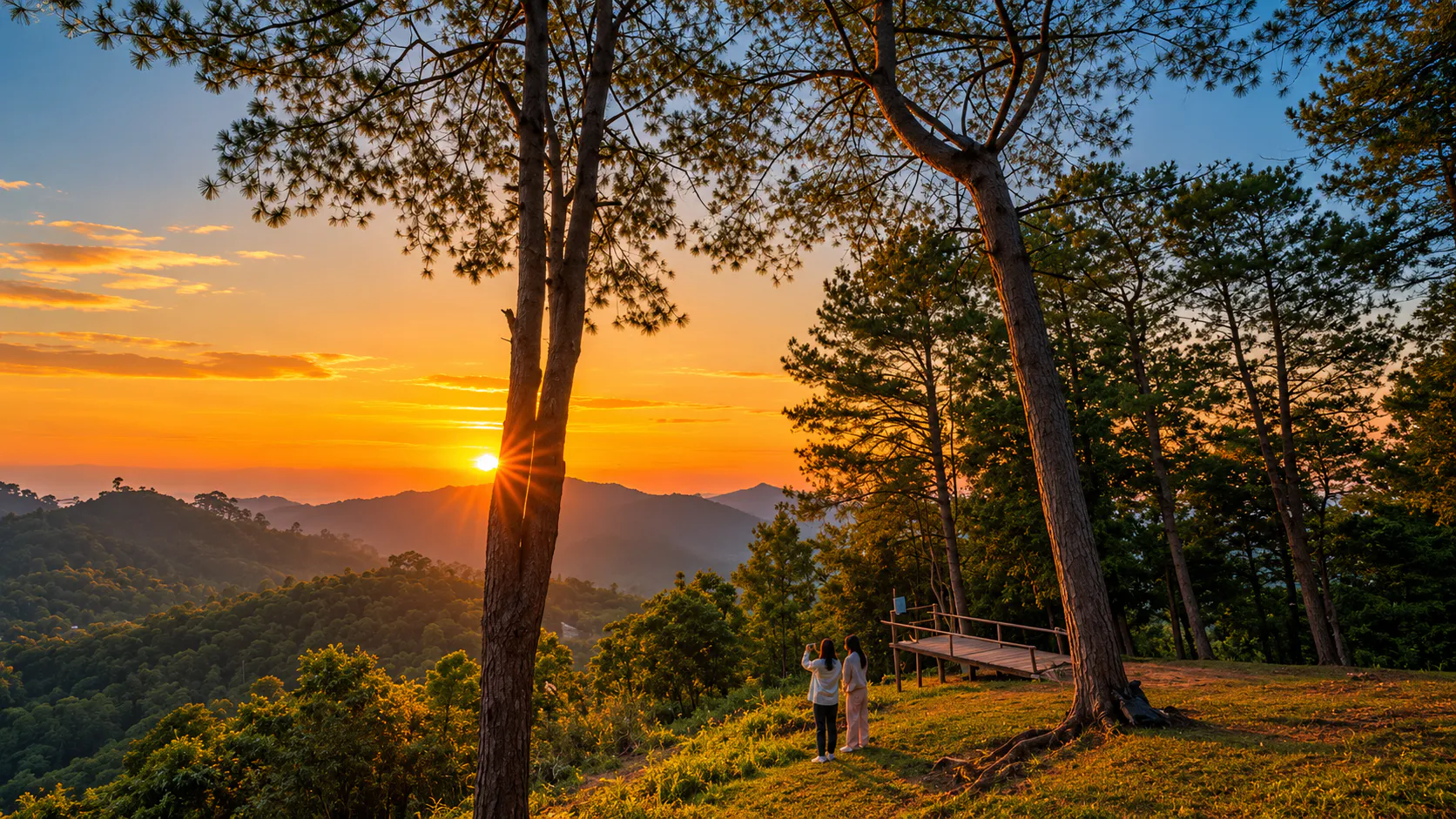
Taksin Maharat sits in the Thanon Thongchai mountain country of western Tak. Steep ridges, narrow valleys and small upland plateaus create a cool forest climate distinct from the hotter lowlands around Tak town.
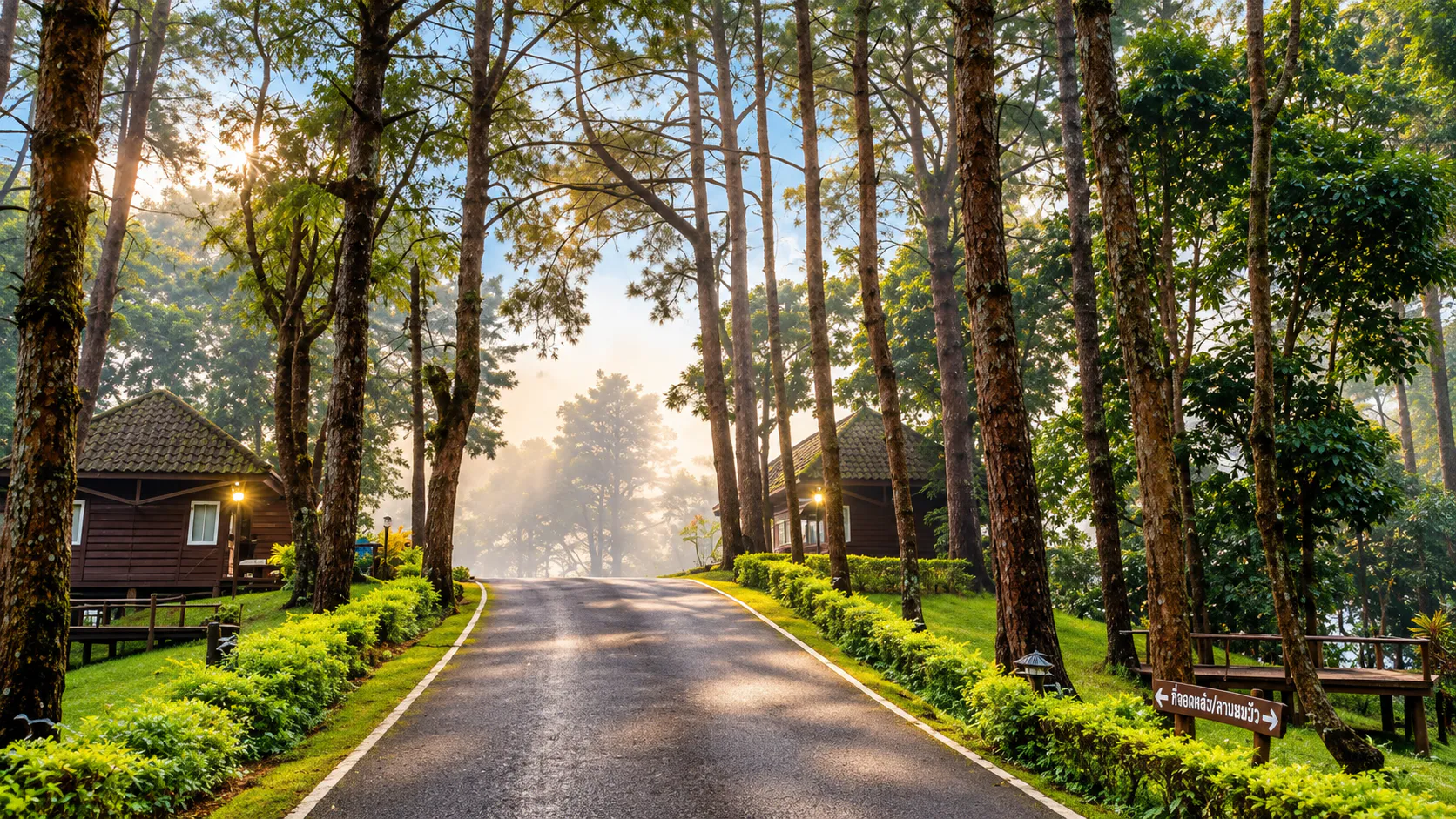
Around the headquarters, pine and mixed forest give the park an almost highland-lodge atmosphere — shaded roads, wooden bungalows and morning mist between the trees. Farther into the protected area, mixed deciduous and evergreen forest take over, with streams feeding waterfalls and cave systems.
This is mountain forest you feel in the air before you name the landmarks.

Ton Krabak Yai
ต้นกระบากใหญ่ · the park’s most famous landmark
Ton Krabak Yai is an enormous Krabak tree (Anisoptera costata) believed to be around 700 years old. It is often described as Thailand’s largest of its kind — roughly 50 metres tall, with a trunk circumference of about 16 metres.
Standing beneath it is the defining moment of a visit. The tree is not only a spectacle; it is living evidence of the old-growth forest these mountains once held more widely.
A short nature study trail leads from the park facilities to the tree. The walk is manageable for most visitors, though sections can be steep — wear proper shoes and allow time to simply stand and look.
- Best experience
- Go early. Soft light, cooler air and fewer people make the tree feel less like a stop and more like an encounter.
Saphan Hin
สะพานหินธรรมชาติ · the natural stone bridge
Saphan Hin is a natural stone bridge spanning a forest stream — a geological formation roughly 25 metres high and about 30 metres long. Water moves beneath the rock arch; forest closes in around it.
Nearby cave systems, including formations with stalactites and stalagmites, are often combined with the same visit. Together they show another side of the park: not only trees and mist, but stone shaped by water over deep time.
If Ton Krabak Yai is the living landmark, Saphan Hin is the geological one.
Waterfalls & Streams
Forest water moving through the mountains
Several waterfalls give Taksin Maharat seasonal drama and cool walking goals away from the headquarters:
- Pang A Noi Waterfall
- น้ำตกปางอ้าน้อย — a medium-sized fall often included on visitor routes from the park area.
- Mae Ya Pa Waterfall
- น้ำตกแม่ย่าป้า — a multi-tiered waterfall reached by a longer walk; one of the park’s more rewarding forest water stops.
- Sam Muen Thung Waterfall
- น้ำตกสามหมื่นทุ่ง — another perennial waterfall within the protected landscape.
Forests & Wildlife
Old trees, highland air and quiet habitat
The park’s forests are a mosaic of evergreen and mixed deciduous cover, with dipterocarp species — including the Krabak — as part of the ecological story. Around the headquarters, planted and natural pine create the cool, open character many travellers remember first.
Wildlife recorded in the wider park ecosystem includes forest mammals such as wild boar, barking deer, civets and other smaller mammals. Birds are a quieter reward: hornbills, barbets, bulbuls, minivets and seasonal migrants all use these ridges.
Large mammals may occur in protected forest, but visitors should treat sightings as chance — never as a guarantee, and never as a reason to leave trails.
Name & History
From Ton Krabak Yai to Taksin Maharat
The park was established on 23 December 1981 as Ton Krabak Yai National Park — Thailand’s 38th national park — named for the giant tree that first made the area famous.
It was later renamed Taksin Maharat National Park in honour of King Taksin the Great, whose story is closely associated with Tak. The renaming places the park within a broader historical landscape: these mountains once formed part of routes linking the Ping River basin with the western frontier.
The tree gave the park its first name. History gave it its present one.
Best Time to Visit
- November – February · Cool season
- The most comfortable period for walking, viewpoints, camping and photography. Nights at headquarters elevation can feel sharply cool.
- March – May · Hot season
- Hotter lowland air still rises into the mountains. Start early for Ton Krabak Yai and shade walks; midday can feel heavy.
- May – October · Rainy season
- Greener forest and stronger waterfalls. Trails and rock around Saphan Hin and falls become more slippery. Mist and cloud can be beautiful — and can also close views.
For a first visit focused on the giant tree, stone bridge and overnight highland air, the cool season is the most straightforward choice.
Lodges & Camping
Stay in the pine air
One of Taksin Maharat’s quiet strengths is how easy it is to stay inside the landscape. Around the headquarters, wooden lodges sit among pine trees, with a canteen and a designated campground nearby.
Park signage points visitors toward lodges such as Anothai Lodge, Tiew Son Lodge and Son Doi Lodge, as well as the campground — useful orientation once you arrive.
How to Get There
Highway 105 between Tak and Mae Sot
From Mueang Tak, drive west on Highway 105 toward Mae Sot. The park entrance is signposted near the km 26 marker, then a short spur road climbs to the headquarters. From Mae Sot, reverse the same mountain road eastward.
- By car
- The most practical way. Private cars and hired vehicles make it easy to combine Taksin Maharat with Lan Sang, Mae Sot or a longer western Tak itinerary.
- By public transport
- Buses and songthaews run the Tak–Mae Sot corridor, but reaching the headquarters spur and returning on your own schedule is awkward. Local hire from Tak or Mae Sot is more reliable for a focused visit.
How Long Should You Spend?
- Half day
- Enough for Ton Krabak Yai, a short forest walk and time at the headquarters.
- Full day
- Better for combining the giant tree with Saphan Hin and one waterfall, without rushing the forest.
- Overnight
- The most rewarding pace — cool evening air, a lodge or campsite among pines, and morning light on the mountain ridges.
What to Bring
- Walking shoes with grip
- Light jacket for cool evenings
- Water bottle
- Sun protection
- Insect repellent
- Headlamp if camping
- Light rain protection in the wet season
- Cash for park fees and simple meals
Responsible Travel
Taksin Maharat protects watershed forest and rare old-growth trees. Visitors should:
- Take all rubbish out
- Stay on designated trails
- Never carve, climb or damage trees
- Do not collect plants, rocks or cave formations
- Keep noise low around lodges and camping
- Never feed wildlife
- Follow fire restrictions
- Respect instructions from park officers
The giant tree has waited centuries. Leave it undisturbed for the next ones.
Travel Tips
- 1. Start with Ton Krabak Yai
- It is the emotional centre of the park — visit while you still have energy and soft light.
- 2. Allow time for Saphan Hin
- The stone bridge needs a separate walk; do not assume it sits next to the tree.
- 3. Overnight if you can
- The pine-lodge atmosphere after day-trippers leave is part of the ThailandLover experience.
- 4. Combine with Lan Sang
- Both parks sit on Tak–Mae Sot mountain routes and work well as a two-park western Tak day or weekend.
- 5. Check current conditions
- Trail access, waterfall safety and lodge availability can change with weather and season.
Essential Information
- Park
- Taksin Maharat National Park · อุทยานแห่งชาติตากสินมหาราช
- Province
- Tak, Western / Northern Thailand
- Districts
- Mueang Tak and Mae Sot
- Gazetted area
- 93,125 rai
- Calculated area
- Approximately 163,750 rai
- Established
- 23 December 1981
- Original name
- Ton Krabak Yai National Park
- Main road
- Highway 105, Tak–Mae Sot
- Signature places
- Ton Krabak Yai, Saphan Hin, Pang A Noi, Mae Ya Pa, Sam Muen Thung
- Signature experiences
- Giant tree walk, stone bridge, highland lodges, camping, cool-season forest
- Official information
- Department of National Parks, Wildlife and Plant Conservation
Frequently Asked Questions
- What is Taksin Maharat National Park?
- A mountainous national park in Tak on the Tak–Mae Sot road — Ton Krabak Yai, Saphan Hin, highland forest, waterfalls and caves.
- Where is it, and how large is it?
- Mueang Tak and Mae Sot districts. Gazetted at 93,125 rai; current calculations put the area near 163,750 rai. Established 23 December 1981.
- Why is Ton Krabak Yai famous?
- A Krabak tree about 700 years old — often called Thailand’s largest of its kind — roughly 50 m tall with a trunk circumference of about 16 m.
- When is the best time to visit?
- November to February for cool walking and camping. May–October for greener forest and stronger falls. March–May is hotter — go early.
- How do I get there from Tak?
- Highway 105 toward Mae Sot; entrance near km 26, then a short spur to headquarters. A private vehicle is the practical choice.
- Can I stay overnight?
- Yes — wooden lodges and a campground near the highland headquarters. Check DNP reservations for current availability.
- How long should I spend?
- Half a day for the giant tree; a full day for tree + stone bridge + a waterfall; overnight for the full highland atmosphere.
More of Tak & the Western Forests
- Lan Sang National Park
- Cascading waterfalls and forest streams close enough to share a Tak–Mae Sot itinerary.
- Mae Moei National Park
- Western Tak mountain forest and viewpoints farther along the border hills.
- Khun Phawo National Park
- Another protected mountain landscape in Tak’s western forest corridor.
- Namtok Pha Charoen National Park
- A different Tak waterfall park toward the southern border hills.
- Doi Soi Malai National Park
- Petrified wood and highland forest in Ban Tak — another Tak nature stop.
Location
Find Taksin Maharat National Park
Mae Tho, Mueang Tak & Mae Sot, Tak · Highway 105 Tak–Mae Sot corridor near km 26