

National Park · Sa Kaeo
Pang Sida National Park
อุทยานแห่งชาติปางสีดา
Thailand's Eastern Forest Where Butterflies Take Flight
Sa Kaeo & Prachin Buri, Eastern Thailand
Come for the butterflies. Stay for the forest. Listen to the waterfalls. Look beyond the obvious — Pang Sida is a living World Heritage landscape, not simply a butterfly attraction.
A Forest Where Water, Wings and Wildlife Meet
Deep in the forests of eastern Thailand, Pang Sida National Park is a destination where waterfalls, mountain streams, evergreen forests, wildlife and thousands of butterflies come together in one of the country's most important protected landscapes.
Located primarily in Sa Kaeo Province, with part of the park extending into Prachin Buri Province, Pang Sida protects a vast forest landscape covering approximately 844 square kilometres, or 527,500 rai.
The park is particularly famous for its butterflies. During the rainy season, warm sunlight, moisture, streams and mineral-rich ground create ideal conditions for butterfly activity. Hundreds of species have been recorded, and large numbers can sometimes be seen gathering around natural and artificial mineral licks.
But Pang Sida is much more than a butterfly destination. Its forests form part of the internationally important Dong Phayayen–Khao Yai Forest Complex, a UNESCO World Heritage property recognized for exceptional biodiversity and importance for threatened wildlife.
Here, the experience is not simply about seeing nature. It is about entering one of eastern Thailand's great forest landscapes.
Pang Sida National Park at a Glance
- 844 km²
- Approximately 527,500 rai of protected eastern forest.
- 500+
- Butterfly species reported — the park's signature wildlife story.
- June–July
- Best butterfly season, when rain, humidity and mineral licks align.
- UNESCO 2005
- Part of the Dong Phayayen–Khao Yai Forest Complex.
- Official name
- Pang Sida National Park
- Thai name
- อุทยานแห่งชาติปางสีดา
- Province
- Sa Kaeo and Prachin Buri
- Main districts
- Mueang Sa Kaeo, Watthana Nakhon, Ta Phraya and Na Di
- Approximate area
- 527,500 rai · 844 km²
- Region
- Eastern Thailand
- Mountain system
- Dong Phaya Yen / Phanom Dong Rak forest landscape
- Signature experience
- Butterfly watching
- Best butterfly season
- Approximately June–July
- Major waterfall
- Pang Sida Waterfall
- Other attractions
- Pha Takhian Waterfall, Kaeng Makha Waterfall, viewpoints, streams, forest trails and butterfly-watching areas
- World Heritage
- Dong Phayayen–Khao Yai Forest Complex · inscribed 2005
The Department of National Parks states that Pang Sida National Park covers approximately 527,500 rai, or 844 square kilometres, across areas of Sa Kaeo Province and Na Di District in Prachin Buri Province.
Where Is Pang Sida National Park?
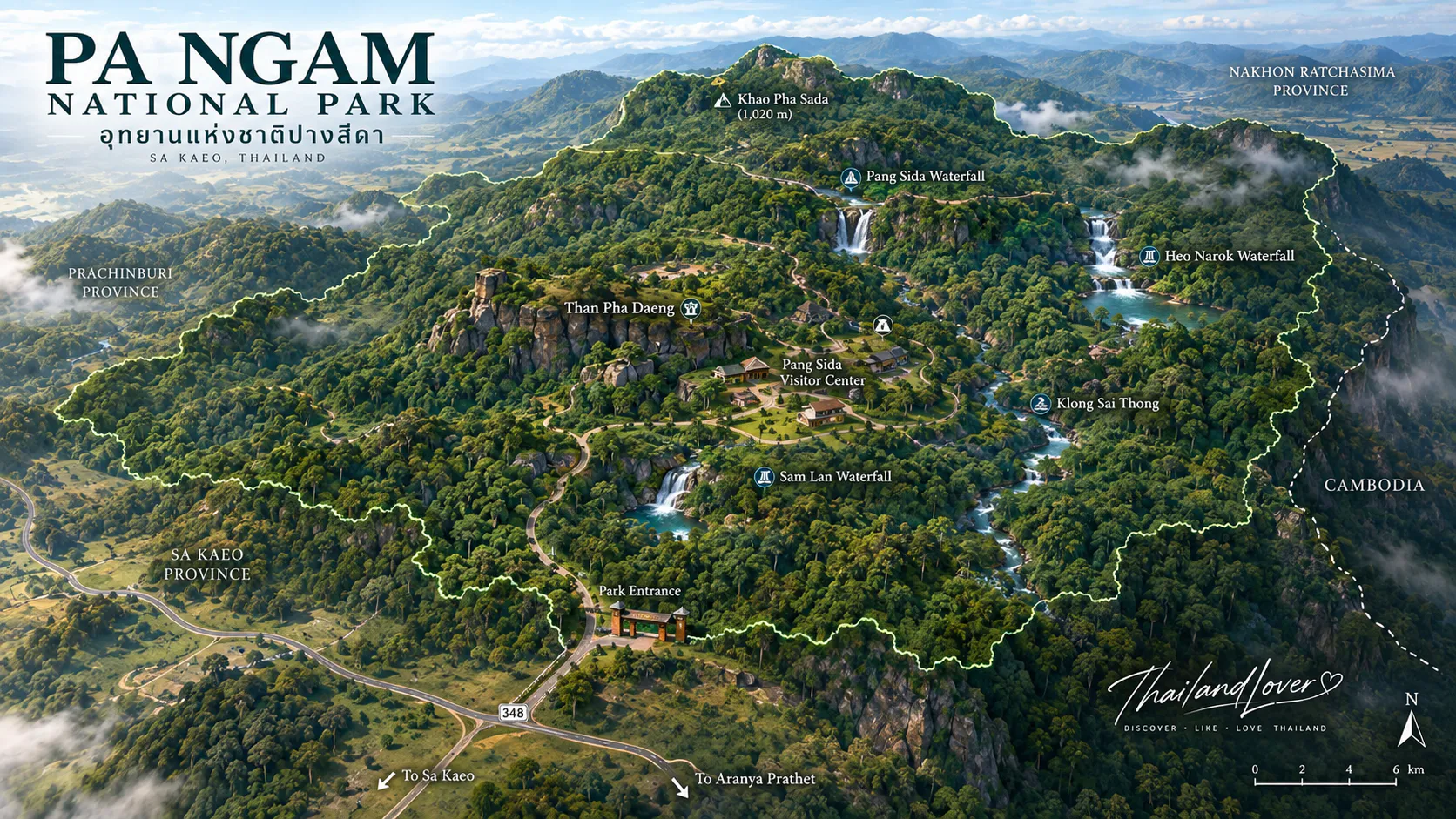
Pang Sida National Park is located in eastern Thailand, primarily within Sa Kaeo Province, with part of its protected landscape extending into Prachin Buri Province.
The park's administrative area includes parts of:
- Mueang Sa Kaeo District
- Watthana Nakhon District
- Ta Phraya District
- Na Di District, Prachin Buri
The park forms part of a much larger connected forest landscape extending westward toward Khao Yai and eastward toward the Cambodian border.
Pang Sida is not an isolated patch of forest. It is one component of a much larger ecological system.
A Forest of World Heritage Importance
Pang Sida National Park forms part of the Dong Phayayen–Khao Yai Forest Complex, a UNESCO World Heritage property.
The complex consists of five almost contiguous protected areas:
- 1 · Khao Yai
- Khao Yai National Park — western gateway of the complex.
- 2 · Thap Lan
- Thap Lan National Park — continuing east through the forest corridor.
- 3 · Pang Sida
- This park — butterflies, waterfalls and eastern forest habitat.
- 4 · Ta Phraya
- Ta Phraya National Park — toward the Cambodian border.
- 5 · Dong Yai
- Dong Yai Wildlife Sanctuary — completing the contiguous complex.
Together, these protected areas cover approximately 615,500 hectares and extend for roughly 230 kilometres from the Cambodian border in the east toward Khao Yai National Park in the west.
UNESCO inscribed the Dong Phayayen–Khao Yai Forest Complex on the World Heritage List in 2005 because of its outstanding importance for biodiversity conservation. This makes Pang Sida part of one of Thailand's most significant protected forest systems.
Why Is Pang Sida Important?
The importance of Pang Sida comes from the combination of extensive forest, mountain terrain, streams and waterfalls, watershed protection, high biodiversity, wildlife habitat, butterfly diversity and ecological connectivity.
The wider Dong Phayayen–Khao Yai Forest Complex contains more than 800 recorded fauna species, including approximately:
- 112 mammal species
- 392 bird species
- 200 reptile and amphibian species
The complex provides habitat for globally threatened wildlife including Asian elephants, tigers, banteng and other important species.
Pang Sida should not be viewed simply as a recreational park. It is part of a much larger conservation landscape.
The Story Behind Pang Sida
The area around what is now Pang Sida National Park was originally managed as forest land and later developed as a protected recreation and watershed area.
The Department of National Parks records that the original Pang Sida Forest Park was established in 1978. Subsequent surveys found that the surrounding forests contained significant natural resources — forests, wildlife, waterfalls and important watershed areas.
The area was subsequently developed into a national park to conserve these resources while providing opportunities for recreation, education and nature study.
It was protected not because of one single attraction, but because of the value of the entire forest landscape.
The Forest Landscape
Pang Sida is characterized by mountainous terrain, valleys, streams and dense forest — substantially more complex than the flat agricultural areas surrounding parts of Sa Kaeo.
As elevation increases, the environment changes. Forest becomes denser. Streams become more frequent. Temperature and humidity vary. And wildlife finds more continuous habitat.
The result is a landscape that feels substantially more remote once visitors move beyond the main visitor areas.
Forest types
Pang Sida contains several forest ecosystems associated with eastern Thailand's mountain environment:
- Evergreen forest
- Dry evergreen forest
- Mixed deciduous forest
- Dry forest communities
- Riparian vegetation along streams
The forest is particularly important as a watershed. Rain falling across the mountains and forested slopes feeds streams and rivers that eventually support communities and agricultural areas outside the protected area.
Pang Sida and the Bang Pakong Watershed
The park's forest is part of an important watershed system. The Department of National Parks describes Pang Sida as an important source of streams and waterways, including areas associated with the Bang Pakong River system.
The trees, soil and mountain landscape help capture and regulate rainfall. Water moves gradually through the forest. Streams emerge from the landscape. And the resulting water systems support ecosystems and human communities downstream.
A waterfall in Pang Sida is therefore not simply a scenic attraction. It is part of a much larger hydrological system.
The Butterfly Kingdom of Eastern Thailand
Why Pang Sida is famous for butterflies
Pang Sida has earned a reputation as one of Thailand's most important butterfly-watching destinations. Tourism Authority of Thailand describes the park as the “Land of Butterflies of Eastern Thailand's Forests” and reports more than 500 butterfly species in the park.
The principal butterfly-viewing season is generally associated with the rainy season, particularly June–July. The attraction is not simply the number of species — it is the behavior of the butterflies. Under suitable conditions, large numbers may gather where they can obtain minerals and moisture. This can create one of the most memorable wildlife experiences in eastern Thailand.
Why do butterflies gather on the ground?
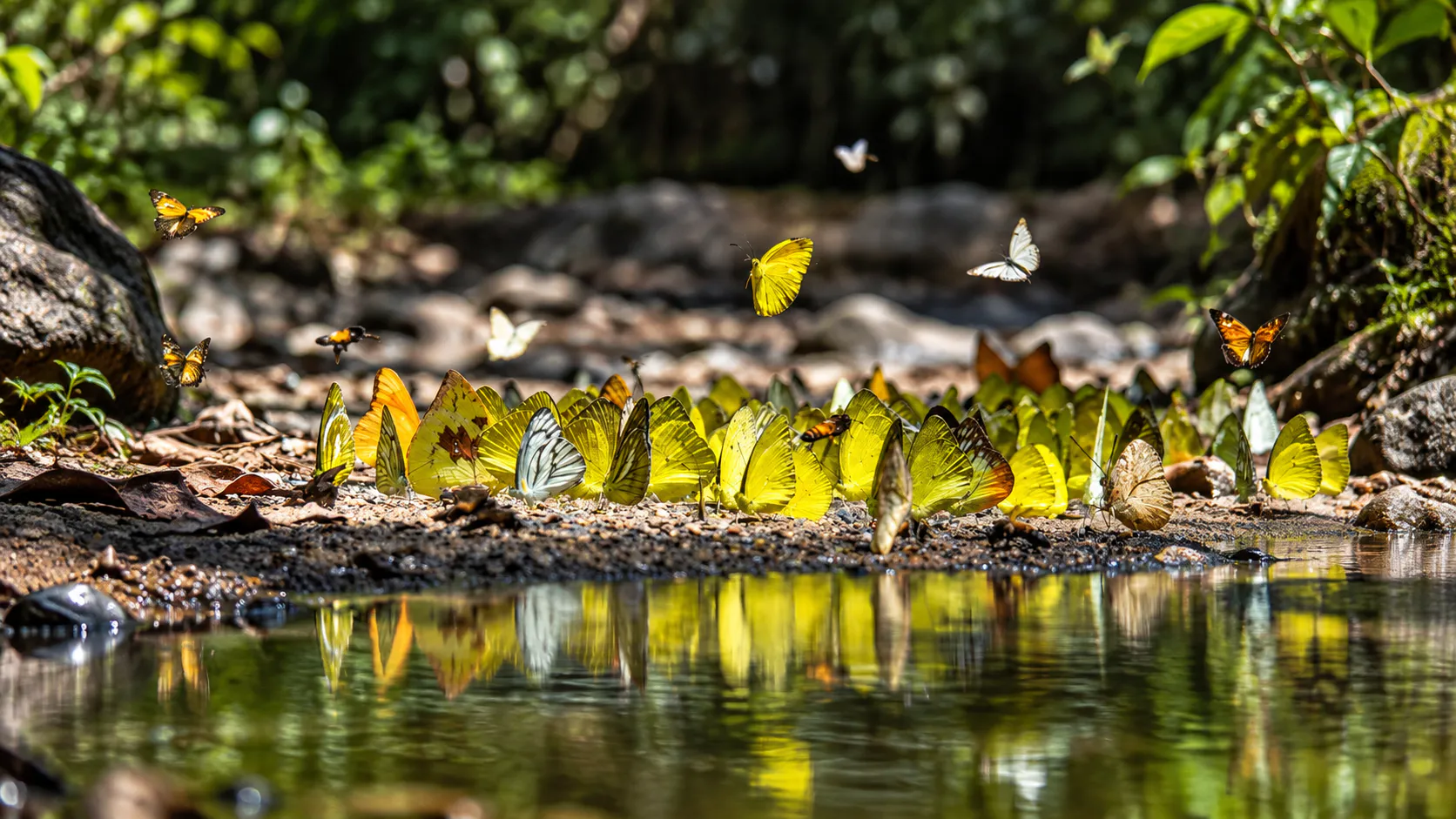
Visitors may see butterflies sitting on wet soil, mud, sand, stream edges, damp rocks and mineral licks. This behavior is known as puddling.
Many butterflies obtain nutrients and minerals that are difficult to obtain from flower nectar alone. Male butterflies are particularly well known for this behavior. In Pang Sida, natural conditions combined with managed butterfly-viewing areas can create excellent opportunities to observe this at close range.
The butterfly season — June–July
Rain increases humidity. Streams and small waterways become more active. Vegetation becomes lush. And mineral-rich damp areas provide favorable conditions for butterflies. TAT currently identifies June–July as the recommended period.
However, butterfly activity is influenced by rainfall, sunshine, temperature, humidity, wind and time of day. A particular day may produce dramatically different sightings.
Best time of day
Butterfly activity is often strongest when the forest receives enough sunlight to warm the insects. Local tourism information recommends approximately 9:00 AM until before noon. Morning light is also excellent for photography — generally softer than strong midday sun.
Arrive early → wait for sunlight → watch the ground → look around streams and mineral licks.
Patience is part of the experience. Butterflies may not all appear simultaneously.
How to Photograph Butterflies
Use a long lens
A telephoto or macro lens lets you photograph butterflies without getting too close.
Watch the ground
Many visitors look upward. Some of the best opportunities are on damp soil and mineral licks.
Early morning light
Soft morning light can reveal wing patterns while reducing harsh shadows.
Be patient — never touch
Find a good position and wait. Butterfly wings are delicate; do not handle them for photographs.
Waterfalls of Pang Sida
- Pang Sida Waterfall
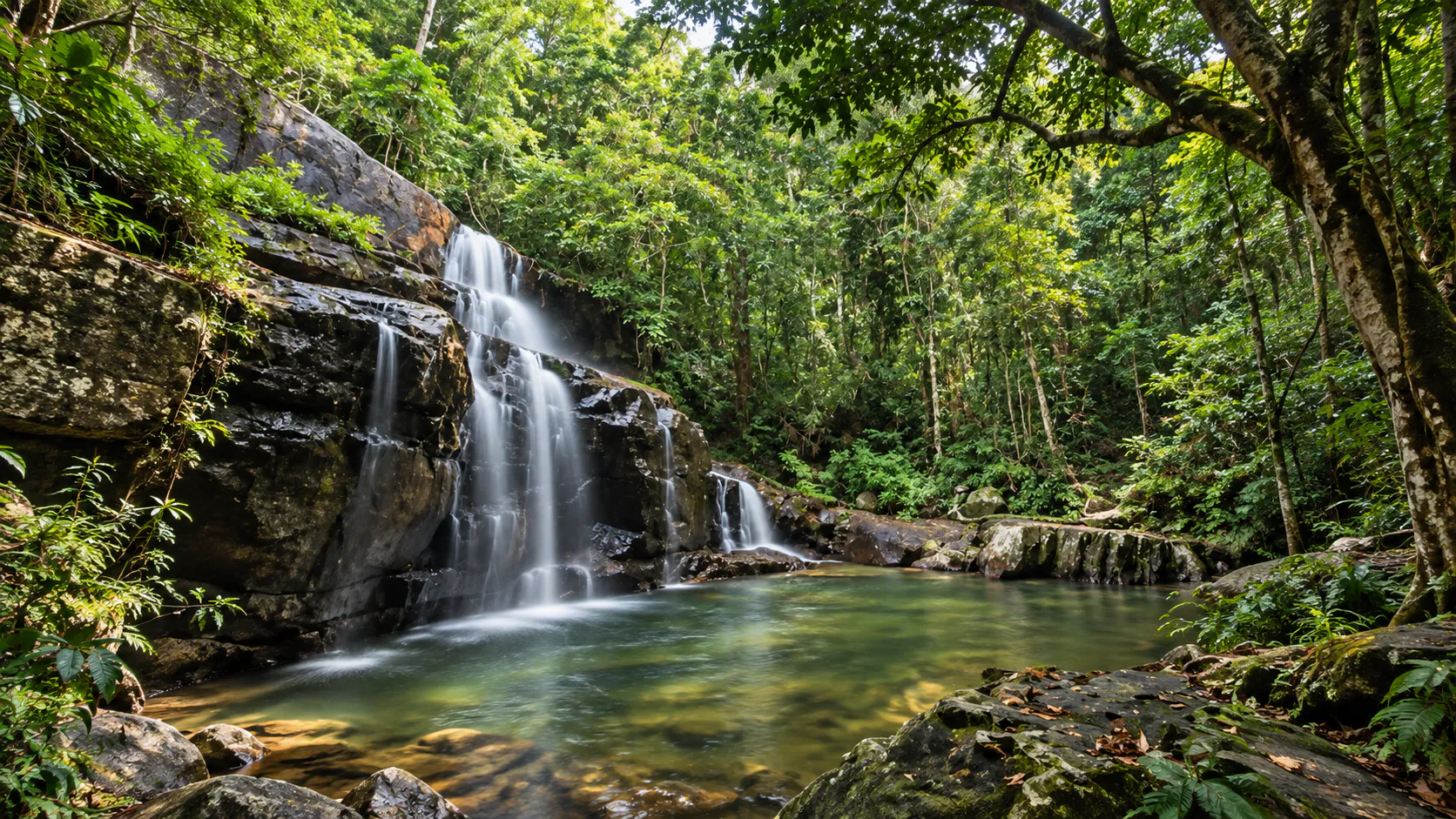
- Namtok Pang Sida — the park's signature cascade. Forest + rock + flowing water. Stronger in the rainy season; always part of the watershed story.
- Pha Takhian Waterfall
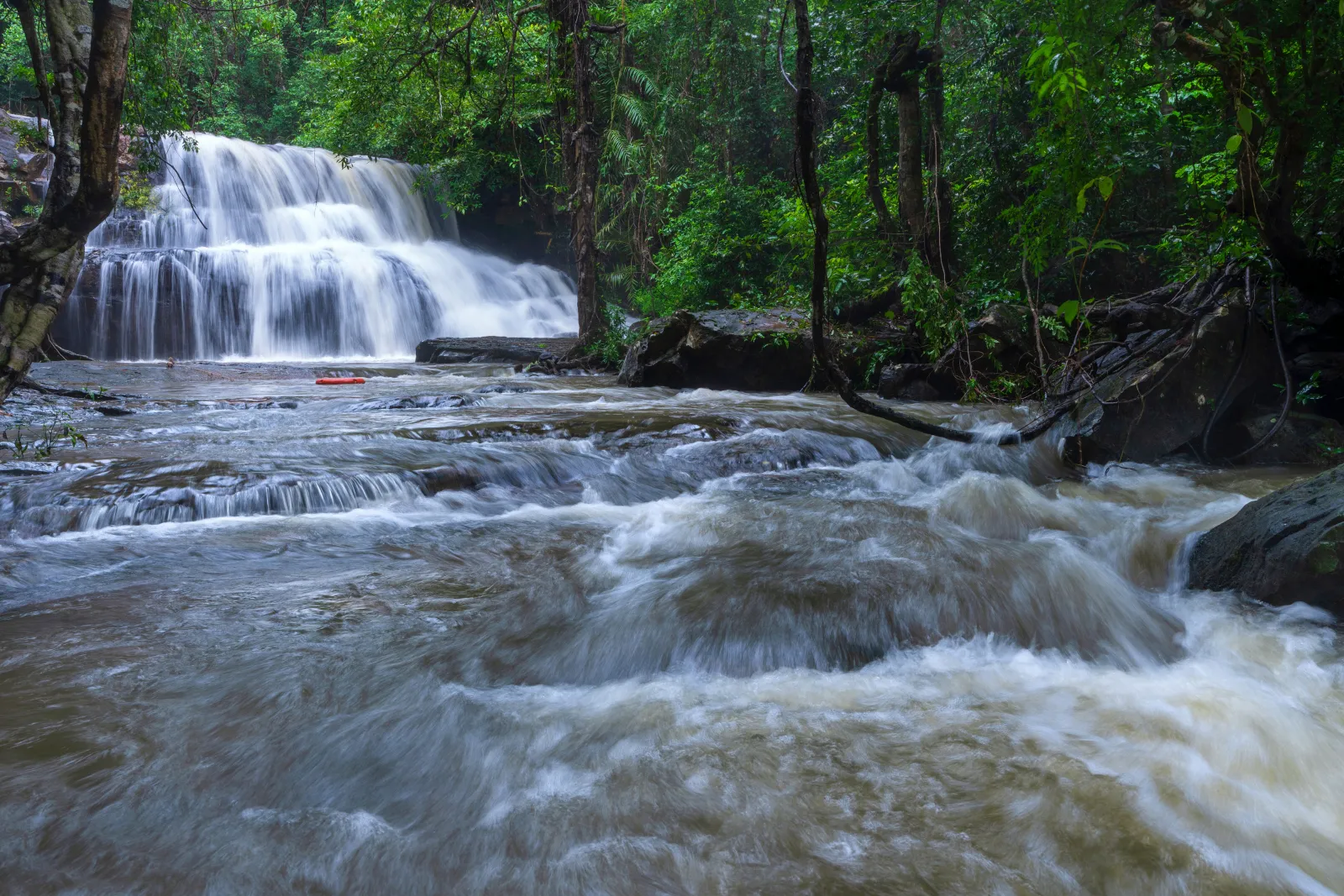
- A forest waterfall associated with streams flowing through mountainous terrain. Water levels vary substantially with rainfall.
- Kaeng Makha Waterfall
- Another cascade in the park's stream network — rain, mountain channels and rock shaping the flow into pools.
Rather than thinking of the waterfalls as isolated attractions, understand them as part of the park's stream network. Rain falls on the forest. Water moves through mountain channels. Rock formations shape the flow. And eventually the water forms cascades and pools.
Streams and forest pools
In the rainy season especially, streams provide water for wildlife, habitat for aquatic organisms, mineral-rich damp areas, forest humidity, natural cooling and scenic environments. Some streams are also associated with butterfly activity — another reason butterflies and waterways are so closely connected here.
Wildlife of Pang Sida
Pang Sida supports a remarkable range of wildlife. The Department of National Parks records large mammals and numerous bird, reptile and amphibian species within the park.
Mammals
- Asian elephant
- Banteng · Gaur · Tiger
- Sambar deer · Muntjac · Wild boar
- Lesser mouse-deer
- Pileated gibbon and other primates
- Otters · Porcupines · Civets · Bats
Birds, reptiles & amphibians
More than 200 bird species have been reported — forest birds, hornbills, pheasants, broadbills and more. Streams and forest also support lizards, flying lizards, monitor lizards, snakes, frogs, toads and other herpetofauna.
Asian elephants, tigers and gibbons
The Asian elephant is one of the major mammals associated with the broader Dong Phayayen–Khao Yai forest landscape. Their presence indicates that the forest retains enough ecological value to support one of Thailand's largest land mammals.
UNESCO recognizes the wider complex as habitat for globally threatened species, including the tiger. Large predators are elusive and wide-ranging — their importance is primarily conservation, not tourism spectacle. A healthy forest is not defined only by what tourists can see.
Pang Sida also forms part of a forest complex where pileated gibbons occur. UNESCO highlights the unusual importance of the region because the ranges of two gibbon species overlap here. Hearing a gibbon calling from deep within the forest can be just as meaningful as seeing one.
Birdwatching & the Soundscape
With more than 200 bird species recorded, Pang Sida offers dense forest, streams, mountain slopes, open areas and different forest types — multiple habitats in one park.
Potential highlights include pheasants, broadbills, pittas, hornbills, forest passerines, raptors and water-associated birds. Early morning is generally the most productive period: cooler air, higher bird activity and better light for photography.
One of the best ways to experience Pang Sida is to stop looking at your camera for a moment. Listen. You may hear bird calls, cicadas, running water, wind moving through leaves, insects and distant animal calls.
Pang Sida is not only a place to see nature. It is a place to hear it.
Best Time to Visit Pang Sida
Pang Sida is a strongly seasonal landscape. During the dry period, vegetation can appear more subdued, streams may shrink, and butterfly activity may be less dramatic. As the monsoon arrives, the forest greens, streams strengthen, humidity rises, wildlife patterns shift — and butterflies become one of the park's most visible spectacles.
- June–July
- Best for butterflies. TAT specifically identifies this window as the recommended period.
- Rainy season
- Best for lush forest and waterfalls. Greener canopy and stronger stream flow.
- Early morning
- Best for wildlife and photography. Cooler conditions and fewer visitors.
- Dry season
- Quieter forest experience. Different landscape mood; still excellent for observation and hiking.
A Perfect Pang Sida Day
- 6:30–8:00 AM
- Arrive and prepare for the forest. Observe the surroundings before the heat rises.
- 8:00–9:00 AM
- Move toward butterfly-viewing areas. Look for damp ground, stream edges and mineral licks.
- 9:00 AM–12:00 PM
- Butterfly time — the main wildlife-photography window. Watch the ground, vegetation and air. Do not rush.
- Midday
- Break, hydrate, lunch or rest at designated facilities.
- Afternoon
- Explore the waterfall or other accessible attractions depending on current park conditions. Afternoon light can be excellent for forest photography.
- Before departure
- One final slow walk — Pang Sida is often more impressive when experienced without trying to photograph everything.
What to Bring
Rainy-season visit
- Comfortable walking shoes
- Rain jacket · water-resistant backpack
- Drinking water · insect repellent
- Sunscreen · hat · small towel
- Camera · extra batteries · power bank
- Waterproof phone protection
- Binoculars for birdwatching
Serious butterfly photography
- Macro lens
- Telephoto lens
- Monopod if appropriate
- Lens cloth
- Waterproof camera cover
Responsible Watching
Butterflies
- Stay on designated paths
- Never touch or capture butterflies
- Do not destroy plants or disturb mineral licks
- Keep noise low
Wildlife
- Never feed, chase or approach animals
- Never use flash irresponsibly
- Never remove plants, rocks or insects
- Never leave rubbish · follow ranger instructions
A photograph should never come at the expense of the animal.
Conservation & Forest Connectivity
UNESCO recognizes the Dong Phayayen–Khao Yai Forest Complex as a major refuge for tropical forest biodiversity — habitat for globally threatened species and one of the remaining large forest systems in northeastern and eastern Thailand. The complex also functions as an important watershed.
Forest + wildlife + water + ecological connectivity
Wild animals do not recognize national park boundaries. Elephants travel large landscapes. Tigers need extensive territories. Birds move between habitats. Gibbons depend on connected canopy. Isolated protected areas can be less effective than connected landscapes — which is why Pang Sida's relationship with Khao Yai, Thap Lan, Ta Phraya and Dong Yai matters so much.
The World Heritage complex stretches approximately 230 kilometres and covers about 615,500 hectares, with more than 800 fauna species recorded across the wider property. Pang Sida is one important piece of that larger landscape.
More Than a Butterfly Destination
It is tempting to market Pang Sida simply as “Thailand's butterfly park.” That is useful — and incomplete. The butterfly phenomenon exists because the forest ecosystem supports it: plants, water, minerals, temperature, humidity, forest structure and seasonal rainfall. Remove the forest, and the butterfly spectacle disappears.
The butterfly is a visible expression of the forest ecosystem — not the whole story.
- 1. Butterflies
- More than 500 species reported.
- 2. Waterfalls
- Pang Sida and other falls bring visitors into the forest.
- 3. Wildlife
- Part of a major habitat for eastern Thailand's fauna.
- 4. Forest
- Large areas of protected forest remain.
- 5. World Heritage
- Dong Phayayen–Khao Yai Forest Complex.
- 6. Accessibility
- Relatively accessible opportunities to experience a major forest landscape.
Who Pang Sida Is For
Photographers
Macro butterflies and insects, wildlife when encountered, mountain forests, waterfalls, streams, mist and dense green atmosphere. The strongest images often combine elements — a butterfly beside a forest stream tells a fuller story.
Nature lovers
Walk slowly. Listen. Look at the forest floor. Watch butterflies. Follow streams. Observe birds. Notice how the landscape changes after rain.
Families
Accessible attractions such as waterfalls and designated visitor areas work well — but this is a genuine forest. Keep children close, stay on paths, and teach them to observe without touching.
Birdwatchers & first-timers
Visit early with binoculars. Expect observation, not guarantees. First visit? Start with three experiences: butterflies, water, forest — and understand how they connect.
Getting There, Staying & Facilities
Pang Sida National Park is accessible from Sa Kaeo and surrounding areas in eastern Thailand. A common approach is to travel toward Sa Kaeo and then continue toward the national park entrance. Roads, visitor facilities and internal access can change with weather, maintenance and park management — check current conditions before departure.
For navigation, search for Pang Sida National Park rather than informal names for individual attractions.
Where to stay
Accommodation within or near the park is available subject to regulations and booking. DNP provides lodging and camping through its official system. Hotel-style stays in Sa Kaeo also work for day trips. Early-morning access favors staying nearby.
Camping
Use only designated areas. Bring gear for rain, humidity, insects, cooler nights and wet ground. Do not camp outside permitted zones. Confirm facilities before relying on them.
A Note About Wildlife Expectations
One of the biggest mistakes travelers make is treating wildlife sightings as guaranteed. Pang Sida contains elephants, important wildlife habitat, many birds and hundreds of butterfly species — but nature does not operate on a schedule.
You may see hundreds of butterflies and no large mammals. You may hear birds without seeing them. You may see tracks rather than animals.
That is not a failed visit. That is wildlife.
The best experience may not be the day with the most photographs. It may be the morning when rain has just stopped, the forest smells of wet earth, sunlight breaks through the canopy, a stream begins to sparkle, and butterflies begin to appear.
Essential Information
- Official name
- Pang Sida National Park
- Thai
- อุทยานแห่งชาติปางสีดา
- Region
- Eastern Thailand
- Provinces
- Sa Kaeo and Prachin Buri
- Area
- Approximately 527,500 rai / 844 km²
- Main districts
- Mueang Sa Kaeo · Watthana Nakhon · Ta Phraya · Na Di
- Signature wildlife
- Butterflies — more than 500 species reported
- Best butterfly season
- June–July
- Best watching window
- Approximately 9:00 AM to before noon, depending on weather
- Main waterfall
- Pang Sida Waterfall
- Other attractions
- Pha Takhian · Kaeng Makha · forest streams · viewpoints · nature trails · butterfly areas
- World Heritage
- Dong Phayayen–Khao Yai Forest Complex · UNESCO 2005
Frequently Asked Questions
- Where is Pang Sida National Park?
- Pang Sida National Park is located primarily in Sa Kaeo Province in eastern Thailand, with part of the park extending into Prachin Buri Province.
- What is Pang Sida National Park famous for?
- Pang Sida is particularly famous for butterfly watching, with more than 500 butterfly species reported, as well as waterfalls, forests and wildlife.
- When is the best time to see butterflies?
- June and July are generally regarded as the best period for butterfly watching, particularly during the rainy season.
- What time should I arrive to see butterflies?
- Morning is generally recommended. Tourism information identifies approximately 9:00 AM until before noon as a particularly suitable period because butterflies become active in sunlight.
- Is Pang Sida part of a UNESCO World Heritage Site?
- Yes. Pang Sida National Park is one of the protected areas forming the Dong Phayayen–Khao Yai Forest Complex, which was inscribed on the UNESCO World Heritage List in 2005.
- What animals live in Pang Sida?
- The park supports many species, including Asian elephants, gaur, banteng, deer, gibbons, birds, reptiles, amphibians and numerous smaller mammals. Sightings are never guaranteed.
- Can I see elephants in Pang Sida?
- Elephants occur in the wider protected forest landscape, but sightings are not guaranteed. Visitors should never approach or attempt to follow wild elephants.
- Does Pang Sida have waterfalls?
- Yes. Pang Sida Waterfall is the park's best-known waterfall, and other waterfalls include Pha Takhian and Kaeng Makha.
- Is Pang Sida suitable for birdwatching?
- Yes. More than 200 bird species have been reported in the park, making it an important forest birdwatching destination.
- Is Pang Sida suitable for families?
- Yes, particularly around designated visitor areas and accessible attractions. Families should remember that Pang Sida is a genuine protected forest and children should remain under close supervision.
- Can I camp at Pang Sida?
- Camping facilities are available subject to current park rules and availability. Check the Department of National Parks' booking system before traveling.
- Is Pang Sida worth visiting outside butterfly season?
- Yes. The park remains valuable for waterfalls, forests, birds, wildlife observation, hiking and landscape photography. The experience simply changes outside the peak butterfly period.
Related Destinations
- Khao Yai National Park
- Western gateway of the same UNESCO forest complex — waterfalls, wildlife and Thailand's first national park.
- Thap Lan National Park
- The World Heritage forest continuing through the Dong Phayayen landscape.
- Namtok Phlio National Park
- Clear pools, stone-sucking carp and royal history in Chanthaburi.
- All Nature & Parks
- Browse ThailandLover's national park guides across the country.
Location
Find Pang Sida National Park
Sa Kaeo Province · Eastern Thailand — park extends into Prachin Buri (Na Di)