

A gentle climate
How Thai Society Feels
ลักษณะสังคมไทยคร่าวๆManners here grow from warmth — not from rigid rule books.
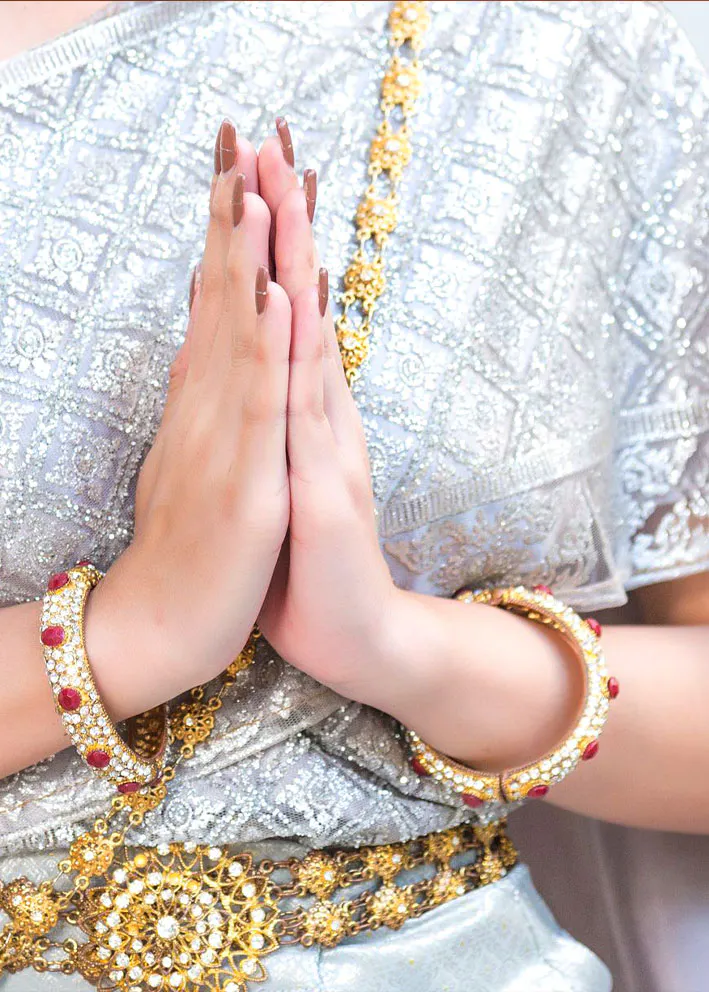
Thailand is often called the Land of Smiles — not only as a slogan, but as a social habit. Many Thais value kindness, politeness, and keeping the atmosphere calm. People tend to avoid open conflict, speak softly, and look after one another’s feelings.
Respect for elders, guests, and sacred places sits close to everyday life. Harmony matters. Making someone lose face in public feels heavier than in many Western cultures.
You do not need to be perfect. Locals usually forgive small mistakes when they see goodwill. What matters most is tone: a smile, a quieter voice, and the wish not to embarrass anyone.
That gentle climate is the real entrance to Thai culture — manners are how you walk through it.
Greeting
The Wai and the Smile
การไหว้และรอยยิ้มThe wai is respect made visible — palms together, a slight bow. The smile is its everyday twin.
When to wai
เมื่อไหร่ควรไหว้Return a wai from elders, hosts, or monks’ contexts with care. Younger people usually wai first. With peers in the city, a warm smile and nod is often enough — and perfectly polite.
When a smile is enough
เมื่อยิ้มก็พอShop staff, café teams, and Grab drivers often wai you. A sincere smile and thank you is gracious; forcing a deep wai every time can feel awkward for everyone.
Handshakes
การจับมือIn business and among younger urban Thais, handshakes are common. If someone offers a hand, take it gently. If they wai, wai back.
Don’t overthink height
ไม่ต้องกังวลมากHand height rises with respect — friends lower, elders higher, sacred contexts highest. As a visitor, sincerity beats perfect form every time.
Body language
Head, Feet, and Space
ศีรษะ เท้า และพื้นที่ส่วนตัวIn Thai culture the head is high and the feet are low — a simple map that prevents many accidental insults.
The head
ศีรษะAvoid touching anyone’s head, including children, unless invited. Don’t tower over seated monks or elders if you can help it — lower yourself a little when you pass.
The feet
เท้าDon’t point with your feet, rest them on tables, or aim soles at Buddha images, people, or sacred objects. Sit with legs folded to the side when you can.
Shoes
รองเท้าWhen you see a pile of shoes, join it — homes, some cafés, temple halls, certain shops. Socks are fine. Follow the local cue.
Hands and objects
การส่งของPass items with your right hand or both hands. Don’t toss things across a room, and don’t reach over someone’s head if you can walk around.
Quick guide
Do & Don’t
ควร · ไม่ควรRead this once before you go out. Kindness remembered beats a long apology later.
Do
ควร-
Smile first
A warm face often matters more than perfect Thai. It signals you come in peace.
-
Keep your voice soft
Loud talk on trains, in shops, or at temples can feel aggressive — even when you are only excited.
-
Wai when it feels right
Return a wai from elders or hosts. With peers, a smile and nod is often enough.
-
Remove your shoes
When you see footwear piled at a door, join the pile without being asked.
-
Mind head and feet
Don’t touch heads or point with your feet — the simplest rule with the biggest payoff.
-
Queue and wait calmly
Patience reads as good manners. Cutting in line costs more goodwill than time.
-
Dress for sacred places
Cover shoulders and knees at temples and palaces. A light scarf saves the day.
-
Ask before you photograph
Especially monks, children, market vendors, and hill communities.
-
Stand for the royal anthem
In cinemas, stand quietly when the anthem plays — a simple sign of respect.
-
Say thank you
Khop khun khrap / kha plus a smile goes a long way with staff and drivers.
Don’t
ไม่ควร-
Don’t lose your temper in public
Anger makes everyone lose face. Step aside, breathe, then solve the problem softly.
-
Don’t shout at staff
Service mistakes happen. Firm and polite works; humiliation never does.
-
Don’t touch people’s heads
Even playful hair-ruffling can feel disrespectful — especially with children.
-
Don’t point with your feet
Avoid soles on tables or aimed at Buddha images, monks, or people.
-
Don’t climb sacred statues
Ruins and Buddha images are not photo props. Keep the joke offline.
-
Don’t treat robes as costume comedy
Monk robes, temple wear as parody, or the Thai flag as a joke outfit crosses a line.
-
Don’t skip temple dress codes
Shorts and bare shoulders at major wats often mean a wrap, a refusal, or both.
-
Don’t discuss the monarchy lightly
It is a deeply sensitive subject. Stay respectful; skip jokes and arguments.
-
Don’t PDA loudly
Holding hands is usually fine in cities; passionate kissing in public still feels out of place.
-
Don’t perform tipping as a lecture
Be generous when service is warm — without turning money into a moral show.
Thais are often kind before they are strict. คนไทยมักใจดีก่อนเข้มงวด — ความสุภาพเล็กๆ ที่จำได้ มีค่ากว่าคำขอโทษยาวๆ หลังพลาด
On the ground
Everyday Situations
สถานการณ์ในชีวิตประจำวันSmall scenes you will meet — and the manners that keep them warm.
Markets & shops
ตลาดและร้านค้าGreet with a smile. Bargain lightly where it is expected — never with pressure or contempt. A soft “too expensive” works better than a performance.
Grab & taxis
รถรับส่งSay hello, close doors gently, wear a seatbelt when there is one. Tip for kindness if you wish; never slam or scold from the back seat.
Trains & BTS
รถไฟฟ้าQueue, keep bags from blocking others, and keep phone calls quiet. See our skytrain etiquette for more.
Thai homes
บ้านคนไทยRemove shoes. A small gift is welcome. Don’t enter a Buddha room or bedroom unless invited. Compliment the food — sincerity travels far.
Work & meetings
ที่ทำงานArrive near the agreed time. Use titles with care. Correct privately when you can — public embarrassment is expensive social currency.
Beach to street
ชายหาดสู่เมืองSwimwear belongs at the beach or pool. Cover up before 7-Eleven, temples, or town centers — a sarong or shirt is enough.
At the table
Dining Etiquette
มารยาทบนโต๊ะอาหารThai meals are often shared. Generosity and ease matter more than formal place settings.
Spoon first
ช้อนเป็นหลักUse the spoon to eat; the fork pushes food onto it. Knives appear for Western dishes. Don’t spear food Western-style as your default.
Shared dishes
อาหารกลางTake modest portions from shared plates. Leave a little for others. Ask before finishing the last piece if you are a guest.
Spice & honesty
ความเผ็ดSay mai phet if you need mild food. Better to ask early than suffer loudly — or waste a cook’s care.
The bill
การจ่ายเงินHosts often insist on paying. A polite offer is kind; a dramatic fight over the bill is not. Match the room’s warmth.
Sacred places
Temples in Brief
มารยาทในวัดแบบสั้นๆTemple life has its own depth — here is the traveler’s essentials, then a door to the fuller story.
Remember these five
- Cover shoulders and knees
- Remove shoes before the Buddha hall
- Keep feet pointed away from images and monks
- Speak softly; no flash during chanting
- Women: place offerings as indicated — not hand-to-hand with monks
Temples are living faith, not theme parks. Curiosity is welcome when respect leads.
“Respect first — curiosity second.”
Speak gently
Words That Help
คำที่ทำให้สุภาพขึ้นทันทีA few phrases — used softly — open more doors than fluent grammar.
Keep exploring
Back to Thai Culture
From the wai to temple mornings and silk for the right occasion — living traditions that help you meet Thailand more gently.