

Living heritage
What Pha Thai Means
ผ้าไทยคืออะไรMore than fabric: a map of place, skill, and meaning woven into every length.
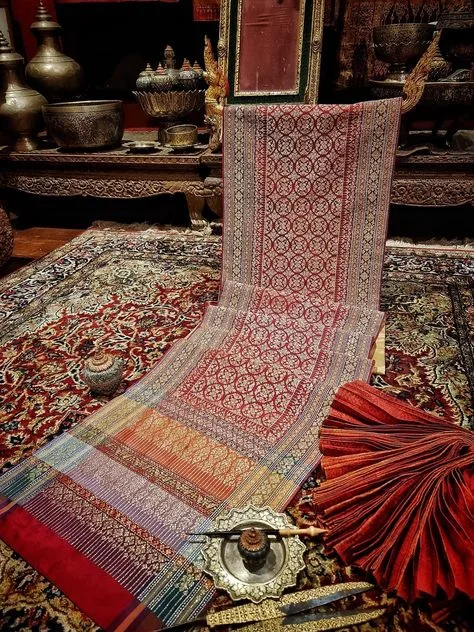
Pha Thai is a cultural treasure of Thai handcraft: valued for its fibers, weaving techniques, and motifs that belong to each region. From highland jok borders to Isan mudmee and southern raised weaves, the cloth speaks of climate, ceremony, and community pride.
Travelers often meet Thai textiles first as Chut Thai silk or a market scarf. Look closer and the same tradition becomes a language: cotton for daily breathability, silk for shine and occasion, and contemporary cuts that carry heritage into soft power on the world stage.
ThailandLover curates this guide so you can recognize what you see: and respect the makers behind the pattern.
“Every motif has a place.
Every place has a hand.”
Across Thailand
Types & Identity by Region
ประเภทและเอกลักษณ์ผ้าไทยตามภูมิภาคFour regions, four dialects of cloth: still living in village looms, festivals, and formal dress. ThailandLover maps the makers, places, and patterns behind each one.
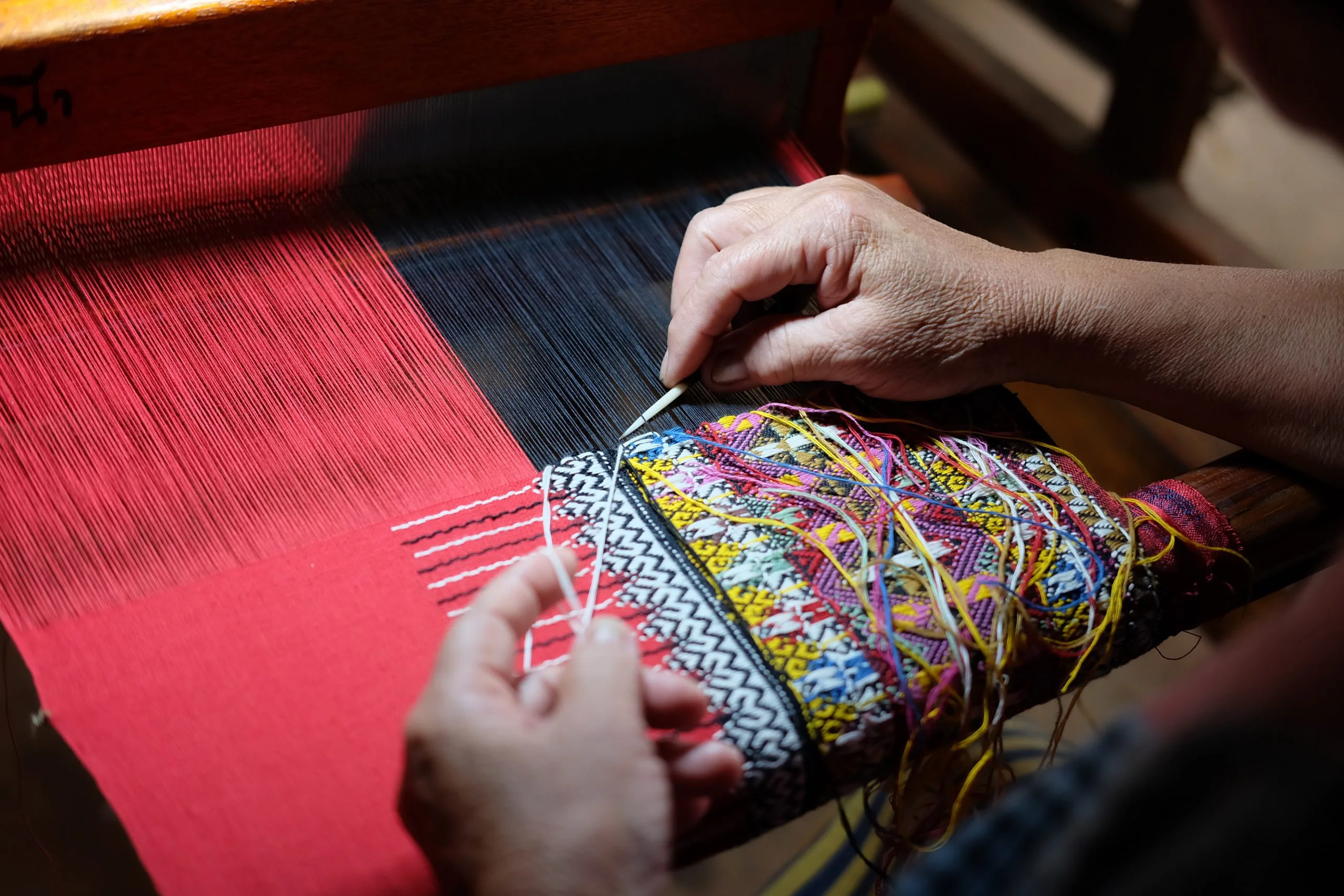
The North · Lanna
ภาคเหนือ · ดินแดนล้านนาAcross the upper North’s eight provinces: Chiang Rai, Phayao, Lamphun, Lampang, Phrae, Nan, Chiang Mai, and Mae Hong Son. Highland cloth still carries the quiet authority of Lanna belief.
Among the Tai Yuan (also called Tai Yonok, or khon mueang) and the Tai Lue, weaving remains a living inheritance. Tai Yuan women keep weaving sin teen jok, the celebrated discontinuous-supplementary-weft border. Famous looms still gather in Mae Chaem, Chiang Mai, and Long district, Phrae. Lamphun’s raised-flower silk adds another layer of northern polish: intricate, luminous, and ceremonial.
Tai Lue communities continue forms and motifs passed down through generations. Their skirts may combine jok, koh (interlaced), and khit techniques, yet the signature that made Tai Lue cloth widely known is koh weaving in zigzag “flowing water” patterns (lai nam lai). Look for it in Chiang Kham, Phayao; Chiang Khong, Chiang Rai; and Wiang Sa, Nan. Motifs such as koh yot (aspiration and success) and the spider pattern (unity) turn geometry into meaning.
Central Thailand
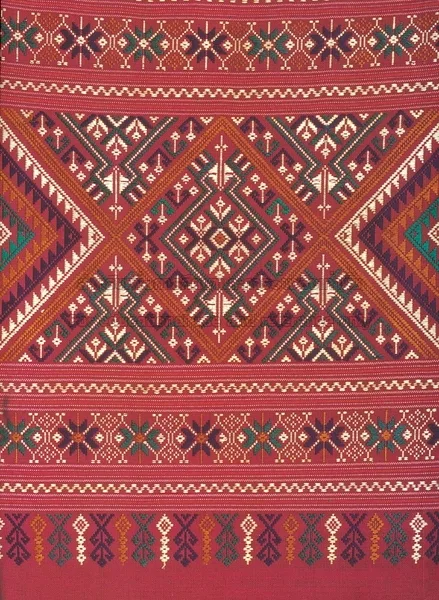
ภาคกลางFrom the upper plains of Phitsanulok, Phichit, Uttaradit, and Sukhothai to the lower belt of Uthai Thani, Chai Nat, Suphan Buri, Saraburi, Lopburi, Nakhon Pathom, Ratchaburi, and Phetchaburi, central cloth is a map of migration as much as of river life.
Tai Yuan and Tai Lao communities resettled here over centuries of conflict and population movement. Among Tai Lao lineages you still meet Phuan, Song (Thai Dam), Phu Thai, Khrang, and others: each keeping a local voice at the loom. Women’s weaving culture thrives in jok foot borders (teen jok) and khit ornament for festival skirts and household textiles: pillows, blankets, handkerchiefs, and pha khao ma.
Even as livelihoods change, weaving often remains the craft beside rice farming. Color and motif still tell origin: silk jok from Uthai Thani and Chai Nat; sin mat kan, teen jok, and yok muk from Saraburi and Ratchaburi; Thai Phuan mudmee in Lopburi; Thai Dam watermelon-motif cloth in Phetchaburi; and Sukhothai’s Hat Siao elephant-pattern pha khao ma in khit. A practiced eye can often name the village from the palette alone.
Isan
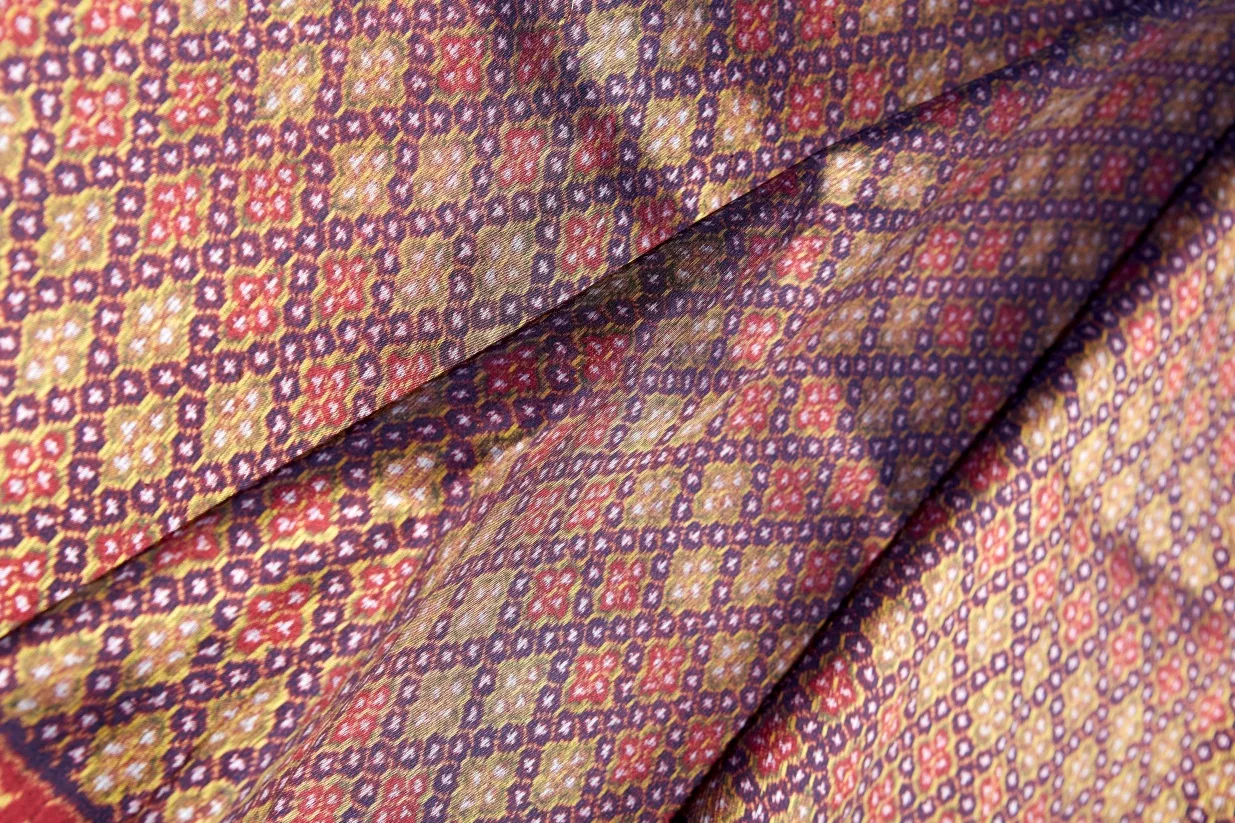
ภาคตะวันออกเฉียงเหนือAlong streams, ponds, and rivers, Isan villages grew where the land could feed a community, and where women’s weaving became almost every community’s quiet inheritance.
Thai people of Lao ancestry form the region’s largest cultural fabric, spread across many provinces. Each group and lineage keeps a weaving character of its own: pattern, rhythm, and color that feel unmistakably local. The craft is not a museum skill here; it is still how celebration and everyday dignity take shape on the body.
Isan’s most celebrated cloth includes silk mudmee (ikat) for wrap skirts, and the radiant khit of praewa: once worn as a diagonal wrap or sabai, now also cut into contemporary garments. Alongside them, hole cloth and cotton–silk blends dyed with local plants keep the older chemistry of place alive. Geometry here is not decoration alone: it is belonging you can wear.
The South
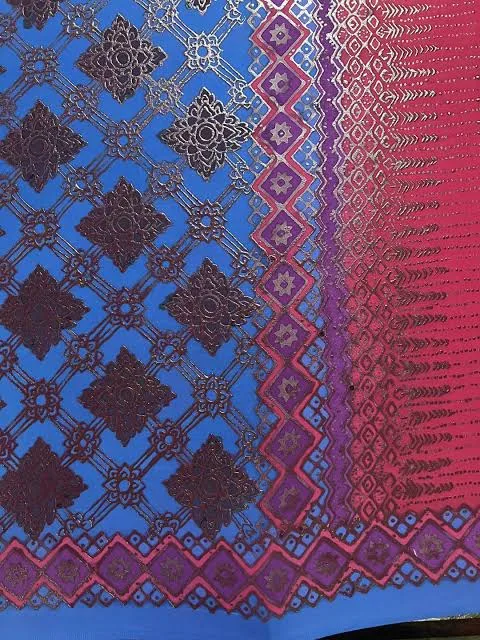
ภาคใต้The South holds several storied weaving centers, especially for raised cloth threaded with silver and gold: a luminous craft many believe was shaped by early Muslim and Arab trade along the coast.
Silver-and-gold yok cloth later became prized among the central kingdom’s elite. Southern governors and officials encouraged households and heirs to weave in quantity, above all in Nakhon Si Thammarat, Songkhla, and Phumriang in Chaiya, Surat Thani. Those centers were once famous throughout the realm: admired by Ayutthaya nobles, and still sought from Thonburi into the Rattanakosin era. Koh Yor cloth and Malay-influenced ornament complete the southern vocabulary of coastal elegance.
Today, many pieces of Nakhon city raised cloth have been donated to the National Museum in Nakhon Si Thammarat, where textile rooms let the public meet that brilliance up close. Yet most renowned master weavers have passed on, and few fully carry the knowledge forward. The looms no longer run at the old abundance, which makes every surviving length feel rarer, and more worth seeing with care.
Touch & purpose
Fibers & Character
เส้นใยและคุณสมบัติหลักWhat the cloth feels like: and how makers carry it into modern life.
Cotton
ผ้าฝ้ายEveryday · Breathable
Soft, durable, and cool against the skin: the fiber of daily wear, work cloth, and many village wraps.
Silk
ผ้าไหมOccasion · Lustre
Lustrous, luxurious, and lasting: favored for formal dress, ceremony, and evening Chut Thai silhouettes.
Contemporary
การต่อยอดร่วมสมัยFashion · Soft power
Thai cloth now reshapes into wearable fashion: natural-dye pieces and modern cuts that travel from village loom to global stage.
On the loom
How Thai Cloth Is Woven
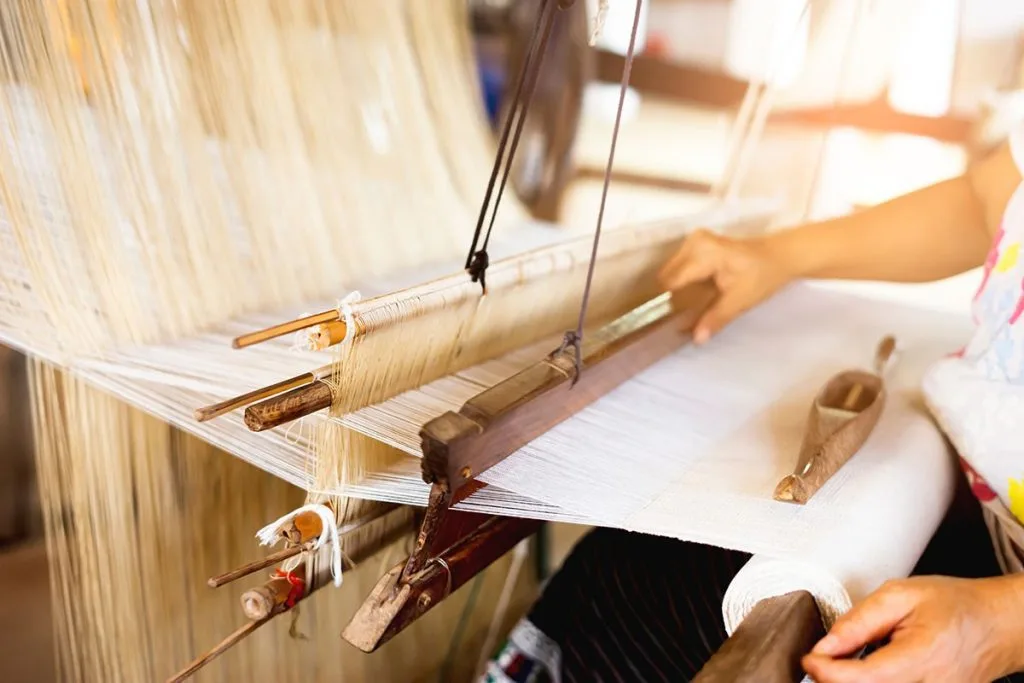
การทอผ้าไทยNatural fibers: cotton and silk: cross as warp and weft on a loom called hook or kee, becoming cloth for dress, ritual, and tradition.
Thai weaving is a traditional craft that interlaces natural yarns lengthwise and crosswise through the loom. The resulting cloth serves everyday dress and sacred or ceremonial use alike.
Before pattern appears, makers select yarn, degum silk with natural alkaline water, and dye with plants and insects: lac and tree bark among them: so color and fiber grow from the same landscape.

Path Yen
เส้นยืนStretched taut on the loom as the vertical foundation: the structure every pattern builds on.
Path Pung
เส้นพุ่งPassed across the warp in sequence: creating motif, density, and the cloth’s lasting strength.
Fiber ready
การเตรียมเส้นใยSelecting silk or cotton, degumming, and natural dyeing: lac, bark, and local color knowledge.
Signature craft
Techniques & Motifs
เทคนิคและลวดลายเด่นตามภูมิภาคHow pattern is made: needle-lifted jok, pre-dyed mudmee, khit bands, and gold-thread yok.
Jok & Tai Lue
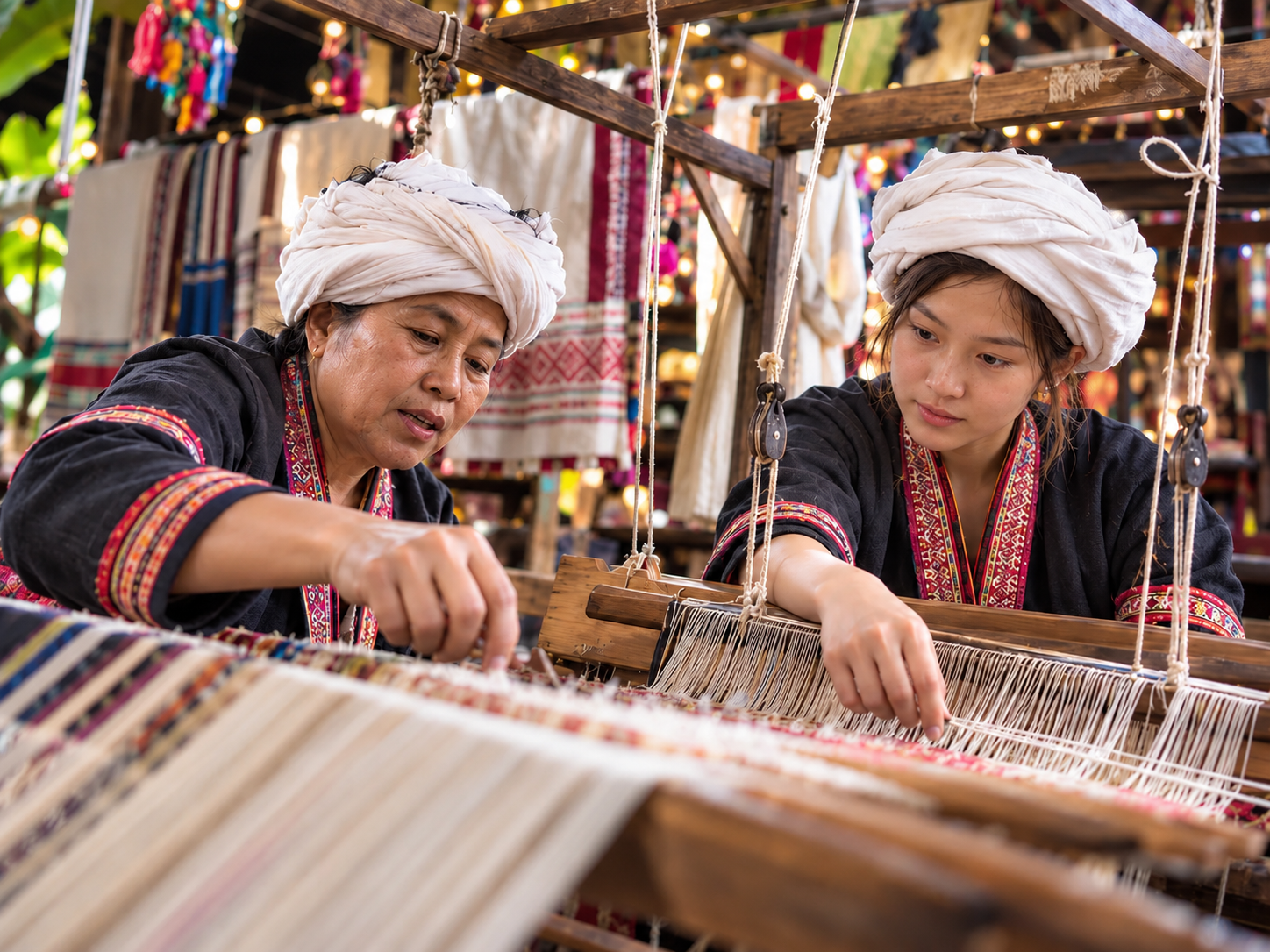
ภาคเหนือSin teen jok: as at Ban Hat Siao, Sukhothai: uses a needle or porcupine quill to lift warp threads and insert colored weft. Tai Lue weaving in Chiang Rai keeps ancient motifs such as koh yot and spider patterns.
- Supplementary weft raised by hand tools
- Ceremonial skirt borders with dense color
- Tai Lue storytelling motifs of success and unity
Mudmee, Praewa & Khit
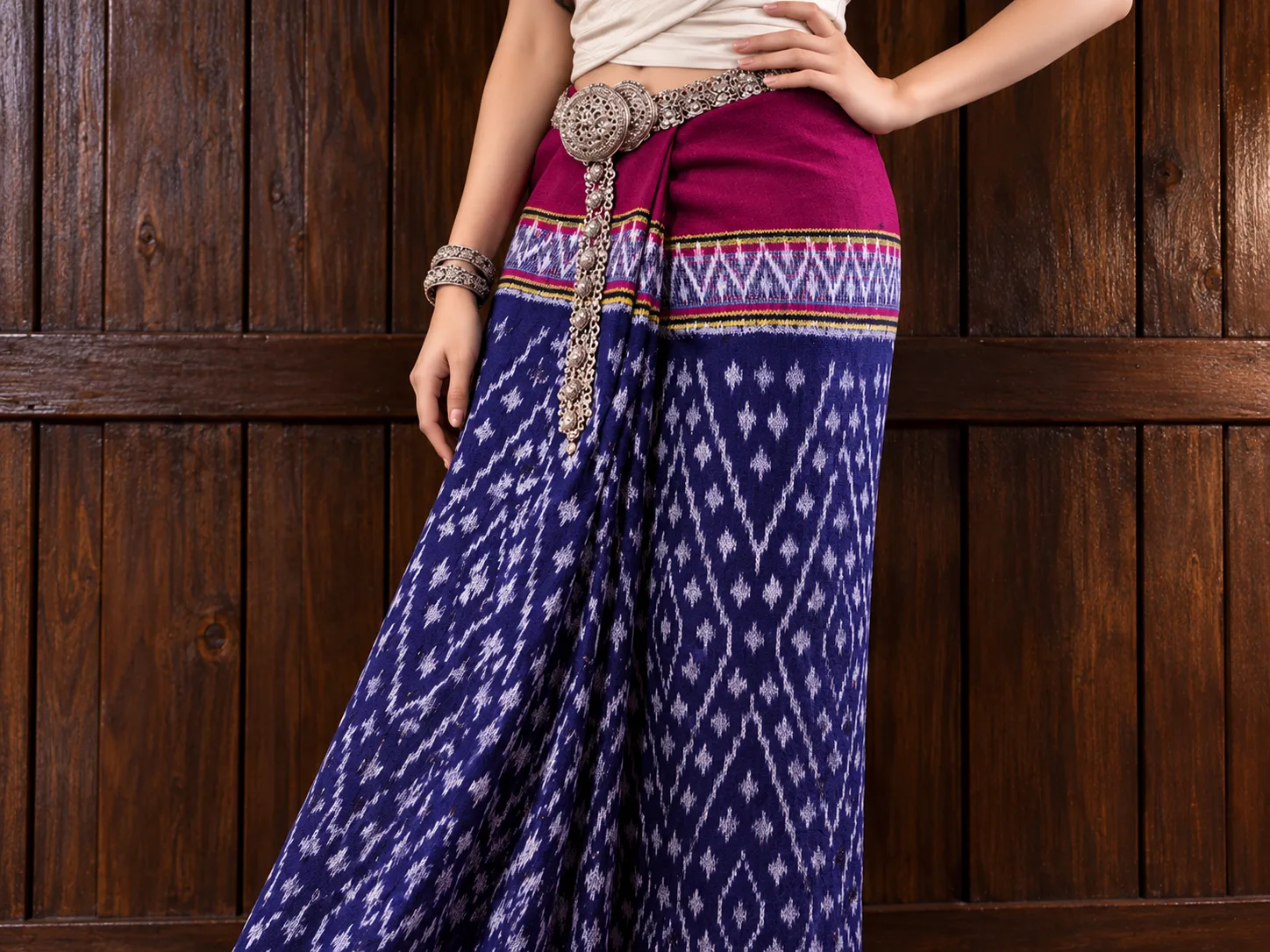
ภาคอีสานMudmee ties and dyes yarn before weaving so the pattern arrives already in the thread. Praewa is a richly patterned shoulder or diagonal wrap. Khit adds extra weft to run a motif as a continuous band.
- Ikat resist dyeing before the loom
- Ceremonial wraps of intricate geometry
- Continuous band motifs across the cloth
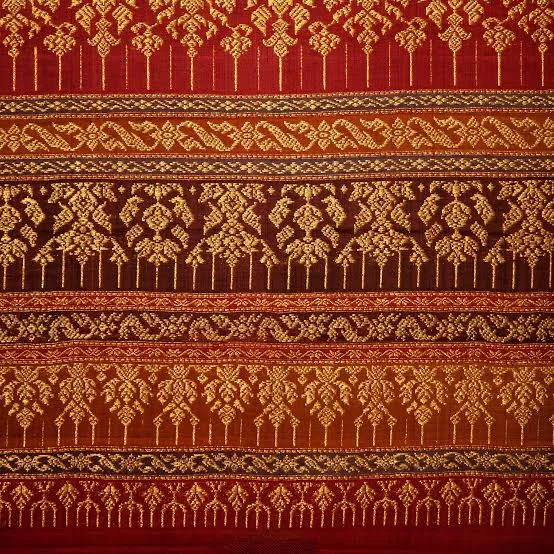
Yok Raised Cloth
ภาคใต้ · ผ้ายกYok uses extra shafts and supplementary weft: sometimes silver or gold metallic thread: for courtly shine. Nakhon Si Thammarat’s city cloth is a classic example of this southern excellence.
- Multi-shaft loom control
- Metallic thread for ceremonial lustre
- Coastal and Malay-influenced ornament
When you buy, prefer pieces with a maker’s story. Pattern without context is decoration; pattern with place is heritage ThailandLover wants to help you see.
Keep exploring
From Cloth to Chut Thai
Once you know the textile, meet the dress: formal styles, regional looks, and where travelers rent with care.