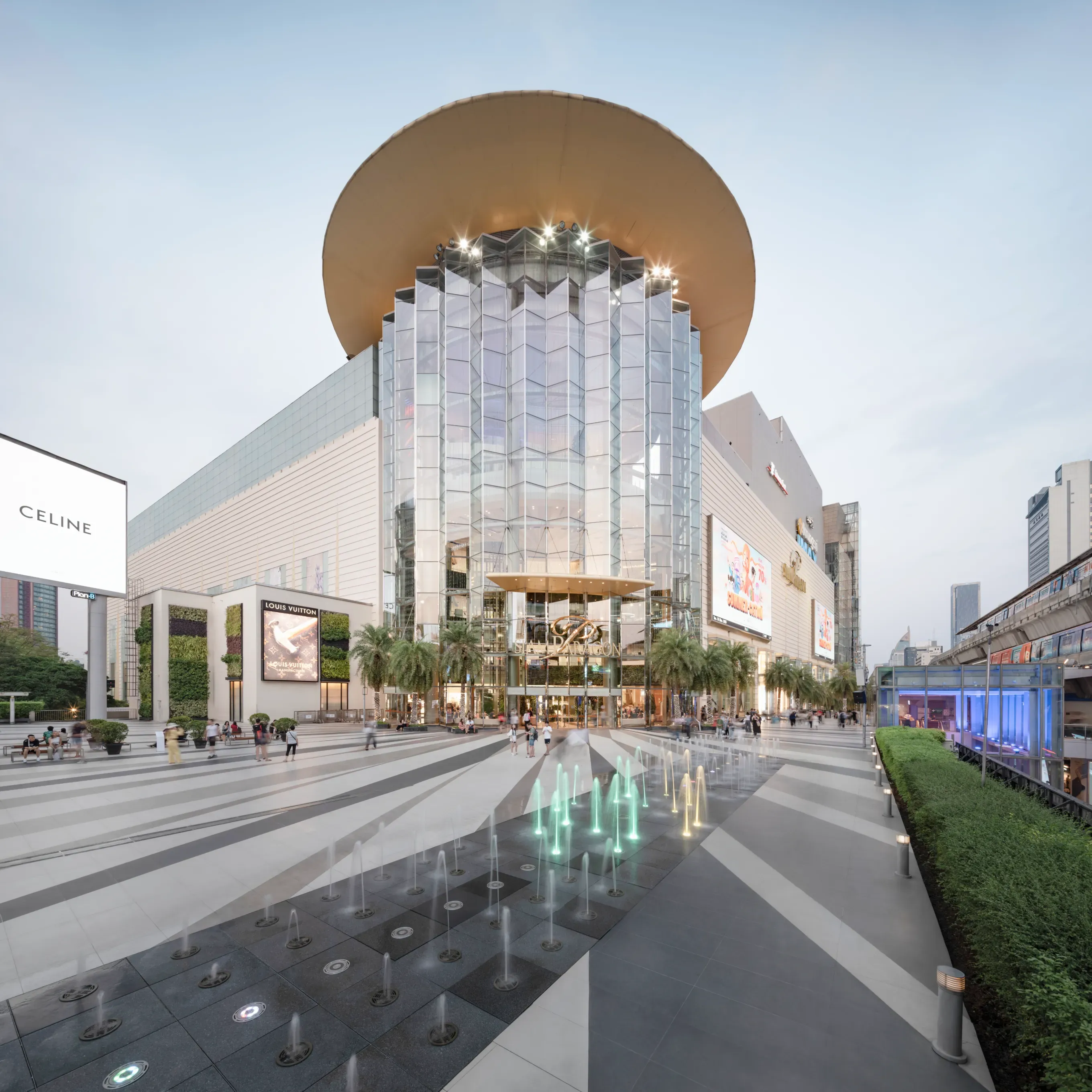
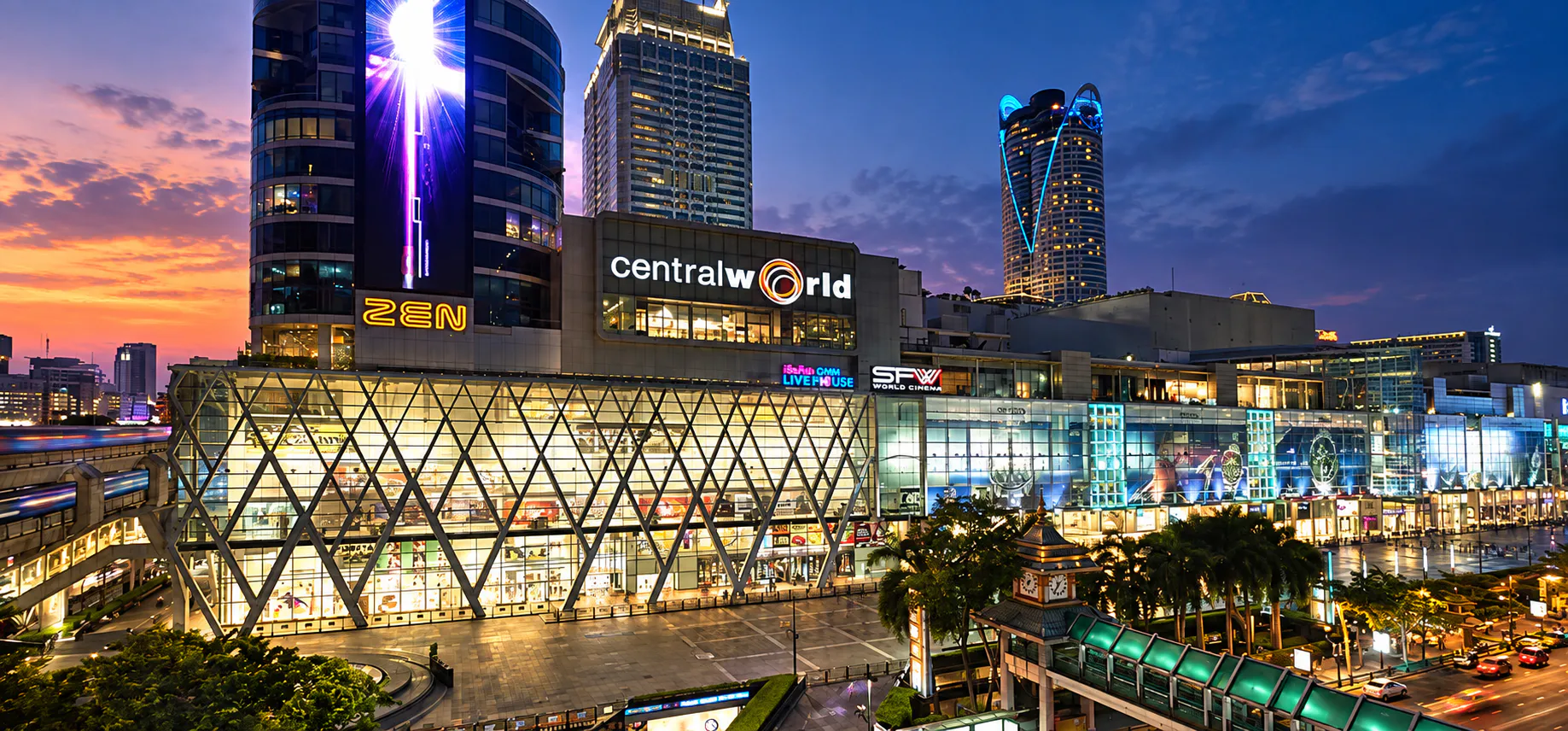
On the Chao Phraya, Bangkok is Thailand’s living capital — gilded royal temples, canal ferries, street-food alleys, and skyline neon in one restless city that still sets the rhythm of the kingdom.
CapitalOf Thailand
50Districts
1,568.7 km²Area
21 April 1782City pillar raised
01
Geography & Climate
Two Banks of the Chao Phraya
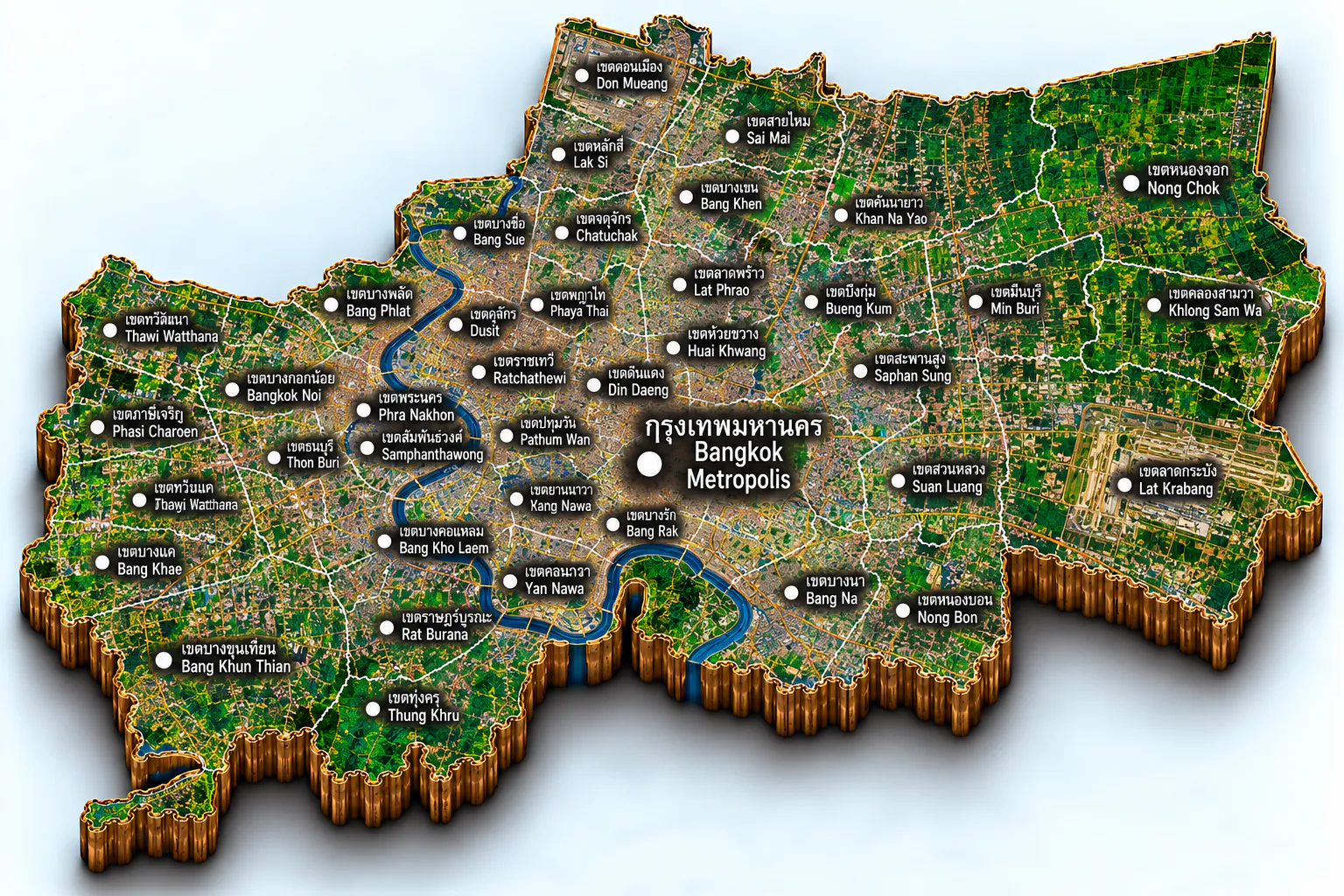
Bangkok sits on the Chao Phraya River delta in Central Thailand — about 1,568.7 square kilometres of flat, low-lying land that began as swamp, orchard, and canal country. The river winds south through the metropolis and meets the Gulf of Thailand roughly twenty-five kilometres beyond the historic core, dividing everyday Bangkok into the Phra Nakhon bank to the east and the Thonburi bank to the west.
Today Krung Thep Maha Nakhon is a special administrative area of fifty districts, not an ordinary province. Dense streets crowd the river’s old heart, while greener outer districts still open toward Nonthaburi, Pathum Thani, Chachoengsao, Samut Prakan, Samut Sakhon, and Nakhon Pathom. Average elevation is only about 1.5 metres above sea level, so monsoon water and urban heat shape the city’s rhythm as much as its skyline.
The climate is tropical savanna under the Asian monsoon. Cooler, drier air settles roughly from November to February; March to May is the hot stretch; southwest rains usually arrive from mid-May through October, with September often the wettest month.
Best time: November – February for clearer skies and more comfortable temple and riverfront days; May – October for lush green-season travel and quieter streets — pack for afternoon showers.
geography.webp
02
History & Heritage
From Thonburi to the City of Angels
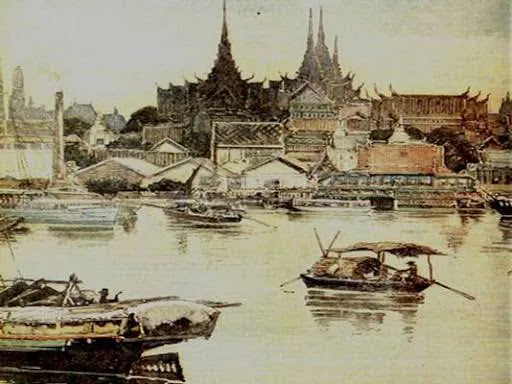
Long before skyscrapers, Bangkok was a riverside trading post near the mouth of the Chao Phraya under Ayutthaya. After Ayutthaya fell in 1767 (B.E. 2310), King Taksin made the west bank his capital as Thonburi. In 1782 (B.E. 2325), King Phutthayotfa Chulalok (Rama I) founded the Chakri dynasty and chose the eastern bank instead — a stronger defensive site, with the river itself as a western moat. The Chinese community living on the palace ground was moved to Sampheng, today’s Chinatown corridor, and the first capital core took shape as Rattanakosin Island — roughly 1.8 square kilometres inside the old Khlong Lod line from Pak Khlong Talat toward the river near today’s Phra Pin Klao Bridge.
The City Pillar was raised on 21 April 1782, the date still remembered as Bangkok’s foundation as capital. The Grand Palace rose on the east bank; by 1785 (B.E. 2328) the royal compound was ready for a full coronation and the celebration of the new city. Rama I bestowed the celebrated ceremonial name that begins Krung Thep Maha Nakhon — later refined by King Mongkut (Rama IV), who changed bowon (บวร) to amon (อมร) in the famous phrase Amon Rattanakosin. Across the water, Wat Arun kept watching from the Thonburi shore, a landmark of the river capital’s twin banks.
Through the nineteenth and twentieth centuries Bangkok became the stage of Siam’s modernization — canals, roads, ministries, and later a restless political heart. In December 1972 (B.E. 2515), Phra Nakhon and Thonburi were merged into Krung Thep Maha Nakhon, a special local administration unlike Thailand’s two-tier provincial system. Governed today under the Bangkok Metropolitan Administration, the City of Angels remains the kingdom’s centre of government, culture, commerce, and first impressions — still growing outward from the small river island where Rattanakosin began.
King Taksin makes the west bank his capital as Thonburi, after Ayutthaya falls.
Rama I founds Rattanakosin on the east bank and raises the City Pillar on 21 April.
The Grand Palace is ready for a full coronation of the new city.
Phra Nakhon and Thonburi merge into Krung Thep Maha Nakhon.
history.webp
03
Top Attractions
Places Not to Miss
Four parts of the city. The cards are worth crossing town for. The lists underneath are the next layer. Most of them sit on the BTS, the MRT, or a river pier — the whole map is in Getting Around.
Rattanakosin & the River
The palace island and the east-bank temples. Start early, cover shoulders and knees, and walk between them.
Thailand's most sacred temple sits inside the Grand Palace. Built in 1782 when Bangkok became the capital, it holds the Emerald Buddha. Shoulders and knees must be covered. The Wat Phra Kaew guide has the landmarks, the map, and the etiquette. Arrive by express boat at Tha Chang, or by MRT to Sanam Chai. More sacred places are in Temples & Heritage.
Wat Phoวัดโพธิ์
The Reclining Buddha and a working traditional massage school, just south of the palace. The mother-of-pearl soles of the feet are the detail most people walk past. Tha Tien pier is at the gate: the cross-river ferry to Wat Arun leaves from here, and the express boat stops on the way from the Grand Palace.
Wat Saket (Golden Mount)วัดสระเกศ · ภูเขาทอง
A man-made hill and golden chedi above the old roofscape. The climb is short, and the light is kindest late in the day.
City Pillar Shrineศาลหลักเมือง
The lak mueang raised on 21 April 1782, a short walk from the palace field. Bangkok still treats this shrine as the mark of its foundation.
Museum SiamมิวเซียมสยามA modern telling of Thai history in a former ministry building. Easy to pair with a palace morning.
Sanam LuangสนามหลวงThe royal field in front of the Grand Palace, kept open for ceremonies and, by evening, a wide pause in the old city.
Wat RatchabophitวัดราชบพิธA small royal temple known for its porcelain-clad exterior and a quiet cloister.
Wat Suthatวัดสุทัศน์One of the city’s great Buddha images, facing the Giant Swing on the old city axis.
Yaowarat & Old Markets
Chinatown after dusk, and the markets that still open before the rest of the city.
Yaowarat Roadถนนเยาวราช
Chinatown’s neon spine of gold shops and night food. Come hungry, and stay on foot — the useful stops are MRT Wat Mangkorn and the Ratchawong boat pier, not a taxi in the evening crush. What to order on this street is in the Bangkok street-food guide, and the night that follows sits in Nightlife.
Wat Mangkon Kamalawatวัดมังกรกมลาวาส
The city’s main Chinese Buddhist temple, thick with incense. At Chinese New Year the street in front of it barely moves.
Pak Khlong Talatปากคลองตลาด
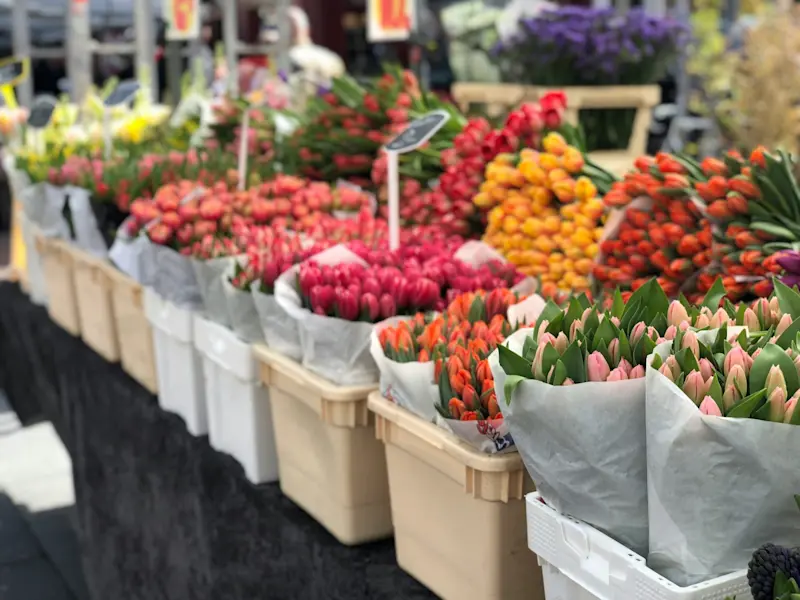
The flower market beside the river, already busy before dawn. Orchids and marigolds first, coffee when the lanes wake up.
Sampeng Laneสำเพ็ง
A covered wholesale lane of fabrics, snacks, and festival goods. It is narrow because it is still a place of trade.
PhahuratพาหุรัดLittle India, one lane west of Sampeng, for textiles and South Asian food.
Talat Noiตลาดน้อยA riverside pocket of shophouses just south of Yaowarat, quieter than the main neon road.
Wat TraimitวัดไตรมิตรHome of the three-metre Golden Buddha, at the edge of Chinatown near Hua Lamphong.
Siam, Sukhumvit & Chatuchak
The modern city: a weekend market, a quiet house museum, and the parks that cut the grid.
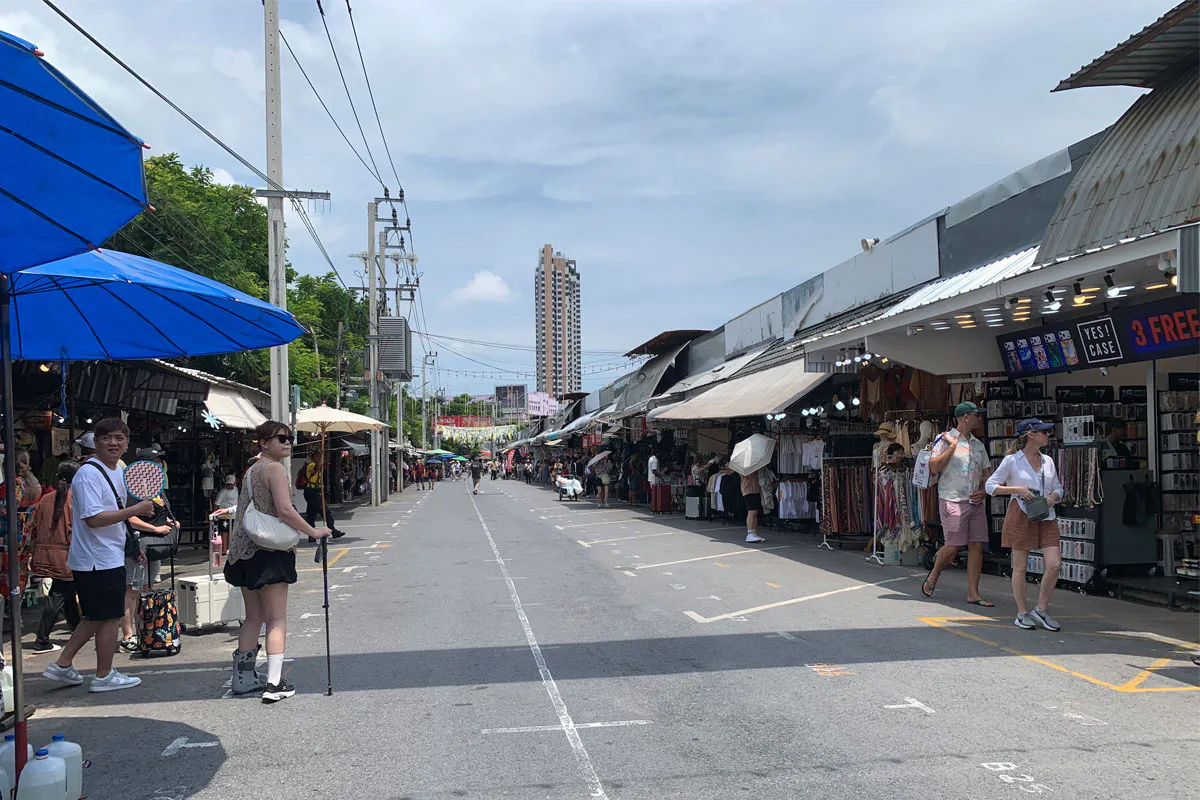
The city’s giant weekend market, open Saturday and Sunday. Go early, pick one zone, and leave before the afternoon heat. BTS Mo Chit and MRT Kamphaeng Phet both land at the gates. The market guide covers the other bazaars, including Or Tor Kor next door.
Jim Thompson Houseบ้านจิม ทอมป์สัน
Teak houses in a garden by the khlong, built by the American who revived Thai silk. A calm hour between the malls. The gate is a short walk from BTS National Stadium.
Lumphini Parkสวนลุมพินี
The central lawn and lake. Best when the gates open and the city has not yet arrived in force. BTS Sala Daeng and MRT Si Lom and Lumphini all reach a gate.
Bangkok Art and Culture Centreหอศิลปวัฒนธรรมแห่งกรุงเทพมหานคร
Contemporary art on a spiral ramp, beside the National Stadium BTS station.
Benjakitti ParkสวนเบญจกิติBoardwalks and a lake beside the Queen Sirikit National Convention Center. A newer green cut through the office district.
Erawan ShrineศาลพระพรหมเอราวัณThe Brahma shrine at Ratchaprasong, still visited between the department stores.
Mahanakhon SkyWalkคิงเพาเวอร์ มหานครBangkok's pixel tower, with an open glass floor above 310 metres and a full sweep from Silom to the Chao Phraya. The SkyWalk story has the floors, the sunset, and how to go.
Wat BenchamabophitวัดเบญจมบพิตรThe Marble Temple in Dusit, known for its white marble ordination hall and a courtyard of Buddha images.
Thonburi & the Khlongs
The west bank is still the easiest place to see Bangkok from the water.
Wat Arunวัดอรุณ
The Temple of Dawn on the Thonburi bank. See the prang from the river, then cross and climb it.
Artists House (Baan Silapin)บ้านศิลปิน
A wooden canal house at Khlong Bang Luang, where painters work and long-tail boats still stop.
Taling Chan Floating Marketตลาดน้ำตลิ่งชัน
A weekend market on the western khlongs. Closer and quieter than the famous markets outside the city. Saturday and Sunday.
Wat Kalayanamitวัดกัลยาณมิตร
A riverside temple with an enormous Buddha. Pair it with the ferry crossing to Wat Arun.
Khlong Bangkok Noiคลองบางกอกน้อยThe canal behind the old city, still used by long-tail boats and local ferries.
Siriraj Bimuksthan Museumพิพิธภัณฑ์ศิริราชพิมุขสถานThe old Thonburi railway station, now a museum of the river port, beside Wang Lang market.
04
Local Flavours & Food
Street Woks and Tiny Bowls
Bangkok eats on the pavement and in the shophouse. Learn these six, then follow a night market instead of a reservation. The Bangkok street-food guide walks Yaowarat and the other night stalls; How to Order Thai Food and How Spicy Is Spicy cover the table once you sit down. If you want the wok in your own hands, the cooking schools are in the city, not upcountry.
Kuay Teow Reuaก๋วยเตี๋ยวเรือ
Boat noodles in a dark, intense broth, served in small bowls so you order another. Victory Monument and the old moat lanes still do them properly.
Stir-fried rice noodles that became a national dish in this city. Trust a street wok more than a photograph on a laminated menu. The dish guide sets it beside the curries and regional plates you will meet once you leave the capital.
Tom Yum Goongต้มยำกุ้ง
Hot-and-sour prawn soup. Bangkok bowls are often richer than the clear southern pot.
Mango with warm sticky rice, a hot-season dessert. Good stalls sell through their tray by afternoon. It sits with the other sweets — thong yip, foi thong, and the banana-leaf parcels — in the sweets guide.
Hoi Todหอยทอด
Crispy mussel or oyster omelette, a Yaowarat night plate with bean sprouts and chilli sauce.
Kuay Japก๋วยจั๊บ
Peppery rolled-noodle soup, often with offal. An old-city breakfast more than a dinner show.
Street-food neighbourhoods
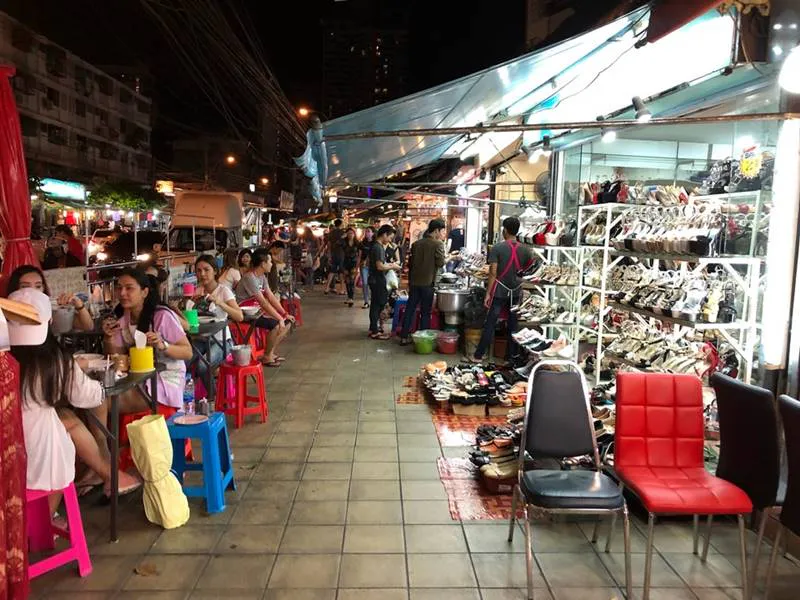
YaowaratเยาวราชFrom late afternoon into the night, carts and shophouses pack Yaowarat Road with steam, wok fire, and neon — Chinese-Thai classics made for sharing.
Banthat Thong – Sam YanบรรทัดทองA student stretch from Rama I toward Charat Mueang: dry rice porridge, fiery noodle bowls, and sweet stops when the heat peaks.
Talat PhluตลาดพลูAn old Thonburi market neighbourhood of savoury legends and traditional sweets, open from early morning and often late.
Pratu Phi – Samran RatประตูผีAn old quarter near the Giant Swing, known for pad Thai and deep noodle bowls. Come in the evening, when the carts fire up.
San Chao Pho Suea – Sam Phraengศาลเจ้าพ่อเสือPhra Nakhon counters around the Tiger God Shrine: rad na, khanom bueng, old-style coffee, and toast stalls.
Talat Nang Loengตลาดนางเลิ้งA daytime community market of court-inspired dishes, Thai sweets, and old family stalls.
Si Yanศรีย่านAn old Dusit strip along Nakhon Chai Si and Samsen — beef-ball noodles, yen ta fo, satay, and late rice porridge.
Bangkok is a market city, not a single-craft province. Buy from the neighbourhood that actually trades the thing, and pack small. Weekend finds are in Markets & Bazaars; the malls along the BTS are a different kind of shopping, mapped in Shopping Malls & Markets.
Chatuchak textiles and homewareWeekend cotton, ceramics, and objects you will not see in a hotel mall. Measure the suitcase before the second lap.
Dried fruit and snacksMango, durian, and banana chips from Or Tor Kor or a supermarket you trust. Lighter than another keychain, and closer to a real gift.
Herbal balms and spa oilsThe practical souvenir: mosquito balm, inhalers, and scented oils from a pharmacy or a reputable spa shop.
Thai silkScarves and silk by the piece. Jim Thompson is the famous house; Chatuchak sells everyday silk at everyday prices.
Thai tea and coffeeTins of Thai tea mix and local coffee. Heavy on flavour, light enough for a carry-on. What to order cold, in a bag, is in the drinks guide.
The capital celebrates in public. The river, Sanam Luang, and Yaowarat are the stages.
Songkranสงกรานต์
13–15 April
Thai New Year. The old city keeps the rites; much of Bangkok keeps the water. Waterproof the bag you actually need.
Loi Krathongลอยกระทง
Full moon of the twelfth lunar month
Usually November. Krathong float on the Chao Phraya and on park lakes. The riverfront is the one to see.
Yaowarat Chinese New Yearตรุษจีนเยาวราช
Late January or February
Chinatown at its most crowded and most golden. Eat early, then watch the street fill.
Royal ceremoniesพระราชพิธี
Dates vary
Processions and public rites still close parts of the Grand Palace and Sanam Luang. A barricaded field means the capital is doing its oldest job.
Nights, fights, and the river
Bangkok rooftopsSkyline bars, terraces, and riverside rooms. The nightlife guide keeps the list, and the rules for getting home.
Dinner on the Chao PhrayaA meal that moves with the river: temple lights, the breeze, and Thai courses framed by the banks.
Rajadamnern and LumpineeThe two stadiums where Bangkok still stages the national sport. Book through the stadium or a desk you trust.
Events in BangkokConcerts, art, food, and sport on the city calendar. Filter the events guide to Bangkok.
07
Travel Info & Getting There
Plan Your Journey
You are already in the capital. Move by rail, river, and a metered car — driving across the old city is the slow choice. Fares, stations, boats, and apps all live in Getting Around Bangkok.
East of the city, and the airport most long-haul flights use. The calm way in is the Airport Rail Link City Line: it ends at Phaya Thai, where you change to the BTS for Sukhumvit and Silom. Taxis queue outside the hall — ignore offers made at the belt. Stations, the Phaya Thai change, and the fare are on the Airport Rail Link page.
North of the city. Many low-cost airlines land here, so read the ticket before you book a hotel on Sukhumvit. The SRT Red Line runs from the airport station to Krung Thep Aphiwat, where you can continue by MRT. A taxi is simpler if you are not changing trains, but allow time on the northern expressway. The Red Line stations and fares are on the SRT page.
Two lines meet at Siam. Sukhumvit runs from Mo Chit, at Chatuchak, east through Asok and the hotel strips. Silom runs from National Stadium to the river at Saphan Taksin, where the boat begins. Gold, Yellow, and Pink sit on the same map. A stored-value card beats single tickets once you ride more than twice. The BTS page has the station list, the fare, and a trip planner.
The Blue Line is the loop under the old city and Chinatown: Sanam Chai for the Grand Palace, Wat Mangkorn for Yaowarat, Hua Lamphong for the station quarter. It meets the BTS upstairs at Sukhumvit/Asok and at Si Lom/Sala Daeng. Chatuchak is Kamphaeng Phet, one stop from BTS Mo Chit. The Purple Line continues north into Nonthaburi. How to pay, and how to change lines, is on the MRT page.
This is the airport train that matters for Suvarnabhumi. The City Line runs into Phaya Thai and stops at city stations on the way. At Phaya Thai you walk across to the BTS — no taxi bargain if the hotel is on Sukhumvit or Silom. Times and the change are on the Airport Rail Link page. The overview of every line is the Bangkok rail guide.
The Red Line is how Don Mueang joins the city rail map. Ride from the airport station to Krung Thep Aphiwat, then change if you are continuing by MRT. It is also the commuter line through the northern districts, not a tour of the old city. Stations and fares are on the SRT page. Long-distance trains out of the capital use the same station; see ordinary trains before you queue for Ayutthaya or the south.
The express boat is a bus on the river. Piers that matter: Tha Chang for the Grand Palace, Tha Tien for Wat Pho and the Wat Arun ferry, Ratchawong for Chinatown, and Sathorn at Saphan Taksin where the BTS meets the water. An orange-flag boat stops more often. The tourist boat costs more and skips piers. Flags, piers, and the khlong boats are in the waterways section of Getting Around.
A metered taxi is fine once you are outside the airport hall and outside rush hour. Ask for the meter before the wheels move. If the driver refuses, open an app. The last short hop from a station is often a win motorbike taxi, with an orange vest and a price you agree first. Apps are compared in Getting Around, and the win bikes have their own section. Airport touts and the other usual traps are in Travel Tips.
From Tha Tien, beside Wat Pho, a small ferry crosses to Wat Arun in a few minutes. Wang Lang and the Thonburi markets use the same kind of hop. It costs a few baht and is often faster than riding to a bridge. The other public boats — express, khlong, and the tourist flag — are in the same waterways section.
The bus still goes where the rail does not: across the river, into the outer districts, and out toward the neighbouring provinces. The fare depends on the colour of the bus. Read the route board in front of you, and use the bus section of Getting Around before you trust one for a timed plan. Minivans are the other way out of the city, from the ranks at Victory Monument and the bus terminals.
Best time to visit
November – February for clearer skies and easier walking between temples. May – October is greener and quieter, with showers most afternoons. The country-wide seasons are in When to Go.