 1
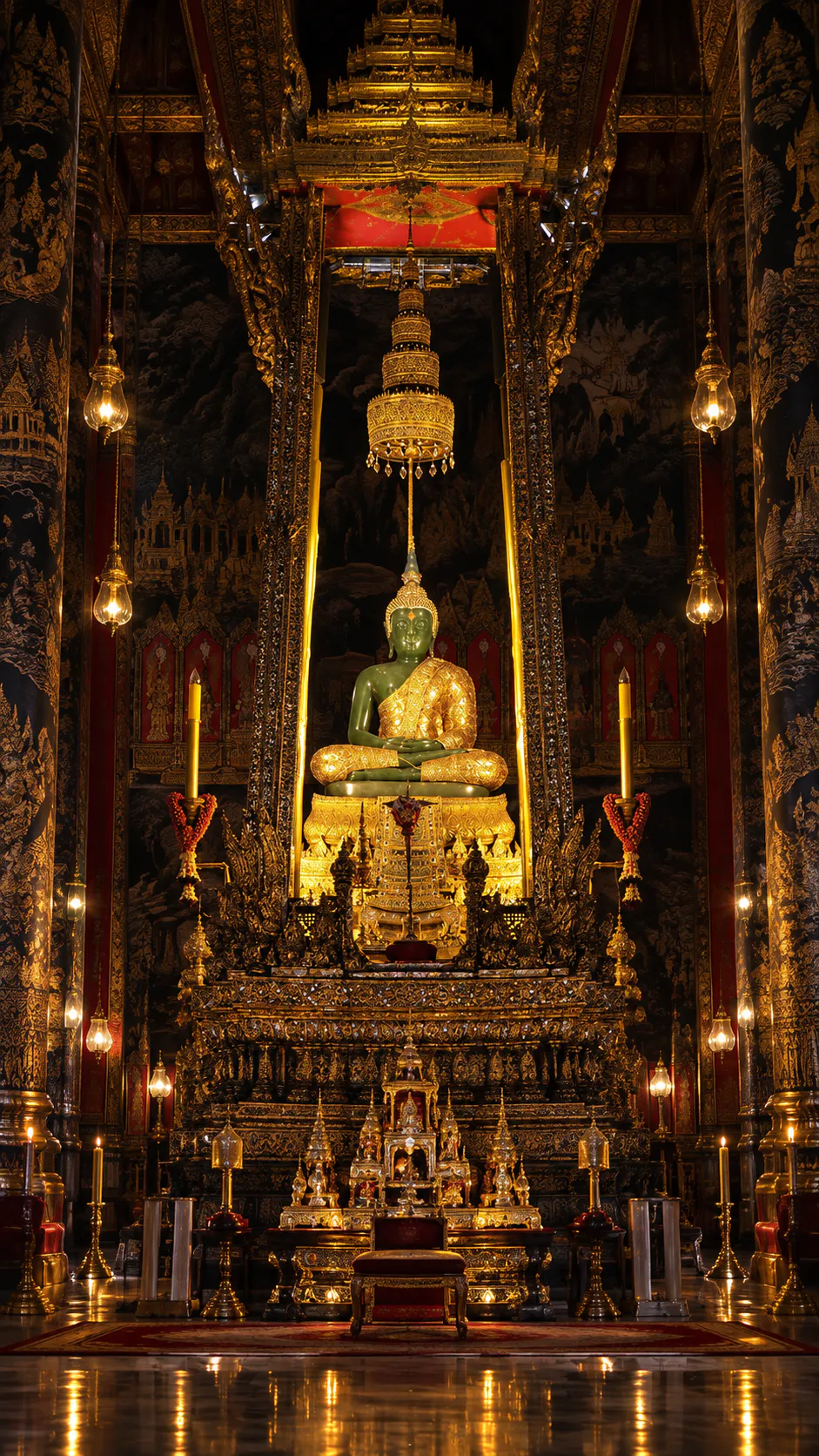
The Emerald Buddha
Thailand’s most sacred Buddha image — carved from a single block of jade, seated high above the altar inside the Ubosot.

 ThailandLover
Contact
Bangkok’s Sacred Treasure
The Temple of the Emerald Buddha
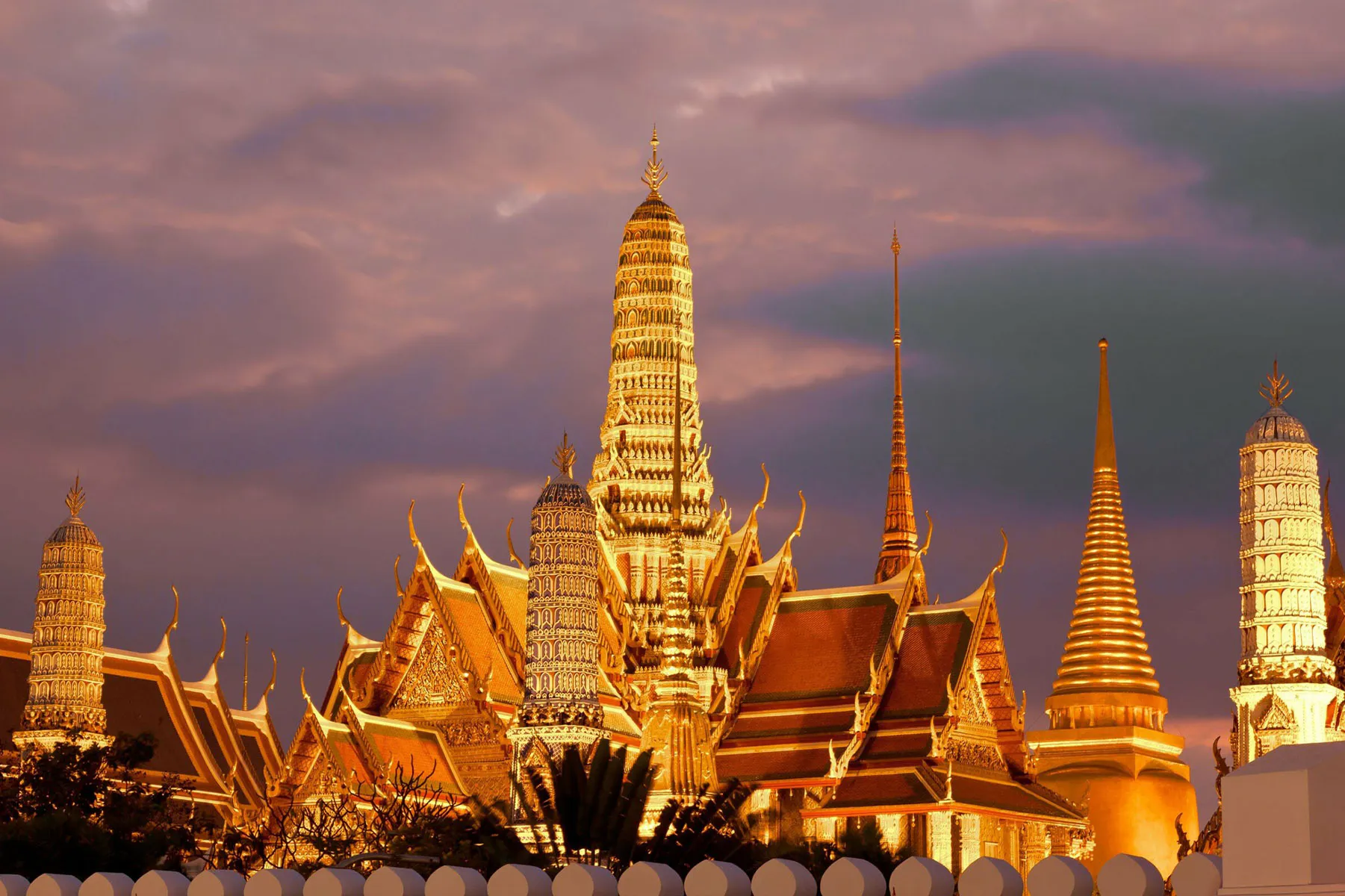
Thailand’s most sacred temple sits inside the Grand Palace complex. Built in 1782 when Bangkok became the capital, Wat Phra Kaew is home to the Emerald Buddha — a national palladium and a living symbol of Thai faith and royalty.
This guide covers the must-see landmarks, a clear temple map, dress code, etiquette, and how to get there — everything you need before you walk through the gates.
“More than a temple, it is the heart of a nation.”
Discover the must-see landmarks within the temple grounds — then study the full labeled map below.
1
Thailand’s most sacred Buddha image — carved from a single block of jade, seated high above the altar inside the Ubosot.
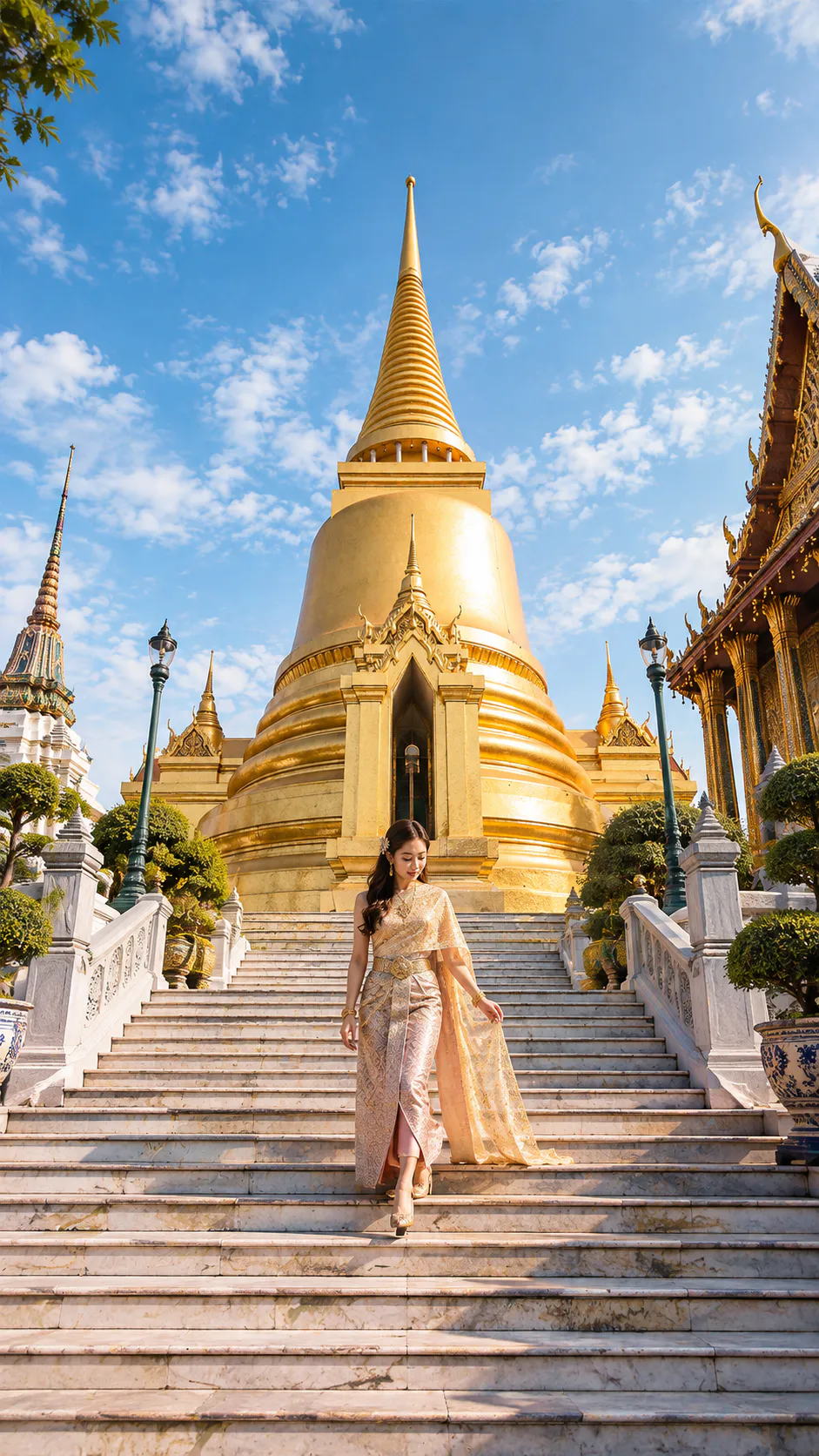 2
The magnificent golden stupa west of the main hall — said to enshrine a relic of the Buddha.
 3
The main ordination hall that houses the Emerald Buddha. Remove shoes before entering; photography is not allowed inside.
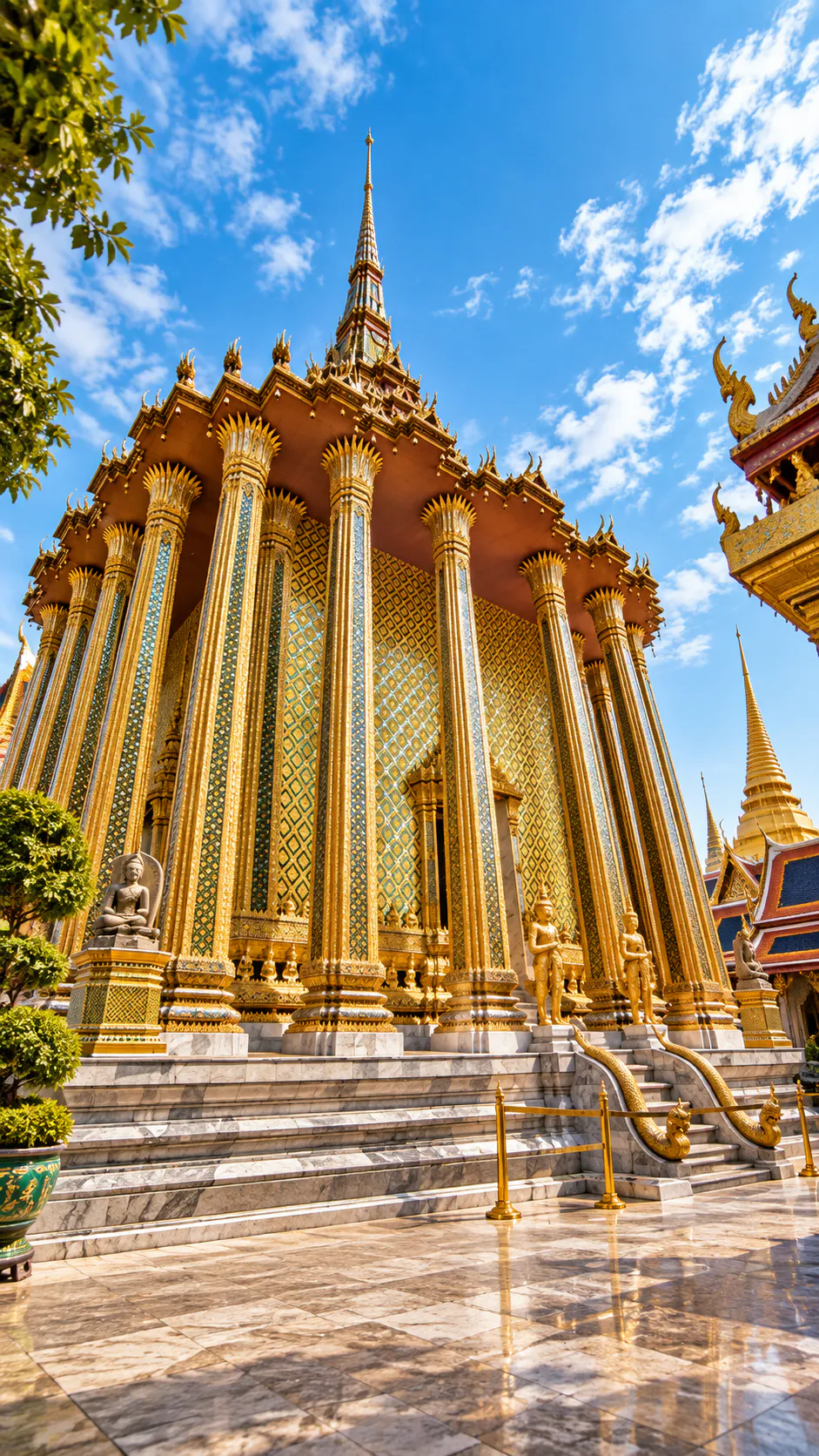 4
A richly decorated library pavilion that keeps sacred Buddhist scriptures — one of the compound’s most ornate buildings.
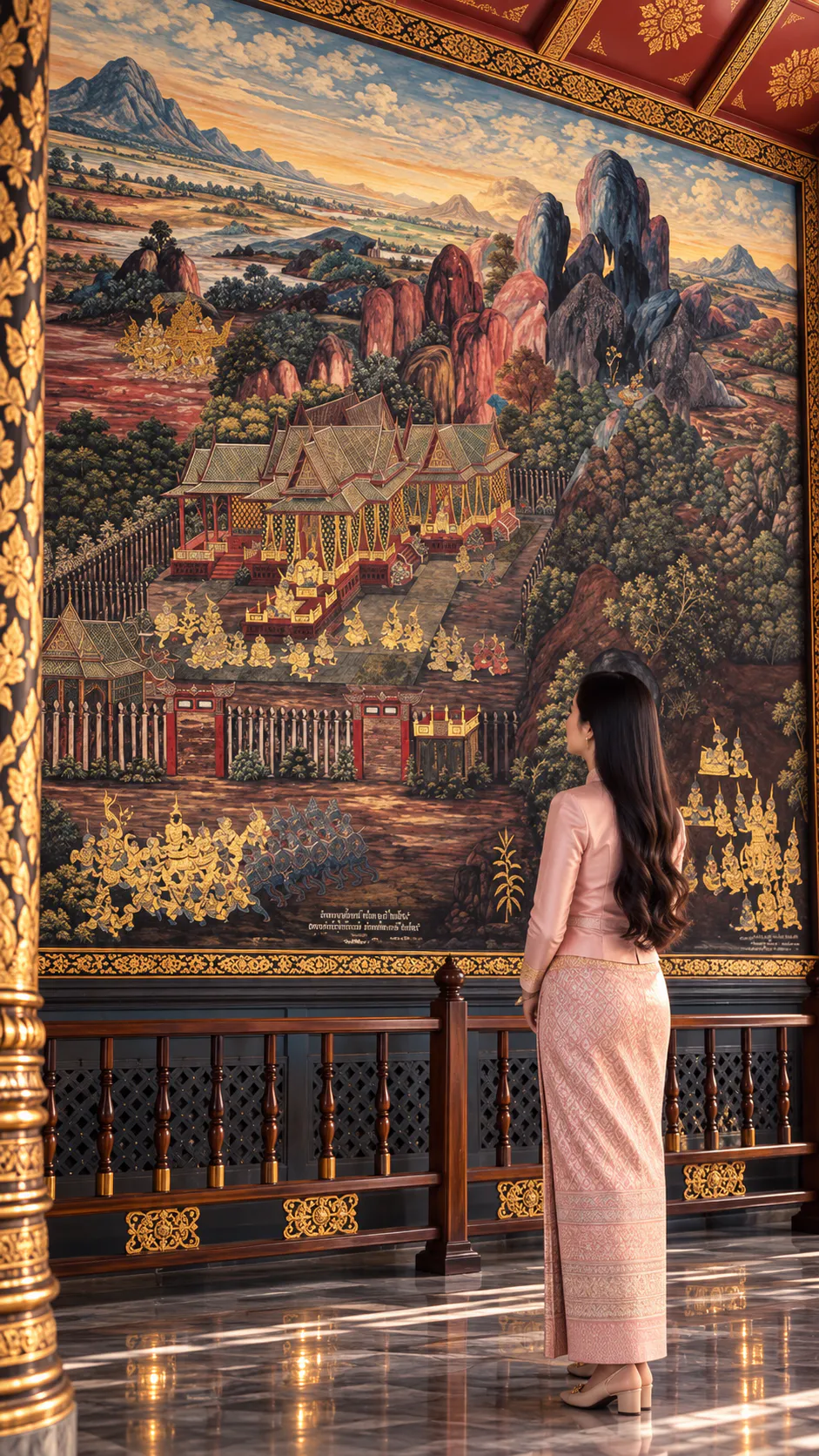 5
178 mural panels along the surrounding galleries telling the Ramakien — Thailand’s version of the Ramayana epic.
 6
Giant yaksha guardians, mythical creatures, and bronze statues stand watch throughout the complex.
Inside the Compound
A labeled isometric guide to the temple grounds — numbered highlights, entrance, and nearby Grand Palace areas. Click to enlarge.
Dress code is enforced at the gate. Arrive prepared and the morning will feel calm instead of stressful.
Sarongs / long pants can usually be rented or bought near the entrance (about 100–150 THB) if your outfit is refused.
Tip: Visit early in the morning to avoid crowds and heat. Pair with Wat Pho next door on the same day.
Royal Chapel of the Grand Palace
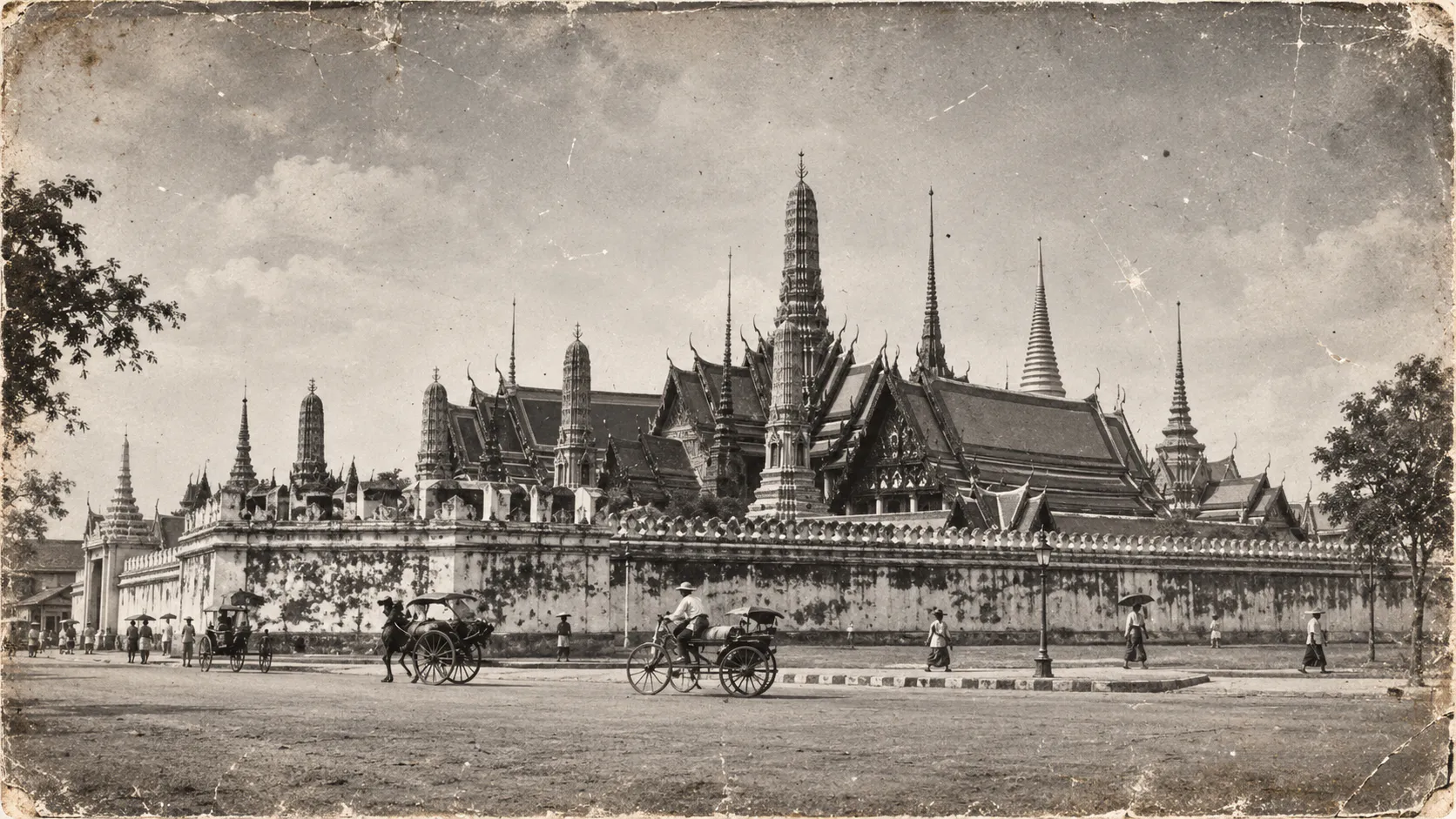
Wat Phra Kaew, officially known as Wat Phra Si Rattana Satsadaram, is the crown jewel of Thai culture and architecture. It stands in the historic heart of Bangkok, within the outer grounds of the Grand Palace, and is the most sacred Buddhist temple in the country.
Here is the story behind this iconic sanctuary — a royal chapel built not as a monastery, but as the spiritual heart of a new capital.
1782–1784
The temple was founded by King Rama I, visionary founder of the Rattanakosin Kingdom, at the same moment he raised the Grand Palace. After moving the capital from Thonburi to the east bank of the Chao Phraya, he wanted a magnificent spiritual heart for his new city — a chapel worthy of a kingdom that would last.
Work began in 1782. The main hall was consecrated around 1784, when the Emerald Buddha was installed on the high altar. From that day, Wat Phra Kaew has stood beside the royal residence as a living symbol of Thai sovereignty, faith, and the Chakri Dynasty.

The Sacred Image
The primary reason for building this complex was to house the Emerald Buddha (Phra Phuttha Maha Mani Rattana Patimakorn) — a deeply revered image carved from a single block of jade. After centuries of journeys through Lanna and Lan Xang, the image was brought from Vientiane to the new capital and placed here as Thailand’s palladium: the Buddha that guards the realm.
It sits high above the altar inside the Ubosot. Three times a year, the King (or a royal representative) changes the image’s seasonal robes — hot, rainy, and cool — a ceremony that binds the monarchy to the nation’s most sacred treasure.
A Royal Chapel
What makes Wat Phra Kaew unique is that no Buddhist monks live here. Unlike a typical Thai wat, it was built exclusively as a royal chapel — the spiritual hall of the King and the royal family — for sacred ceremonies and state rituals rather than daily monastic life.
Monks may be invited for royal rites, but the compound is not a residential monastery. That is why the atmosphere feels different from Wat Pho next door: this is palace ground first, a chapel of the realm, not a village temple.
1782 to the present
True to its royal status, the temple has been restored and meticulously maintained by every monarch of the Chakri Dynasty. A landmark conservation campaign marked Bangkok’s Bicentennial in 1982, when gilding, mosaic, mural, and guardian figures were renewed for a new century of visitors.
With its dazzling golden spires, glass mosaics, Ramakien galleries, and yaksha guardians, Wat Phra Kaew remains an essential wonder for anyone who falls in love with Thailand — a place where history is not only told, but still performed.
“Some places you visit. This place stays with you.”