

National Park · Deep South
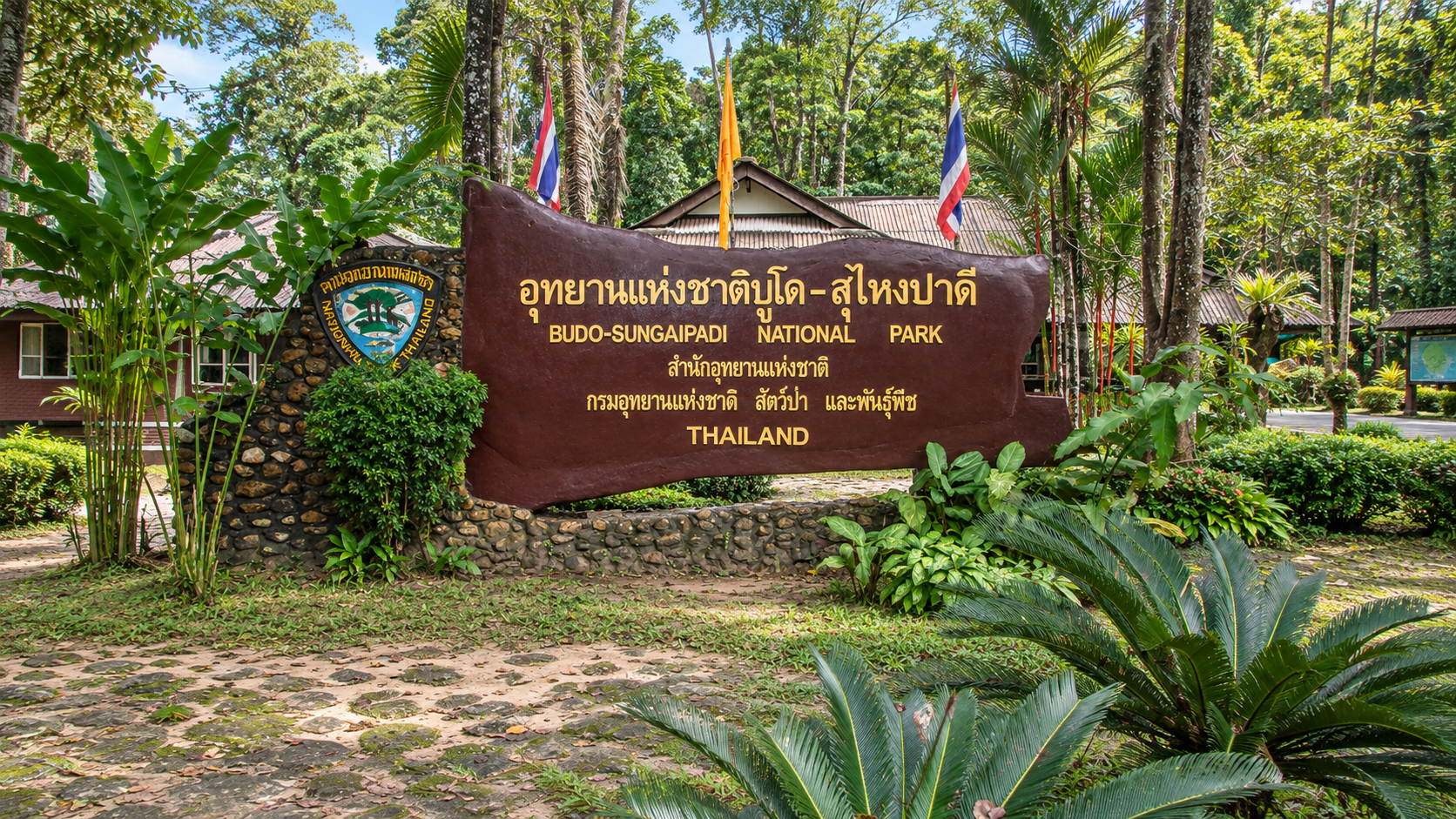
Budo–Su-ngai Padi National Park
อุทยานแห่งชาติบูโด–สุไหงปาดี
Golden Leaves, Rainforest & Waterfalls in Thailand's Deep South
Narathiwat · Yala · Pattani, Thailand
A hidden rainforest world of waterfalls, hornbills and golden leaves in Thailand's Deep South — where the rainforest turns gold.
A Living Rainforest of the Deep South
Budo–Su-ngai Padi National Park stretches across parts of Narathiwat, Yala and Pattani, protecting approximately 213,125 rai (341 sq km) of mountainous forest within the Budo and Su-ngai Padi ranges.
The landscape belongs to the Indo-Malayan tropical rainforest region, where high humidity, abundant rainfall and dense evergreen forest create an exceptionally rich ecosystem — one of the standout destinations in ThailandLover’s Nature & Parks collection.
But Budo–Su-ngai Padi is not simply a destination for waterfalls.
It is a place where the forest itself is the main attraction.
Why Budo–Su-ngai Padi Is Special
A Three-Province National Park
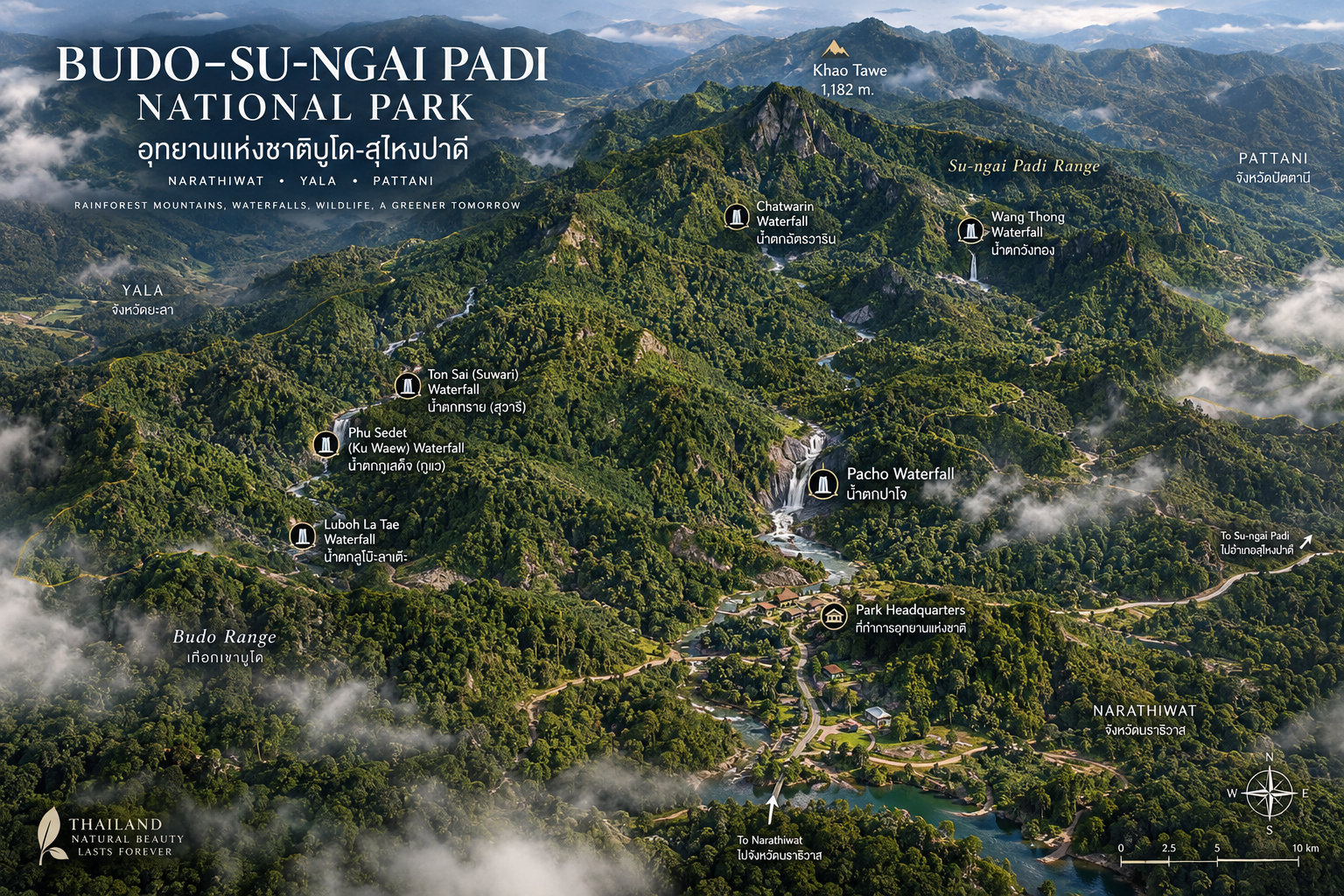
The protected landscape extends across Narathiwat, Yala and Pattani, connecting two major mountain systems: the Budo Range and Su-ngai Padi Range.
This gives the park a geographical character that is quite unusual among Thailand’s national parks.
The Golden Leaf
One of the park’s most distinctive botanical treasures is Yan Da-O, commonly known as the Golden Leaf of Thailand.
Its scientific name is currently treated as Phanera aureifolia, with Bauhinia aureifolia appearing as a former name/synonym in older references. The plant was first discovered around Pacho Waterfall and is regarded as an endemic plant of Thailand.
Young leaves may begin with a reddish or pinkish tone before gradually developing copper, gold and eventually silvery tones as they mature. The clearly golden appearance is traditionally associated with around June–July.
A Hornbill Forest
Budo is particularly important for hornbill conservation in Thailand. Scientific research has documented six hornbill species in the Budo mountain forest:
- Great Hornbill
- Wreathed Hornbill
- Rhinoceros Hornbill
- Helmeted Hornbill
- White-crowned Hornbill
- Bushy-crested Hornbill
The presence of these large forest birds is an important indicator of ecological quality, while hornbills themselves play an important role in dispersing seeds through the rainforest.
Long-term research has followed hornbill nesting and breeding in the Budo forest, including the use of artificial nest boxes.
In July 2026, the Department of National Parks highlighted the Banded Broadbill (Eurylaimus javanicus) photographed in Budo–Su-ngai Padi as another indicator of the richness of the southern rainforest ecosystem.
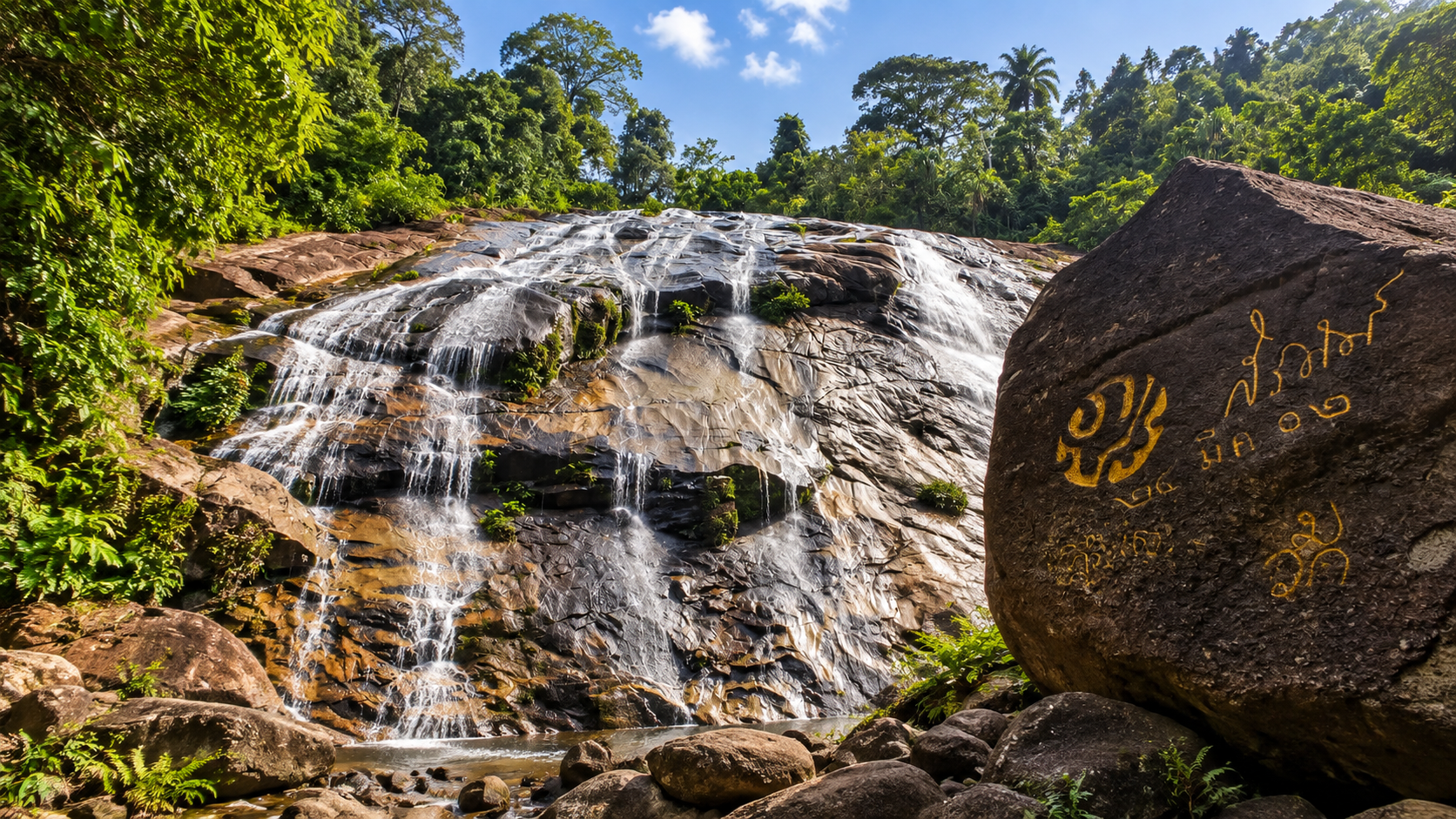
Pacho Waterfall
น้ำตกปาโจ · The Iconic Waterfall of Budo
If there is one place that introduces visitors to Budo–Su-ngai Padi, it is Pacho Waterfall in Narathiwat.
Located near the park headquarters in Bacho District, Narathiwat, Pacho is one of the most accessible highlights of the park.
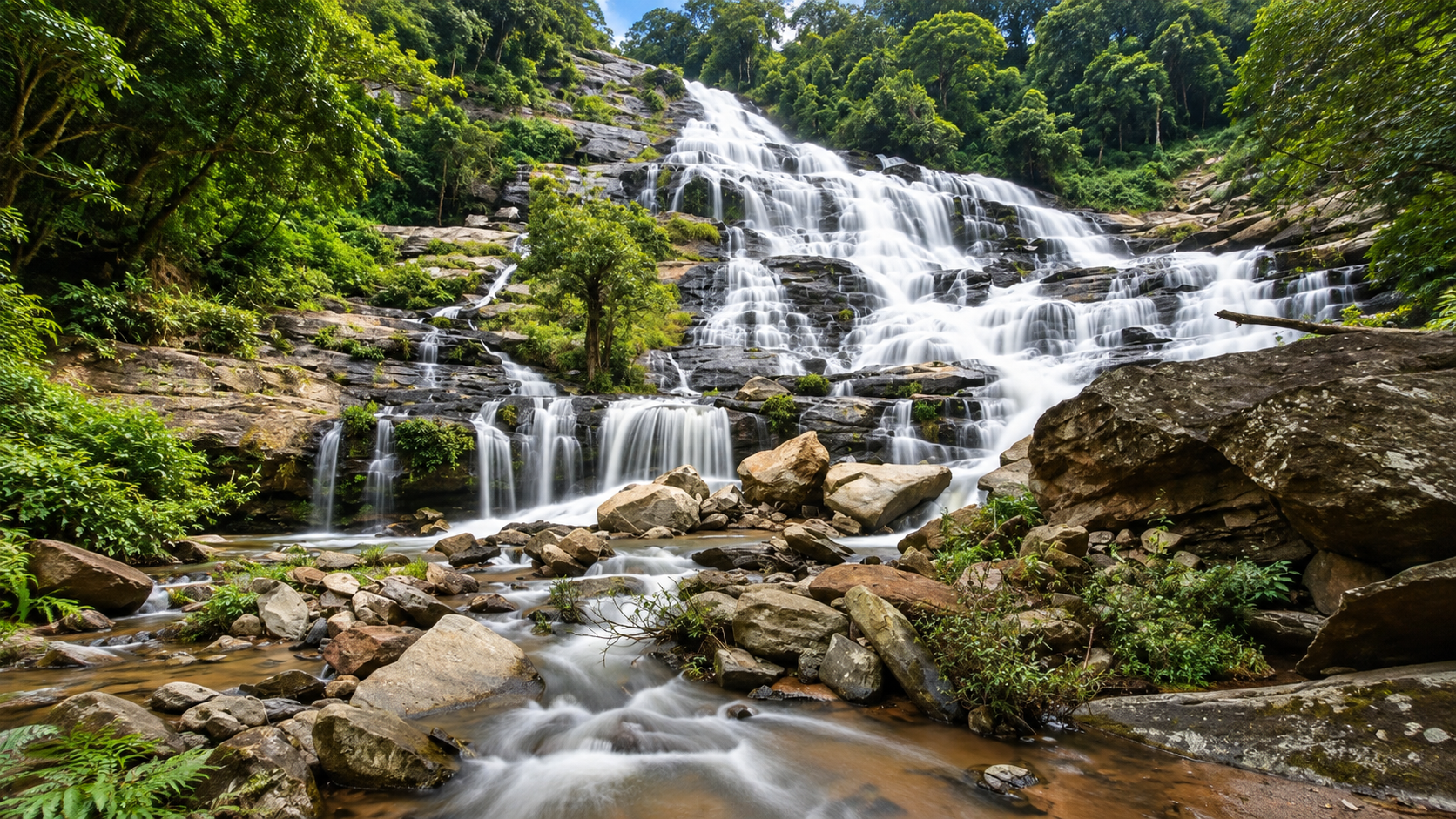
The waterfall drops from a broad rock terrace by approximately 60 metres at its main dramatic section, with water continuing through the forest landscape below.
During the rainy season, the increased water volume gives the waterfall a much stronger presence.
But the real attraction is not simply the height of the waterfall. It is the setting.
Rock + water + giant trees + tropical vegetation + rainforest sound
This makes Pacho particularly suitable for travellers who want to experience the atmosphere of southern Thailand’s rainforest without committing to a major multi-day trek.
Pacho Waterfall at a Glance
- Location
- Bacho District, Narathiwat
- Landscape
- Tropical rainforest
- Main Feature
- Approximately 60-metre waterfall drop
- Best Experience
- Waterfall + rainforest + botanical discovery
- Nearby Highlight
- Golden Leaf / Yan Da-O
- Access
- Near the national park headquarters
The Golden Leaf Trail
Yan Da-O — The Plant That Turns Gold
One of the most unusual things to look for around Pacho is not something that moves.
It grows.
Yan Da-O, the Golden Leaf vine of Thailand, is a woody climbing plant associated with the Budo rainforest.
Its large leaves are covered with fine, velvety hairs and can change colour as they develop. According to botanical information published by the Department of National Parks, the leaves associated with flowering may change from green toward golden tones, while younger leaves can appear pinkish before becoming copper or gold.
The plant flowers approximately between October and February, while the most recognisable golden foliage is associated with June and July.
This creates two very different seasonal experiences:
- June–July
- Look for the Golden Leaf.
- October–February
- Look for the flowers and changing foliage.
For photographers and plant lovers, this is one of the most distinctive details of the park.
Chatwarin Waterfall
น้ำตกฉัตรวาริน
On the Su-ngai Padi side of the national park lies another important waterfall landscape: Chatwarin Waterfall.
It is located in To Deng Subdistrict, Su-ngai Padi District, Narathiwat, and is managed through the park’s second protection unit.
The waterfall is surrounded by shaded forest, streams and natural rock formations, creating a quieter rainforest experience than the better-known Pacho area.
One of the botanical highlights associated with this area is the Bangsun Palm, a distinctive palm of the southern rainforest.
Chatwarin is therefore particularly interesting for visitors who want to experience the Su-ngai Padi side of the park, rather than visiting only Pacho.
Wang Thong Waterfall
น้ำตกวังทอง
The southern forest complex also includes Wang Thong Waterfall.
Together with Chatwarin Waterfall, it forms part of the waterfall landscape associated with the Su-ngai Padi forest section of the national park.
This side of Budo–Su-ngai Padi is useful to understand because the park is not one compact waterfall attraction.
It is a much larger protected mountain landscape containing several forest and watershed systems.
More Waterfalls to Discover
Historical park information identifies several additional waterfalls around the Budo mountain section, including:
- Luboh La Tae Waterfall
- Pacho Waterfall
- Phu Sedet / Ku Waew Waterfall
- Ton Sai / Suwari Waterfall
Some waterfalls have both local and official names, so names may vary between local sources and maps.
This is one reason ThailandLover presents Budo–Su-ngai Padi as a rainforest destination, rather than creating the impression that the park is simply one waterfall with a few side attractions.
A Forest Built for Wildlife
The Budo forest belongs to the Indo-Malayan / Sundaic tropical rainforest region, a biological zone known for its high diversity and strong connections with the forests of the Malay Peninsula.
The park’s steep terrain ranges from roughly 100 metres to 1,182 metres above sea level in the Budo study area, creating different ecological conditions across elevations.
The forest provides habitat for:
- Birds
- Especially hornbills and other rainforest birds.
- Mammals
- Including dusky leaf monkeys and other forest species.
- Butterflies & Insects
- The humid forest environment supports a wide variety of smaller wildlife.
- Rare Plants
- Including Golden Leaf and distinctive palms.
Come to observe the forest, not to chase the animals.
Early morning is generally the best period for bird observation because forest activity is higher and temperatures are lower.
The Mountain Landscape
The national park consists of two major forest landscapes:
- Budo Range
- The northern and central forest landscape around Bacho and Pacho.
- Su-ngai Padi Range
- The southern forest landscape extending toward Su-ngai Padi and the Malaysian border region.
The highest point identified in the park is Khao Tawe, reaching approximately 1,182 metres above sea level.
The terrain is mountainous and steep, with forested ridges and valleys forming important watershed areas.
This topography is one of the reasons why Budo–Su-ngai Padi is more interesting when viewed as a landscape system, rather than as a collection of individual attractions.
A Rainforest of Water
The mountains of Budo–Su-ngai Padi function as important watershed forests.
Streams descend from the mountains, feeding the surrounding landscape and contributing to river systems including the Sai Buri River and waterways around Bacho.
This relationship between mountain, forest and water explains why waterfalls are such a defining feature of the park.
The waterfalls are not isolated attractions.
They are the visible expression of a much larger rainforest water system.
A Landscape with History
Budo–Su-ngai Padi also has a complicated modern history.
Before the area became a national park, parts of the Budo and Su-ngai Padi mountain forests were difficult to access and were associated with periods of armed conflict and insecurity in Thailand’s southern border region.
The conservation history began earlier with the establishment of Pacho Waterfall Forest Park in 1974, followed by Chatwarin Waterfall Forest Park in 1976. The larger protected landscape was subsequently consolidated as Budo–Su-ngai Padi National Park and formally declared in the Royal Gazette on 17 June 1999.
The focus remains on how a once difficult-to-access mountain landscape became protected as one of southern Thailand’s important rainforest areas.
What to See at Budo–Su-ngai Padi
The ThailandLover Shortlist
- 01. Pacho Waterfall
- The signature waterfall and easiest introduction to the park.
- 02. Golden Leaf / Yan Da-O
- One of the park’s most distinctive botanical treasures.
- 03. Budo Rainforest
- Dense Indo-Malayan evergreen forest and rich biodiversity.
- 04. Hornbill Habitat
- An important landscape for six recorded hornbill species.
- 05. Chatwarin Waterfall
- A quieter waterfall experience on the Su-ngai Padi side.
- 06. Wang Thong Waterfall
- Another waterfall destination within the southern forest complex.
- 07. Bangsun Palm
- A distinctive palm associated with the Chatwarin area.
- 08. Mountain & Watershed Landscape
- The larger story behind the waterfalls.
Best Things to Do
- Waterfall Walks
- Start with Pacho for the most accessible experience. Listen to the forest before approaching the water.
- Nature Photography
- Especially suitable for rainforest, waterfall, botanical, macro, bird and mist photography.
- Birdwatching
- Hornbills are the headline attraction — six documented species make this important for serious birdwatchers and casual visitors alike.
- Botanical Discovery
- Look beyond the waterfall. The Golden Leaf, palms, vines, epiphytes and rainforest trees are part of what makes Budo different.
When to Visit
Budo–Su-ngai Padi is a rainforest environment, so visitors should expect moisture, rain and changing stream conditions.
Historical park information describes a wetter period roughly from May to December, with a relatively drier period from January to April.
- For Waterfalls
- The wetter months generally offer stronger water flow.
- For Golden Leaf
- June–July is traditionally highlighted for the most obvious golden foliage.
- For Birdwatching
- Early morning is preferable.
- For Comfortable Walking
- A relatively drier period can make trails easier, but rainforest weather can change quickly.
Always check the park’s current operating conditions before travelling, especially during periods of heavy rain.
The Department of National Parks has also published seasonal closure schedules in which Pacho, Chatwarin and Suwari have been among the areas subject to temporary closure. Dates can change by year.
How to Get There
From Narathiwat
The main visitor area around Pacho is approximately 26–28 km from Narathiwat town, depending on the reference point and route.
Take Highway 42 toward Bacho / Pattani, then follow the local route toward Pacho and the national park headquarters.
By Car
This is the easiest option for independent travellers.
By Public Transport
Travellers can reach Bacho or the surrounding area by public transport, then arrange local transportation to the park.
For international visitors, arranging transport in advance is preferable because the attractions are spread across a large mountainous protected area.
Travellers exploring more of southern Thailand’s protected landscapes may also want to continue to nearby Ao Manao–Khao Tanyong National Park on the Narathiwat coast, or inland to Bang Lang National Park in Yala.
Visitor Information
- Address
- Phiphit Pacho Road, Bacho Subdistrict, Bacho District, Narathiwat 96170, Thailand
- Telephone
- +66 73 530 406
Current third-party listings report regular daytime visitor hours around 08:00–16:30, but operating hours, fees and individual attraction access can change.
How to Experience Budo–Su-ngai Padi
ThailandLover Travel Style
Don’t rush in, take a photograph of the waterfall and leave.
The better way to experience Budo is to slow down.
Start at Pacho. Listen to the water. Look into the canopy. Search for the Golden Leaf. Watch the forest edge for birds.
Notice how quickly the landscape changes from roadside villages and agricultural land to dense tropical forest.
And remember that the waterfall is only the visible part of the story.
The real destination is the forest.
A Perfect Half-Day
- 08:00
- Arrive at Pacho — begin before the heat builds.
- 08:15–09:30
- Explore Pacho Waterfall and the surrounding rainforest.
- 09:30–10:30
- Explore the botanical area and look for Yan Da-O / Golden Leaf.
- 10:30–11:30
- Slow nature walk, photography and birdwatching.
- 11:30 onward
- Continue to nearby destinations in Bacho or return toward Narathiwat.
A Better Full-Day Experience
Morning
Pacho Waterfall → Golden Leaf / botanical exploration → Rainforest walk → Lunch in the Bacho area
Afternoon
Explore another local nature destination or travel toward the Su-ngai Padi side.
If visiting Chatwarin, allow additional travel time because it is in a separate part of the park rather than immediately beside Pacho.
Who Is Budo–Su-ngai Padi For?
Perfect for
- Nature Lovers
- Who want a genuine southern rainforest experience.
- Photographers
- Especially waterfall, botanical, bird and rainforest photographers.
- Birdwatchers
- Particularly those interested in hornbills.
- Botany Enthusiasts
- The Golden Leaf alone makes the park unusual.
- Slow Travellers
- Those who prefer landscapes over tourist crowds.
- Thailand Collectors
- Travellers who want to discover parts of Thailand beyond the standard tourist circuit.
Who Should Think Twice?
This is not the best destination for travellers looking for luxury facilities, polished resort infrastructure, a large commercial attraction, predictable weather or extensive paved sightseeing routes.
Budo is fundamentally a forest destination.
Come prepared for humidity, uneven ground, insects, rain and changing conditions.
Budo–Su-ngai Padi National Park FAQ
- What is Budo–Su-ngai Padi National Park known for?
- Budo–Su-ngai Padi National Park is known for its Deep South rainforest landscape, Pacho Waterfall, the Golden Leaf (Yan Da-O), hornbill habitat and a protected mountain forest spanning Narathiwat, Yala and Pattani.
- Where is Budo–Su-ngai Padi National Park?
- The park stretches across parts of Narathiwat, Yala and Pattani in Thailand's Deep South. The main visitor area around Pacho Waterfall is in Bacho District, Narathiwat.
- What is Pacho Waterfall?
- Pacho Waterfall is the signature waterfall of Budo–Su-ngai Padi National Park. Located near the park headquarters in Bacho District, Narathiwat, its main dramatic section drops approximately 60 metres into a rainforest setting.
- What is the Golden Leaf of Thailand?
- The Golden Leaf, locally known as Yan Da-O and scientifically treated as Phanera aureifolia, is a rare climbing plant associated with the Budo forest. Young leaves can develop striking golden tones, traditionally most noticeable around June–July.
- Can you see hornbills at Budo–Su-ngai Padi National Park?
- Yes. Scientific research has documented six hornbill species in the Budo mountain forest, making the park an important destination for birdwatching and rainforest biodiversity.
- When is the best time to visit Budo–Su-ngai Padi National Park?
- A relatively drier period from January to April can make walking more comfortable, while wetter months from May to December generally bring stronger waterfall flow. June–July is traditionally highlighted for Golden Leaf foliage. Always check current park conditions before travelling.
- How do you get to Budo–Su-ngai Padi National Park?
- The main visitor area around Pacho is approximately 26–28 km from Narathiwat town. Travellers typically take Highway 42 toward Bacho / Pattani, then follow the local route to Pacho and the national park headquarters. Arriving by car is the easiest option for independent travellers.
Quick Guide
- Official Name
- Budo–Su-ngai Padi National Park
- Thai Name
- อุทยานแห่งชาติบูโด–สุไหงปาดี
- Province
- Narathiwat, with protected areas extending into Yala and Pattani
- Area
- Approx. 213,125 rai / 341 km²
- Established
- 17 June 1999
- Landscape
- Budo & Su-ngai Padi mountain ranges
- Highest Point
- Khao Tawe — approx. 1,182 m
- Main Attraction
- Pacho Waterfall
- Other Waterfalls
- Chatwarin, Wang Thong, Suwari and others
- Signature Plant
- Golden Leaf / Yan Da-O
- Wildlife Highlight
- Hornbills
- Forest Type
- Indo-Malayan tropical rainforest
- Main Access
- Bacho District, Narathiwat
- Park Phone
- +66 73 530 406
Location
Find Budo–Su-ngai Padi National Park
Phiphit Pacho Road, Bacho, Narathiwat 96170, Thailand