
ThailandLover Contact

มหาสารคาม

Maha Sarakham

Navel of Isan

Named for a land rich in every goodness, Maha Sarakham is the quiet heart of the northeast — Chi River rice plains, ancient Buddhist stones, and a university city that still keeps the twelve Heet traditions.

01

Geography & Climate

Chi River Plains at Isan’s Centre

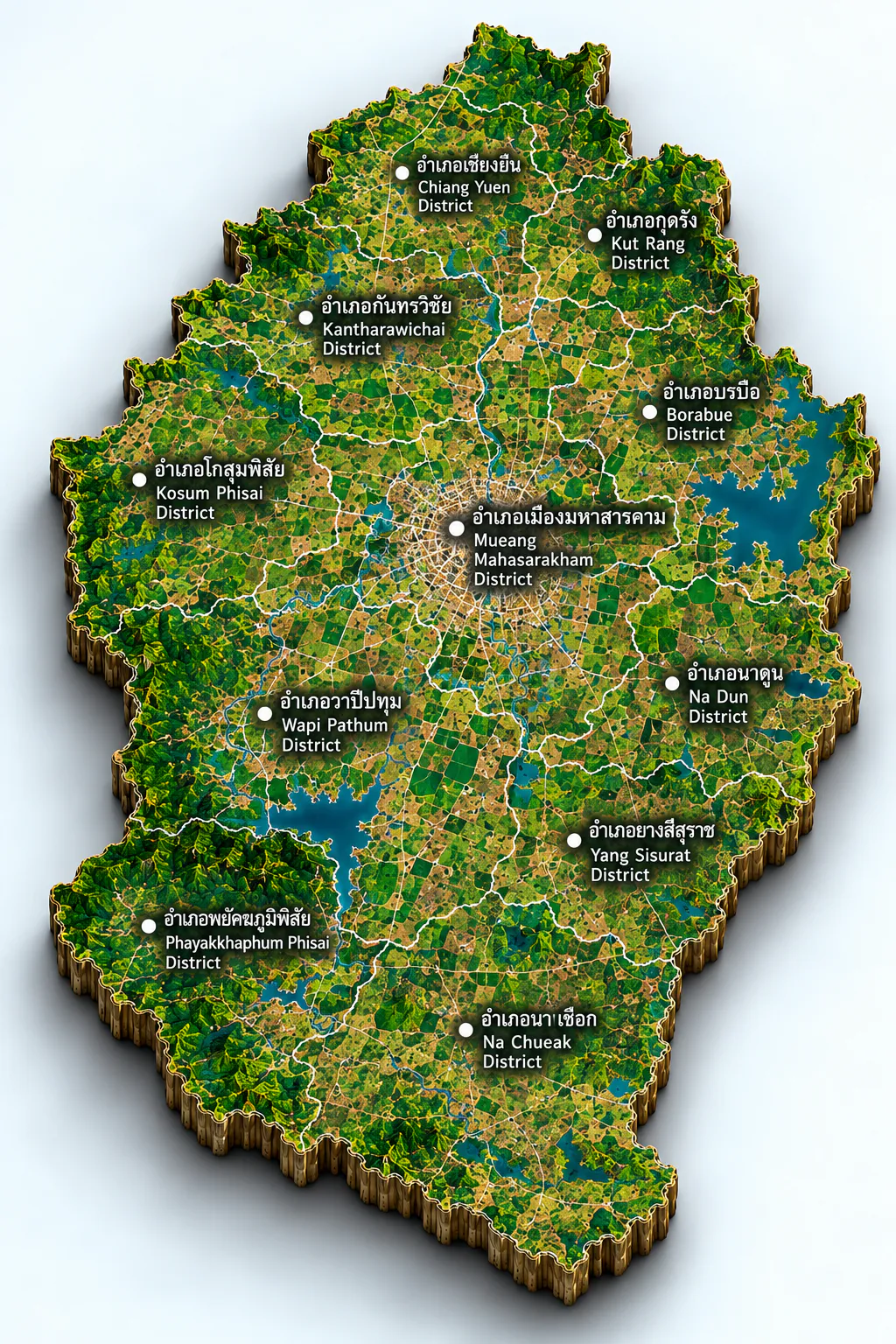
Maha Sarakham sits in the middle of the northeast, on the Khorat Plateau — about 5,292 square kilometres, shaped a little like an upside-down eagle, and roughly 470 kilometres from Bangkok. Kalasin lies to the north, Roi Et to the east, Surin and Buriram to the south, and Khon Kaen to the west.

There are no mountains here. The land rolls as undulating plain between about 130 and 230 metres above sea level — rice fields, open dry forest, and sandy soils that thirst in the dry months. The Chi River is the main waterway; reservoirs and irrigation hold the green that makes this bowl feel abundant when the rains come.

The climate is wet-and-dry Isan. March to June is the hot stretch; rains usually settle from about July through October; cooler, clearer days arrive from November to February.

Best time: November – February for dry, cooler travel across the plains and easy temple days; July – October for green paddies and a fuller Chi.

Maha Sarakham landscape

02

History & Heritage

From Ancient Ku to the Navel of Isan

People lived on this ground long before the modern town. In Phayakkhaphum Phisai, archaeologists have found traces of salt-making and metal smelting that reach back thousands of years. Later the plateau carried Buddhist cities of the Dvaravati centuries — the standing Buddha of Kantharawichai and relics associated with Nakhon Champasi — then Khmer-influenced sanctuaries of the Lopburi age: Ku Santarat, Ku Ban Khwao, and Ku Ban Daeng still mark that older map.

The Maha Sarakham of today began as a westward migration. Thao Mahachai (Kuat) led people out of Roi Et to settle a new place; King Rama IV granted the name Maha Sarakham — a land abundant in every goodness — and on 22 August 1865 (B.E. 2408) the settlement was raised as a mueang. An earlier form of the name was Maha Salakham. From that quiet founding, the town grew into what locals still call the navel of Isan — and, in its university decades, the Taxila of the northeast.

The people remain a weave of Isan Thai speakers, Thai Yor, and Phu Thai, largely Buddhist and still bound to the twelve Heet traditions that shape the year. The province’s aquatic emblem is the flour crab — pu thulakramom, also called pu paeng — a small creature that belongs to these watery plains as surely as the rice does.

Maha Sarakham heritage

03

Top Attractions

Places Not to Miss

Golden chedis, Khmer ku, a century-old wooden bridge, and forest temples — places that shape a Maha Sarakham journey, listed A to Z.

Ka Dam Wooden Bridge

Ka Dam Wooden Bridgeสะพานไม้แกดำ

A century-old timber bridge nearly a kilometre long, stretching across Nong Ka Dam reservoir between Ban Hua Khua and Ban Ka Dam. Lotus, water plants, and winter ducks make it the classic photo walk of the province — still used by villagers, still gently swaying underfoot.
Location · Ka Dam District

Kaeng Loeng Chan

Kaeng Loeng Chanแก่งเลิงจาน

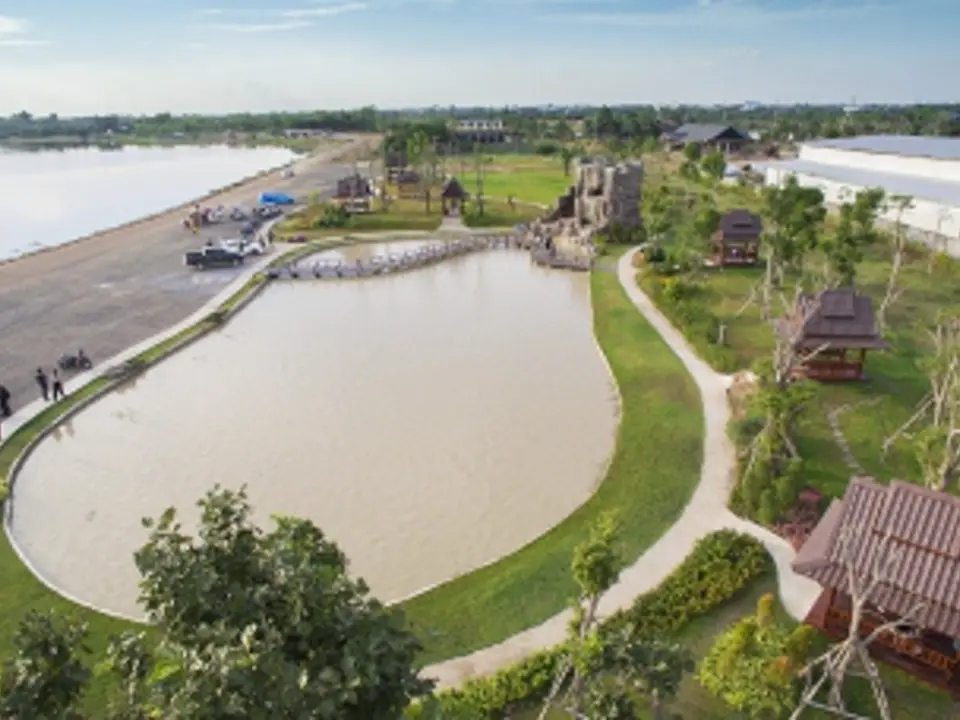
The city’s easy evening lake — a wide reservoir west of town with health gardens, big shade trees, a waterside pavilion, and a freshwater fishery station that stocks fish across Isan. Come for a stroll, a bike loop, or the soft light at day’s end.

Location · Mueang Maha Sarakham

Kosamphi Forest Park

Kosamphi Forest Parkวนอุทยานโกสัมพี

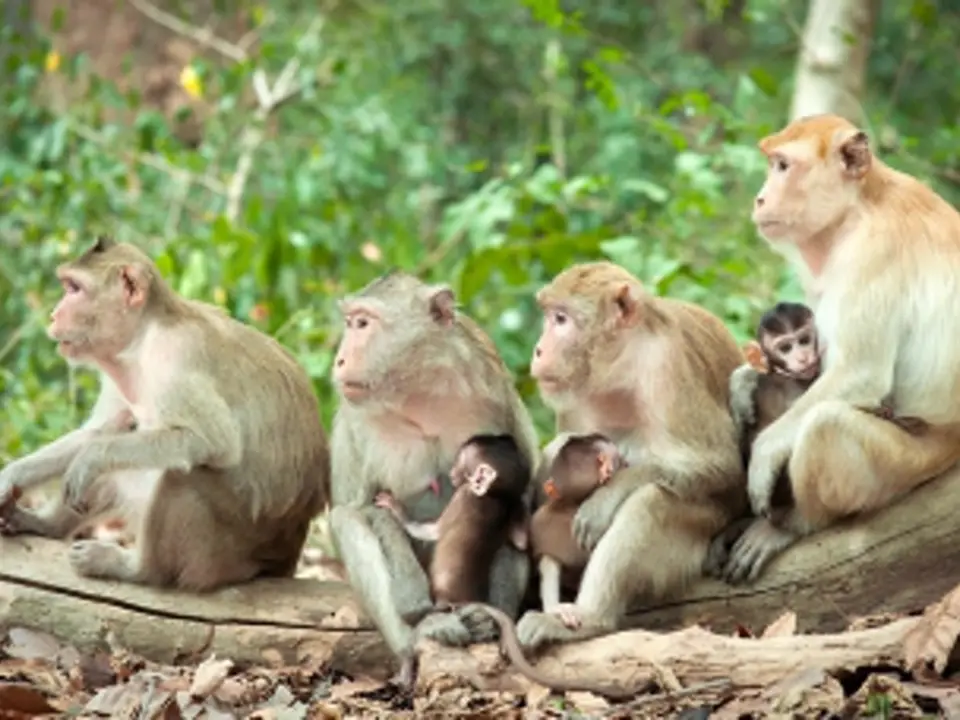
A pocket of Chi River forest in Kosum Phisai, home to hundreds of crab-eating macaques and short nature trails for walking or cycling. Kaeng Tat, a long-loved Songkran bathing spot of Isan, sits nearby when the water runs cool.

Location · Kosum Phisai District

Ku Santarat

Ku Santaratกู่สันตรัตน์

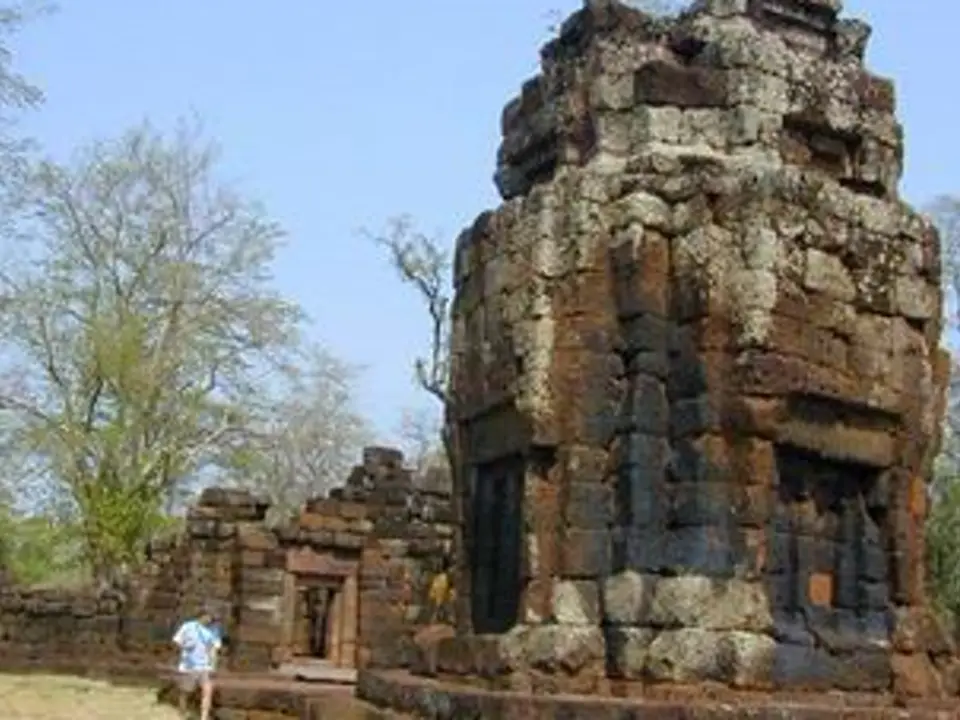
A laterite Bayon-style prasat from the age of Jayavarman VII — once an arogyasala, a Khmer hospital shrine — about four kilometres east of Na Dun town. Unfinished pediments and a small baray still tell how the builders left the work mid-stone.

Location · Na Dun District

Phra Phuttha Ming Mueang

Phra Phuttha Ming Mueangพระพุทธมิ่งเมือง

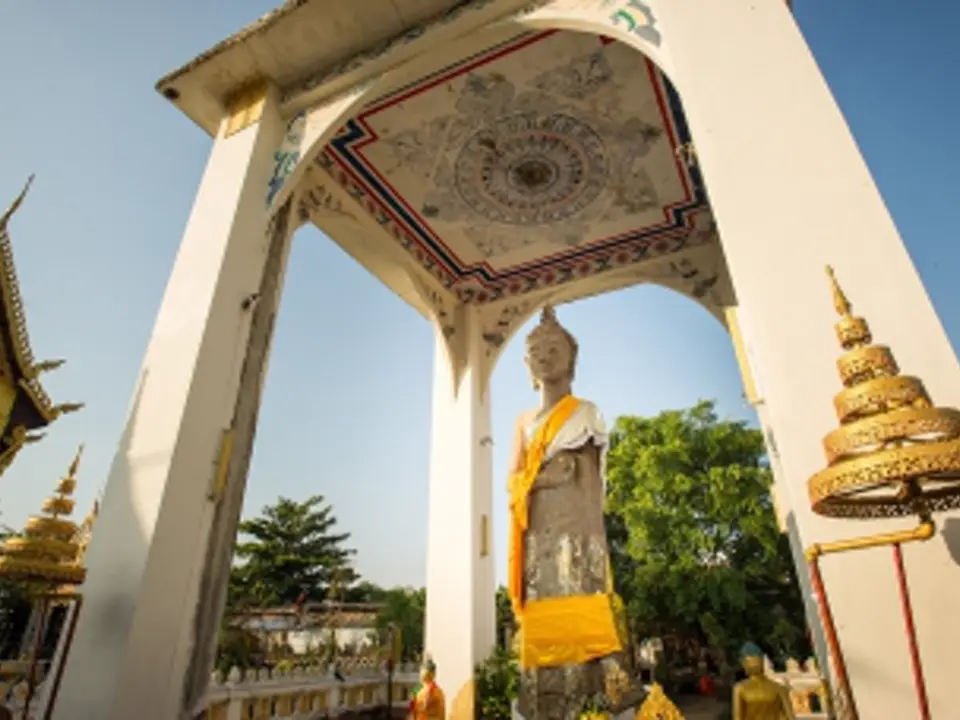
A red-sandstone standing Buddha of the Dvaravati centuries, kept at Wat Suwannawas in Kantharawichai. Locals call him Luang Pho Phra Yuen — the rain-bringing image of the district, paired in legend with the Mongkhon Buddha a kilometre away.

Location · Kantharawichai District

Phra That In Plaeng

Phra That In Plaengพระธาตุอินทร์แปลง

A faith-built chedi in Phayakkhaphum Phisai, inspired by Phra That Phanom with a tip echoing Phra That Na Dun. Khmer-style galleries, Balinese stucco, and wells at the four directions make it one of the south’s most striking modern sanctuaries.

Location · Phayakkhaphum Phisai District

Phra That Na Dun

Phra That Na Dunพระธาตุนาดูน

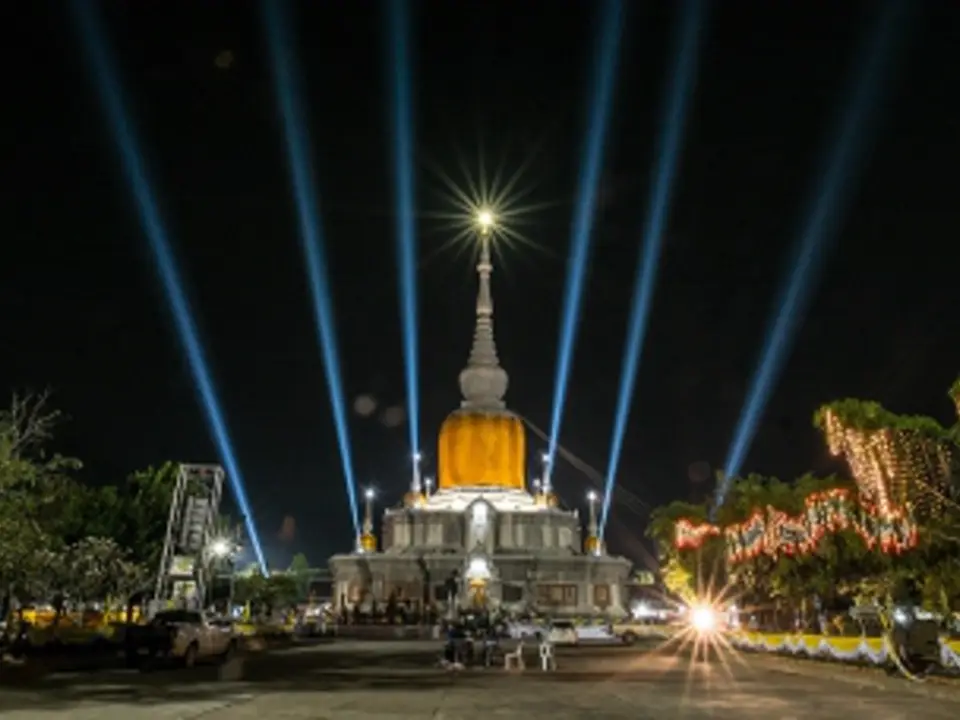
The Buddhist park of Isan — a white Dvaravati-inspired stupa raised after 1979 relic finds at ancient Nakhon Champasi, with the sacred ashes enshrined in 1987. Gardens and the nearby Walai Rukhavej research forest wrap the hill in green.

Location · Na Dun District

Standing Buddha Mongkhon

Standing Buddha Mongkhonพระพุทธรูปยืนมงคล

The twin of Phra Phuttha Ming Mueang — another red-sandstone Dvaravati standing Buddha at Wat Phutthamongkhon, Ban Sa. Legend says the women of the district raised this image while the men raised Ming Mueang; when both were finished, the rains returned.

Location · Kantharawichai District

Wat Nong Hu Ling

Wat Nong Hu Lingวัดหนองหูลิง

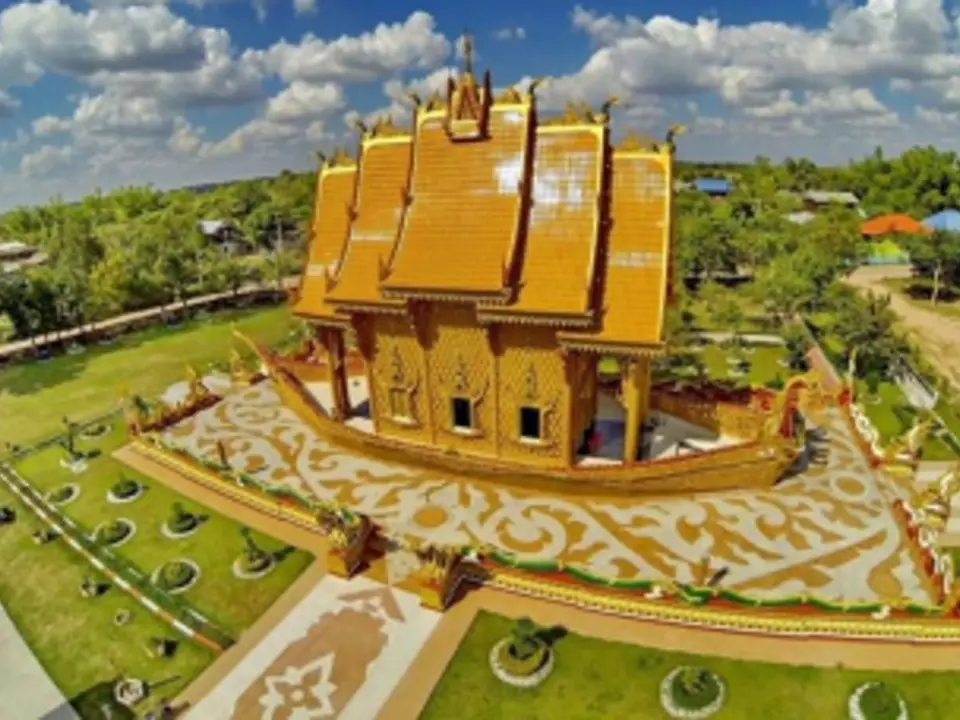
A temple founded in 1933 whose ubosot is shaped like Anantanakkharat’s boat of merit. Four stairways stand for the Four Noble Truths; inside, the principal Buddha sits in the First Sermon pose, as if you have stepped aboard to hear the teaching.

Location · Ka Dam District

Wat Pa Nong Chat

Wat Pa Nong Chatวัดป่าหนองชาติ

A forest temple in Chiang Yuen nicknamed the Gallery of Ten Thousand Somdet — a red cloister lined with roughly twenty thousand cast Somdet images. Thai, Lao, and Burmese lines meet in the wood-and-stucco hall; a glass-walled wooden ubosot sits at the quiet centre.

Location · Chiang Yuen District

Wat Pa Tham Uthayan

Wat Pa Tham Uthayanวัดป่าธรรมอุทยาน

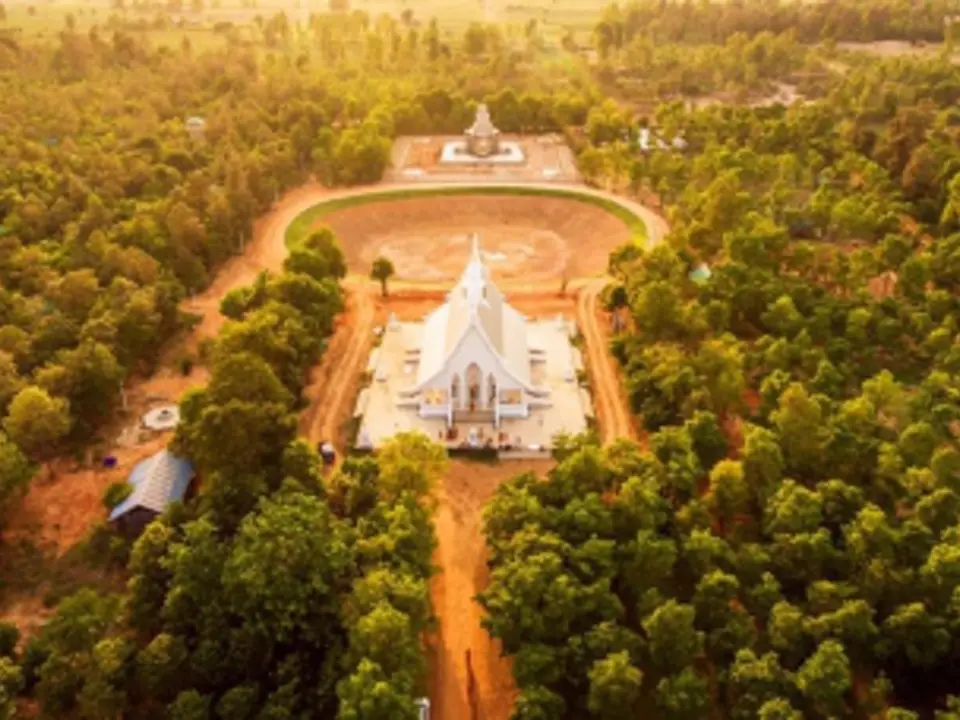
More than 500 rai of dry dipterocarp forest in Borabue, built to live quietly with the trees. The white Buddhajayanti ubosot of 2012 blends Dvaravati, Lan Xang, and Lanna lines around Luang Pho Hen Tham — a meditation grove where visitors lower their voices without being told.

Location · Borabue District

Wat Pa Wang Nam Yen

Wat Pa Wang Nam Yenวัดป่าวังน้ำเย็น

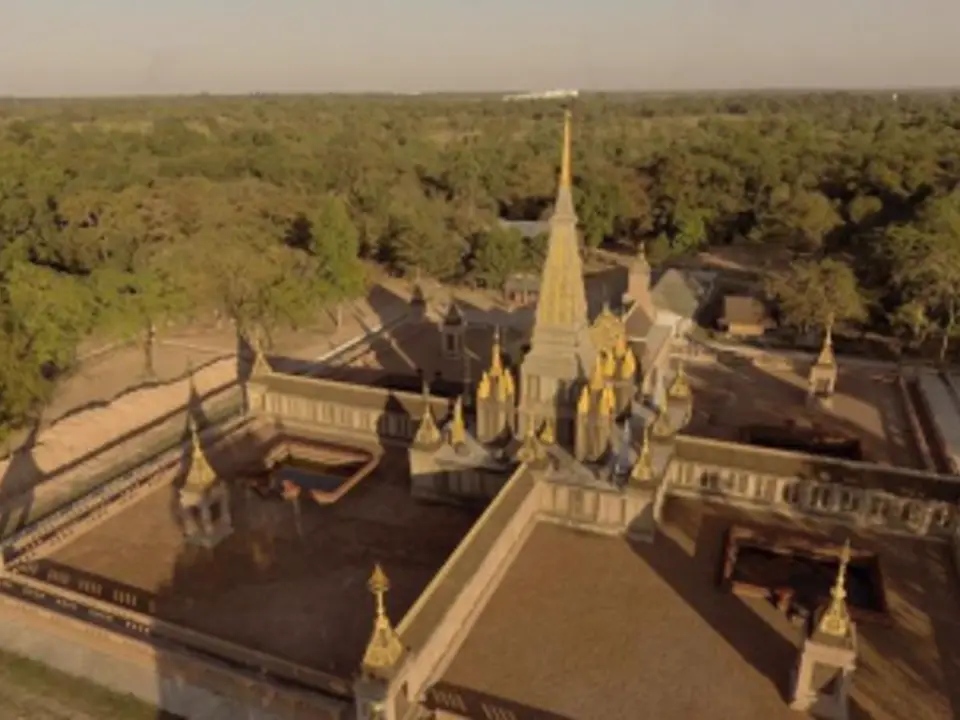
Also called Wat Phutthawanaram — the province’s best-known modern Buddhist landmark, about three kilometres from town. Golden Chedi Si Maha Sarakham rises above one of Thailand’s largest wooden sermon halls, raised by Phra Ajahn Suriyan Khosapanyo.

Location · Mueang Maha Sarakham

04

Jaew Hon, Charcoal Chicken & Chi River Tables

Jaew Hon, Charcoal Chicken & Chi River Tables

Maha Sarakham eats like the Isan heartland it sits in — bubbling jaew hon near the university, crackling grilled chicken with sticky rice, crab-and-pla-ra som tam that still draws drivers from Khon Kaen, and garden kitchens by the Chi and Kaeng Loeng Chan. The plates below are the ones locals still send you to find.

  1. Jaew Honแจ่วฮ้อน

    The province’s signature hot pot — a herbal, chilli-loud broth for dipping beef, pork, or offal at the table. Tha Khon Yang’s long-loved rooms are where travellers learn why locals treat it like Chiang Mai treats khao soi.

  2. Grilled Chicken & Sticky Riceไก่ย่าง · ข้าวเหนียว

    Everyday Isan: birds marinated with herbs, grilled until the skin crackles, then wrapped with hot sticky rice in banana leaf. Garden grills in Waeng Nang still draw the noon queue.

  3. Som Tam Pu Pla Raส้มตำปูปลาร้า

    Green papaya pounded with salted crab and house-made fermented fish — sharp, funky, and unapologetic. Order it beside grilled pork neck when you want the real Sarakham heat.

  4. Chi Riverside & Garden Platesริมชี · สวนอาหาร

    Fresh grilled prawns in Borabue, snakehead in spicy garden sauce near Kaeng Loeng Chan, and breezy café tables along the Chi by Mahasarakham University — the softer half of a Sarakham night.

05

Souvenirs from Maha Sarakham

Soi Dok Mak Silk, Jaew Bong & Reed Mats

Maha Sarakham packs the loom, the ferment jar, and the rice field into one bag — provincial Soi Dok Mak silk first, then Ban Phaeng reed mats, teak Buddha carvings, and the edible gifts locals still name: pla ra bong by Wat Mahachai, Khanom Tian Kaeo from Kantharawichai, homemade pork packs, and organic rice. Fill the sealed jars carefully; leave room for cloth you will actually wear.

  • Ban Phaeng reed matsเสื่อกกบ้านแพง Handwoven reed mats from Ban Phaeng, Kosum Phisai — fine floor mats, bags, seat cushions, and khit pillows from the same community looms. Choose a mat or soft cushion you will use; each piece still smells faintly of dry reed and village work.
  • Homemade pork sausage, naem & som mooไส้กรอกหมู · แหนม · ส้มหมู Homestyle cured pork — Isan sausage, fermented naem, and som moo from trusted counters such as shops near the BAAC bank and processing groups in Kosum Phisai. Buy vacuum packs for the road; keep them cool until you cook or grill them at home.
  • Khanom Tian Kaeo Mae Phun Siขนมเทียนแก้วแม่พูลศรี A clear, soft sticky dessert from Kantharawichai — translucent “glass” tian sweets that locals still send as the district’s edible calling card. Buy sealed boxes; they travel better than loose market trays.
  • Kantharawichai teak Buddha carvingsไม้สักแกะสลักพระกันทรวิชัย Golden-teak sculptures of the standing Buddha of Kantharawichai — the sacred image paired with the province’s identity. Choose a size that survives luggage; it is the craft souvenir that still points back to the old sandstone original.
  • Pla ra bong (jaew bong)ปลาร้าบอง · แจ่วบอง Pounded fermented-fish chilli paste with a deep, not overly salty heat — Sarakham’s kitchen gift along the wall of Wat Mahachai in town (names locals still trust include Khun Nong and Khun Toi). Seal the jar well; one spoon lifts sticky rice and grilled meat for weeks.
  • Riceberry & Hang rice Thung Na Thongข้าวกล้องไรซ์เบอร์รี่ · ข้าวฮางทุ่งนาทอง Organic brown Riceberry and Hang rice from Thung Na Thong — health-minded field products that steam fragrant and keep well in sealed bags. Look for labelled packs at OTOP and farm shops when you want rice that still tastes of the plain.
  • Soi Dok Mak silkผ้าไหมลายสร้อยดอกหมาก The provincial mudmee pattern — a fine “areca-flower chain” motif on silk or cotton that Maha Sarakham claimed as its identity weave, almost lost for how long and skilled the tying takes. Buy scarves, sabai, or yardage from town silk shops; each piece rewards a closer look at the dye.

06

Local Culture & Vibe

Heet Sip Song, Klong Yao & Phra That Merit

Maha Sarakham keeps Isan time by Heet Sip Song and Khong Sip Si — the twelve-month merit cycle and fourteen ways of living — then writes its own chapter in long-drum villages, silk and reed looms, and the great gathering at Phra That Na Dun. Come for a festival weekend and you meet the navel of Isan at its most itself: devout, musical, and still bound to rain, ancestors, and the plain.

  • Boek Fa Merit & Red Cross Fairงานบุญเบิกฟ้าและกาชาด Around the third waxing day of the third lunar month, near the Provincial Hall — the rite that opens the rice season and asks for rain in its season, braided with the province’s Red Cross fair. In 2026 the civic fair ran mid-to-late January into early February; the lunar Boek Fa day still anchors the prayer for the fields.
  • Bun Khao Pradap Dinบุญข้าวประดับดิน Heet month nine — on the fourteenth waning day, families wrap small parcels of food in banana leaf and set them quietly at temple trees, walls, and earth for ancestors and wandering spirits. No loud procession; only the soft dedication that still marks Isan’s ninth-month night.
  • Bun Sam Haบุญซำฮะ Heet month seven — sam ha means to cleanse. Town and village gather to wash body, speech, and mind, sweep misfortune from house and city, and bind arms with sacred thread after Buddha chant and guardian offerings. Recent years have held it at the City Pillar and Hall of Phra Kantharawichai.
  • Crafts of the Plainงานหัตถกรรมท้องถิ่น Living hands of Sarakham: Soi Dok Mak silk and Ban Phaeng reed mats, bamboo basketry for the kitchen, benjarong ware and gem cutting, and teak carvings of the Kantharawichai Buddha. The same plain that feeds the festivals still fills OTOP stalls and village workshops.
  • Klong Yao of Wapi Pathumออนซอนกลองยาวชาววาปีปทุม Wapi Pathum’s signature sound — long drums that almost every village here still plays. The Onson Klong Yao fair keeps the legend loud with parades and contests; dates shift (often a March weekend, with recent editions also in December), but the drums remain the district’s heartbeat.
  • Phra That Na Dun Worship Fairงานนมัสการพระธาตุนาดูน The province’s great Buddhist gathering at the Buddhist Park of Isan — centred on Magha Puja, the full moon of the third lunar month, with alms-giving and candle circumambulation. Recent years stretch nine days and nights around that peak; in 2026 the fair ran from 28 February to 8 March.
Maha Sarakham culture

07

Travel Info & Getting There

Plan Your Journey

How to reach Maha Sarakham from Bangkok, and how to move around once you arrive.

From Bangkok

By air

Maha Sarakham has no airport of its own, so you fly a neighbour and roll in. Khon Kaen (KKC) is the usual door — frequent hops from Bangkok, about 55–60 minutes in the air, then roughly 75 kilometres east into town on the pink coaches or a hire car, about 1–1.5 hours. Roi Et (ROI) is a quieter second option when that flight fits; the last stretch is still about an hour across the Chi-basin plains.

By car

About 457 kilometres and roughly 6.5–7 hours in ordinary traffic on the Mittraphap spine — Highway 1 to Saraburi, then Highway 2 through Nakhon Ratchasima toward Khon Kaen, peeling east on Highway 23 into Maha Sarakham. Tolls apply on the Bangkok expressway exit; alternate loops via 2256 or 304 run longer when Mittraphap is heavy.

By train

There is no station in the province. Ride the Northeastern Line into Khon Kaen — typically about 7–8 hours from Krung Thep Aphiwat — then a bus or hired car the last 70–75 kilometres. Day express and overnight sleepers both work; from Khon Kaen station, pink coaches on the Khon Kaen–Maha Sarakham (and Roi Et) corridor finish the journey in about an hour.

By bus

The simplest door-to-door ride: coaches from Bangkok’s Mo Chit 2 (Chatuchak) cover about 470 kilometres in roughly 6.5–8 hours and roll into Maha Sarakham Bus Terminal. Nakhonchai Air, Rung Prasert Tour, Transport Co (999), and Cherdchai share the corridor — daylight seats for Mittraphap rice fields, overnight if you want to wake already on the Chi plain.

Getting around

Town is easy between the bus terminal, Wat Pa Wang Nam Yen, and Kaeng Loeng Chan — songthaews, motorbike taxis, and tuk-tuks cover short hops; Grab thins outside the centre. Rent a car or hire a driver for Phra That Na Dun and Ku Santarat (about 60–65 km south), Kosamphi Forest Park, and the Kantharawichai Buddha pair. Highways 23, 208, and 2040/2045 are the spines; the university café strip at Tha Khon Yang sits a short run north.

Best time to visit

November to February brings dry, cooler days for temple walks, Kaeng Loeng Chan evenings, and easy drives to Na Dun. July through October greens the paddies and fills the Chi — with afternoon rain on the clock. March–April is the hot stretch; Magha Puja week around the third lunar month is when the Phra That Na Dun fair draws the province, and Boek Fa opens the rice season soon after.

Continue the Journey

Nearby Provinces