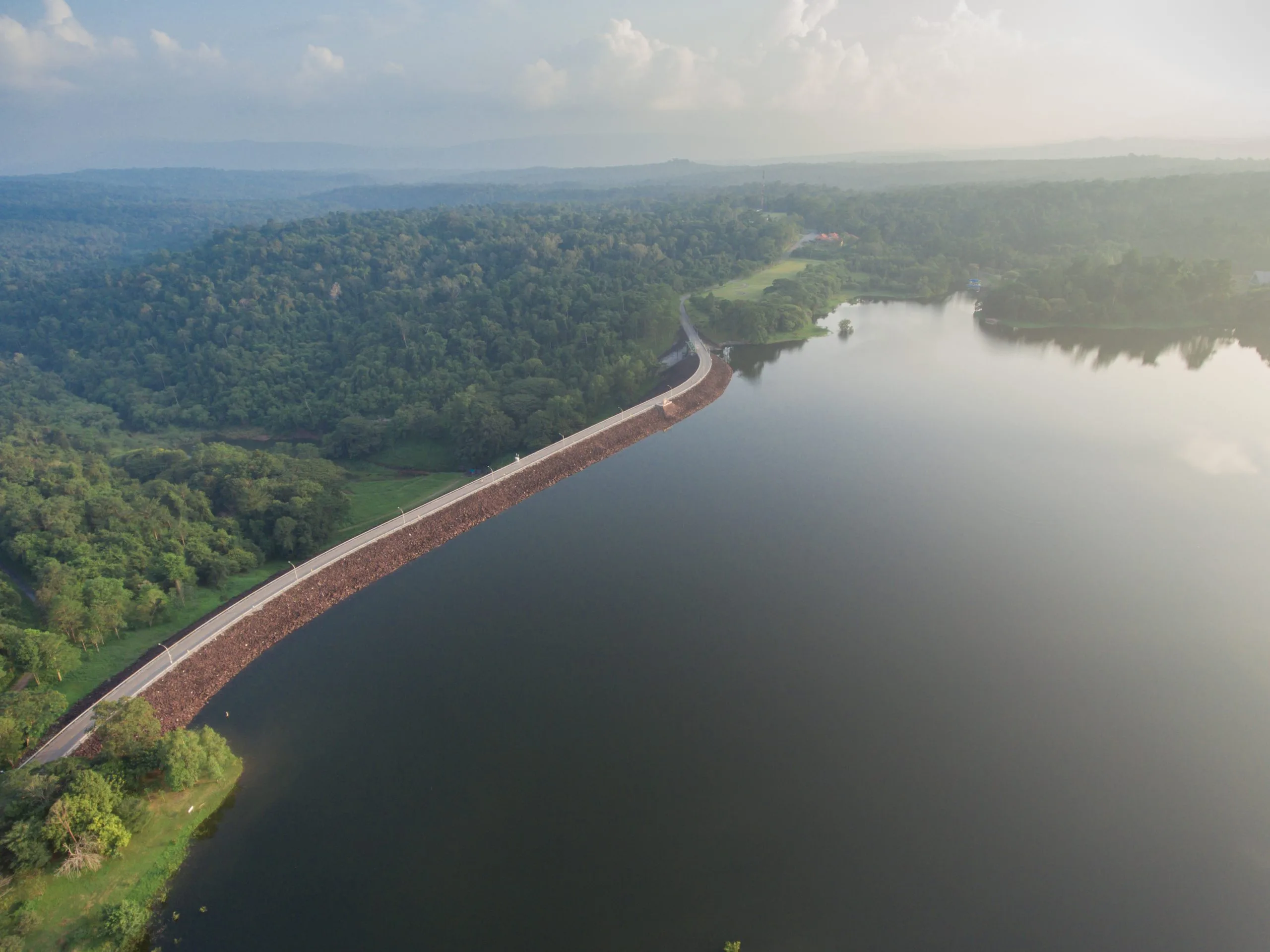
Chulabhorn Damเขื่อนจุฬาภรณ์
Thailand’s highest dam site, about 800 metres above sea level on the Phrom River — cool air year-round, lake views toward Phu Kradueng country, EGAT gardens, and the Lup Khuan pavilion for long highland horizons.

 ThailandLover
Contact
ชัยภูมิ
Land of Victory
On the western rim of Isan, where the Phetchabun hills meet the Khorat Plateau, Chaiyaphum opens into highland wind, Siam-tulip meadows, and a quiet victory story that still flies on its three-tailed flag.
01
Geography & Climate
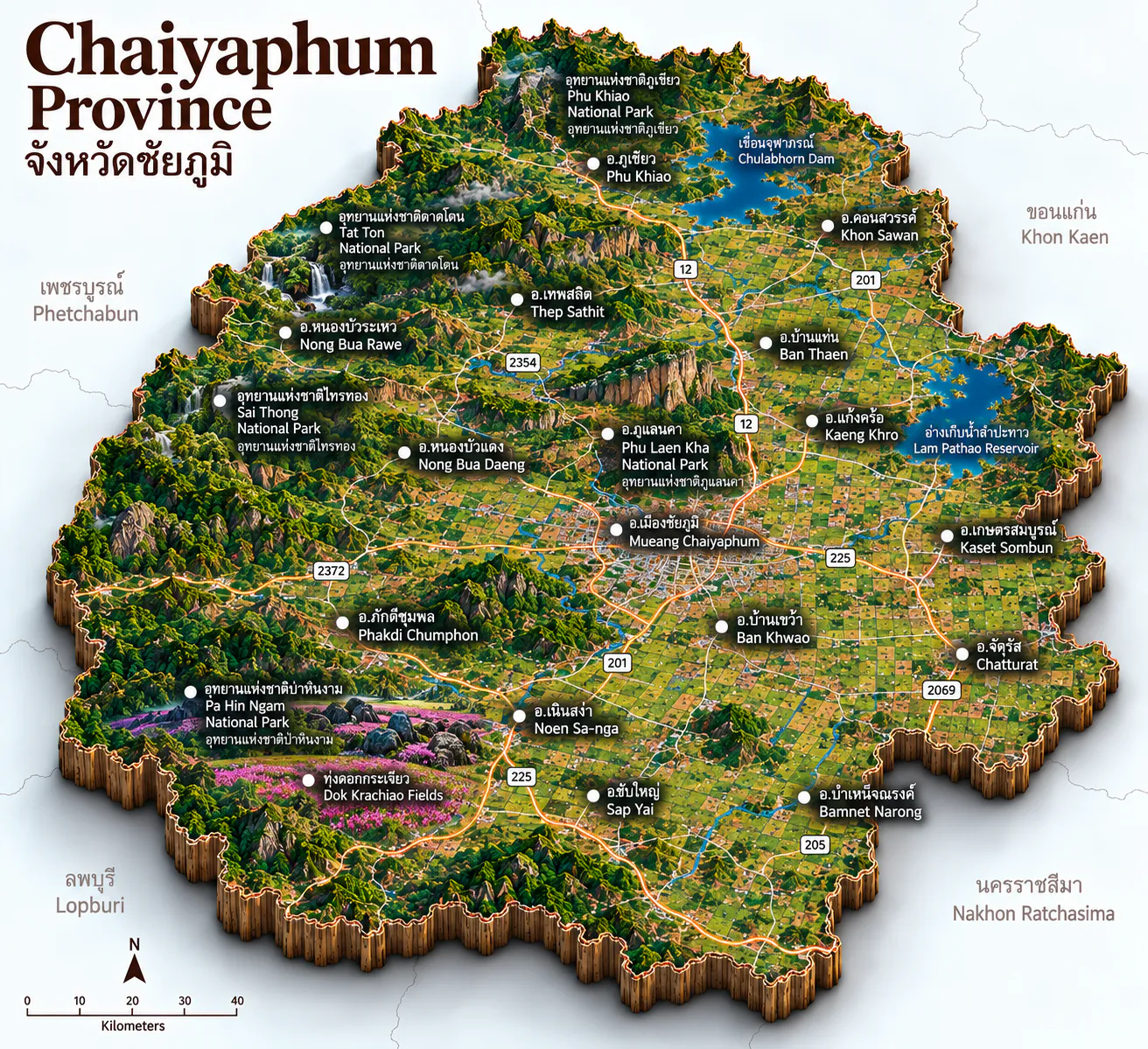
Chaiyaphum sits on the western edge of northeastern Thailand — about 12,778 square kilometres where the Phetchabun mountain range lifts the land above the Khorat Plateau. It borders Khon Kaen to the north and east, Nakhon Ratchasima to the south, and Lopburi and Phetchabun to the west. The Phang Hoei and related ridges bisect the province; the highest points rise above 1,200 metres, while the eastern districts settle into the flatter Isan plain.
Forest still covers roughly a third of the land. Tat Ton, Sai Thong, Pa Hin Ngam, Phu Laenkha, and stretches of Nam Phong and Nam Nao keep waterfalls, sandstone gardens, and open hill meadows close to the road. Phu Khiao Wildlife Sanctuary holds one of Thailand’s important protected forests. Streams from these highlands feed both the Chi River basin toward Isan and tributaries that run west toward the Pa Sak.
The climate is tropical savanna with a highland edge. November to February brings the cool, clearer dry season — ideal for ridge walks and camping. March to May is the hot stretch. The southwest monsoon greens the parks from about May to October, when dok krachiao (Siam tulips) carpet Pa Hin Ngam and Sai Thong in pink and purple from roughly June to August.
Best time: November – February for cool dry air, clear viewpoints, and easy hiking; June – August for Siam-tulip fields at Pa Hin Ngam and Sai Thong; May – October for fuller waterfalls and quieter green-season parks.
02
History & Heritage
Chaiyaphum’s name means land of victory — and its story earns the title. In the Ayutthaya era the town appeared in King Narai’s administrative lists as a dependency of Nakhon Ratchasima. War and hard years later left it abandoned, a blank on the map until early Rattanakosin settlers returned.
In 1817 (B.E. 2360), under King Rama II, Nai Lae led families to farm at Ban Nong Nam Khun. Two years later they moved to Ban Non Nam Om, and Lae was raised as Khun Phakdi Chumphon. In 1822 (B.E. 2365) the community settled at Ban Luang, still under Nakhon Ratchasima, and the court elevated it as Mueang Chaiyaphum, with Khun Phakdi Chumphon (Lae) as Phraya Phakdi Chumphon, the first lord of the city.
Loyalty soon tested that title. In 1826 (B.E. 2369), during Chao Anuwong of Vientiane’s rebellion and the seizure of Nakhon Ratchasima, Phraya Phakdi Chumphon fought beside Lady Mo (Thao Suranari) until the invading army broke. He later refused to join the rebels and was executed. The shrine at Nong Pla Thao still honours his courage and fidelity.
Today the provincial seal shows a three-tailed victory flag — a banner of war won, and a reminder that this quiet highland province was rebuilt on loyalty as much as on land.

03
Top Attractions
White stone pillars, Siam-tulip meadows, Khmer prangs, and cool highland dams — Chaiyaphum’s must-sees, listed A to Z.
Thailand’s highest dam site, about 800 metres above sea level on the Phrom River — cool air year-round, lake views toward Phu Kradueng country, EGAT gardens, and the Lup Khuan pavilion for long highland horizons.
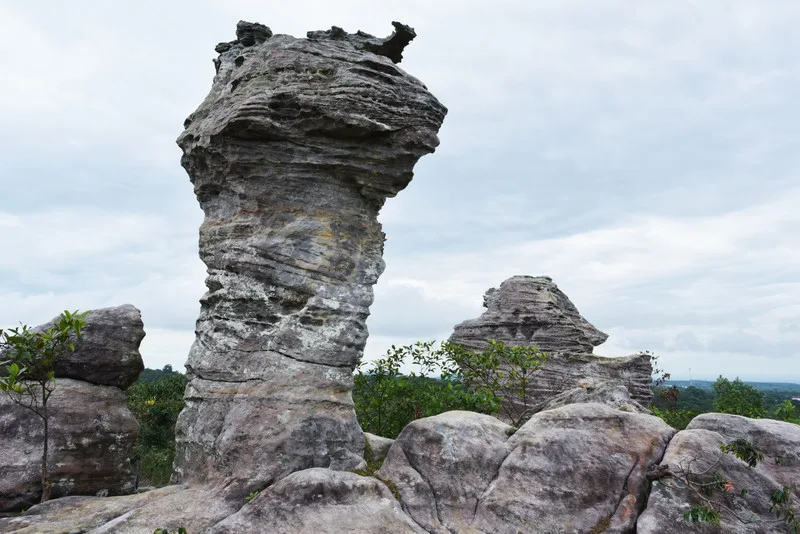
A wide sandstone courtyard in Pa Hin Ngam National Park, carved by wind and water into mushrooms, castles, and animal shapes. Pair it with the Sut Phaen Din cliff viewpoint for a full rock-and-ridge day.

Often called Thailand’s Stonehenge: five white sandstone pillars rising about 12 metres on Phu Laen Kha, with trails to rock gardens, Lan Hin Ton Sai, and Pha Hua Nak viewpoints over dry-dipterocarp hills.
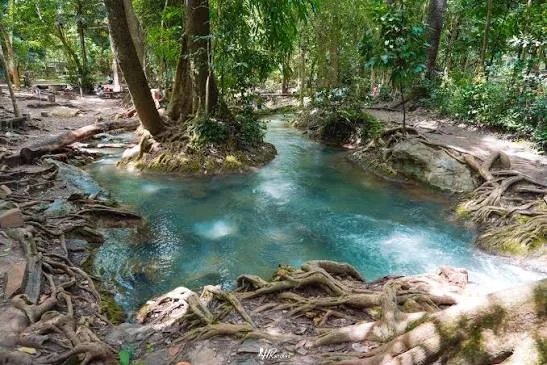
A clear spring-fed stream that runs all year under big shade trees — wide pools for a cool soak, local food stalls nearby, and a favourite weekend pause for travellers circling Kon San.
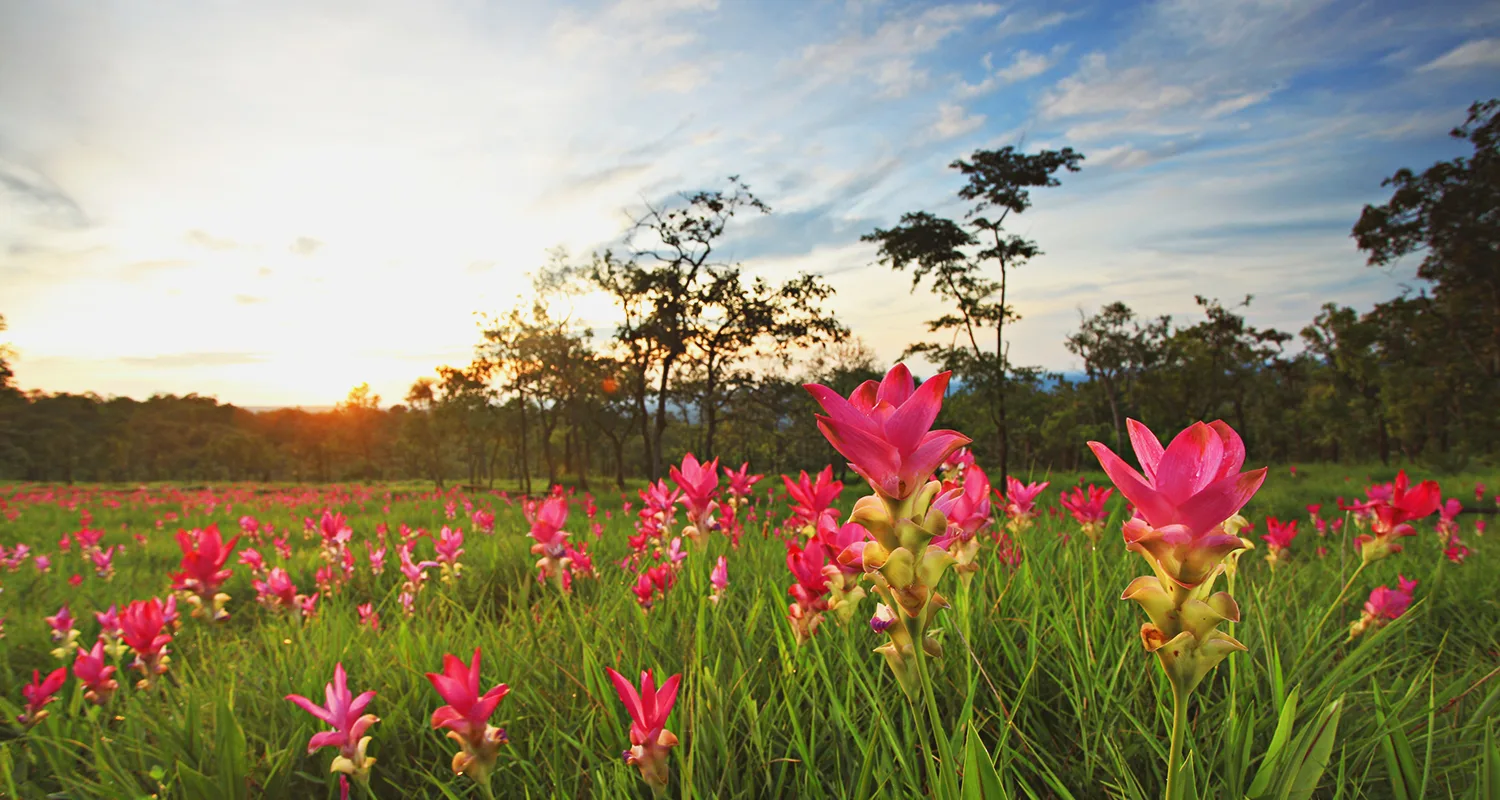
Pink-purple dok krachiao (Siam tulips) carpet the grasslands of Pa Hin Ngam each rainy season, roughly July to August. Come early for soft light over the blooms, then walk on to the cliff edge at Sut Phaen Din.

A roadside lookout near Phu Khiao Wildlife Sanctuary with labelled mountain silhouettes — Phu Pha Chit, Phu Kradueng, and layered green ridges that glow after rain when mist lifts from the valleys.

A short walkway to a cliff terrace above forested hills — sunrise, sunset, and post-rain mist are the classic moments. An easy Sap Yai stop when you want big views without a long trek.
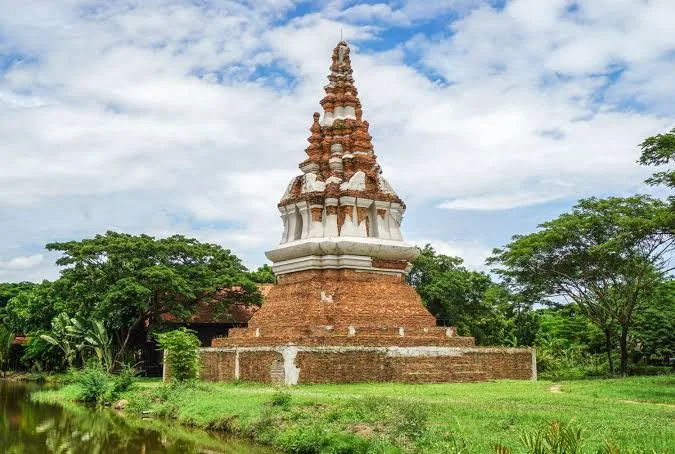
One of Chaiyaphum’s finest ancient stupas, blending Lan Xang, Lanna, and Ayutthaya lines and linked to the 16th–17th centuries under Phra Chai Chetthathirat. Songkran brings the annual Phrathat bathing rites.
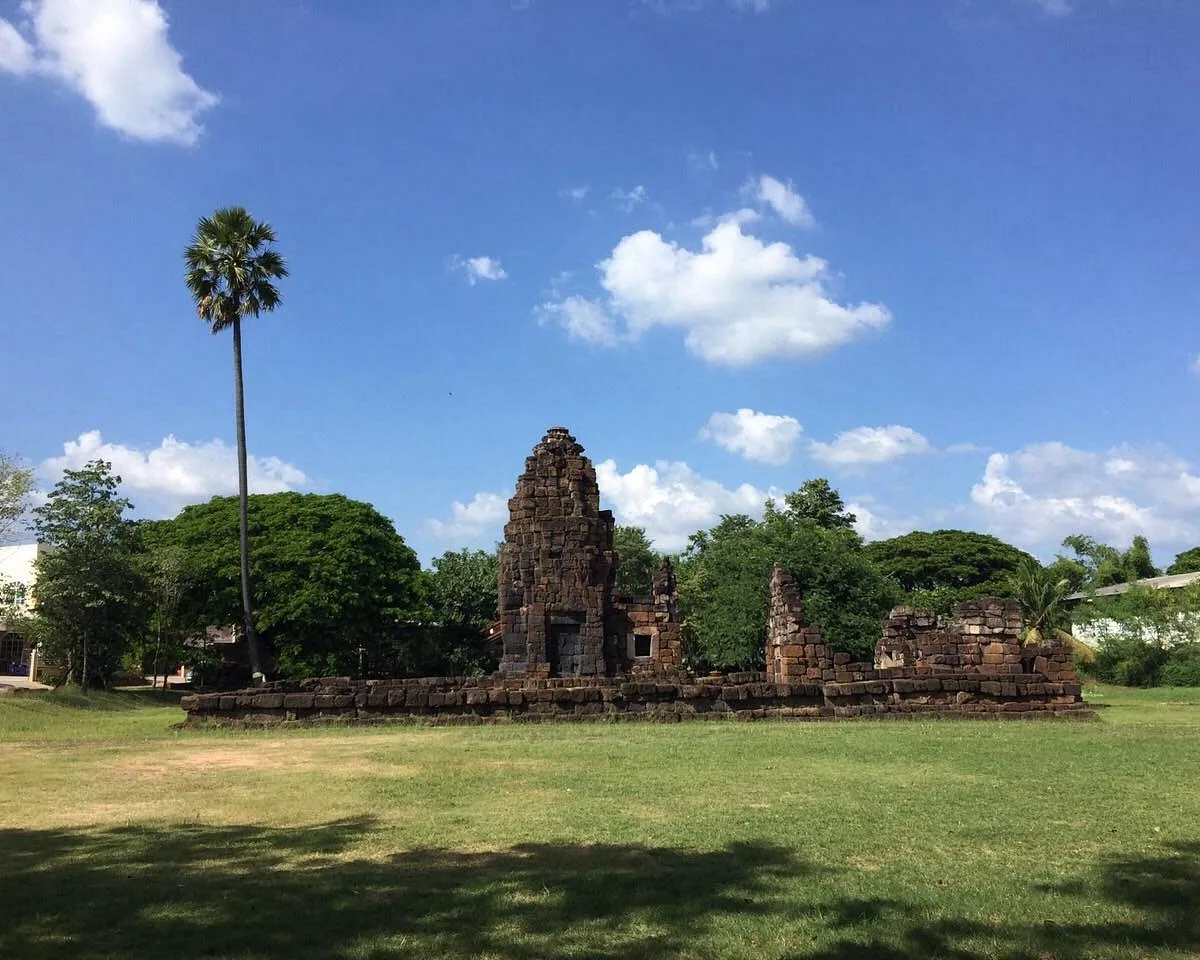
A well-preserved Khmer-style sanctuary in town, widely linked to the arokayasala hospital temples of Jayavarman VII. Still an active place of respect — stone, quiet courtyards, and a deep Isan–Khmer past.
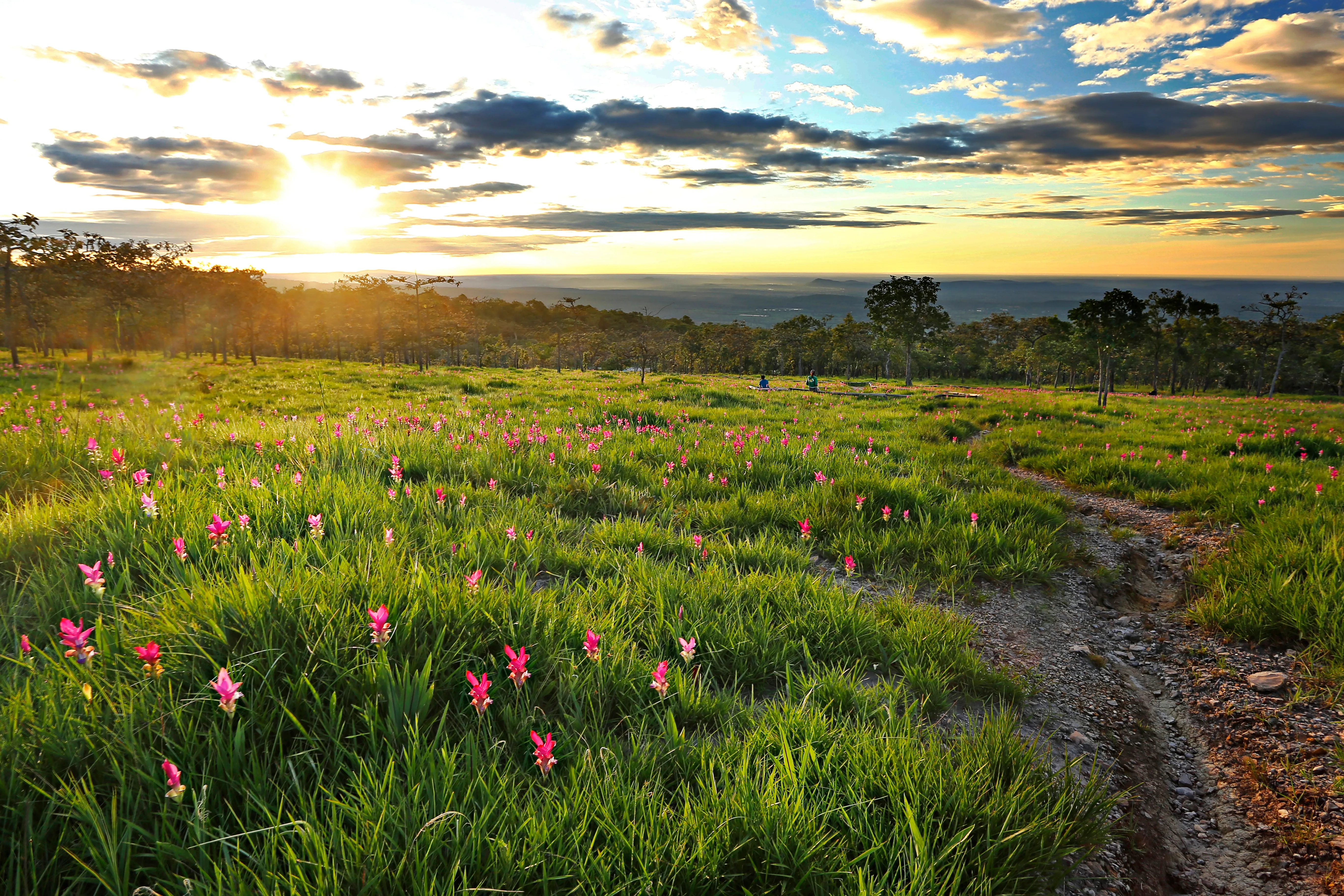
Home to another famous Siam-tulip meadow — including rare white blooms — plus Sai Thong Waterfall and Wang Sai, the banyan pool at the fall’s base. Best in the green season when flowers and water run together.
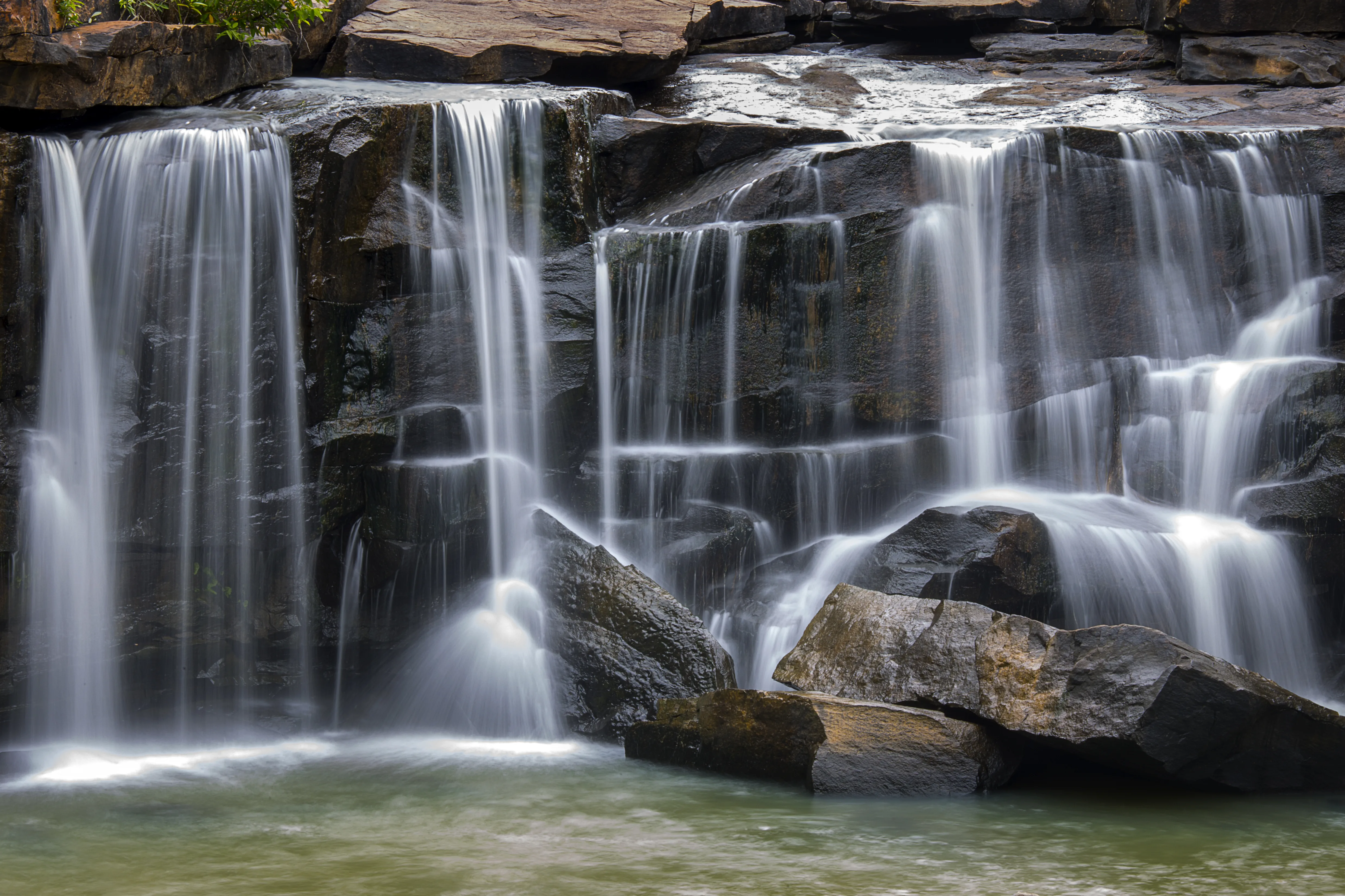
A wide rock-shelf waterfall about 20 km from town, flowing nearly year-round inside Tat Ton National Park — a three-time Thailand Tourism Awards Hall of Fame site. Swim the upper ledges, then follow on to Tat Fa and Pha Iang.
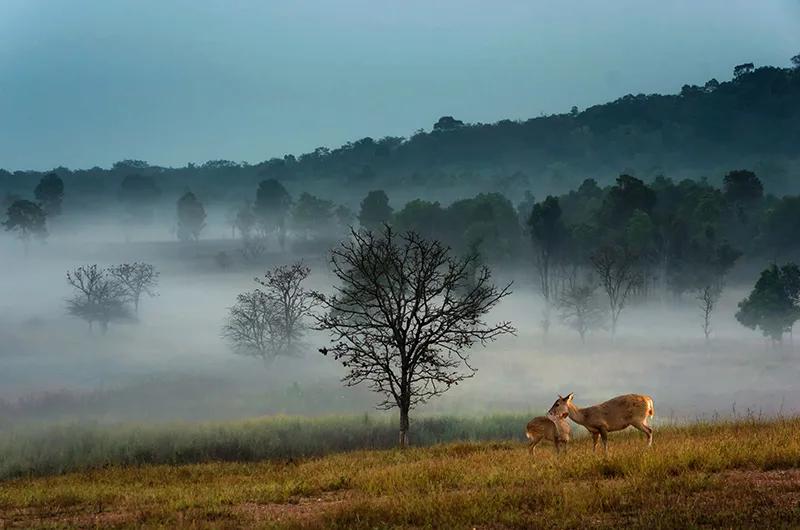
A broad grassland bowl inside Phu Khiao Wildlife Sanctuary, where salt licks draw deer and wildlife especially in the late afternoon. Feel of a quiet Thai safari — book through the sanctuary and travel with respect.
04
Local Flavours & Food
Chaiyaphum eats between cool mountain terraces and sharp Isan tables — jaew hon under shade trees, lunch queues for tom saep and laab, and evening seats by water or green paddies. Start with the ten tables below; hours can change, so check before you go.
Where to Eat
Mountain cafés near Tat Ton, classic jaew hon, Isan lunch queues, and lakeside evenings — Chaiyaphum’s tables, listed A to Z. Hours can change; tap Location for the latest pin.

An open-air seafood pavilion in Ban Lao with cool evening air and river prawns chosen fresh each day.
Come for grilled river prawns, prawn salad with lime cream, tom yum, and hot-pot sea bass when the table wants seafood without leaving town.

A long-loved garden table opposite the Chaopho Phraya Lae shrine — open breezes, shade trees, and the place locals bring guests.
Order hor mok in young coconut, country-chicken jungle curry, grouper tom yum, and crispy green-curry fried rice when you want classic Thai after dark.

A small in-town kitchen that feels like someone’s home table — warm wood, smiling service, and plates cooked without fuss.
Mix Thai–Isan comfort with steak, pasta, and fresh coffee when you want an easy midday pause between attractions.

Chaiyaphum’s sharpest Isan lunch stop on Niwet Rat Road — book ahead if you can; the room fills early.
Must-orders are tom saep with soft beef, pork laab, thick-cut grilled pork neck, and plump Isan sausages with trays of fresh local herbs.
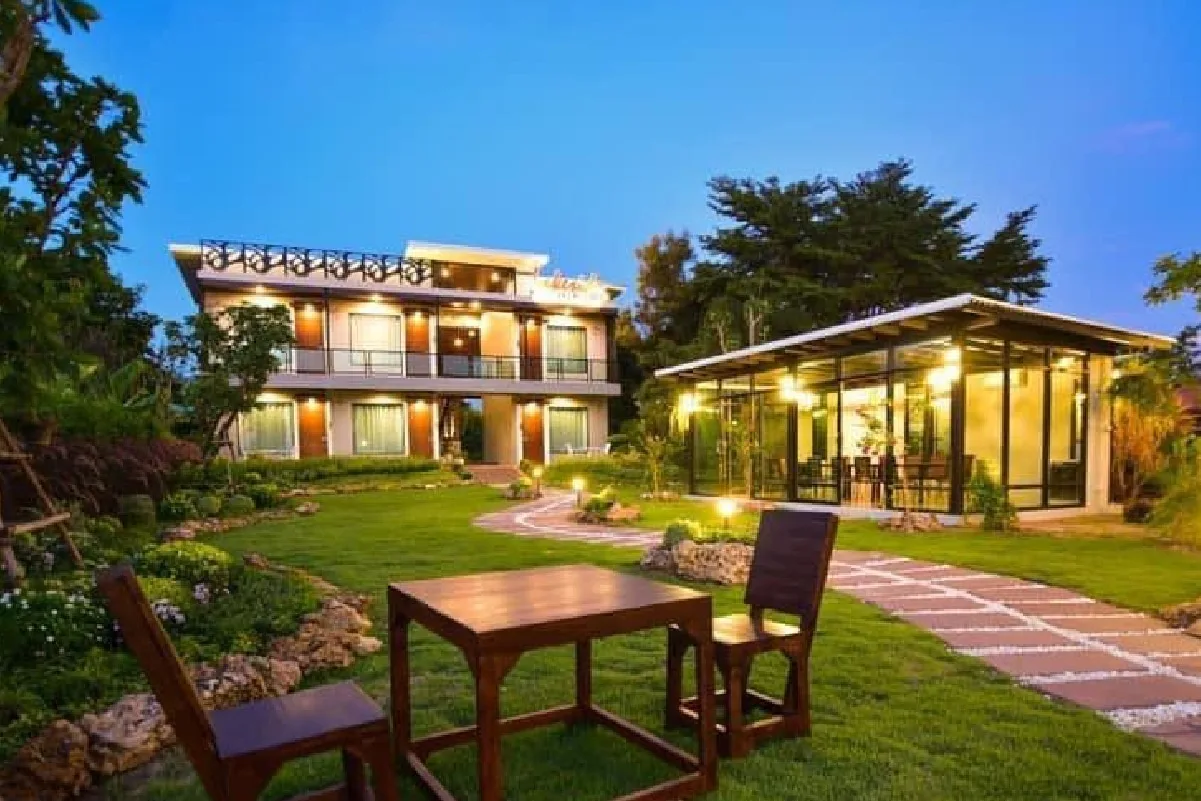
A wide waterfront evening room with sofa corners, hammock nets, and lights over the water — built for long sits at golden hour.
Order food made fresh to the table, then linger with drinks when the sky turns and the lake starts to glow.

A mountain-edge café on the road toward Tat Ton National Park — misty ridges, open terraces, and cool highland air with breakfast coffee.
Stay for Thai plates, drinks, and sweets with a view, or book a private VIP karaoke room when the group wants the evening to stretch.
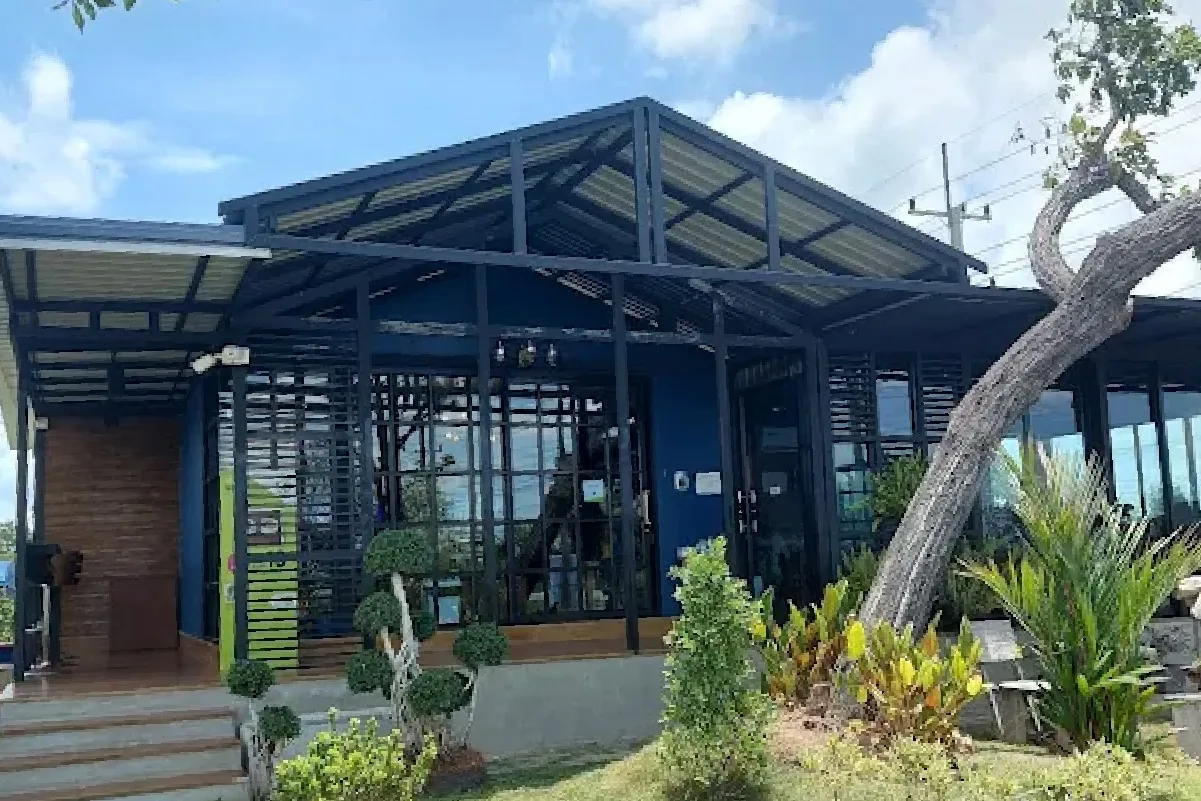
A colourful Chatturat garden stop mixing Thai, Isan, and light European fusion — made for families and check-in corners.
Share tamarind-sauce prawns, grilled pork-neck yum, cake, and cold drinks when you want a creative midday table in the countryside.

A newer Isan kitchen on Bannakan Road with air-conditioned rooms and a leafy outdoor zone — local flavours without the long wait.
Order soijuu, blanched pork leg with jaew, pla ra som tam, and soft pork laab when you want Chaiyaphum plates at friendly prices.
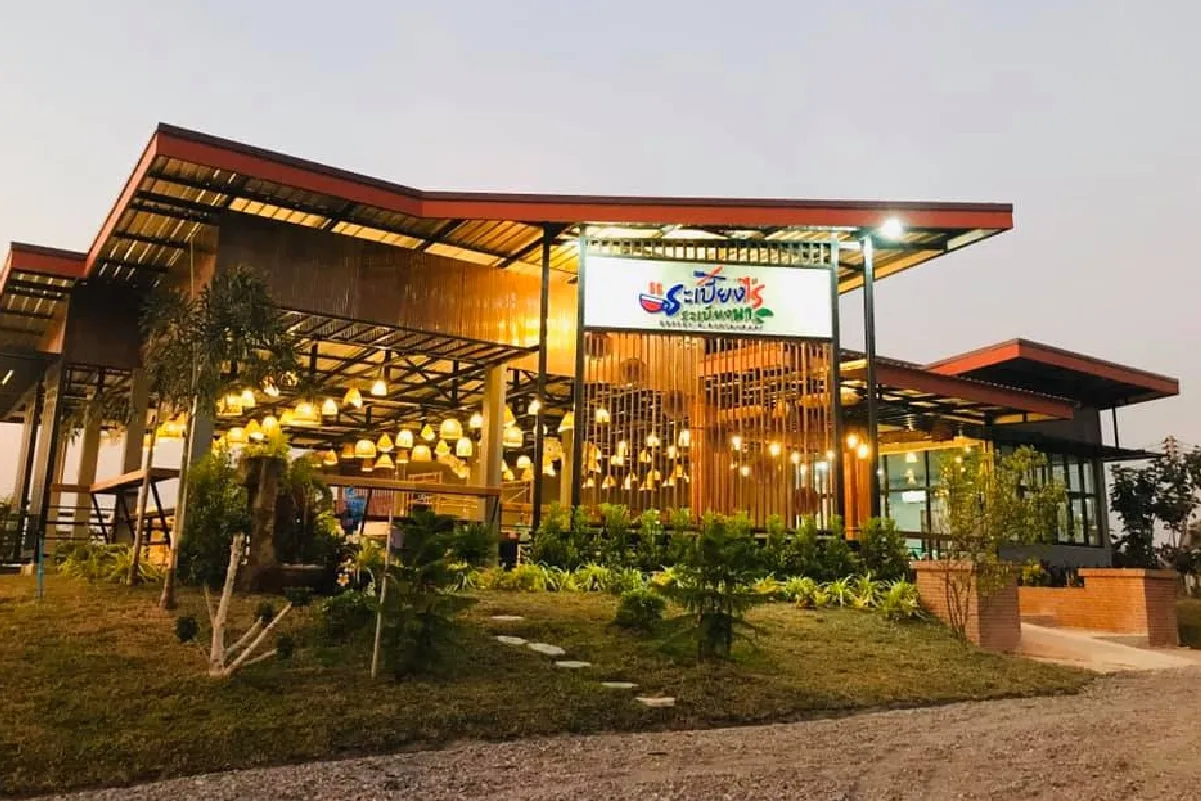
Wooden pavilions among green paddies in Chatturat — cool daytime breezes and live music after dark, with a resort next door if you want to stay.
Try mackerel miang, clay-pot tom yum, mixed seafood yum, and steamed sea bass with lime when the rice fields turn gold at dusk.
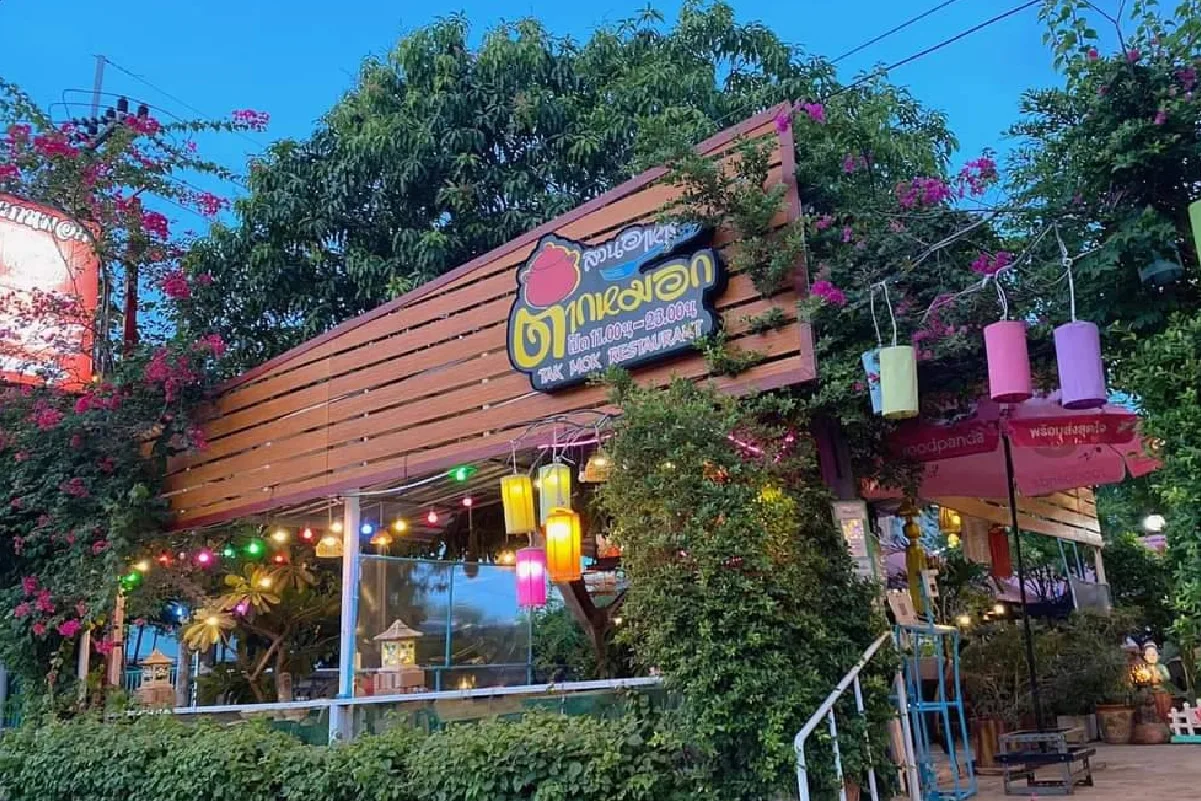
The jaew hon house most locals name first — Nonthanakorn Road, shade trees, soft folk songs, and herbal broth bubbling on the table.
Start with the marinated-pork jaew hon set, then add som tam, yum, and grilled plates when you want the classic Chaiyaphum night table.
05
Souvenirs from Chaiyaphum
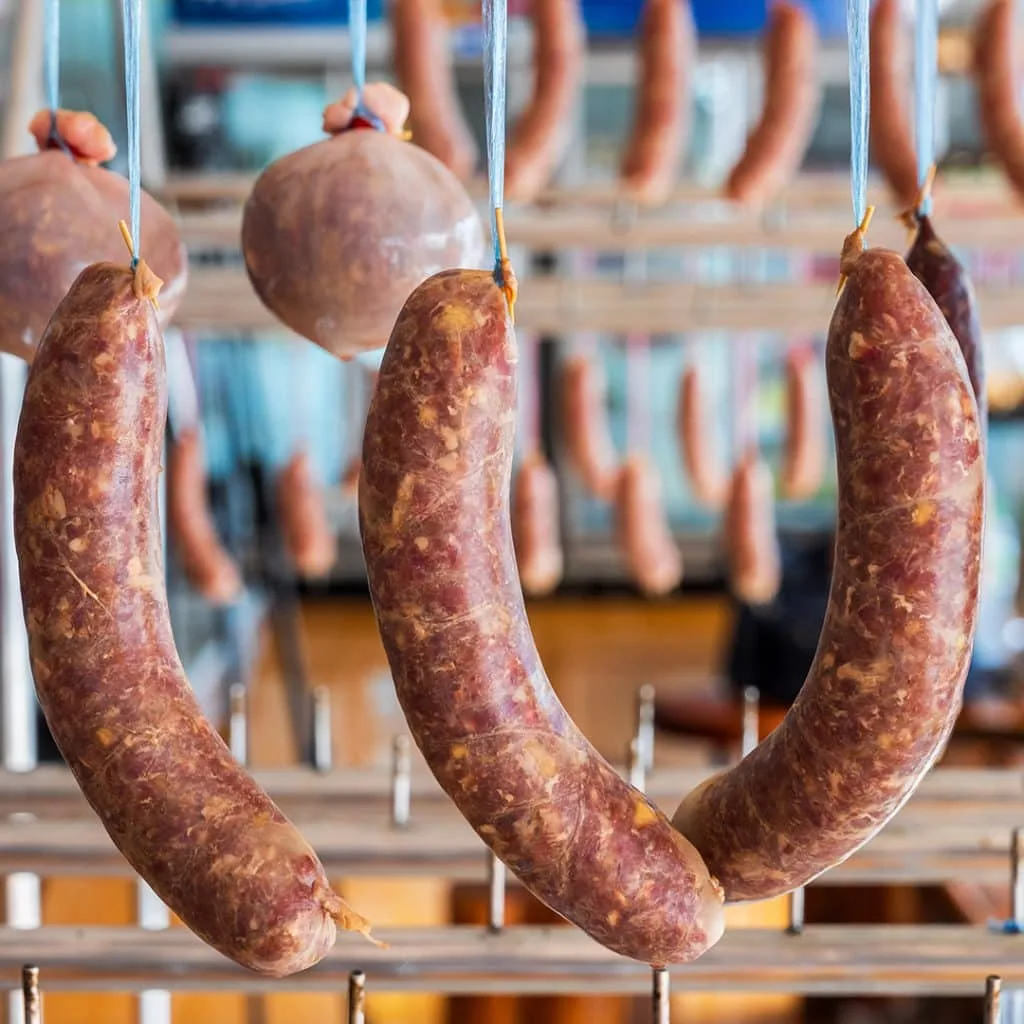
Chaiyaphum’s gift bag starts with mum — the province’s number-one edible souvenir — then fills with Ban Khwao mudmee silk, GI fruit from Ban Thaen and Nong Bua Daeng, and small woven pieces for the road home. Stock mum and Isan sausage along the Mittraphap (Asia Highway) stretch between Chatturat and the city; buy silk at the Ban Khwao silk centre.
06
Local Culture & Vibe
Chaiyaphum keeps Isan time in public — processions for the first lord of the city, giant incense trees before Ok Phansa, ancient ordination rites, and village sports that still smell of woodsmoke. Come for a ceremony and you meet the province at its most itself: devout, proud, and rooted in the highland plain.

07
Travel Info & Getting There
How to reach Chaiyaphum from Bangkok, and how to move around once you arrive.
Chaiyaphum has no scheduled passenger airport, so you fly a neighbour and drive in. Khon Kaen (KKC) is the easiest door — frequent hops from Don Mueang and Suvarnabhumi in about an hour, then roughly 150 kilometres southwest into town, about 2–2.5 hours on Highways 2 and 201. Nakhon Ratchasima (Korat) works if that flight fits; from there Highway 201 through Sikhio and Chatturat is the classic run into the province.
About 330–340 kilometres and a 4–5 hour drive in ordinary traffic. Take Highway 1 (Phahonyothin) to Saraburi, then Highway 2 (Mittraphap) and peel north on Highway 201 at Sikhio — through Dan Khun Thot and Chatturat into Chaiyaphum town. A second line runs Highway 21 toward Chai Badan, then Highways 205/204 past Thep Sathit and Chatturat — useful if you want Pa Hin Ngam’s Siam tulips before you reach the city.
There is no station in the city itself. Ride the Northeastern Line from Krung Thep Aphiwat and alight at Chatturat (about 40 km south of town) or Ban Lueam (about 35 km), then continue by bus, songthaew, or hired car. Watabaek in Thep Sathit is another stop if you are heading for Pa Hin Ngam. Book an express or rapid service; the last stretch is always a road hop.
The simplest door-to-door ride: coaches from Bangkok’s Mo Chit 2 (Chatuchak) cover about 330–340 kilometres in roughly 4.5–6 hours and roll into Chaiyaphum Bus Terminal. Air Chaiyaphum, Nakhonchai Air, Chaiyaphum Chong Charoen, and Transport Co share the corridor — day and evening departures, with some boards also at Rangsit. Daylight seats if you want Mittraphap’s rice fields; overnight if you want coffee already under highland wind.
Town is compact between the bus terminal, Chaopho Phraya Lae shrine, and the evening food streets — walkable in a pinch, with songthaews, motorbike taxis, and tuk-tuks for short hops. Grab is thin outside the centre. Rent a car or hire a driver for Tat Ton (about 20 km), Mo Hin Khao and Phu Laen Kha, Pa Hin Ngam / Sai Thong tulip fields, Chulabhorn Dam, and Phu Khiao. Highway 201 is the spine; the Phang Hoei parks and Kon San highlands sit a turn off it.
November to February brings cool, clearer days for ridge walks, Mo Hin Khao camping, and easy town hours. June to August is Siam-tulip season at Pa Hin Ngam and Sai Thong; May is Chaopho Phraya Lae / sixth-month merit; early February is Bun Lom Khao Yai in Ban Khwao. May through October greens the parks and fills waterfalls, with rain often on the afternoon clock. March–April is the hot stretch — start outdoor sites at dawn.
Continue the Journey