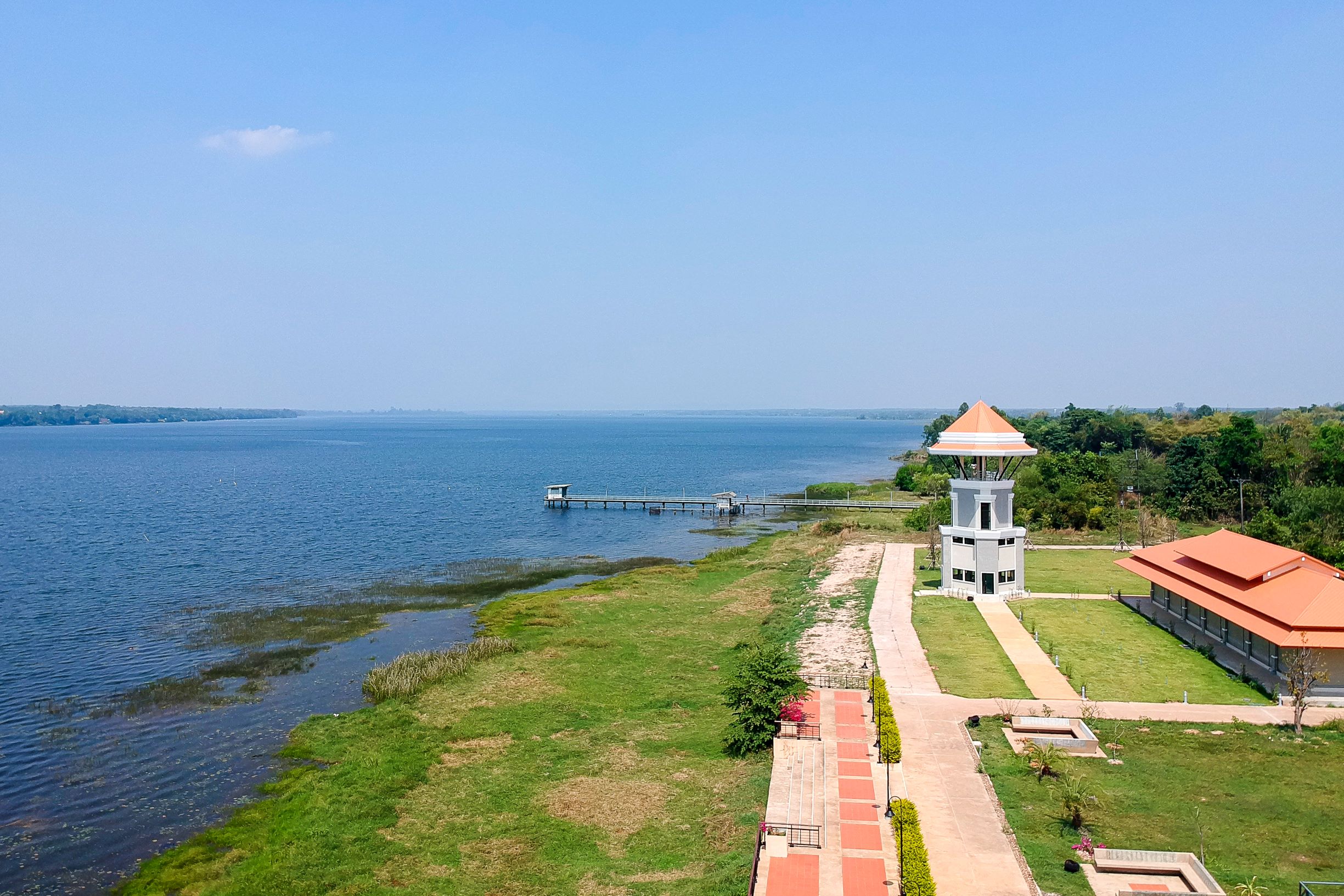
Bueng Khong Longบึงโขงหลง
A broad freshwater lake folded among hills — morning mist, migrating birds, and slow evenings over the water. Pair it with Kham Somboon Beach or a boat to Don Pho when you want the quiet side of Bueng Kan.

 ThailandLover
Contact
01
Geography & Climate
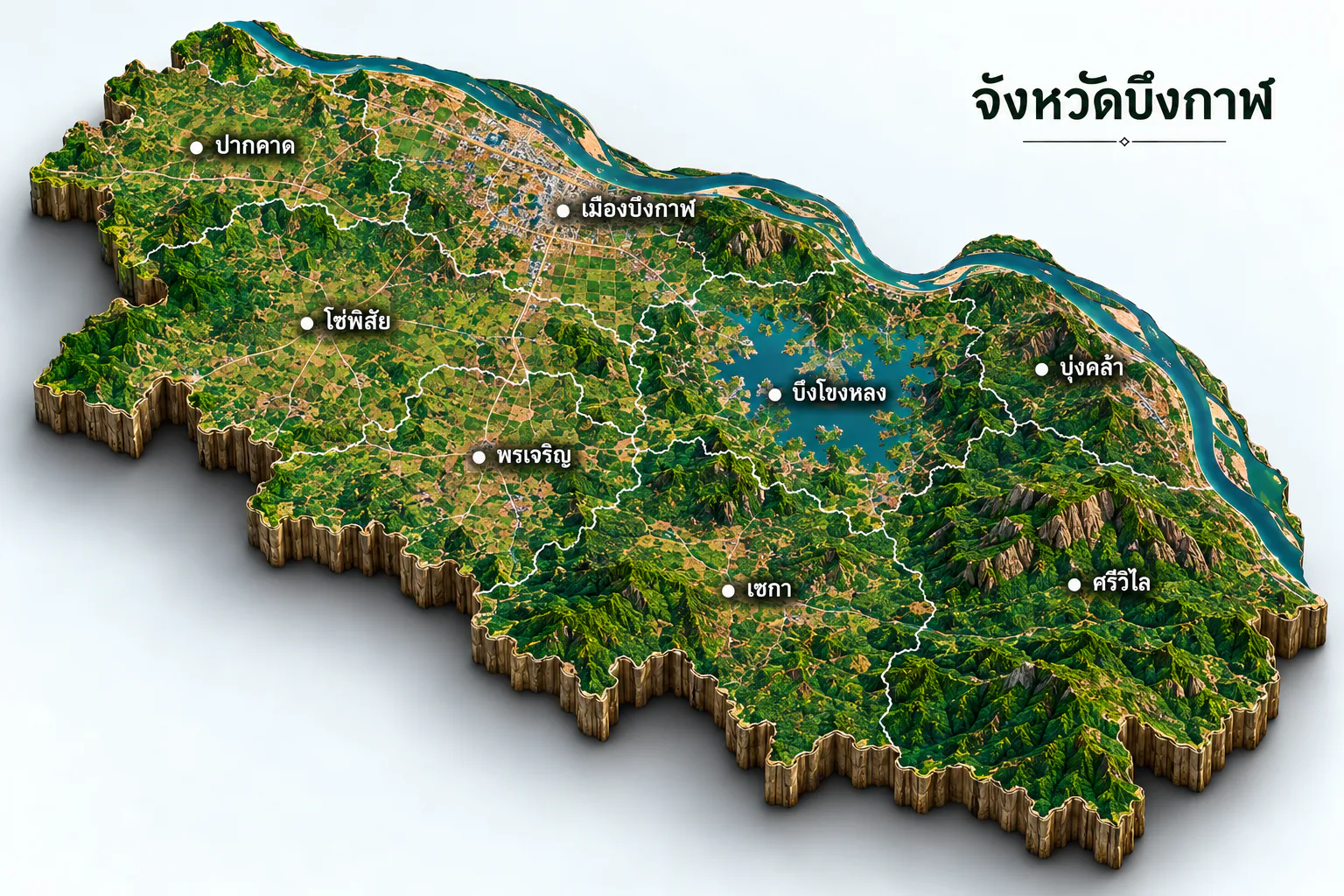
Bueng Kan sits on the upper Mekong rim of northeastern Thailand — about 4,306 square kilometres and some 750 kilometres from Bangkok. The river draws its northern and eastern edge opposite Laos’s Bolikhamsai; Nakhon Phanom lies to the east, Sakon Nakhon to the south, and Nong Khai to the west.
Most of the land is open Mekong-valley plain and farm country. Inland, Bueng Khong Long gathers a wide wetland lake and bird-rich shallows; toward the south and southeast the ground lifts into sandstone hills and forest ridges — the country of Phu Tok and the whale-shaped outcrops travellers still come to find. The capital faces the Mekong at a quiet bend, a classic twin-shore frontier between Thailand and Laos.
The climate is tropical monsoon. Cooler, clearer days settle from about November to February; March to May is the hot stretch; rains green the paddies and raise the river from roughly May through October.
Best time: November – February for cool, dry Mekong days and clear ridge walks; May – October for green paddies, fuller water, and quieter green-season travel.
02
History & Heritage
Bueng Kan’s story begins as a Mekong settlement, not a province. The land once sat under Amphoe Chaiyaburi of Nakhon Phanom, when the district office still stood near the mouth of the Songkhram. In time the seat moved to the Mekong shore at Ban Bueng Kanchan — opposite Pakxan in Laos’s Bolikhamsai — and the riverside village that would lend the province its name began to gather weight on the map.
In 1916 (B.E. 2459) the state built a new district office here and transferred Chaiyaburi from Nakhon Phanom to Nong Khai; the old Songkhram seat was reduced to a tambon under Tha Uthen. The place was still known for a long marsh — some 160 metres wide and about three kilometres long — that locals called Bueng Kanchan. After a Ministry of Interior inspection in 1932 (B.E. 2475), Amphoe Chaiyaburi was renamed Amphoe Bueng Kanchan; two years later, in 1934 (B.E. 2477), the spelling settled as Amphoe Bueng Kan. From that district, Seka, Phon Charoen, Si Wilai, and Bung Khla later peeled away as the eastern Mekong corridor grew.
A province was the next demand. From 1994 (B.E. 2537) people here pressed for provincial status so they would not face the long haul down Nong Khai’s Mekong spine — more than 200 kilometres from the farthest amphoe to the old capital — simply to deal with government business. Nearly two decades on, the Act Establishing Changwat Bueng Kan, B.E. 2554 took effect on 23 March 2011. Eight districts left Nong Khai to form Thailand’s youngest province: Mueang Bueng Kan, Seka, So Phisai, Bung Khla, Bueng Khong Long, Pak Khat, Phon Charoen, and Si Wilai — with Amphoe Bueng Kan renamed Mueang Bueng Kan at the same stroke.
What travellers meet today still carries that twin memory: a quiet district town that once answered to Nong Khai, and a young province whose landmarks — Phu Tok, Hin Sam Wan, and the wetland of Bueng Khong Long — now stand under its own name on the Mekong frontier.

03
Top Attractions
Sandstone whales, wooden cliff walks, naga caves, Mekong shallows, and Phu Wua waterfalls — places that shape a Bueng Kan journey, listed A to Z.
A broad freshwater lake folded among hills — morning mist, migrating birds, and slow evenings over the water. Pair it with Kham Somboon Beach or a boat to Don Pho when you want the quiet side of Bueng Kan.

A sandstone cascade in Phu Wua where water slips under a natural rock bridge about a hundred metres wide. Upstream, Bueng Chorakhe opens a sandy shore — a wilder stop for hikers who like geology with their swim.

The town’s guardian shrine for two sister spirits lost on the Mekong — still the place locals ask for safe journeys and good fortune. November brings a grand offering rite and dance that fills Chao Mae Song Nang Road.
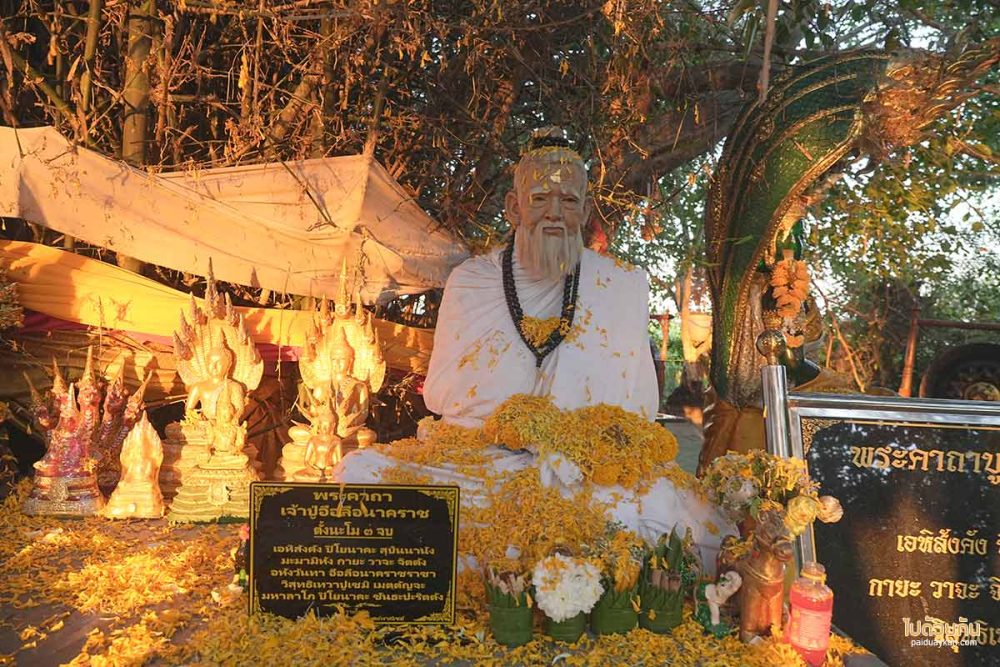
A naga shrine on Don Pho island in Bueng Khong Long — reached by a short boat across clear lake water. Many travellers stop here before or after the Naka Cave climb, for faith and the quiet ride in equal measure.
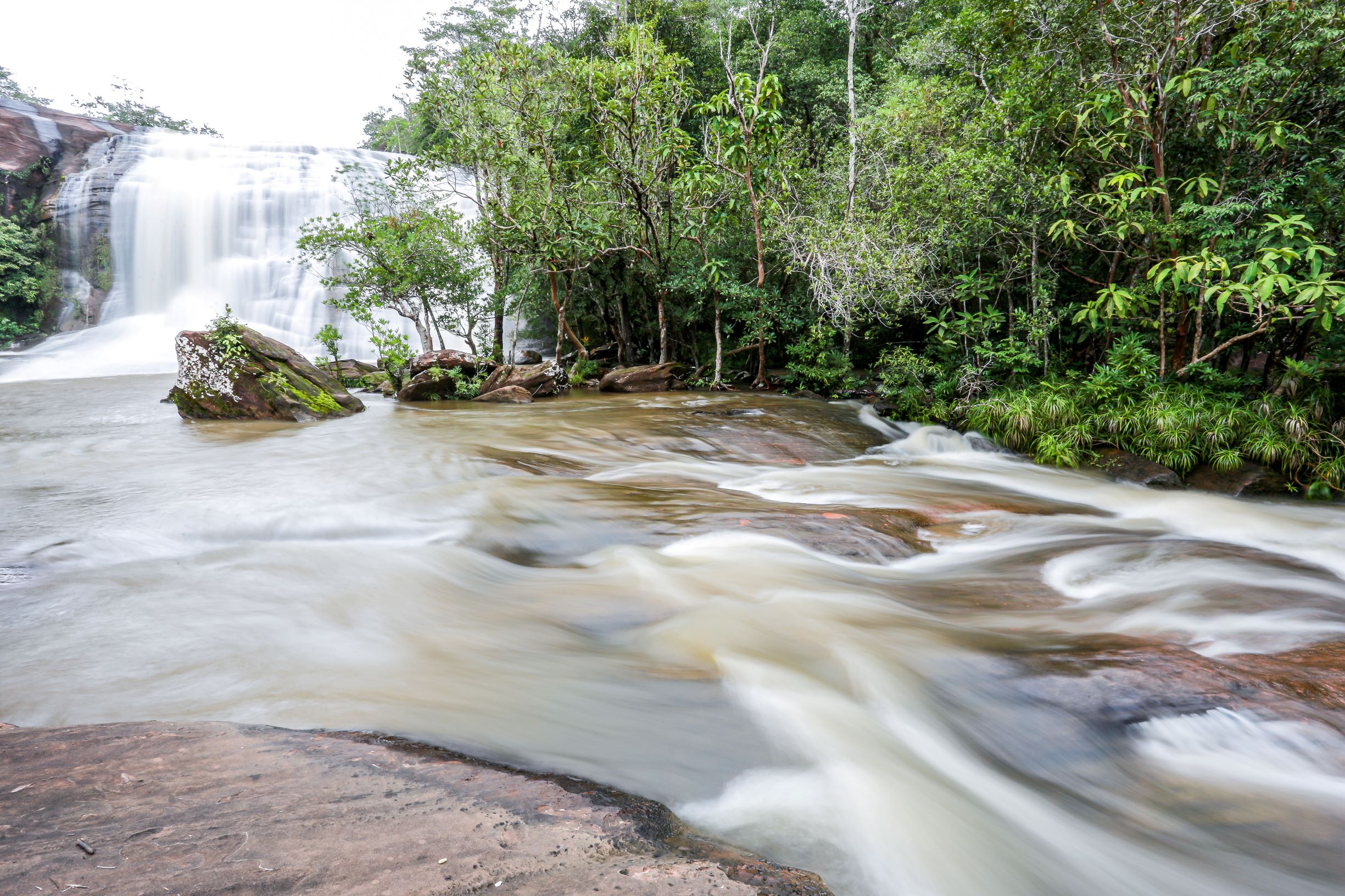
Once called Huai Kra-am by locals, this three-tier fall on Phu Wua throws a rainbow spray when sun hits the mist — especially on the third drop. Best after rains, when the forest is green and the cascade runs full.
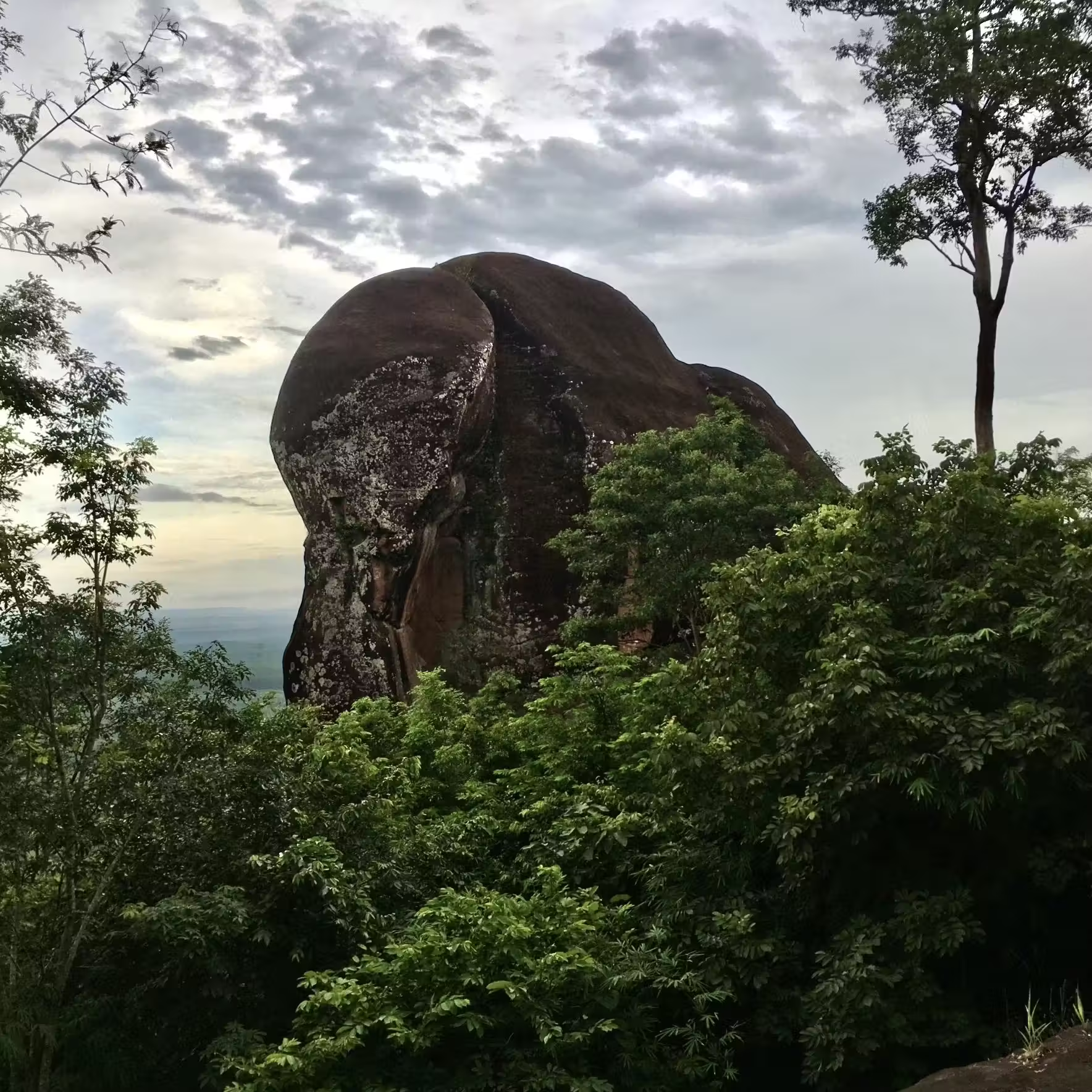
A cliff outcrop shaped like an elephant’s head on the Phu Sing ridge near Three Whale Rock. Quieter than the whales, with the same forest panorama — an easy extra viewpoint when you already have a morning on the mountain.
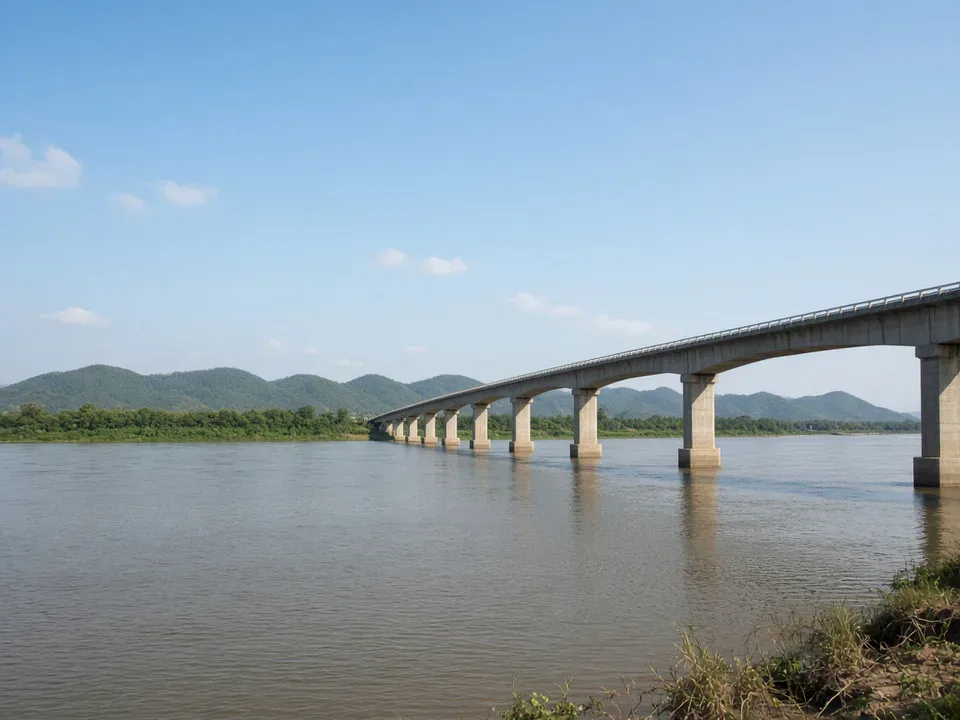
The newest Mekong span between Bueng Kan and Bolikhamsai’s Pakxan — a clean landmark for photos from the Thai approach park. With a passport, it is also the day-trip door into Laos across the river.
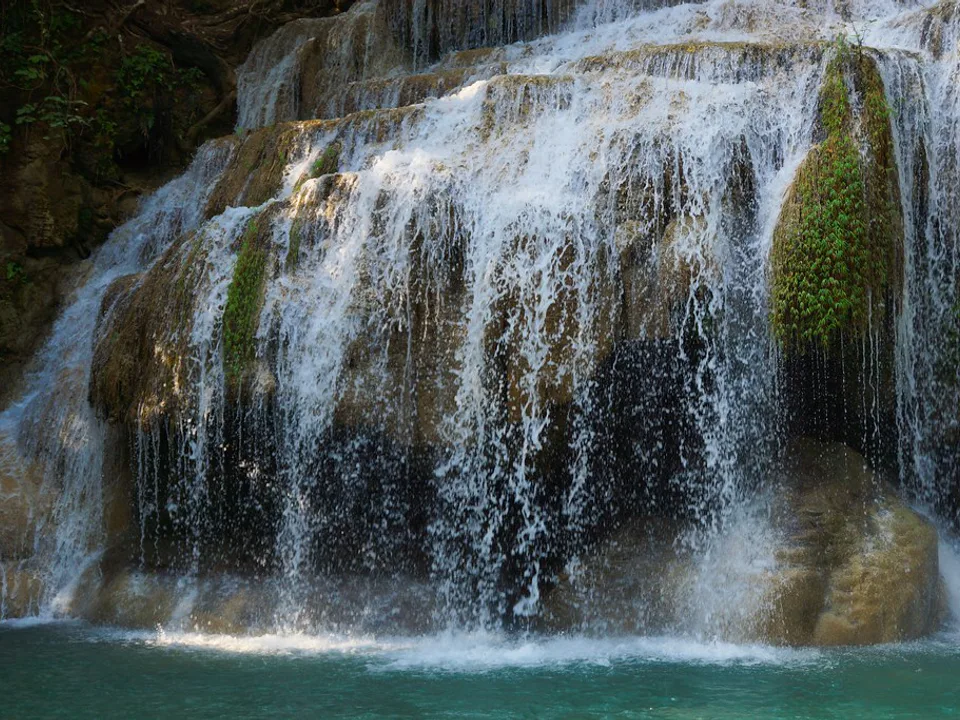
A stream valley where sandstone blocks look like a naga at play in the water — a local sacred stop as much as a nature walk. Come for light adventure, cool shade, and the stories villagers still tell beside the rocks.

The Mekong’s deepest bend in front of Wat Ahong Silawat — locals call it the river’s navel, a naga gate to the underworld. Whirlpools, evening wind, and Naga fireball season after Buddhist Lent give the rapids their quiet pull.
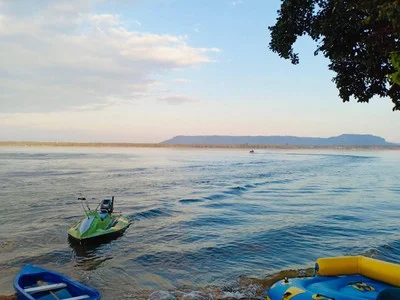
Nicknamed “Bang Saen of Isan” — a pale freshwater strand on Bueng Khong Long with Phu Langka as the backdrop. Seafood shacks, sunset on the lake, and an easy family pause between Naka Cave and town.
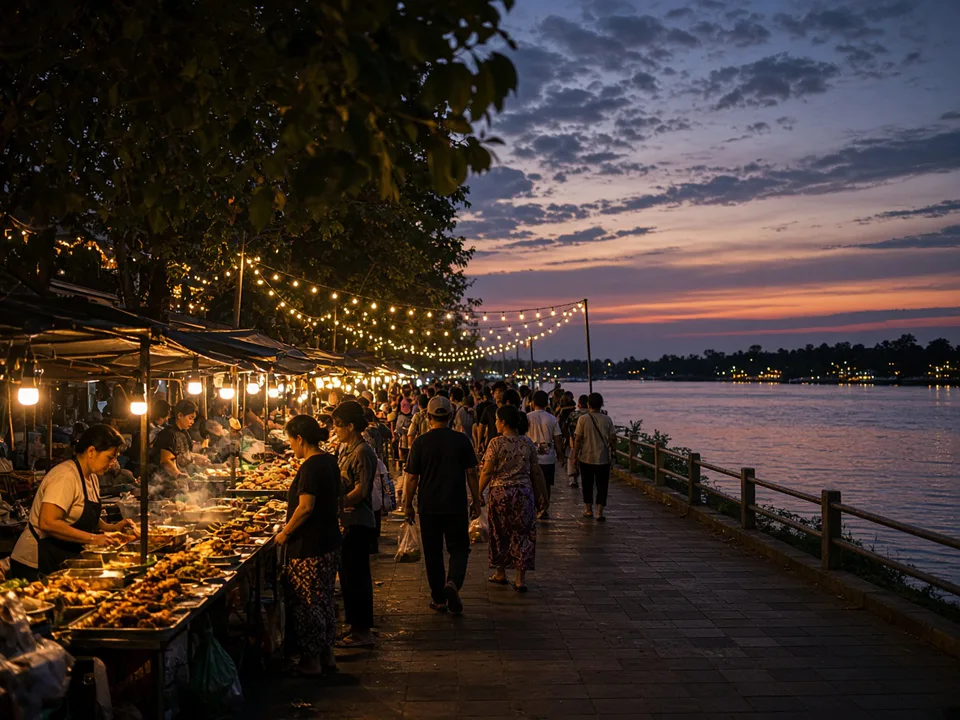
The riverside must-visit market in front of Bueng Kan Municipality — local snacks, OTOP gifts, and evening air off the Mekong. Fridays to Sundays from late afternoon into night are when the street feels most alive.

A sixty-year-old wooden house in So Phisai that keeps Isan kitchens, sin cloth, and black-and-white royal photographs alive. Naga street art on the timber walls ties village faith to a walkable community museum.
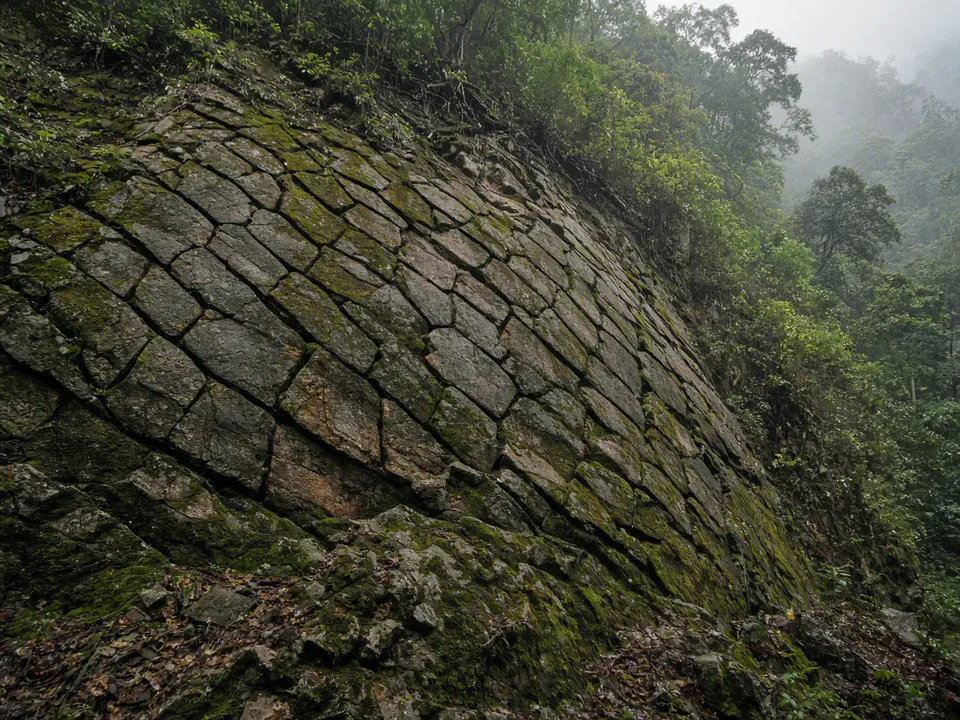
Not a dark cavern but a sandstone massif cracked into naga-scale patterns — sun cracks that look like serpent hide. Book QueQ ahead, hike with a local guide, and allow half a day for the climb and the legend.
Location · Phu Langka National Park, Bueng Khong Long District

Forest ridges shared with Nakhon Phanom — Naka Cave, Bus Rock viewpoints, camping, and cool dawn air. A green escape for hikers who want more than a single photo stop on the southern Bueng Kan map.
Location · Bueng Khong Long District (shared with Nakhon Phanom)
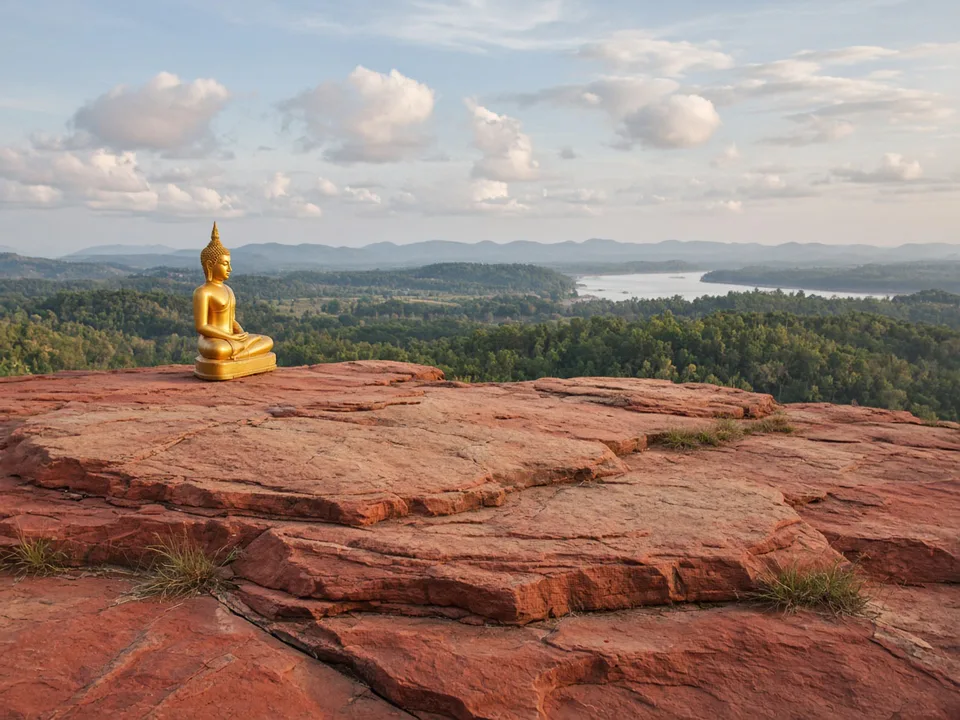
A red-sandstone plateau named for a crouching-lion rock, with golden Luang Pho Phra Sing for merit and wide views toward the Mekong and Laos. Pair it with Three Whale Rock on the same Phu Sing morning.
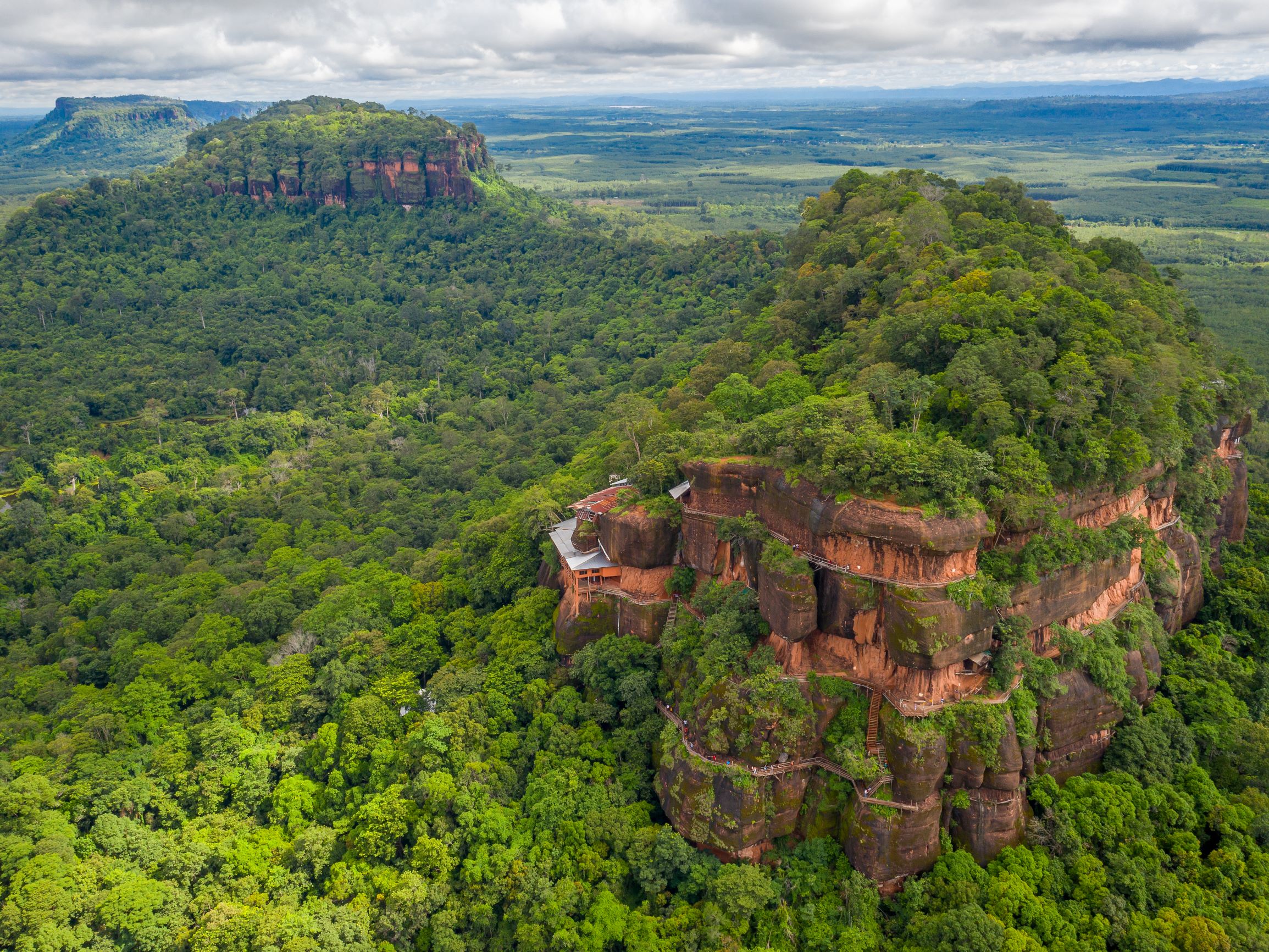
Wat Jetiyakhiri Wihan — wooden walkways wrapping a lone sandstone mountain. Heights, forest views, and winter sea fog make this Bueng Kan’s essential climb; go early, move slowly, and respect the working meditation retreat.
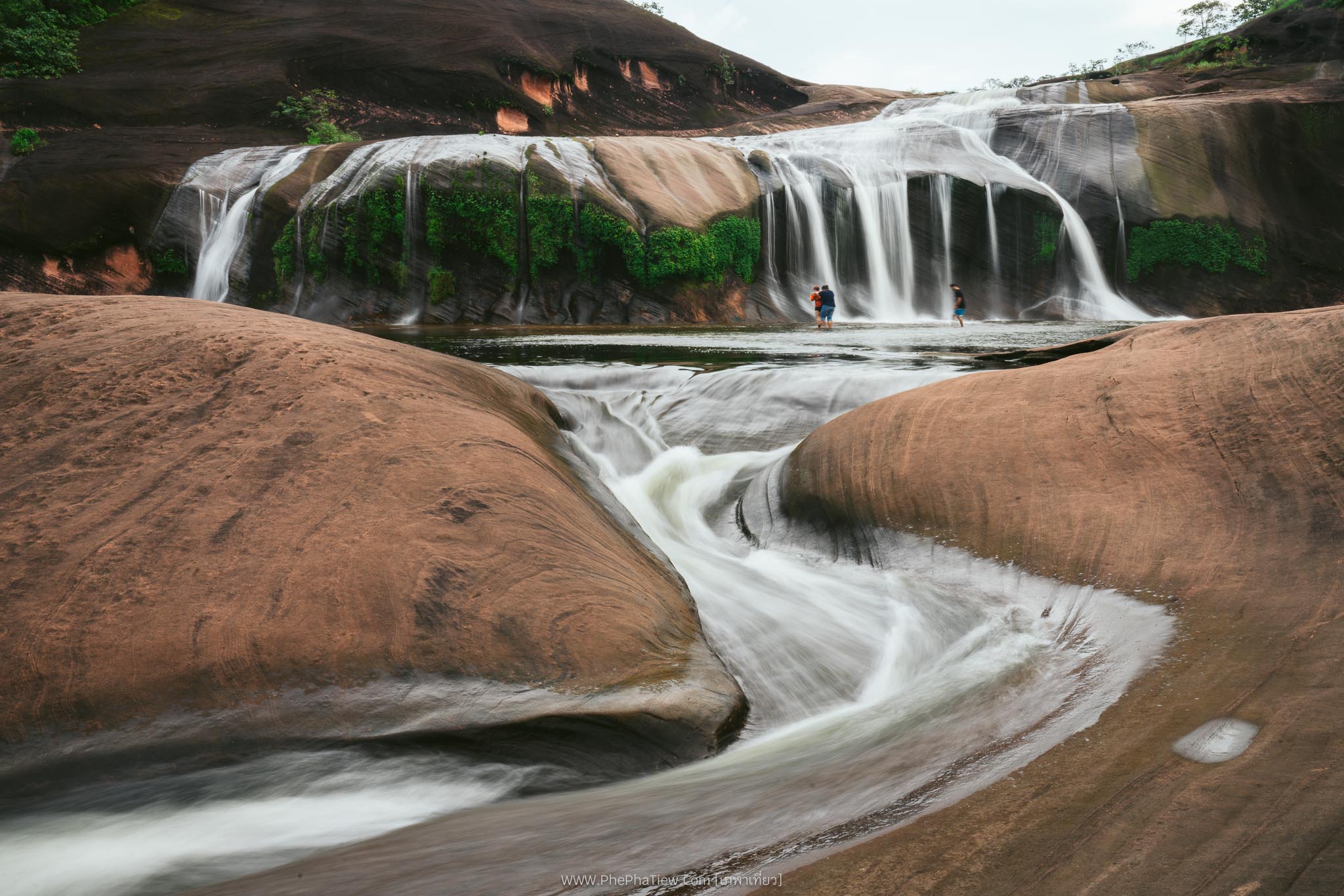
Dry evergreen and dipterocarp forest home to elephants, barking deer, and the rare Phu Wua lizard found nowhere else. Base yourself here for Tham Phra, Chanen, and Chet Si — sanctuary trails with real wild edges.

A sandstone shelf pocked with natural pits like a field of stone jacuzzis after rain. An easy drive-and-short-walk photo stop — sunset light turns the pitted rock into one of Bueng Kan’s oddest, loveliest surfaces.
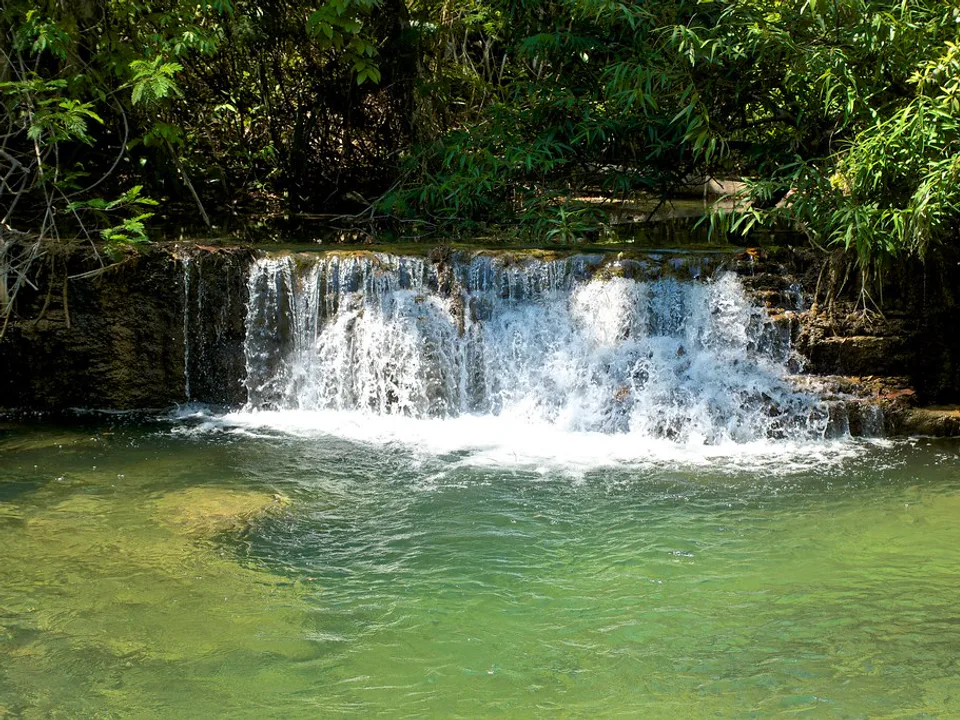
Tiered falls in green forest with cool water year-round and a short approach — ideal for picnics, camping, and a local swim when the big Phu Wua hikes feel like too much for one day.

A high sandstone veil in deep forest — fullest in the green season, quiet enough to feel like the “heavenly mansion” of its name. A moderate nature walk for travellers chasing waterfalls beyond the famous three.
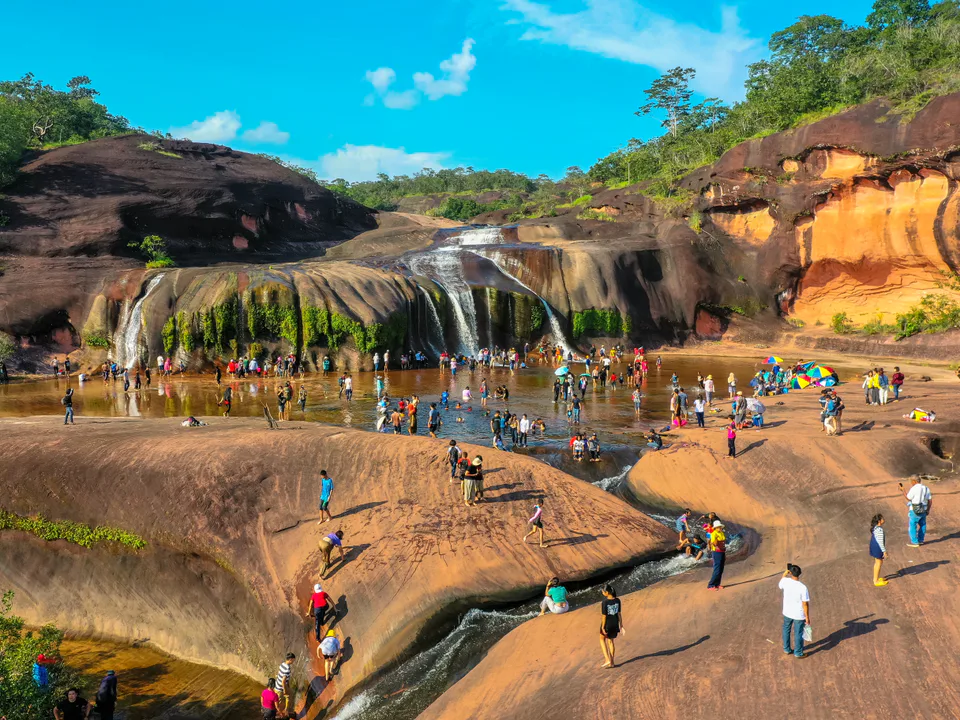
Bueng Kan’s “forest water park” — a three-tier sandstone cascade with a natural rock slide, reached by a short boat then a walk. July to early October is peak water; bring grip shoes and a sense of play.
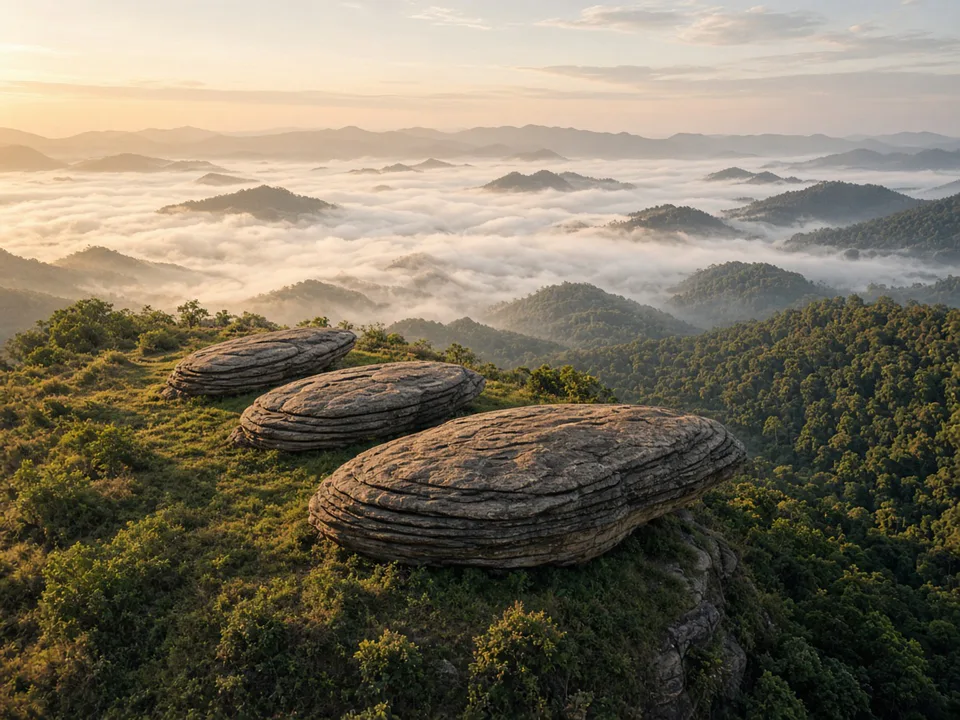
Hin Sam Wan — ancient sandstone whales of parent and calves on a cliff edge above endless forest. Sunrise is the prize; nearby Ruesi Cave, Phu Sing Gate, and Elephant Rock fill out a full Phu Sing morning.
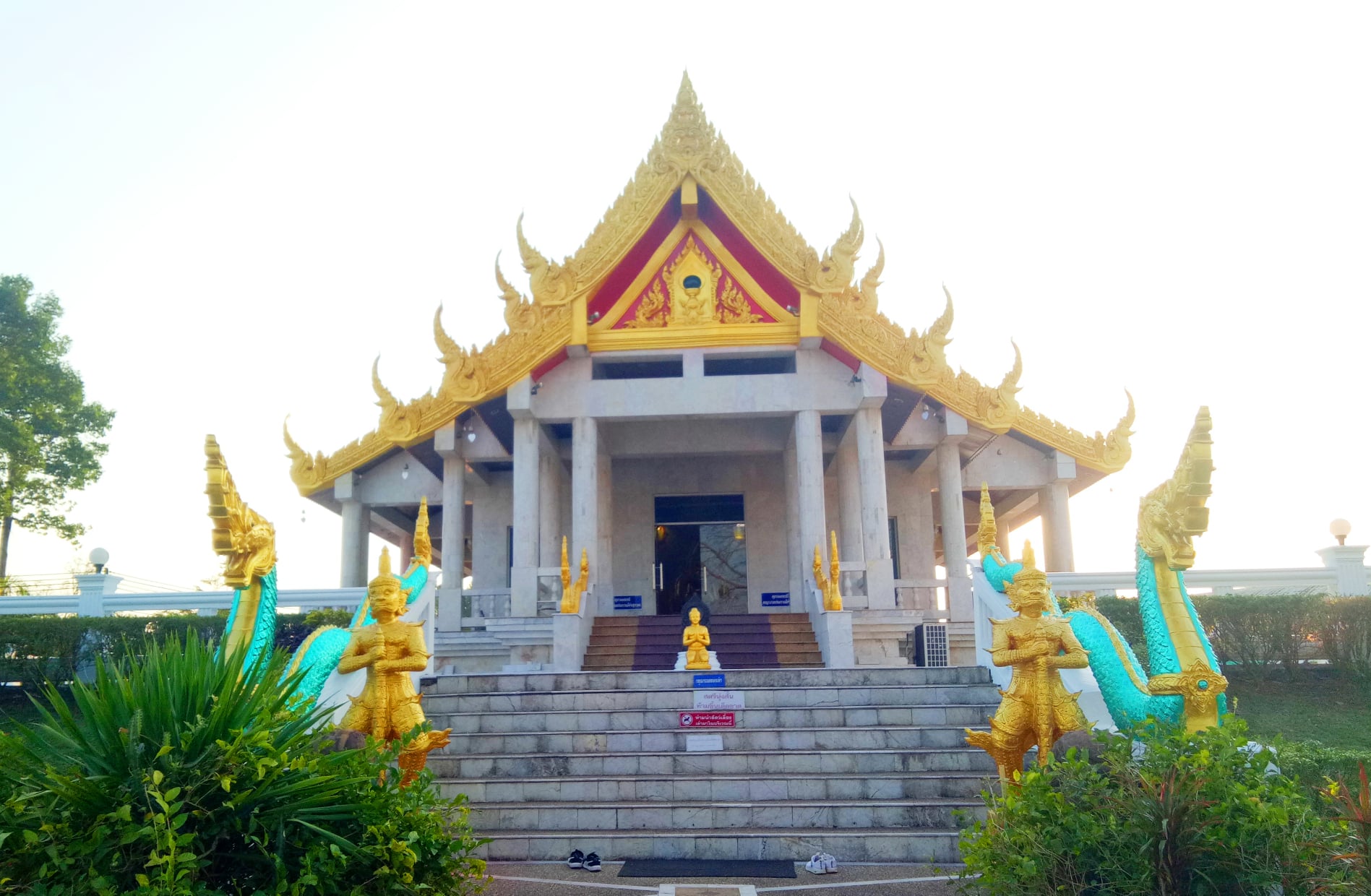
A small Mekong-side temple at Kaeng Ahong, where faith marks the river’s deepest navel. Sit with the current, listen for Naga fireball lore after Lent, and let the quiet bank reset the pace of your trip.
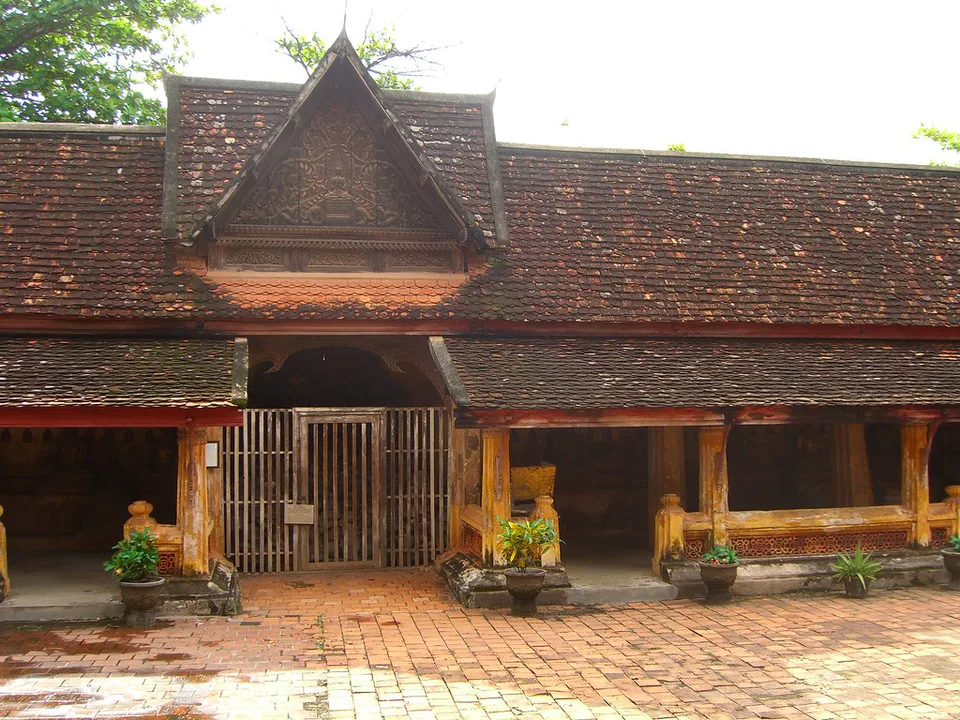
Home of Luang Pho Phra Yai — a Lan Xang-style Maravijaya Buddha treasured along this Mekong bend. An old junk-rig boat on the grounds adds a river-trade memory to a classic merit stop.
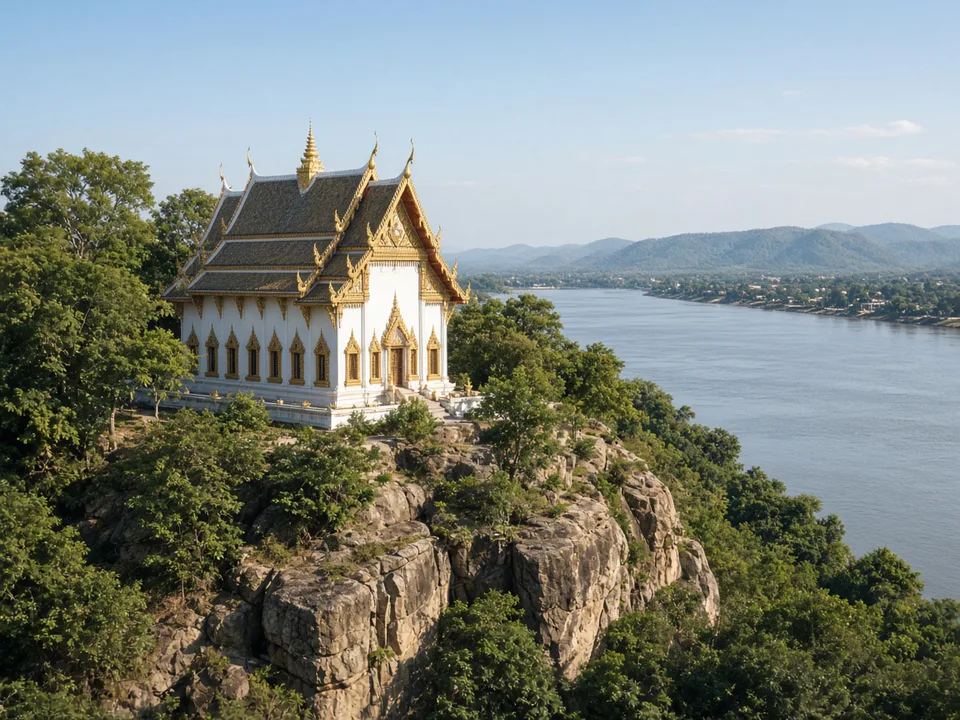
Also called Wat Tham Si Than — an inverted-bell ubosot on a rock outcrop above a cave reclining Buddha. Shade, silence, and Mekong–Laos views make Pak Khat’s hillside wat a calm counterpoint to the cliff hikes.
04
Local Flavours & Food
Bueng Kan eats with the Mekong on the plate — plump pla khang, soft river fish, and pla khae grilled, tom-yum’d, or pounded into sharp fish laab while Lao hills darken across the water. Come from late afternoon for breeze and sunset; the tables below are where travellers begin. Hours can change, so check before you go.
Crisp outside, tender inside — the easiest Mekong fish for mixed tables and children. Mae Nam and riverside rooms serve it alongside pad cha when you want river flavour without full Isaan heat.
Whole fish blistered until the skin shatters and the flesh stays sweet — dipped in fiery jaew. Order it as the centrepiece, then add tom yum or laab around the edges of the table.
Isan fish laab with toasted-rice heat — pla khang or pla khae minced sharp and eaten with sticky rice and raw greens. Bung Khla’s Khrua Rim Khong is known for pla khae; town Mekong rooms do pla khang every night.
The clearest taste of Bueng Kan’s hero fish — firm, silky catfish briefly blanched and dipped in seafood chilli sauce. Ask if today’s catch is swimming in the holding tank before you order.
The dish almost every Mekong table shares — sour-spicy broth with fatty pla khang that melts into the soup. Khrua Saway, Kin Lom Chom Khong, and Mae Nam keep it on the must-order list.
Where to Eat
Mekong fish houses, canal gardens, and riverside evenings — Bueng Kan’s tables, listed A to Z. Hours can change; tap Location for the latest pin.
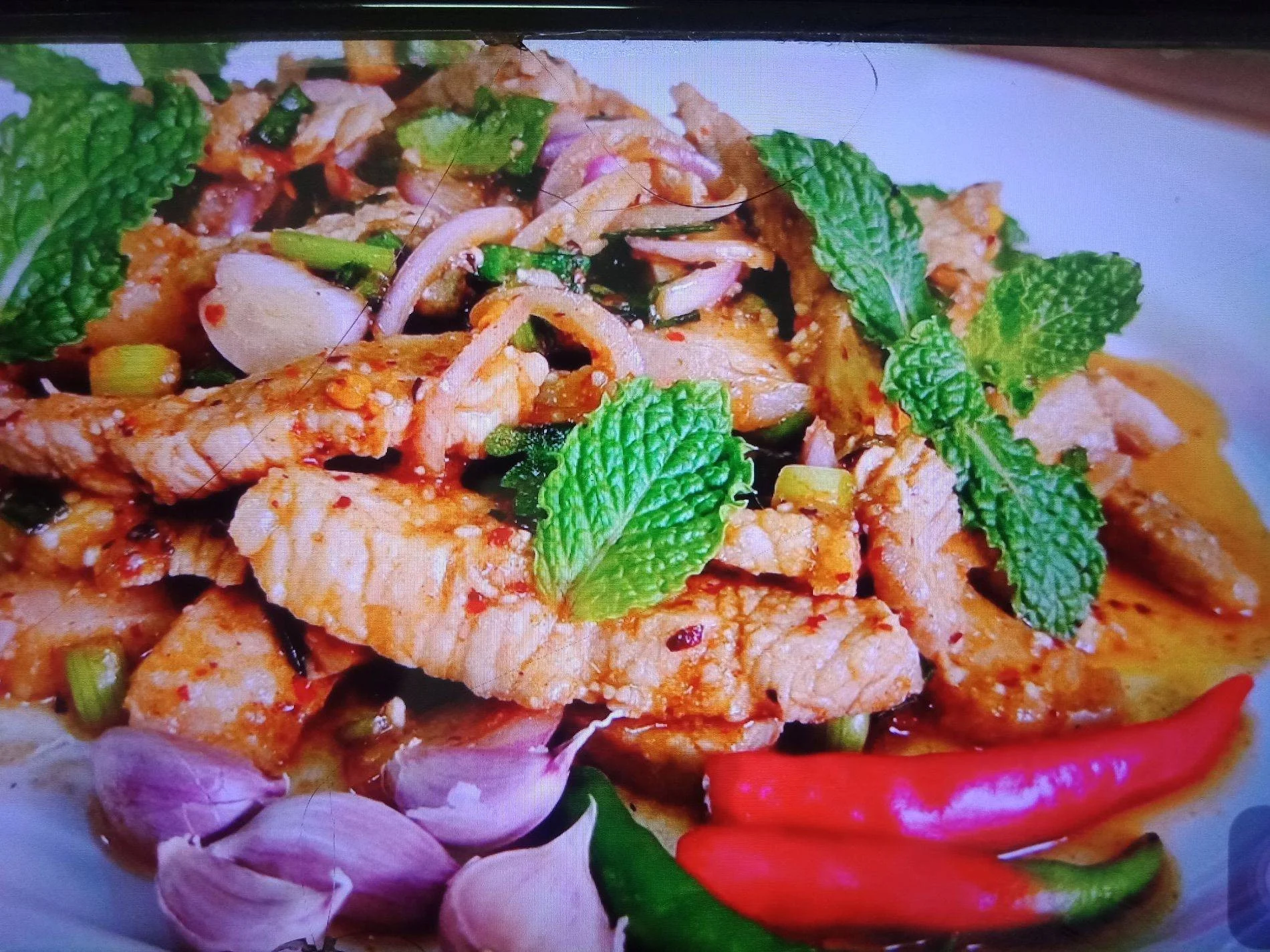
A simple canal-side room on the Phang Khon–Bueng Kan road — cool water, private salas, and friendly prices.
Share Thai–Isan plates in a quieter setting than the Mekong strip when you want shade and an easy local table.
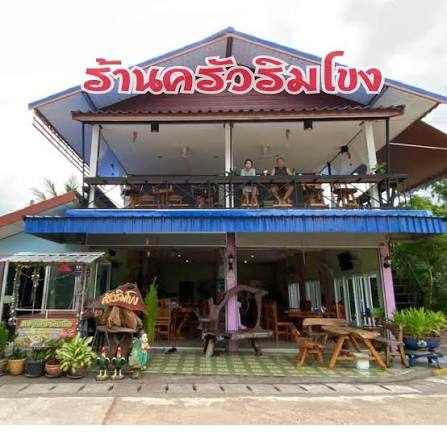
A quiet Mekong cove kitchen in Bung Khla — home cooking, Lao ridgelines, and fewer crowds than town.
Must-orders are sharp pla khae laab, tom yum pla khang, and a shared minced-pork omelette when you want river fish without the city rush.
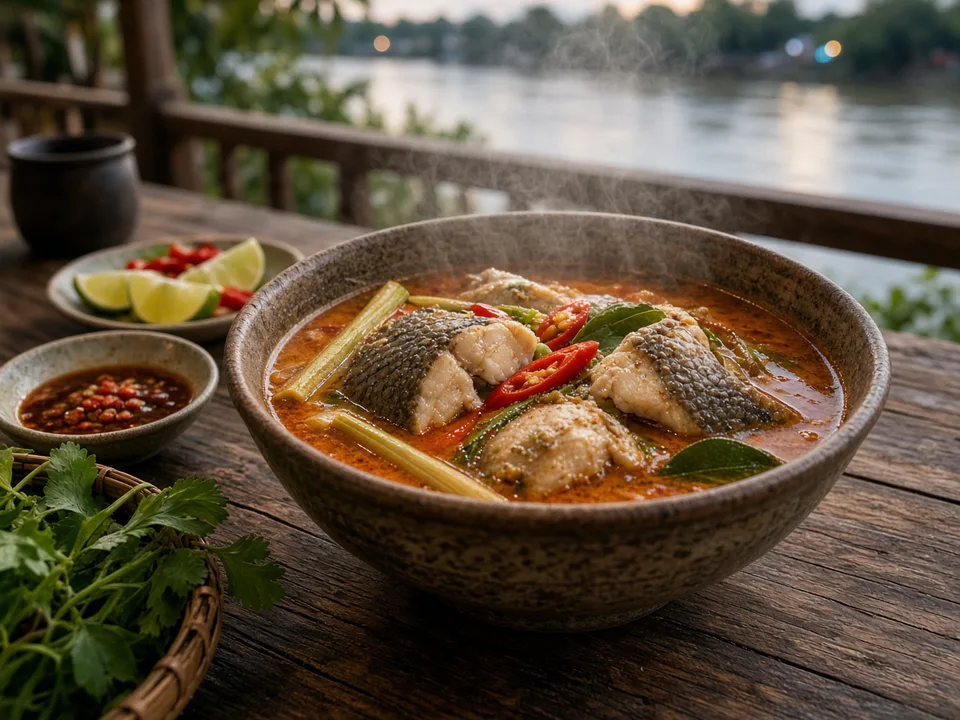
A wide Mekong-view Thai house on Prasat Chai Road — tour groups and locals share the same evening breeze.
Order tom yum pla khang, fish laab, chu chi fish, or drunken stir-fried fish; oysters and river prawns round out a classic Bueng Kan sunset table.

Opposite Makro — a popular town kitchen with a long menu of salads and stir-fries.
Locals send you for blood-cockle yum, fluffy catfish yum, cashew chicken, and fish-head tom yum when you want a full Isan table without the riverfront queue.
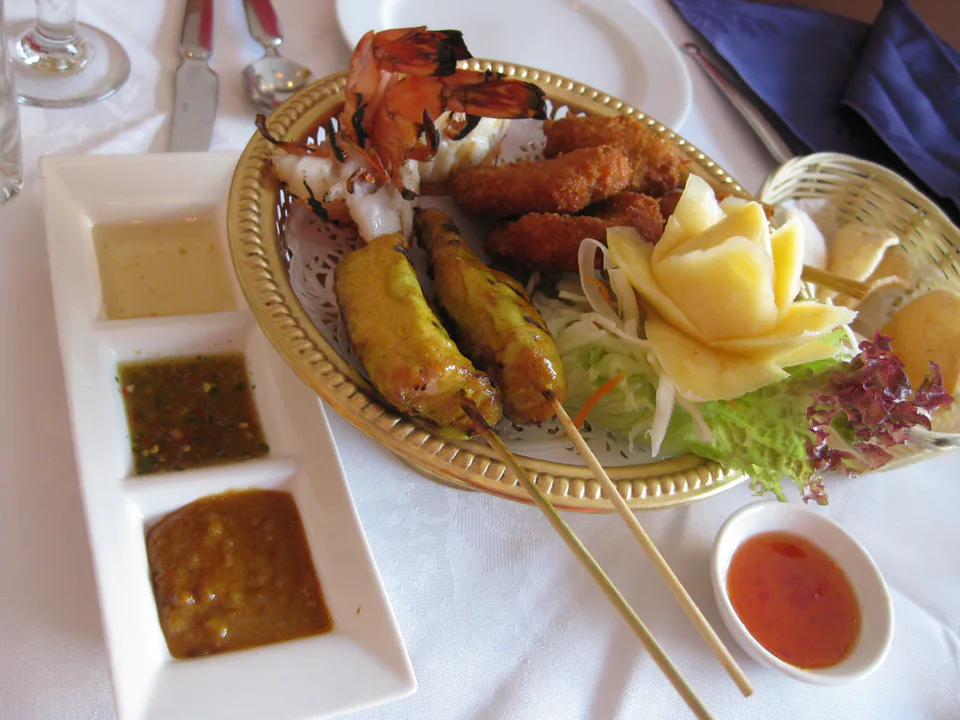
A relaxed roadside room on the Bueng Kan–Phang Khon corridor — easy seating and a broad Thai–Isan menu.
Order snakehead luy suan, gaeng som with cha-om and prawn, or grilled fish when you want a reliable town dinner between Makro and the Mekong.
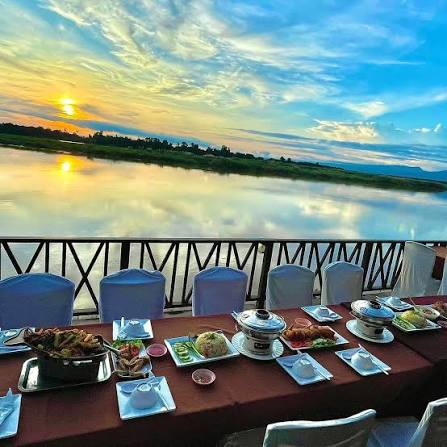
A Mekong bend house in Pak Khat where the Lao hills fill the view — often named among the province’s best river-fish evenings.
Order tom yum pla khang, fish laab, and springy fried fish cakes; come from late afternoon for the widest light on the bend.
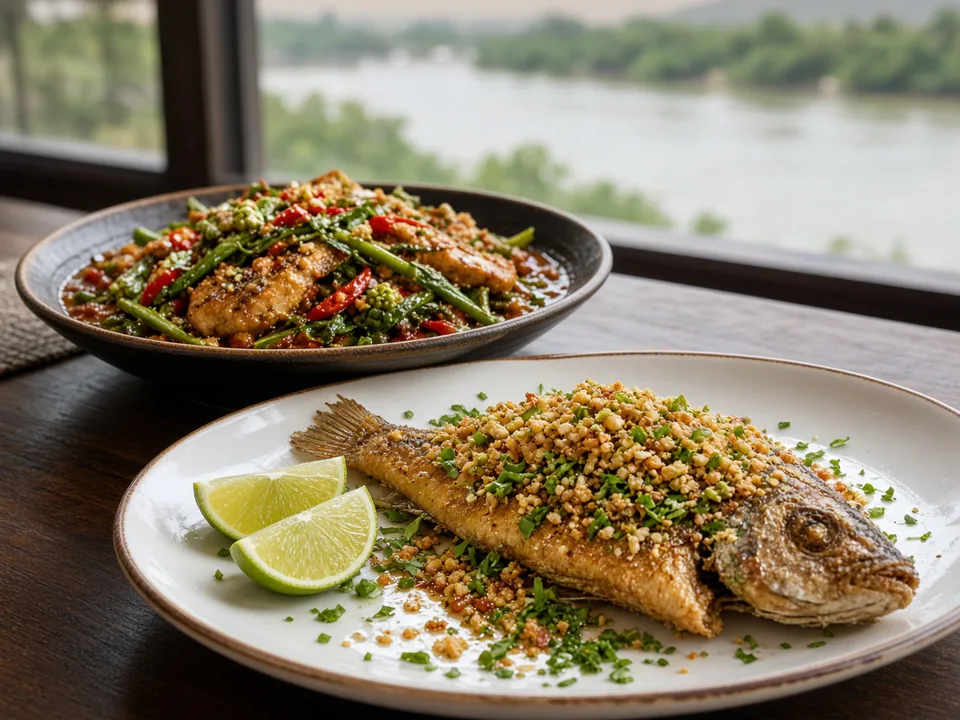
A clear Mekong-view room on Chan Sin Road — seafood trucked fresh from Chonburi’s fish bridge, plus the river catch that defines Bueng Kan.
The house move is soft Mekong fish: pad cha or garlic-fried — order both when you want town convenience with river flavour.
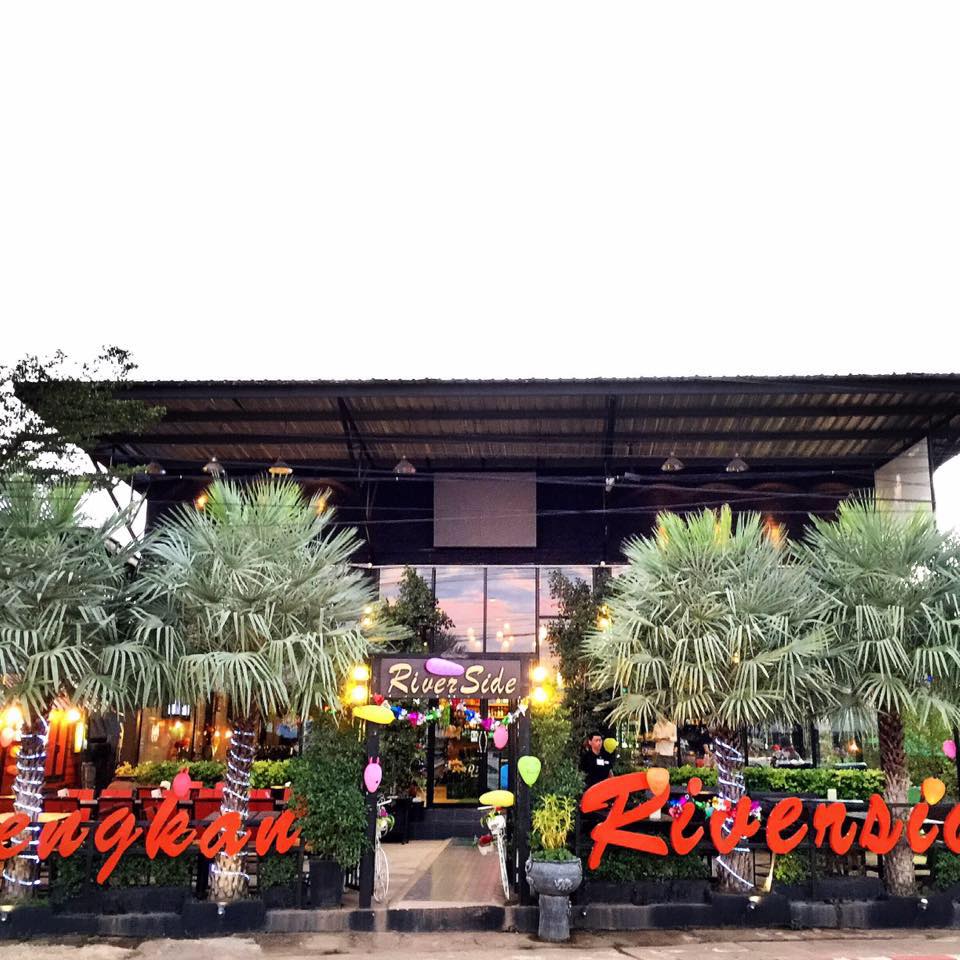
A riverside bar-restaurant on Michai Road — Mekong light from the front tables, live music on some nights.
Share German pork knuckle, sharp yums, Mekong-fish laab, or grilled fattened beef with jaew when you want a longer, looser evening by the water.
05
Souvenirs from Bueng Kan
Bueng Kan packs the Mekong into a bag you can carry — GI pineapple with deep yellow flesh, toad-skin local pumpkin, fruit wines and preserves, and mud-fermented cotton that still smells faintly of river soil. Fill the edible side first, then leave room for Daranake weaves, khaoma, and a small naga keepsake before you leave.
06
Local Culture & Vibe
Bueng Kan’s culture moves with the river and the loom. Thai–Lao evenings share one Mekong shore; mud-fermented cloth from Ban Sa-Ngo still carries the smell of local soil; and naga faith — from Kaeng Ahong to Chao Mae Song Nang — shapes how people ask for safe journeys. Come for a weave, a riverside rite, or a slow market walk, and you meet Thailand’s youngest province at its most itself: devout, crafty, and unhurried.
07
Travel Info & Getting There
How to reach Bueng Kan from Bangkok, and how to move around once you arrive.
Bueng Kan has no commercial airport yet. Fly into a neighbour and drive on — Udon Thani (UTH) is the easiest door, about 190–220 km and roughly 3 hours by road, with the densest Bangkok schedules and the widest car-rental choice. Nakhon Phanom (KOP) and Sakon Nakhon (SNO) are similar distances (about 2.5–3 hours) if those fares or a Mekong detour suit you better. Bangkok hops to Udon take about an hour; land, pick up a car or hire a driver, and use the same wheels for Phu Tok, Three Whale Rock, and Naka Cave.
About 750–760 km from Bangkok — a full day on the road, roughly 10–11 hours with stops. Take Highway 1 (Phahonyothin) to Saraburi, then Highway 2 (Mittraphap) through Nakhon Ratchasima, Khon Kaen, and Udon Thani into Nong Khai, and finish on Highway 212 along the Mekong through Phon Phisai and Pak Khat into Bueng Kan town. The riverside stretch is beautiful but mostly two-lane — drive it in daylight. Many travellers break the trip overnight in Khon Kaen or Udon, then run the last Mekong hours in the morning.
There is no passenger railway into Bueng Kan. Ride the Northeastern Line from Krung Thep Aphiwat to Udon Thani or Nong Khai, then continue by coach, hired car, or rental — roughly 3 hours from Udon, a little less from Nong Khai once you are on Highway 212. Overnight sleepers into Udon plus a morning road hop remain the classic rail-and-road combo if you prefer not to fly.
The simplest door-to-door ride: air-conditioned coaches from Bangkok’s Mo Chit 2 (Chatuchak) cover about 750 km in roughly 10–12 hours and roll into Bueng Kan Bus Terminal. Sawasdee Isan, Budsarakham, Lotus Phibun, and Chiratkan are among the regulars — day seats from mid-morning and many evening overnight services that land near dawn. Routes often run Bangkok–Kumphawapi–Bueng Kan or Bangkok–Nong Khai–Bueng Kan (some continue to Bung Khla). Book ahead for cool-season and long weekends.
Attractions sit in different amphoe — Phu Tok (Si Wilai), Three Whale Rock (Phu Sing / Mueang), and Naka Cave (Bueng Khong Long) are each a long hop from town, and public transport between them is thin. Rent a car at Udon (or hire a local driver) and treat Highway 212 as the Mekong spine. At Three Whale Rock you cannot drive private cars to the viewpoint — park below and take the local pickup (about 500 baht per truck); at Naka Cave book QueQ ahead and hike with a guide. In town, songthaews and motorbike taxis cover short hops; Grab can be thin. Carry cash for park fees, boat rides, and hill pickups — signal drops in the forest belt.
November to February brings cool, clear Mekong days for Phu Tok, Three Whale Rock sunrises, and riverside evenings — book rooms and QueQ early on long weekends. May to October greens Phu Wua and fills the waterfalls; trails can be slippery after rain. March–April is hottest; start ridge walks at dawn. Chao Mae Song Nang’s November rite and Naga fireball season after Buddhist Lent are the faith highlights worth timing if you can.
Continue the Journey