
100-Year Wooden Bridgeสะพานไม้ 100 ปี
A nearly 200-metre wooden bridge from the King Rama V era, still spanning canal and rice fields outside Phimai. Walk the planks at golden hour — one of Korat’s quietest, most photogenic rural lines.

 ThailandLover
Contact
01
Geography & Climate
Nakhon Ratchasima — Korat — is Thailand’s largest province, about 20,494 square kilometres on the southwestern edge of the Khorat Plateau, some 260 kilometres northeast of Bangkok. Chaiyaphum and Khon Kaen lie to the north, Buriram to the east, Sa Kaeo, Prachin Buri, and Nakhon Nayok to the south, and Saraburi and Lopburi to the west.
The land steps down from forest to farm. The southwest and west rise into the Dong Phaya Yen and Sankamphaeng ranges — Pak Chong, Wang Nam Khiao, Sikhio, Pak Thong Chai — where Khao Yai National Park holds the green ridges and Lam Takhong gathers behind a dam before it runs on through the city. The centre opens into the capital and a wide plateau of fields around Sung Noen, Chok Chai, and Non Sung. Eastward the plain continues toward Phimai, and the Mun River, born in these highlands, carries the province’s water across Isan toward the Mekong.
The climate is tropical savanna. November to February is cool and dry — the kind season for town, temple, and clear mornings in the park. March to May is hot, dry, and famously windy. From about May to October the rains green the rice and fill the waterfalls along the Khao Yai edge.
Best time: November – February for cool, dry days in the city and at Phimai, and clear mornings in Khao Yai; May – October for green forest and fuller waterfalls along the southwestern ranges.

02
History & Heritage
This was a city long before the walls you see now. Around today’s Sung Noen stood the old towns remembered as Mueang Sema and Khorakhapura — Korat’s name in an earlier form — with traces of Dvaravati and the Khmer world still in the moats, boundary stones, and laterite shrines. East of there, Phimai rose as a great Khmer temple on the old road toward Angkor. In the reign of King Narai the Great, Ayutthaya moved the settlement and built it anew as a frontier fortress, drawing Mueang Sema and Khorakhapura together into one stronghold against enemies from the east. That walled plan, moat and gates included, is the city centre still. The name Nakhon Ratchasima says the job outright: the king’s city on the boundary.
Early Bangkok raised the rank. Under King Rama I, Nakhon Ratchasima became a first-class city, charged with the Lao and Khmer towns to the east. The proving year was 1826 (B.E. 2369), in the reign of King Rama III, when Chao Anuwong of Vientiane seized Korat. Thao Suranari — Khunying Mo, whom the city still calls Ya Mo — led the townspeople, broke the occupation, and defeated his army at Thung Samrit. The frontier held. Her monument still watches the old gate.
King Rama V turned the fortress into a modern gate. In 1900 (B.E. 2443) the railway from Bangkok reached Korat and tied the plateau to the capital. The same reign gathered the northeast into monthons: this circle began as Monthon Lao Klang, then took the name Monthon Nakhon Ratchasima — the administrative heart of a region the city still opens.

03
Top Attractions
Khmer stone, Ya Mo’s city, Khao Yai forest, and highland farms — places that shape a Nakhon Ratchasima journey, listed A to Z.
A nearly 200-metre wooden bridge from the King Rama V era, still spanning canal and rice fields outside Phimai. Walk the planks at golden hour — one of Korat’s quietest, most photogenic rural lines.

A family petting zoo on the Khao Yai road — feed miniature horses and parrots, wander past flamingos, giraffes, and ostriches, and keep the kids busy between forest days and farm stops.
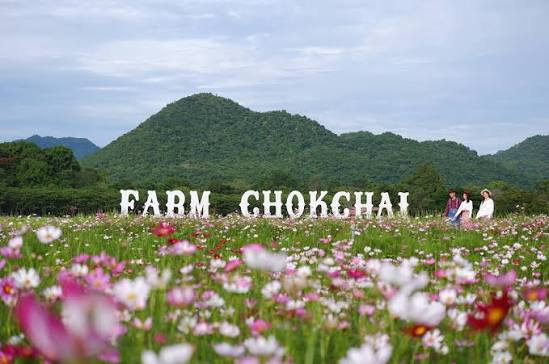
Asia’s landmark dairy farm on the Mittraphap corridor — cow milking, horse rides across the pastures, farm ice cream, and steak dinners that travellers still plan whole weekends around.
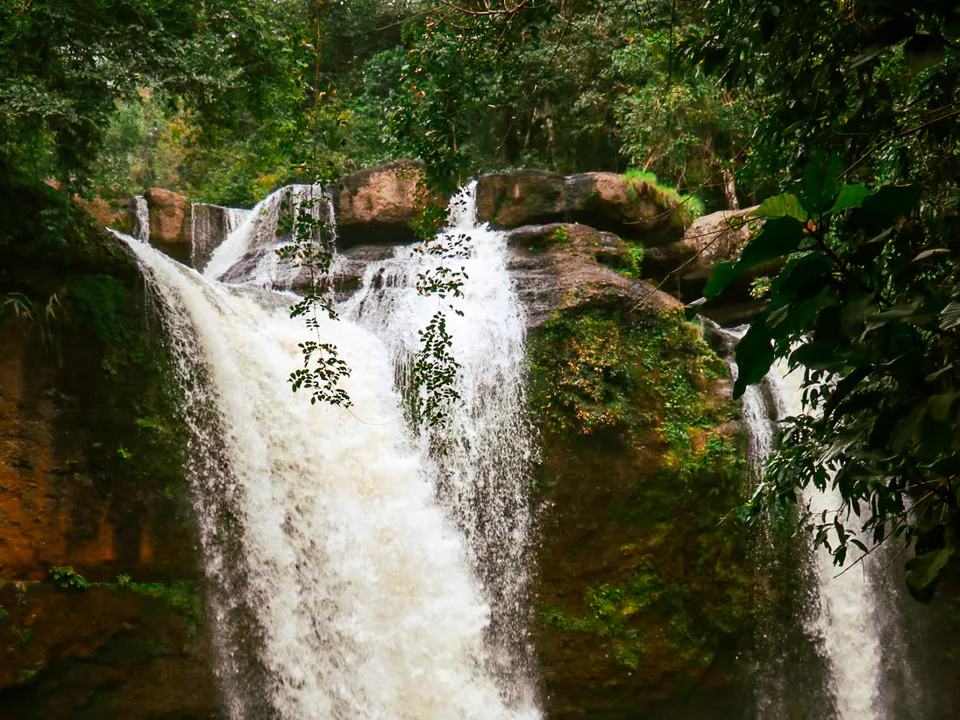
Khao Yai’s classic ~20-metre cascade — the one that made the park famous on film. In the dry season you can walk closer for a cave-side view; after rains the curtain of water is the show.

One of the region’s largest wind farms — roughly ninety turbines, each as tall as a forty-storey tower, turning over open highland. Free to visit; best at late light when the blades cut the sky.

A seasonal Isan farm experience tied to the silk legend — flower fields, a reconstructed village, organic plots, and pumpkin patches when the calendar opens. Check opening dates before you drive.

A wildlife sanctuary famous for wild elephants grazing open grassland at dusk. Arrive an hour before sunset, claim a viewpoint, and watch for herds without walking deep into the forest.

Thailand’s first national park (1962) and a UNESCO World Heritage forest — waterfalls, night safaris, camping, and a chance of elephants, deer, and gibbons. Enter via Pak Chong’s Chao Pho Khao Yai gate.

EGAT’s giant wind turbines on the southern ridge of Khao Yai Thieng — cool air, wide plateau views, and one of Korat’s easiest green-energy photo stops above Lam Takhong.
A large city zoo of about 545 rai — mammals, birds, and aquatic life with lagoon and learning zones. An easy family day when you want wildlife without the full Khao Yai drive.

A broad reservoir below the wind ridges — boat, cycle the shoreline, fish, or frame turbines against open water. One of Korat’s favourite weekend escapes between city and park.

A mid-sized fall about 50 metres high inside Thap Lan — water sheets down the cliff like a thin curtain. Best from roughly August to October; dry months leave mostly bare rock.
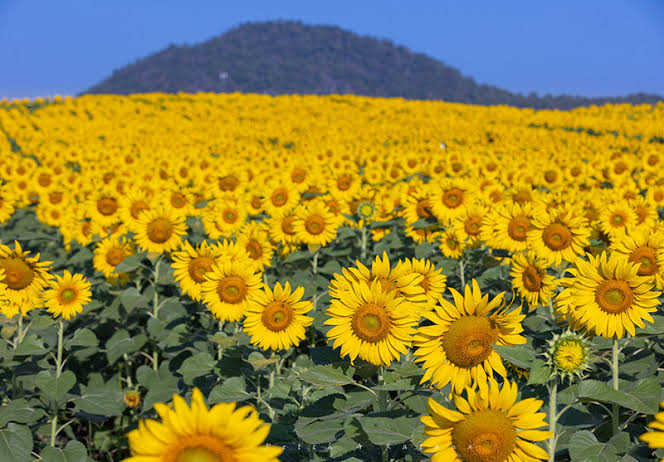
Wide sunflower rows under Wang Nam Khiao’s cool hills — a favourite yellow photo field when blooms peak. Check the farm’s season before you go; entry is usually a small fee.

Clear blue-green spring pools filtered through carbonate rock — four basins for a cool picnic stop. An Unseen Korat favourite when the Khao Yai road needs a soft landing.

Vineyard rows and a working winery under the Khao Yai hills — tastings, cellar tours, and European-style photo walks. Mornings and late afternoons give the softest light over the vines.
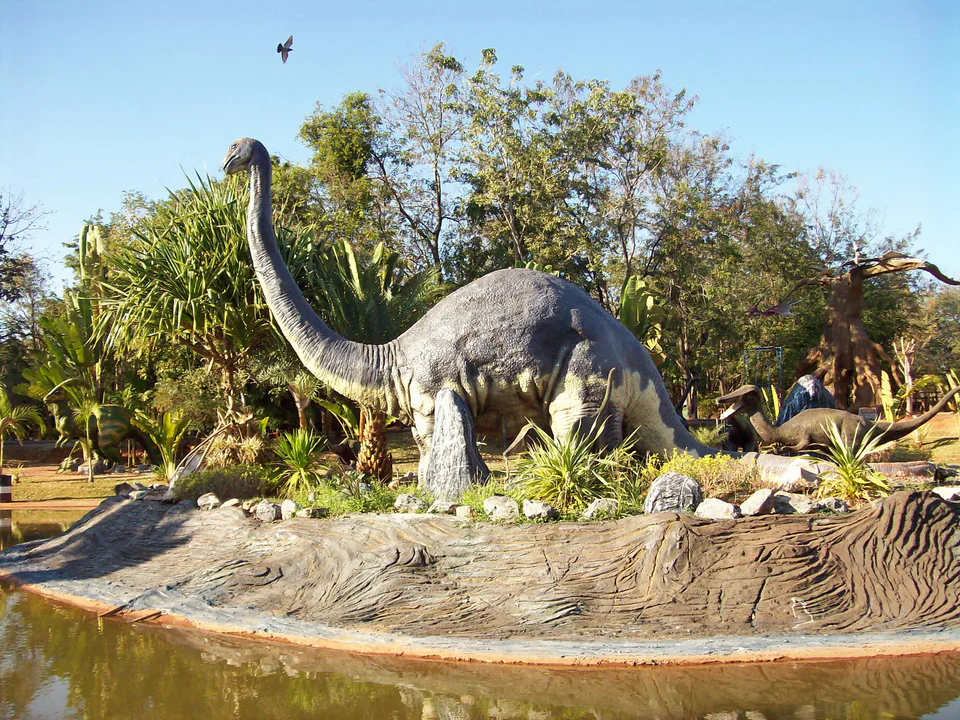
Northeast petrified wood and dinosaur fossils under one roof — outdoor stone gardens and indoor galleries for a cooler, family-friendly deep-time day in Korat city.
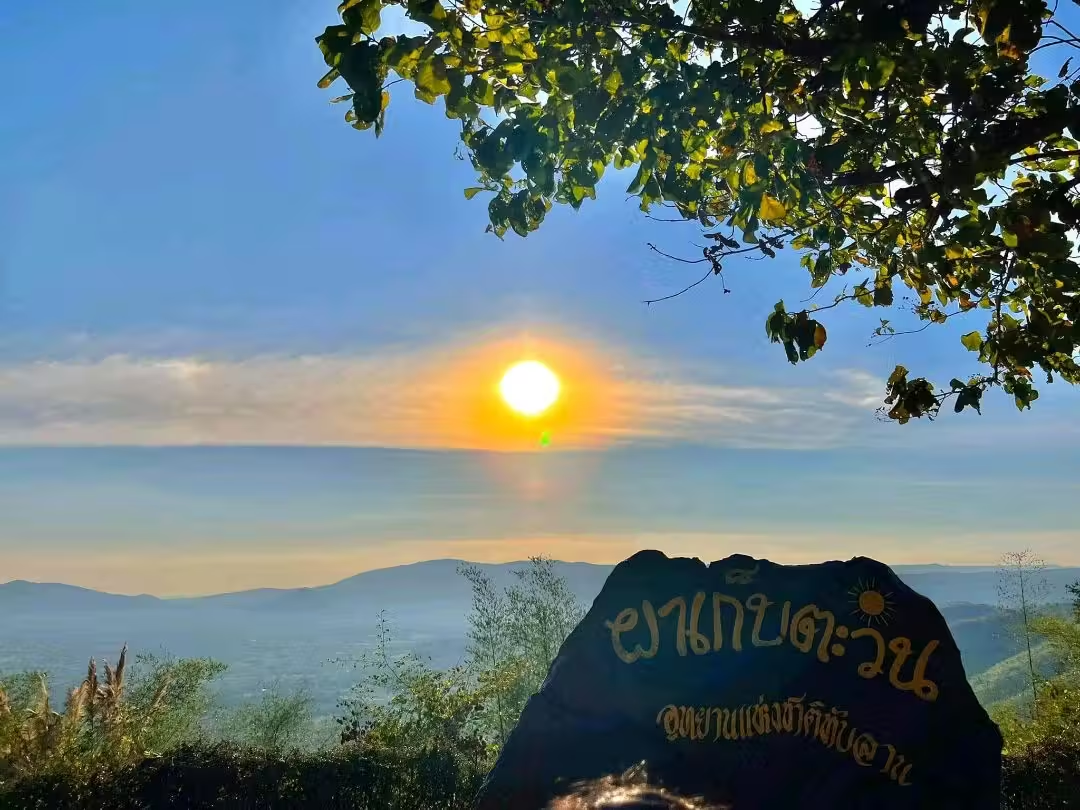
A cliff-edge sunset viewpoint over folded hills and forest — one of Wang Nam Khiao’s classic golden-hour stops, with camping nearby when you want the full night sky.

A quieter Khmer sandstone sanctuary than Phimai — begun as a Hindu shrine, later adapted for Buddhism. Come for clear architectural detail without the big-crowd crush.
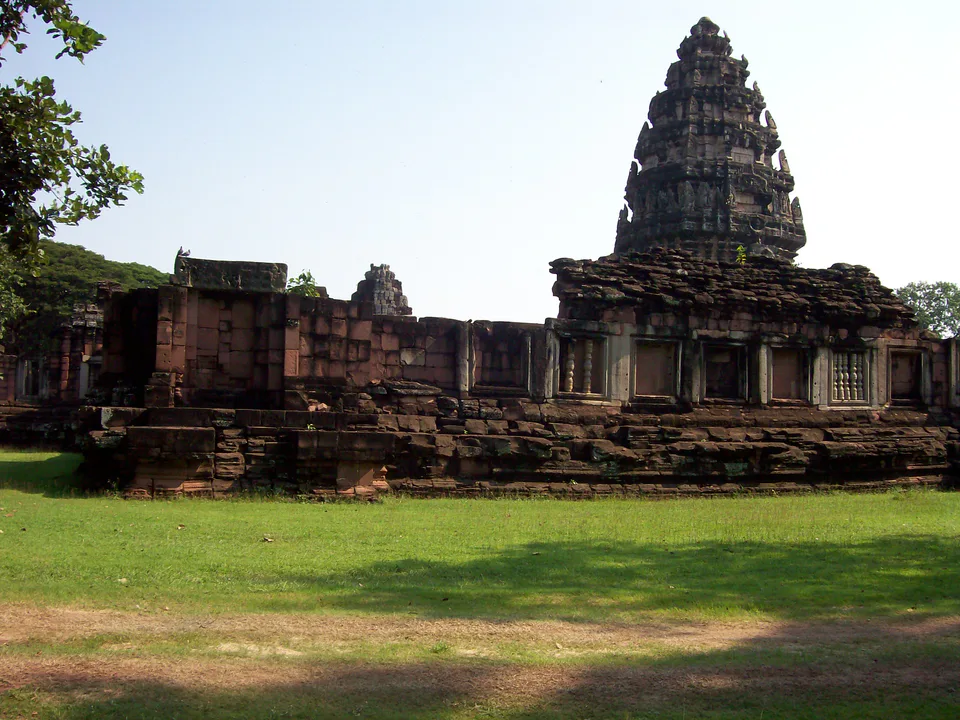
Thailand’s largest surviving Khmer stone temple — a Mahayana sanctuary laid out like Mount Meru on the old road toward Angkor. The prang, galleries, and museum make this Korat’s essential heritage day.
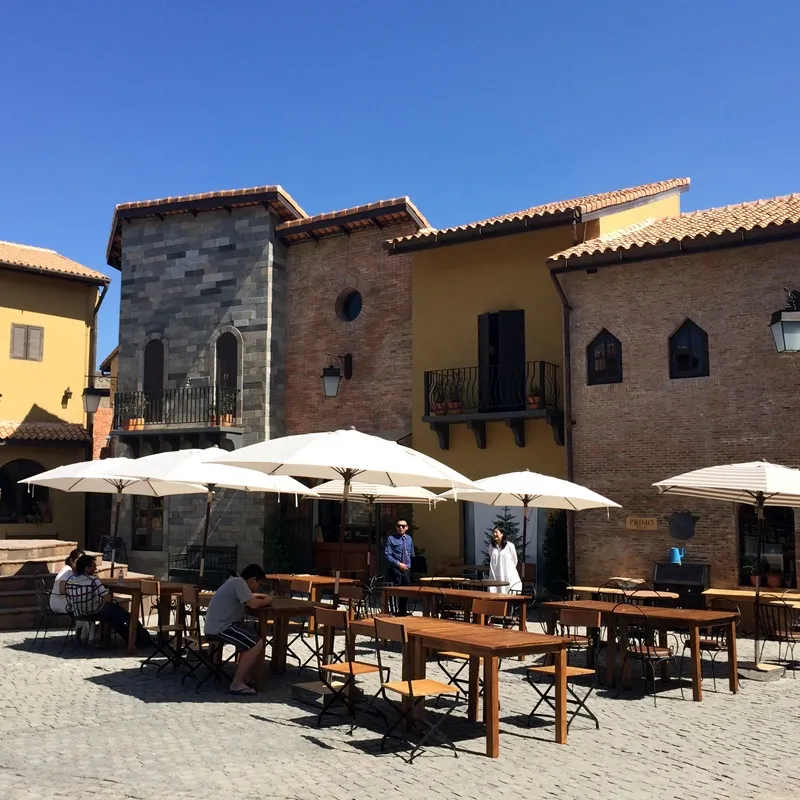
An Italian-style hilltown set among Khao Yai greenery — cafés, gelato, and gentle animal encounters with sheep, alpacas, and donkeys. Built for soft light, slow walks, and cool-season weekends.

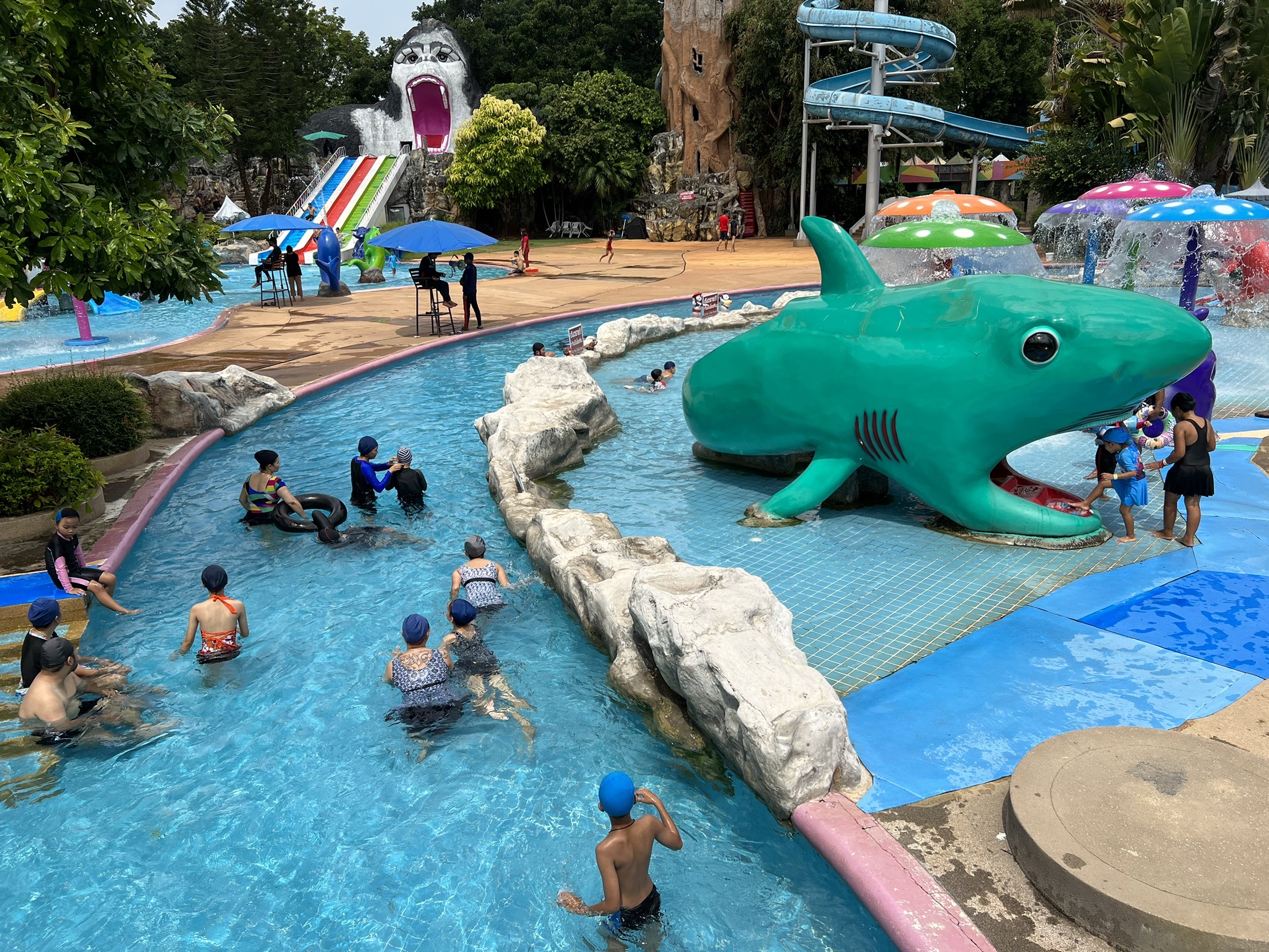
A large amusement-and-water park on more than 130 rai — thrill rides, splash zones, and shows for families and friends who want a full play day beside the Khao Yai circuit.

Korat’s civic heart — the statue of Ya Mo (Khunying Mo) at the old western gate, honouring her stand in 1826. Locals still come to pay respects; travellers start the city walk here.
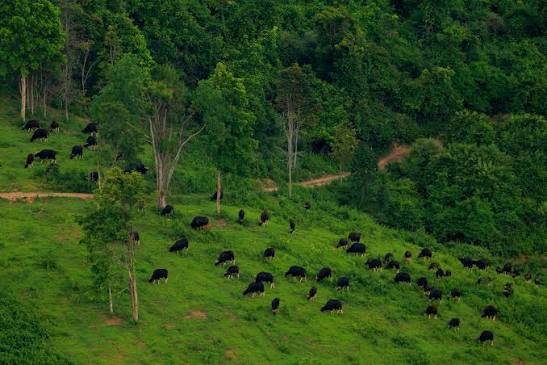
A vast protected forest linked to Khao Yai — camping, nature trails, and quieter ridges than the main park road. Cooler air year-round; always check trail status with rangers before you go.

Often called the Switzerland of Isan — cool highland air, tea and grape farms, vegetable gardens, and valley resorts. Best from late rains into early cool season, when mist sits in the hollows.
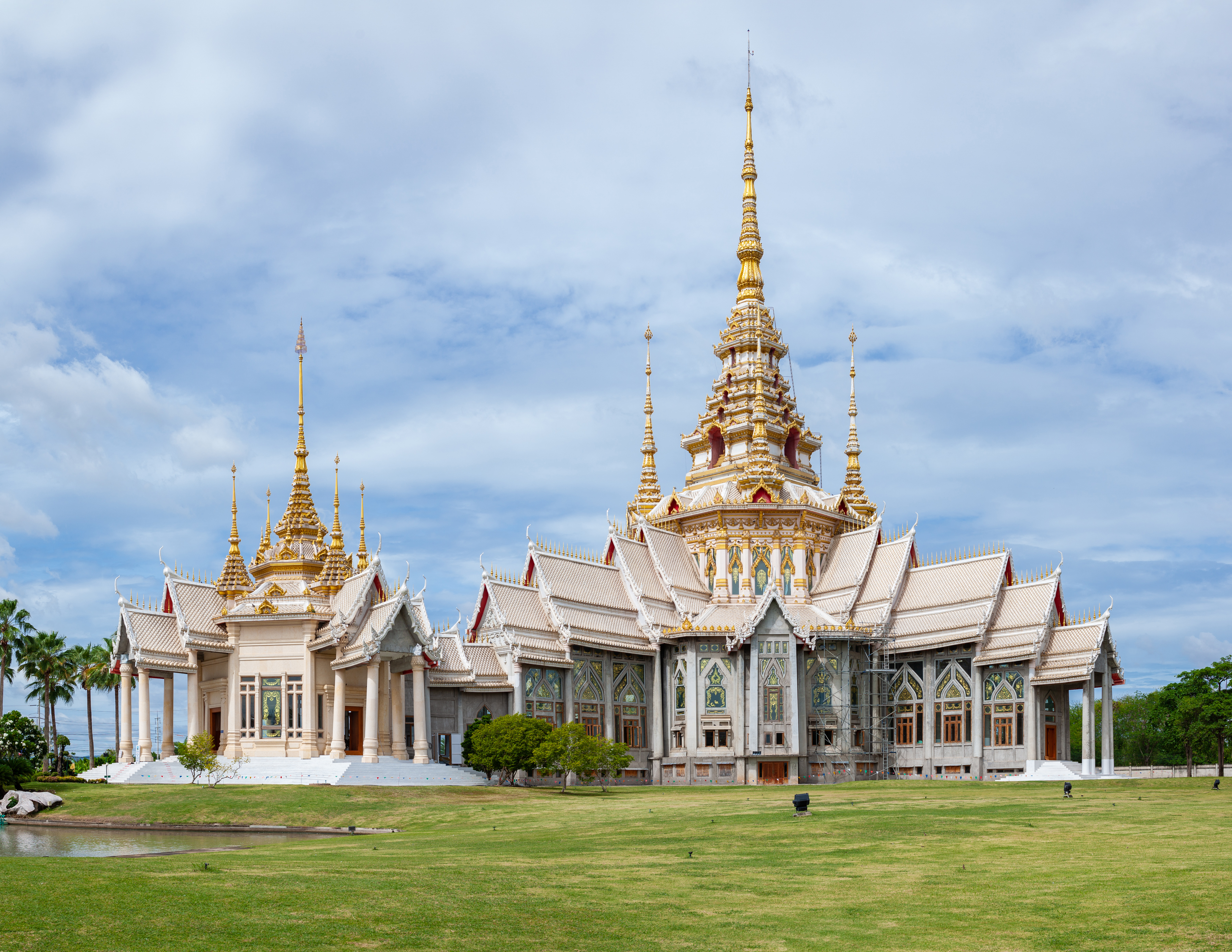
Also called Wat Luang Pho To — home to a colossal golden image of the monk Luang Pho To, about 27 metres high, under an open pavilion. Pilgrims come for blessings; the landscaped grounds make an easy faith-and-photo stop on the Mittraphap corridor.

An old forest monastery wrapped in large trees near the city centre — a calm merit stop that still feels removed from traffic. Ideal for a short pause between markets and monuments.
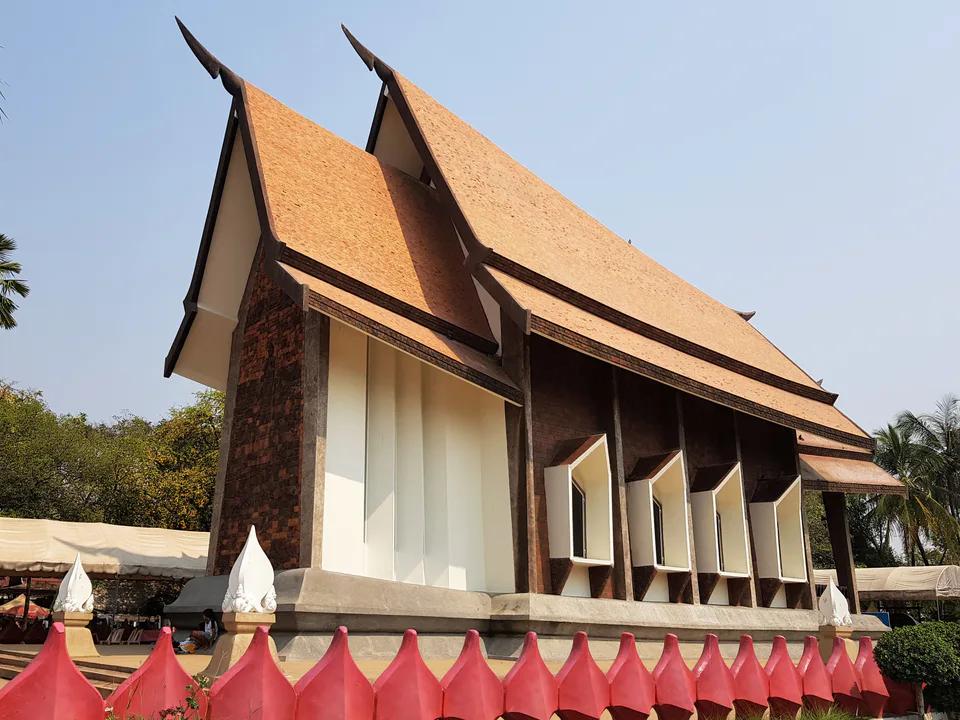
Founded in early Rattanakosin by Thao Suranari and her husband — famous for its junk-shaped chedi and for holding her ashes. Faith, city legend, and distinctive architecture in one riverside wat.
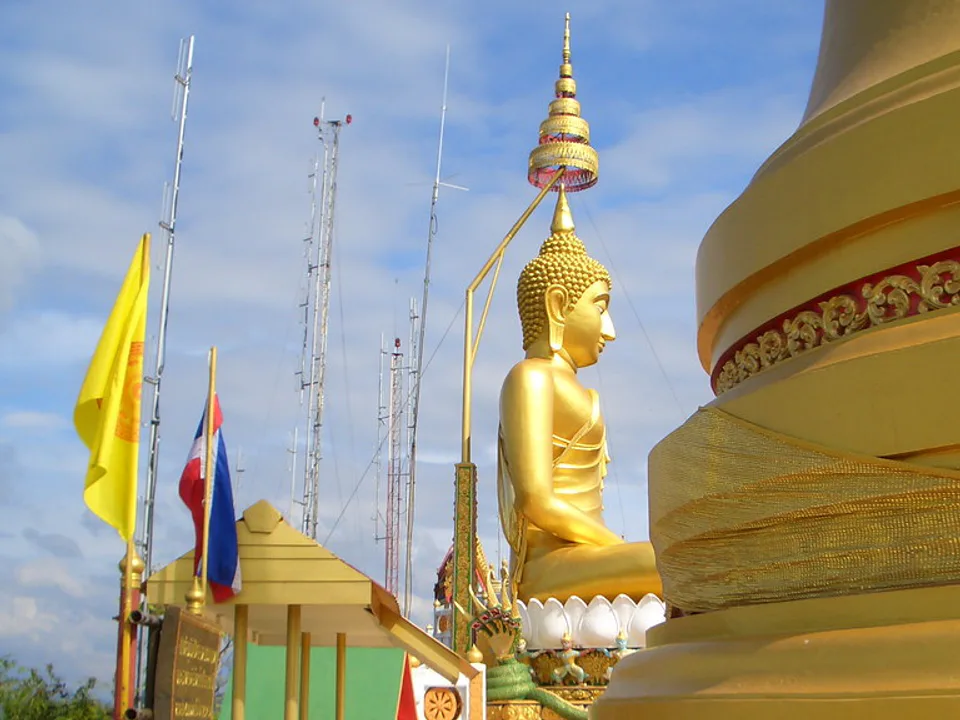
A cave temple with a high, airy chamber — cool, dry, and built for quiet meditation. Come for the limestone space and the stillness between Khao Yai’s louder attractions.

A white reclining Buddha more than 111 metres long on the Khao Yai Thieng ridge — visible from afar across the valley. Pair a merit stop with the windmill viewpoints nearby.
04
Local Flavours & Food
Korat eats at the hinge of Isan and the Central plains — sweet-savoury pad mee that belongs to this plateau, spit-grilled chicken with som tam, four-sauce kanom jeen in the Pradok orchards, and fried buns that only this city still queues for. Old Chinese banquet rooms share the map with Khao Yai garden kitchens; the plates below are where a Korat meal still begins.
The province’s edible emblem — thin rice noodles stir-fried until soft-chewy and sweet-savoury, a style born in Chok Chai (old name Kratok). Eat it plain first; the best versions need no extra seasoning. Pair with som tam the local way.
Crisp-skinned grilled chicken and pounded papaya salad — Korat’s everyday feast. Look for birds grilled just through, two dipping sauces, and sticky rice; Michelin Bib counters and neighbourhood charcoal pits both keep the tradition loud.
A Korat-only fried bun from a second-generation trolley on Jomsurangyat — crisp shell, soft centre, savoury glass-noodle filling or sweet bean, corn, and taro. Michelin Bib Gourmand, takeaway only, and trays vanish before closing.
Fresh rice noodles with a classic four-sauce set from the Pradok orchards — chicken curry, sweet nam phrik, forest curry, and coconut fish. Soft, fragrant strands under garden shade; one of Korat’s most local lunch rituals.
Inland Korat still runs serious crab and prawn houses — baked crab with glass noodles and Chinese herbs, pickled crab with overflowing roe, and riverside grilled prawns when the table wants a shared feast.
Where to Eat
Grilled-chicken queues, Michelin Bib bowls, Khao Yai garden tables, and Korat street classics — places locals still name first, listed A to Z. Hours can change; tap Location for the latest pin.

A countryside café-restaurant among the Khao Yai hills — rice-field mood, natural materials, and a layout shaped with design help from Ban Rai I-Aroon in Ranong.
Come for slow family meals and coffee when you want green air between forest days and farm stops.
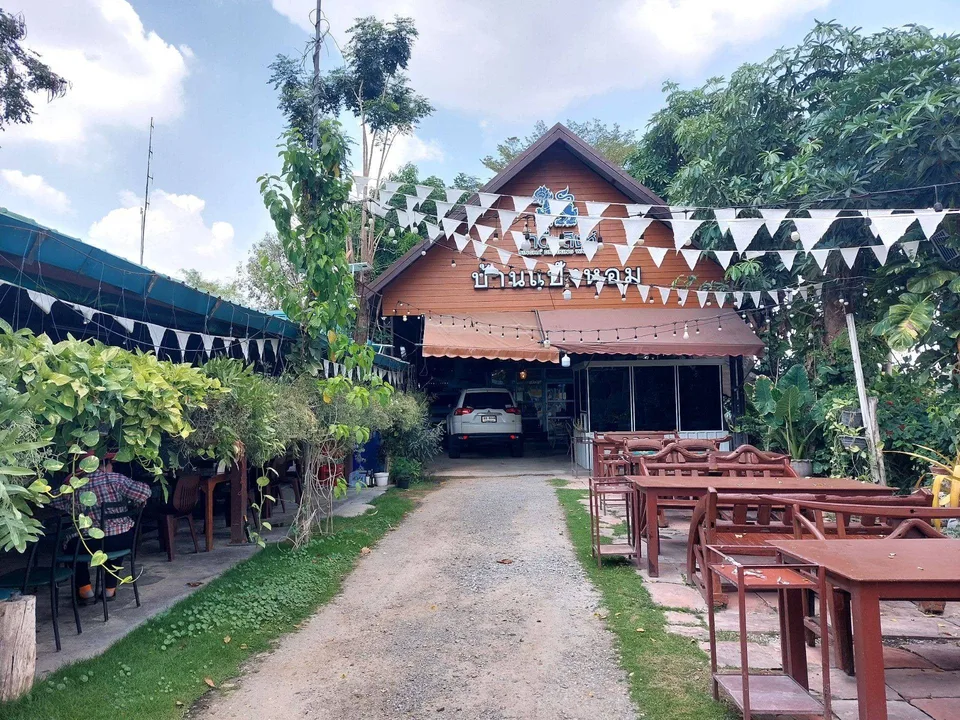
A Michelin Bib Gourmand Thai kitchen on Mittraphap — leafy grounds, family tables, and confident Central–Isan heat at fair prices.
Order gaeng khua with apple snails, stir-fried chicken with pickled bamboo, and hot clams when you want a serious Korat Thai meal without fuss.

A long-loved town steak-and-Thai room on Atsadang Road — steaks, pizza, pasta, Thai one-plate meals, and desserts under one roof.
Useful when the group wants mixed menus and easy prices a short hop from Ya Mo.
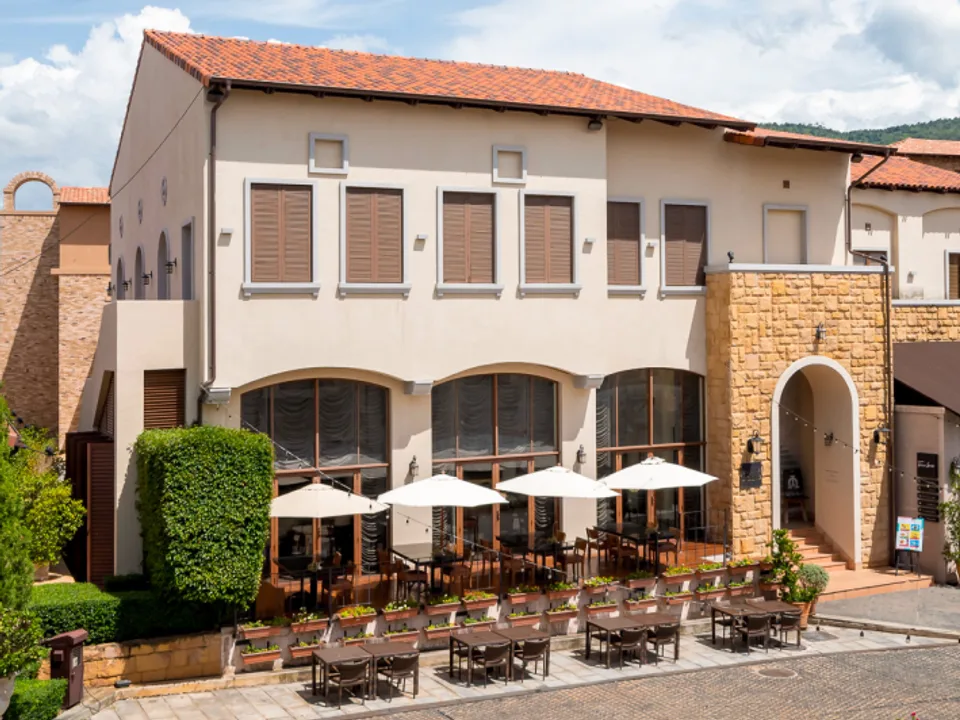
The Italian dining room inside Toscana Valley Khao Yai — Asian-twist Italian plates with vineyard-and-tower views that photograph like a day trip abroad.
Book a long lunch when the Khao Yai circuit wants pasta, wine light, and a slow walk after the meal.
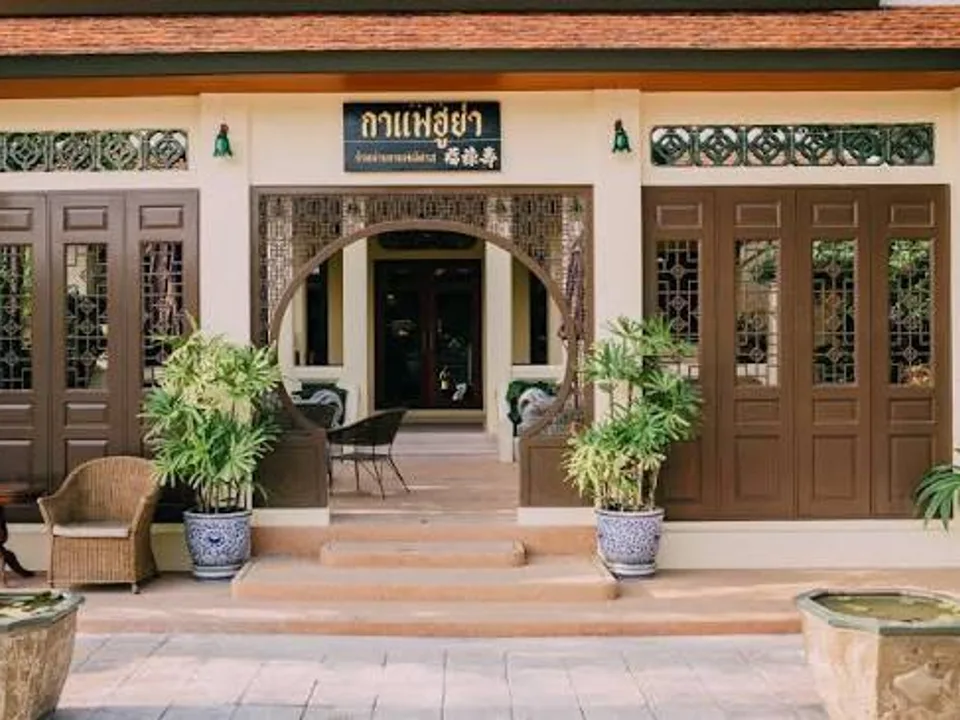
A Ya Mo-era coffee house remade as a Chinese-style tea room — hot coffee arrives with tea, bakery cases stay serious, and dim sum fills the savoury side.
Come for a leafy morning cup near the old quarter when temple walks need a soft pause.
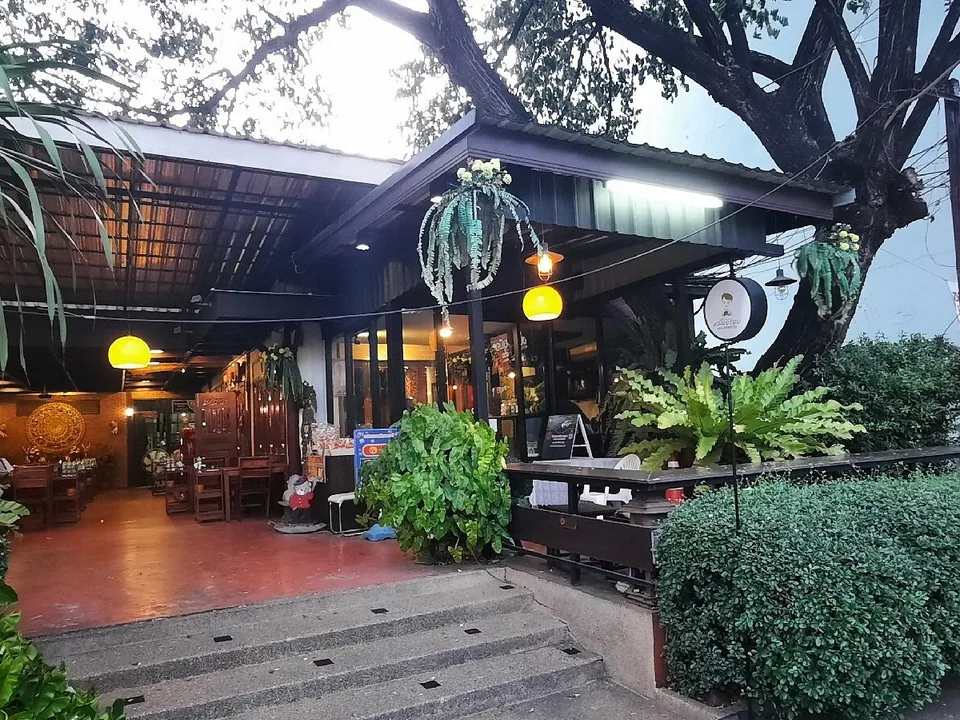
A som tam house famous for crisp-skinned grilled chicken — birds about 45 days old, grilled just through, with two dipping sauces and hot sticky rice.
Arrive early for dinner; the Chang Phueak Road queue builds fast when locals clock off.
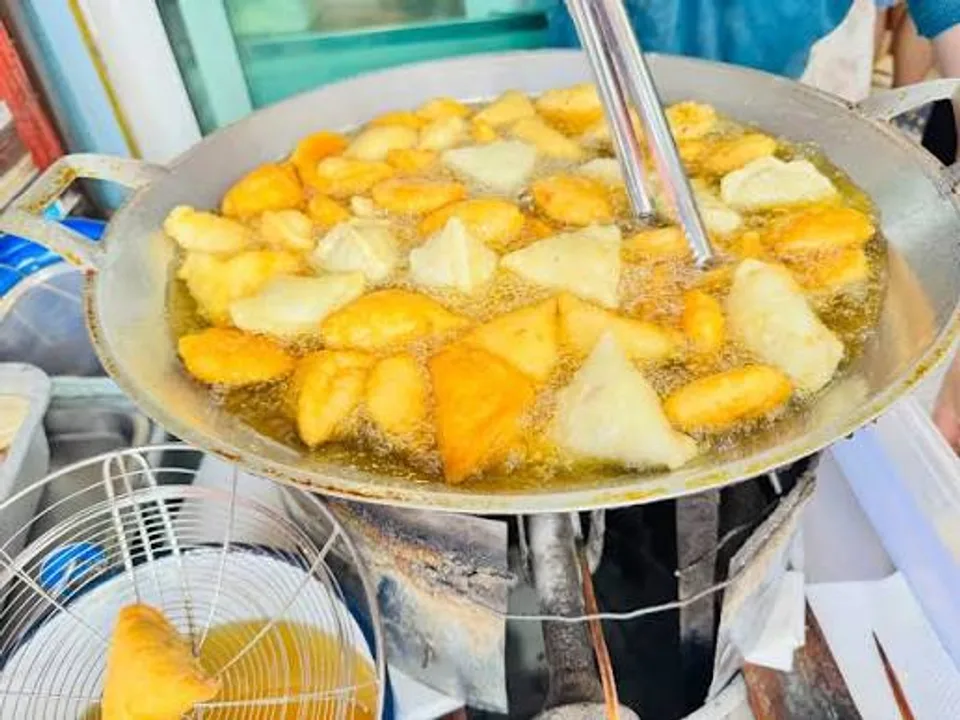
A Michelin Bib Gourmand takeaway stall on Jomsurangyat — second-generation fried buns named after the Japanese drama Oshin, sold from a trolley with no branches.
Queue for the savoury glass-noodle filling and sweet red-bean, soy, corn, or taro pockets; cash only, and trays sell out.

A Khao Yai roadside favourite at the Kut Kla junction before the park gate — glasshouse views of the ridges and outdoor tables in cool air.
Stop for Thai plates with mountain light when you want a proper meal before or after Haew Suwat.

More than noodles — a Suranarai Road kitchen for khao pad gaprao, spicy pork-bone soup, and everyday Korat bowls that keep locals returning.
Useful for a fast, honest lunch between Ya Mo and the markets.
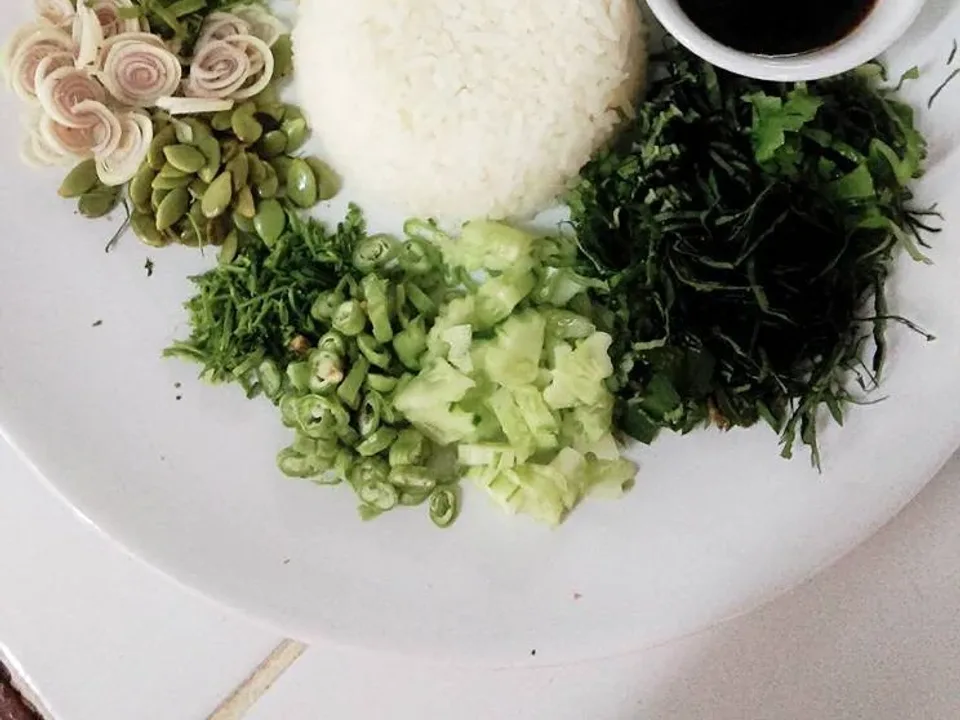
A True Chuan Chim southern kitchen in Mu Si — gaeng leuang, gaeng tai pla, and bold Pak Tai heat that surprises people who think Korat only does Isan.
Drive out when the table wants coconut depth and dried-fish fire after a Khao Yai morning.
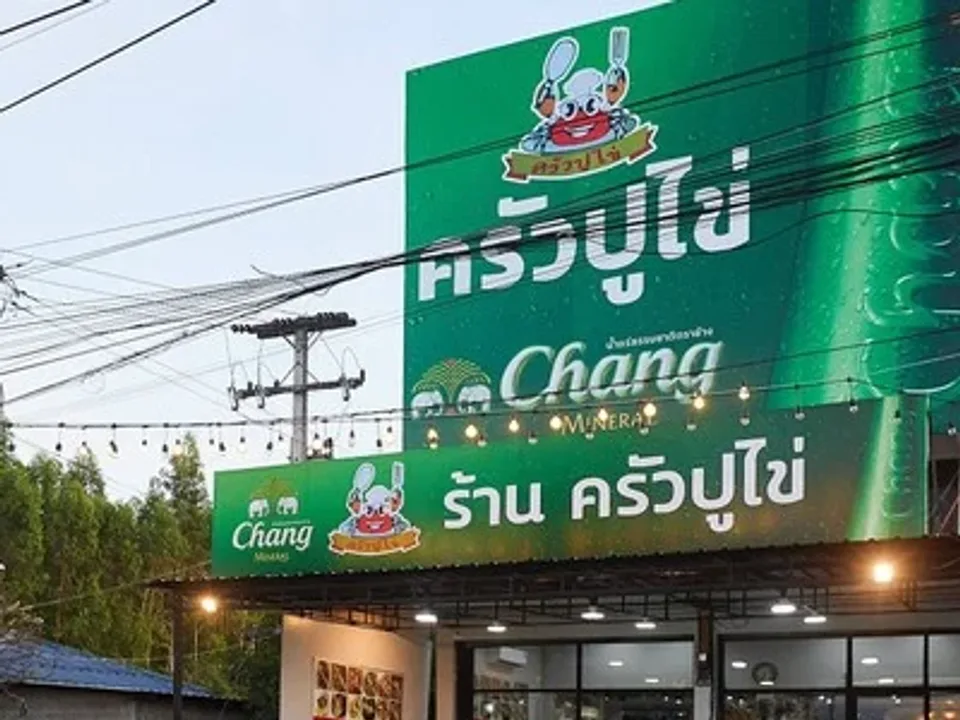
A family seafood room at Ban Nong Song Hong — generous crab and shellfish plates, calm service, and portions built for sharing.
Come when the group wants a full Thai–seafood table without the Mittraphap rush.
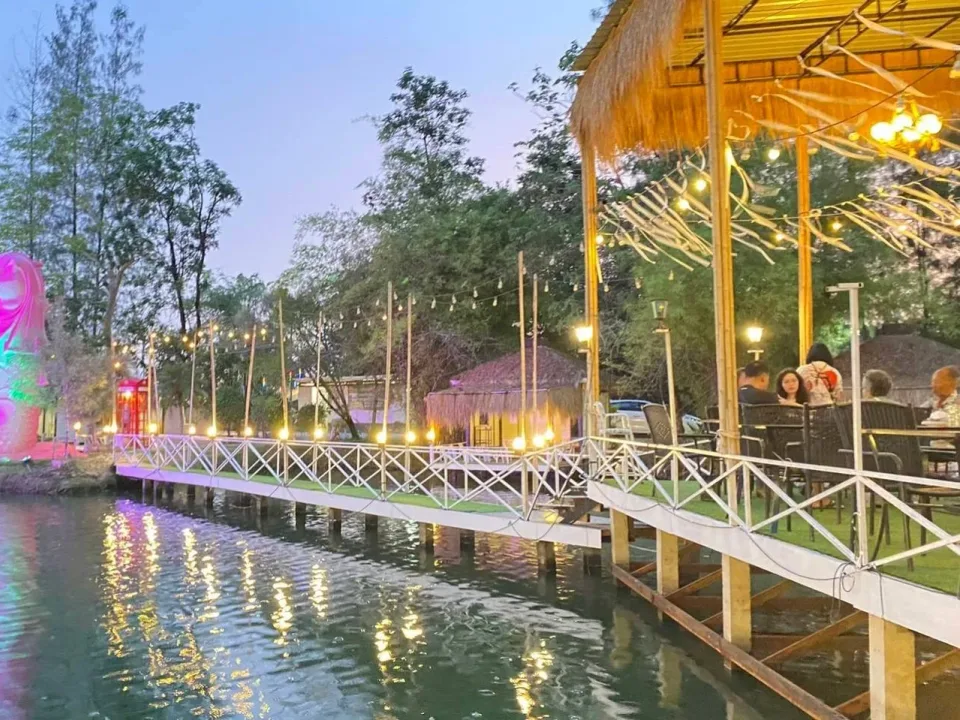
An evening garden pavilion on Suranaree 2 — waterside booths, live music, private salas, and karaoke rooms for longer nights.
Order a mixed Thai table when celebrations need space, breeze, and photo corners after dark.
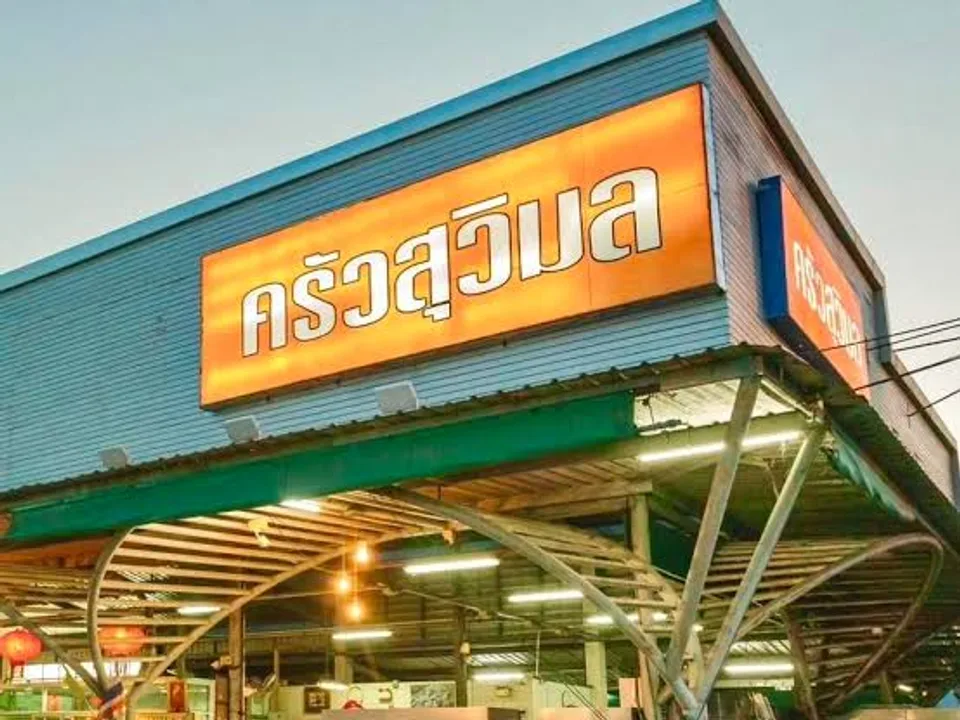
A Michelin Guide–noted Thai garden kitchen at the Pang Thong Chai junction on Mittraphap — the room Korat families still send guests to after dark.
Order the house Thai favourites when you want a reliable, leafy evening table on the highway edge of town.
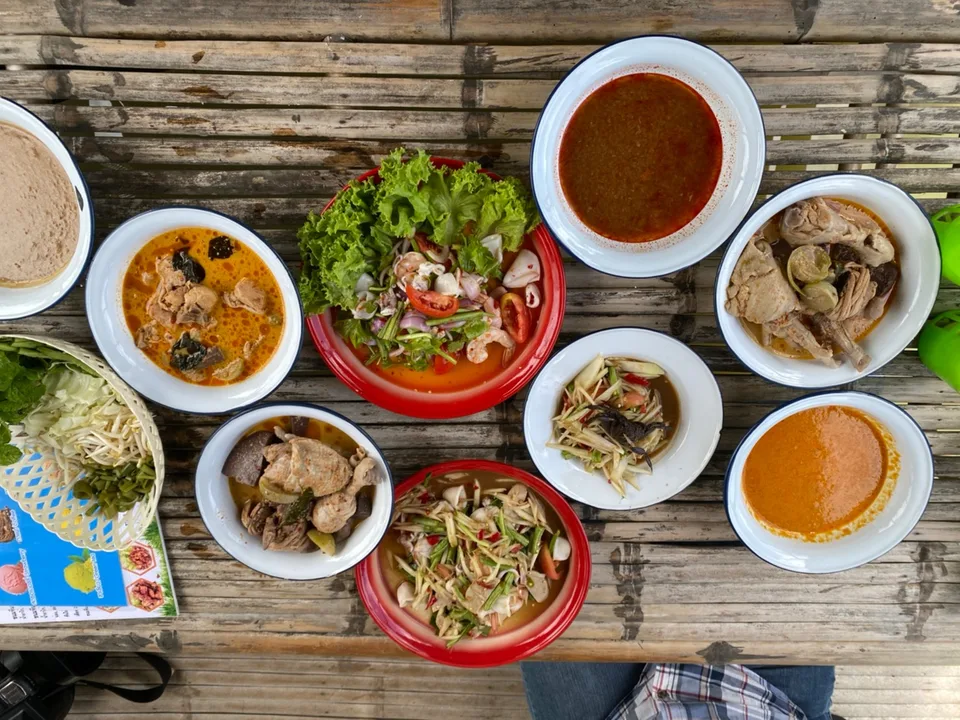
A long-running kanom jeen house in Pradok — soft fragrant noodles with a four-sauce set: chicken curry, sweet nam phrik, forest curry, and coconut fish.
Eat under garden shade when you want Korat’s classic noodle ritual outside the city grid.

A compact Vietnamese kitchen on Mittraphap Soi 13 — naem nueang, sugarcane prawns, and Vietnamese kuay jap at prices that keep regulars loyal.
Take a ready-to-cook kuay jap pack home if the broth theory sticks.

A café-restaurant looking over open rice fields on Mittraphap toward Nong Rawiang — slow air, wide sky, and plates made for lingering.
Come when town heat needs a green horizon and an unhurried coffee hour.

A riverside seafood pavilion on the bypass — every zone hugs the water for family tables and quiet dates alike.
Order grilled prawns and shared Thai–seafood plates when the evening wants breeze more than city lights.

A four-region Thai house on Atsadang — North, South, Central, and Isan plates gathered under one roof with produce chosen for each kitchen style.
Useful when travellers want a tasting tour of Thailand without leaving Korat town.
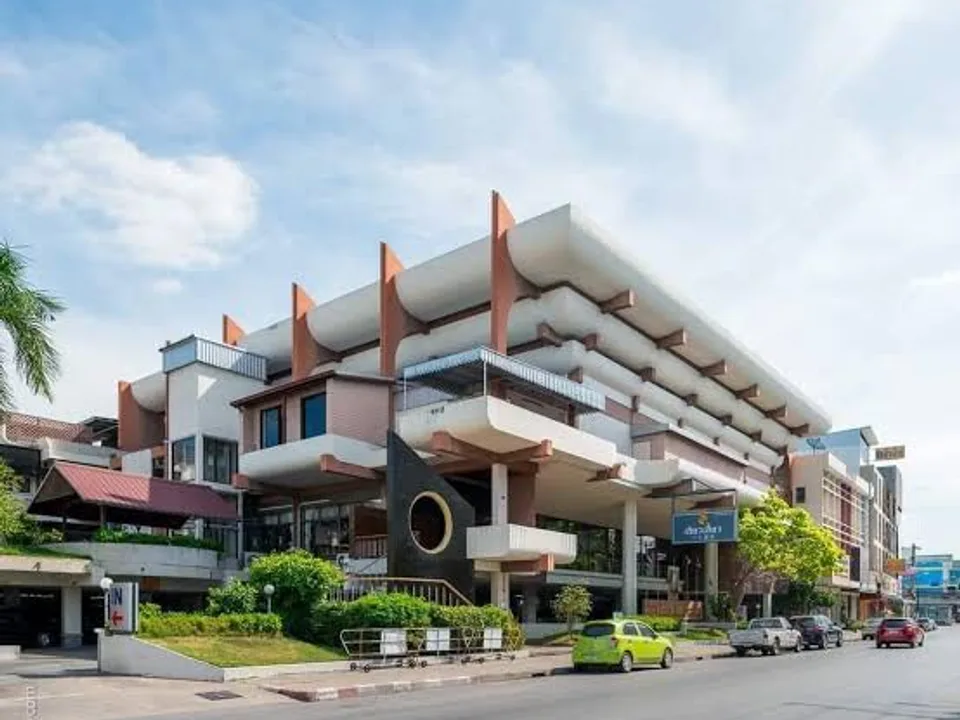
Korat’s landmark Chinese restaurant on Buarong Road — house-style banquet cooking that locals still treat as the city’s Chinese table of record.
Book a shared feast when celebrations or big groups need classic Sino-Thai theatre.

A garden restaurant on Thanarat Road by former Iron Chef and Michelin-starred chef Thaninthorn Chantrawan (Chim by Siam Wisdom) — backyard shade under the trees, careful Thai plates, friendly prices.
Book ahead for a Khao Yai lunch that still feels like eating in someone’s orchard.

A grilled-fish house by Suranaree University Gate 1 — day-fresh fish, fair prices, and a menu built around the grill.
Order pla pao, snakehead “lui suan,” and sea bass with Chinese celery when the table wants sweet fish and sharp herbs.

Korat’s go-to crab-and-seafood room on Mittraphap Soi 6 — grilled prawns, pickled crab with overflowing roe, and the house baked crab with glass noodles and Chinese herbs.
Come hungry; the claws are the reason people drive across town.
05
Souvenirs from Nakhon Ratchasima
Korat packs the plateau into bags you can carry — ready-to-cook pad mee, crisp pork sheets, Isaan sausage, and dairy sweets from the Pak Chong farms, then room for GI Khao Yai wine, Dan Kwian pottery, and Pak Thong Chai silk. Fill the edible side first; leave space for clay and cloth that still feel like the province.

06
Local Culture & Vibe
Korat sits where Central plains meet Isan — a frontier city that still greets Ya Mo at the old gate, fires Dan Kwian clay until it shines, and weaves Pak Thong Chai silk on two-heddle looms. Khmer stone at Phimai, farm weekends on the Khao Yai rim, and civic pride that still gathers each spring for Thao Suranari: devout, practical, and proud of the heroine who held the plateau.
07
Travel Info & Getting There
How to reach Nakhon Ratchasima from Bangkok, and how to move around once you arrive.
Nakhon Ratchasima Airport (NAK) sits on the edge of town, but scheduled commercial flights remain rare — most travellers still fly into Bangkok (DMK or BKK) and continue by land. If a seasonal hop appears, confirm it before you book; otherwise land in Bangkok and take the Mittraphap corridor northeast.
About 260 kilometres and a 3–3.5 hour drive in ordinary traffic. Take Highway 1 (Phahonyothin) to Saraburi, then Highway 2 (Mittraphap) straight into Korat — or use the Bang Pa-in–Nakhon Ratchasima motorway when you want a faster, toll-road run toward Pak Chong and the city. Once you are on 2, Khao Yai, Farm Chokchai, and the old gates open along the same spine.
The Northeastern Line still treats Korat as a real junction — about 265 kilometres from Bangkok. Board at Krung Thep Aphiwat for Ubon-bound express and rapid services (Nong Khai expresses often skip the city). Special Express 21 leaves around 06:10 and is due about 10:11; Rapid 135 and Express 71 cover later mornings. All trains call at both Nakhon Ratchasima station (west of downtown) and Thanon Chira Junction by the old moat — check your ticket so you alight at the right one. Pak Chong is about 1.5 hours before Korat if Khao Yai is your first stop.
The easiest frequent door: coaches and VIP vans from Bangkok’s Mo Chit 2 leave roughly every 15–30 minutes from early morning into late evening, cover about 260 kilometres in roughly 3–4.5 hours, and roll into Bus Terminal 2 on the outskirts (some Bangkok routes still use Terminal 1 near the old city). Nakhonchai Air, Air Korat Pattana, Transport Co, and others share the corridor — book ahead on long weekends. Daylight seats if you want Mittraphap’s rice fields; evening boards if you want dinner already under Ya Mo’s lights.
The old town around Ya Mo, the moat, and Terminal 21 is walkable; Grab, songthaews, and motorbike taxis cover short hops. Rent a car or hire a driver for Khao Yai and Wang Nam Khiao (about 1–1.5 hours west), Phimai (buses from Terminal 2 roughly every half-hour until mid-afternoon), Dan Kwian pottery, and the wind-ridge dams. Highway 2 is the spine; park days and Khmer stone sit a turn off it.
November to February brings cool, dry days for the city, Phimai, and clear Khao Yai mornings — book park lodges early. March to May is hot and windy on the plateau; start outdoor sites at dawn. May to October greens the forest and fills waterfalls, with quieter roads after the rains. Sunflower fields around Wang Nam Khiao usually peak late year into early cool season.
Continue the Journey