ThailandLover Contact

ลพบุรี

Lopburi

City of Lavo

Once called Lavo, Lopburi keeps over three thousand years on the Lopburi River — Khmer sanctuaries and King Narai’s second capital.

01

Geography & Climate

River Plain and Eastern Hills

Lopburi lies in Central Thailand on the left bank of the Lopburi River, about 153 kilometres north of Bangkok by road and about 6,200 square kilometres across eleven districts. Roughly thirty percent of the land is low floodplain in the west — rice country through Tha Wung, Ban Mi, and Mueang Lopburi, only a few metres above the sea. The other seventy percent rises eastward into hills and forested ridges, through Chai Badan, Phatthana Nikhom, Tha Luang, Sa Bot, and Lam Sonthi. The province meets Nakhon Sawan and Phetchabun to the north, Chaiyaphum and Nakhon Ratchasima to the east, Saraburi and Ayutthaya to the south, and Sing Buri and Ang Thong to the west.

The Lopburi River leaves the Chao Phraya, crosses that western plain, and runs on to join the Pa Sak near Ayutthaya. The Pa Sak itself cuts a narrow valley through Chai Badan and Phatthana Nikhom. The climate is a tropical monsoon: cooler and drier from about November to February, hot from March to May, and rainy from roughly May through October, when the low fields take seasonal flood and the eastern hills turn green.

Best time: November – February for cooler, drier days in the old town and on the plain; May – October for green hills and a fuller river — expect afternoon rain and high water on the low fields.

Lopburi landscape

02

History & Heritage

From Lavo to Narai’s Second Capital

People were living on this ground long before the city had a royal name. Provincial archaeological records place human burials with pottery at Ban Tha Kae at about 3,500–4,500 years old, Neolithic burials at Ban Khok Charoen at about 2,700–3,500 years old, and Bronze Age burials at the Artillery Centre at about 2,300–2,700 years old. In the Dvaravati centuries, moated towns stood at Sap Champa in Tha Luang and at Dong Marum in Khok Samrong; the same provincial account includes Mueang Mai Phaisali among communities thought to be about a thousand years old. At Ban Lum Khao in Khok Samrong, silver coins punched with the symbols of the day were found among tools and household goods. The finds show Lopburi as settled land from prehistory into the early kingdoms.

The old name was Lavo. The Yonok Chronicle says King Kalavarnadish, a son of a Khmer king, founded the city in 459 (B.E. 1002) — a chronicle tradition, not a dated inscription. What the ruins and later history do show is a city that mattered from the Dvaravati period, under Mon and then Khmer power, until Tai rulers took hold of this part of the plain in the thirteenth century. Khmer prangs in the old town still mark that middle chapter.

When King Ramathibodi I (King U Thong) founded Ayutthaya, Lopburi became a mueang luk luang — a city of the heir. He sent his eldest son, Ramesuan, to rule it, and Ramesuan built up the forts, the moat, and the walls. U Thong died in 1369 (B.E. 1912). Ramesuan succeeded him at Ayutthaya, then yielded the throne to his uncle, who reigned as Borommarachathirat I, and went back to Lopburi. He remained there until Borommarachathirat I died in 1388 (B.E. 1931), then returned to rule at Ayutthaya. After that, the city’s importance faded.

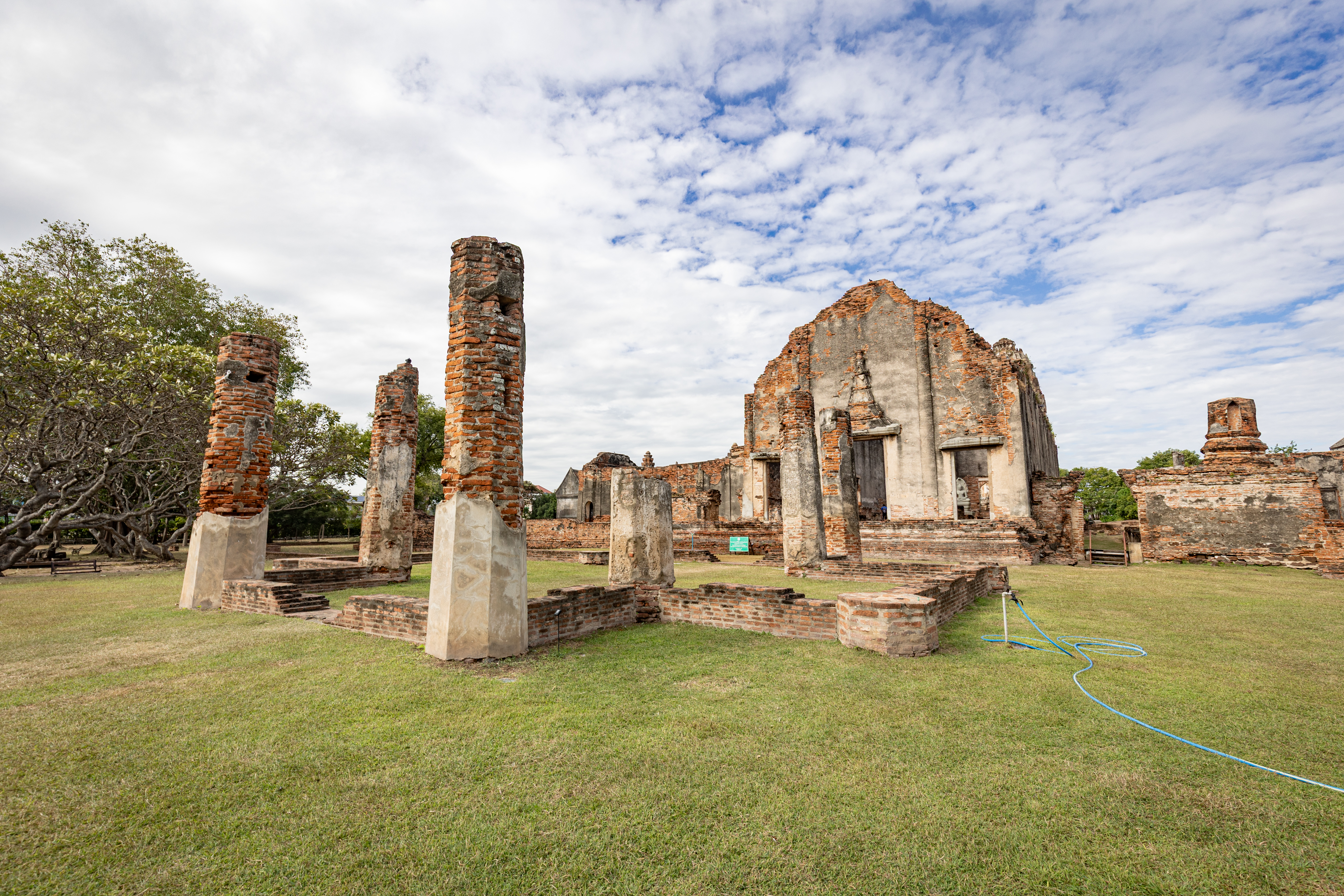
It returned under King Narai. Dutch pressure on Ayutthaya’s trade, and the danger of a siege, led him to build Lopburi as a second capital on ground he judged safer and better placed. French and Italian craftsmen helped raise a palace inside a ring of forts. The record of his reign has him in residence eight or nine months a year, and he received foreign envoys here more than once, including the French embassy of 1685. He died in 1688 (B.E. 2231) in the Sutthasawan throne hall of that palace. King Phetracha moved the government back to Ayutthaya, and no later king of Ayutthaya kept a residence in Lopburi.

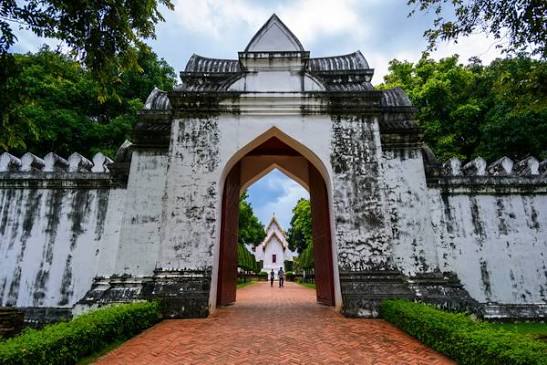
In the Rattanakosin era, King Mongkut restored the city in 1863 (B.E. 2406) — walls, forts, and gates — and built the Phiman Mongkut hall in the palace, which he named Phra Narai Ratchaniwet. The palace is now the King Narai National Museum. After the 1932 change of government, Field Marshal Plaek Phibunsongkhram, as prime minister, gave Lopburi a new town plan and based army units in the city. The province still describes itself as a military town, with eleven army units posted here, and introduces the Lopburi of today as a city of economy, tourism, and the army.


Lopburi heritage

03

Top Attractions

Places Not to Miss

Narai’s palace, Khmer prangs, a spring-fed waterfall, and the Pa Sak dam — places that shape a Lopburi journey, listed A to Z.

Ban Din Mod Daeng

Ban Din Mod Daengบ้านดินมดแดง

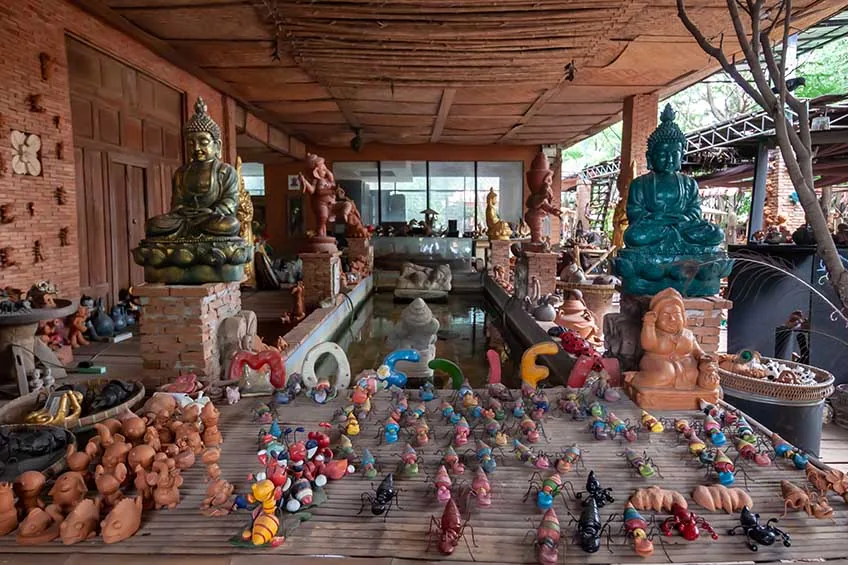
An earth-house learning centre in Khok Tum where you can see how rammed-earth walls are mixed, raised, and finished — and try the method yourself. Clay figures, including the red ants the house is named for, fill the workshop yard, and a community market sits alongside. Usually about 08:00–17:00; joining the lesson is free. Dress for dust and sun.

Location · Mueang Lopburi District

Khao Chin Lae Sunflower Fields

Khao Chin Lae Sunflower Fieldsทุ่งทานตะวันเขาจีนแล

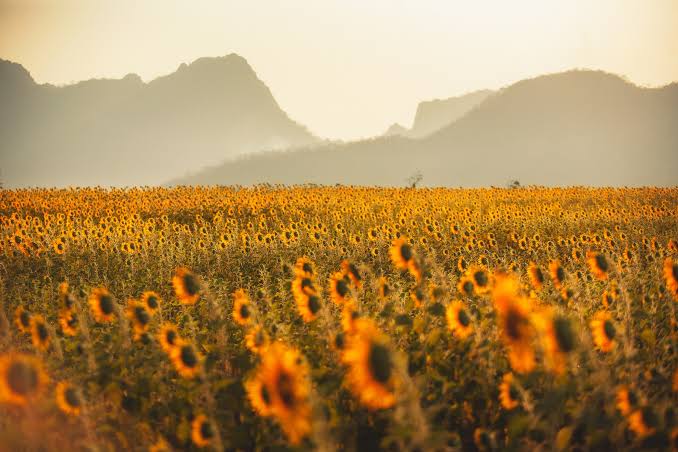
Cool-season sunflower plots beneath Khao Chin Lae, in Nikhom Sang Ton-eng — yellow rows with the limestone hill behind them. Blooms are usually strongest from about November to January, and the open fields shift from year to year, so ask which plot is flowering before you drive out. In season the gates are often about 08:00–18:00. Morning light is the kindest on the flowers.

Location · Mueang Lopburi District

Khao Phraya Doen Thong Viewpoint

Khao Phraya Doen Thong Viewpointจุดชมวิวเขาพระยาเดินธง

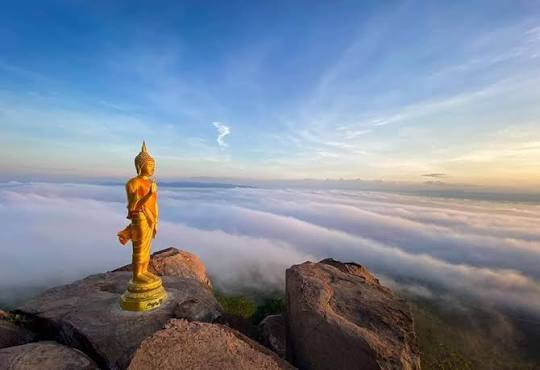
A wide lookout over the plain above Phatthana Nikhom. The last four kilometres are steep — a pickup can attempt them; most visitors walk or ride a mountain bike. Wat Nong Na at the top keeps a quiet monastic rhythm, with meditation camps and a New Year chant. About 06:00–18:00. Carry water; shade is thin on the climb.

Location · Phatthana Nikhom District

King Narai National Museum

King Narai National Museumพิพิธภัณฑสถานแห่งชาติสมเด็จพระนารายณ์

The galleries inside Phra Narai Ratchaniwet — the same gate and the same ticket as the palace. A display opened in the Chanthara Phisan hall in 1924 (B.E. 2467); it became a national museum in 1961 (B.E. 2504). Phiman Mongkut holds Lopburi prehistory and Chao Phraya finds; Chanthara Phisan tells King Narai’s reign; the inner houses cover central-Thai life and the province’s nang yai shadow puppets. Wednesday–Sunday about 09:00–16:00, closed Monday, Tuesday, and public holidays. Thais typically 30 THB, foreigners 200 THB.

Location · Mueang Lopburi District

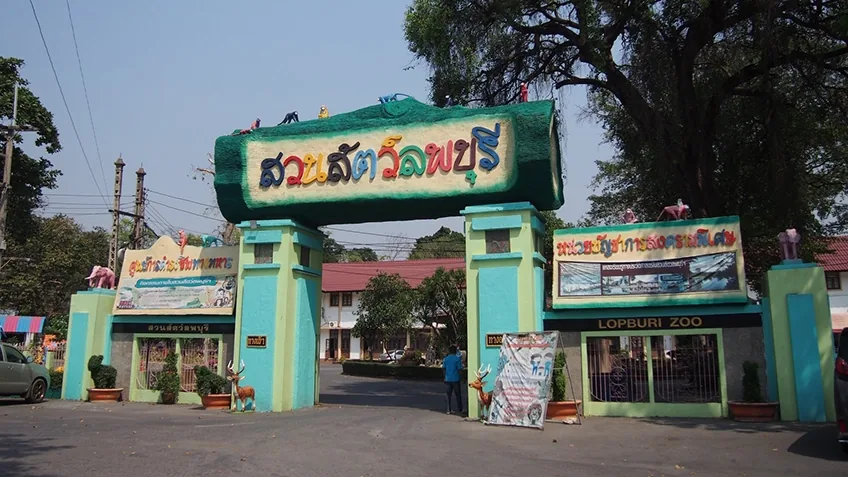
Lopburi Zoo

Lopburi Zooสวนสัตว์ลพบุรี · สวนสัตว์สระแก้ว

A small city zoo behind the army cinema, opened around 1940 (B.E. 2483) in the Phibun years and still known locally as Sa Kaeo Zoo. Shaded paths pass the enclosures, a playground, and a pond with short boat rides. Show times, when they run, are posted at the gate. About 08:00–18:00.

Location · Mueang Lopburi District

Pasak Jolasid Dam

Pasak Jolasid Damเขื่อนป่าสักชลสิทธิ์

A clay-core earthen dam on the Pa Sak, 4,860 metres long and 31.5 metres high, raised on a Rama IX initiative and opened on 25 November 1999 (B.E. 2542). The crest looks across the reservoir; a commemorative garden and Pasak Jolasid station sit near the entrance, and the northeastern railway crosses the water on a long causeway. The reservoir also reaches Wang Muang in Saraburi. About 06:00–18:00. Entry is free; a small parking fee is common.

Location · Phatthana Nikhom District

Pasak Jolasid Sightseeing Train

Pasak Jolasid Sightseeing Trainรถไฟลอยน้ำเขื่อนป่าสักชลสิทธิ์

A seasonal State Railway special, usually on cool-season weekends from about November to February, that runs out from Bangkok and pauses on the dam so you can step down among the water. Seats go quickly — book with the SRT and check that year’s dates and fares. On ordinary days the regular northeastern trains still cross the reservoir; the special is the one that stops for photographs.

Location · Phatthana Nikhom District

Phra Narai Ratchaniwet

Phra Narai Ratchaniwetพระนารายณ์ราชนิเวศน์

King Narai’s palace on Sorasak Road in Tha Hin, begun in 1666 (B.E. 2209) as a residence, a court, a hunting lodge, and a place to receive envoys. Dusit Sawan Thanya Mahaprasat was the audience hall; Chanthara Phisan and Sutthasawan still stand, with the twelve treasury rooms and the waterworks once fed from Sap Lek. King Mongkut added Phiman Mongkut and gave the palace its present name. The national museum fills these halls — one ticket covers both. Wednesday–Sunday about 09:00–16:00, closed Monday, Tuesday, and public holidays. Thais typically 30 THB, foreigners 200 THB.

Location · Mueang Lopburi District

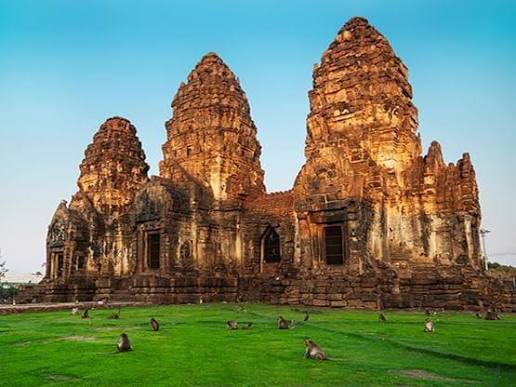
Phra Prang Sam Yot

Phra Prang Sam Yotพระปรางค์สามยอด

Lopburi’s landmark — three linked laterite prangs in Bayon style, raised under Jayavarman VII in the 13th century as a Mahayana shrine, then given a brick viharn when King Narai turned the ground to Theravada use. Macaques still share the ruins. Keep glasses, phones, and food zipped away. Daily about 08:30–18:00. A single ticket is often 10 THB for Thais and 50 THB for foreigners; a combined old-town ticket, often 30 / 150 THB, also covers Wat Phra Si Rattana Mahathat. Late-afternoon light warms the stone.

Location · Mueang Lopburi District

Phu Sap Lek Viewpoint

Phu Sap Lek Viewpointภูซับเหล็ก

A sunset ridge in Khok Tum, looking over Khao Chin Lae and Sap Lek reservoir in one frame. The road up is short from the water; stay for the last light. Open through the day. Bring a layer in the cool season — the ridge wind picks up after dusk.

Location · Mueang Lopburi District

San Phra Kan

San Phra Kanศาลพระกาฬ · ศาลสูง

The city shrine in the middle of Si Sunthon roundabout, a short walk from Phra Prang Sam Yot. The laterite base is Khmer; under King Narai a small brick shrine in a Thai–Persian manner was set on it, holding a reclining-Vishnu lintel and the dark image of Chao Pho Phra Kan. About 05:30–17:30. Dress modestly, and watch the macaques around the circle.

Location · Mueang Lopburi District

Sap Lek Reservoir

Sap Lek Reservoirอ่างเก็บน้ำซับเหล็ก

A broad reservoir in Nikhom Sang Ton-eng that King Narai had dug so water could be piped to the palace. Hills ring the shore, and a pier and rafts sit out on the water for a hot-afternoon pause. Open through the day. Pair it with Phu Sap Lek for sunset, and with the sunflower fields when they are in bloom.

Location · Mueang Lopburi District

Wang Kan Lueang Waterfall

Wang Kan Lueang Waterfallน้ำตกวังก้านเหลือง

Lopburi’s best-known waterfall, in the Chai Badan reserved forest at Tha Din Dam. The water does not drop from a high ridge — it rises from springs in Huai Makok, runs about a kilometre, and spills over a limestone lip in a clear green sheet. Flow holds through most of the year. About 09:00–17:00. The walk is short; the rock is slick after rain.

Location · Chai Badan District

Wat Huai Kaeo

Wat Huai Kaeoวัดห้วยแก้ว

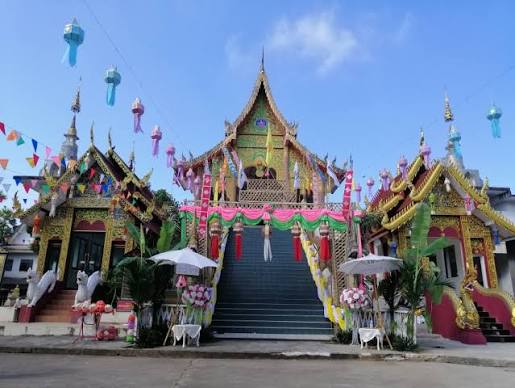
A temple in Maha Son whose buildings mix Thai, Khmer, and Myanmar lines. The temple’s own account gives it more than 140 years. The Mahametha Rattana Rangsri chedi stands in water, and green and white jade Buddhas brought from Myanmar are the images people come to bow to. About 06:00–20:00. Dress for an active temple.

Location · Ban Mi District

Wat Khao Samo Khon

Wat Khao Samo Khonวัดเขาสมอคอน

An Ayutthaya-era temple on a low hill, known for a bell-shaped chedi with twelve-indented corners — a form that stayed in favour from Ayutthaya into the Rattanakosin years. A small cave sits under the chedi, with other old structures on the slope. About 06:00–18:00. The walk up is short; early morning keeps the stone quieter.

Location · Tha Wung District

Wat Khao Wong Phrachan

Wat Khao Wong Phrachanวัดเขาวงพระจันทร์

A pilgrimage mountain in Huai Pong, long called one of Lopburi’s highest, with a Buddha footprint on the summit that devotees count as the fourth true footprint. The stair is about 3,790 steps over roughly 1,680 metres — allow two to three hours, and more if you take the last extra flight. Daily about 07:00–17:00; during the annual footprint festival the mountain stays open through the night, with lights and stalls along the way. Carry water.

Location · Khok Samrong District

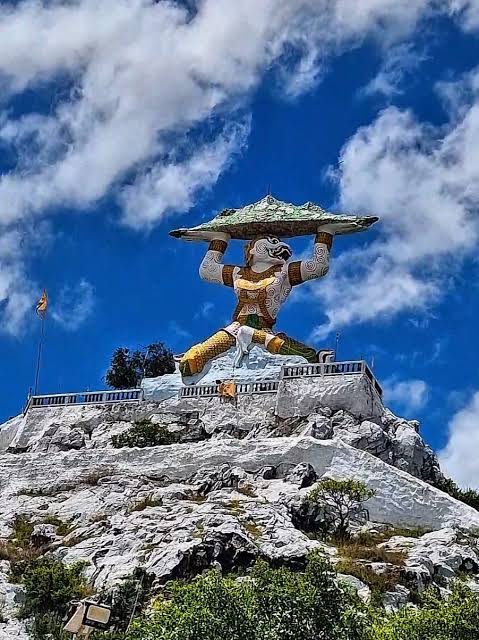
Wat Khung Tha Lao

Wat Khung Tha Laoวัดคุ้งท่าเลา

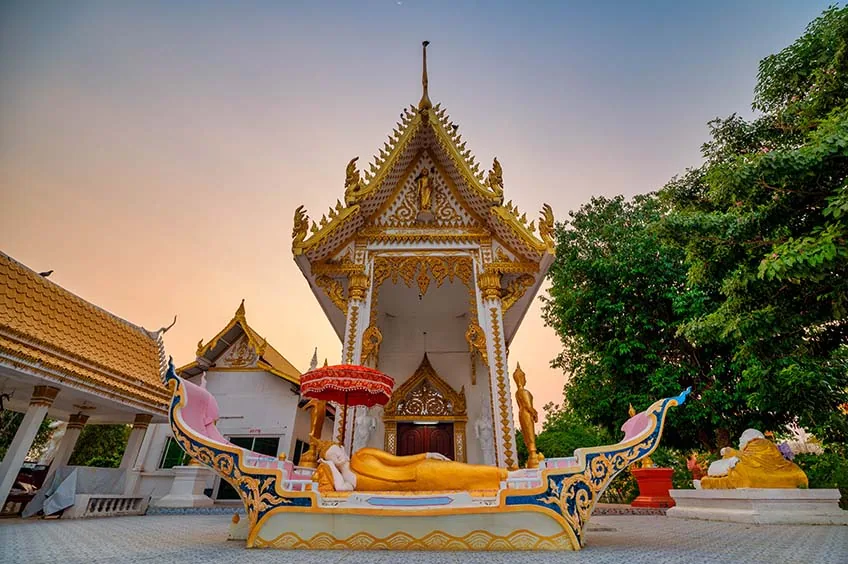
A Bang Phueng temple known for its gate: a giant Hanuman, mouth open and set with coloured glass, so you walk through the figure to enter. Inside, gilded halls and a reclining Buddha keep it a place for merit as much as for the photograph. About 08:00–15:00. Dress modestly; the glass gate catches the light best around midday.

Location · Ban Mi District

Wat Kroen Kathin

Wat Kroen Kathinวัดเกริ่นกฐิน

A Ban Chi temple still visited for Luang Pho Phian Akkathammo, the abbot people remember, and for Luang Pho Pan, the image in the glass viharn. The hall is bright with mirror-work. About 08:00–18:00. This is a living temple — shoulders covered, voices low near the image.

Location · Ban Mi District

Wat Lai

Wat Laiวัดไลย์

Local tradition places the founding around 1257 (B.E. 1800); King Borommakot restored the temple in the eighteenth century. The viharn keeps an early Ayutthaya frame, and the nine-chamber viharn carries stucco of the Ten Jataka. A small museum holds further finds, and Phra Si Ariya is the image most people come to bow to. About 08:00–16:00.

Location · Tha Wung District

Wat Muchalin

Wat Muchalinวัดมุจลินท์

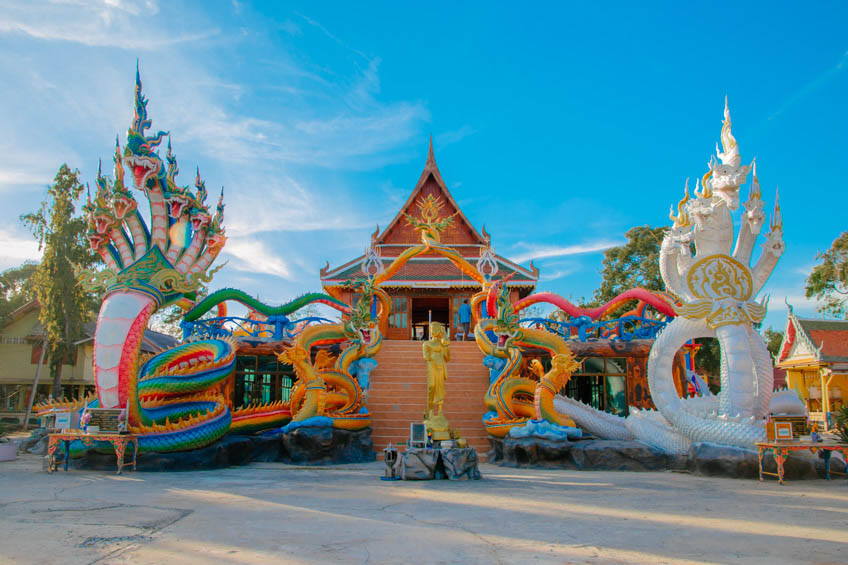
A Tha Wung temple built around the Muchalinda story — the naga king who sheltered the Buddha — with a large naga image and the naga-bas stair that visitors walk as a blessing of enough to spare. About 06:00–18:00. The stair is the photograph; the ubosot is where you leave your shoes.

Location · Tha Wung District

Wat Phra Si Rattana Mahathat

Wat Phra Si Rattana Mahathatวัดพระศรีรัตนมหาธาตุ

The great prang of old Lavo, the tallest in town. No founding date is fixed; records show repairs under Ramesuan, King Maha Chakkraphat, and King Narai. The Khmer tower was reworked in the Ayutthaya years, so the stucco mixes both ages. Sala Pliang Khrueang is where the king changed robes before a rite. The large viharn, from Narai’s reign, has Thai doorways and French-Gothic window openings. About 08:30–17:30. Often included on the old-town combined ticket with Phra Prang Sam Yot.

Location · Mueang Lopburi District

Wat Tham Khao Prang

Wat Tham Khao Prangวัดถ้ำเขาปรางค์

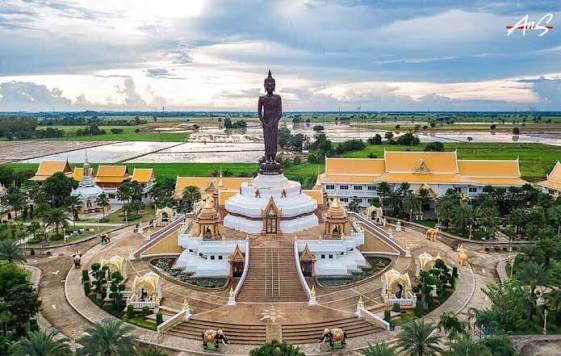
A cave-hill temple in Nikhom Lam Narai. The nine-spired chedi, Nawalokut, sits against the hill and holds relics the temple invites you to bow to. Above it, a first-sermon Buddha about 32 metres wide and 56 metres high was raised in 2014 (B.E. 2557), reached by a seven-headed naga stair. About 07:00–18:00. The white figure reads best from the plain below in late light.

Location · Chai Badan District

Wat Weluwan

Wat Weluwanวัดเวฬุวัน

A hillside temple in the Khao Chin Lae valley, built through the faith of Mae In Sirimongkhon of Lopburi. Luang Pho Khao, the white Buddha, shows from the road; Luang Pho Som Khwam Prathana sits in the ubosot. The grounds keep a large flock of peacocks, locally counted in the hundreds. About 06:00–19:30. The climb is the visit — pair it with the sunflower fields when they bloom nearby.

Location · Mueang Lopburi District

04

Local Flavours & Food

River Rafts, Garden Tables & Evening Rooms

Lopburi eats away from the monkey lanes — a raft on the Lopburi River at Tha Hin, Isaan plates facing the paddies on the Tha Wung bypass, and garden rooms where a band starts after the ruins close. Banana-leaf Thai, boneless fried carp, and barbecue ribs all turn up in the same small province.

Where to Eat

Ten Rooms, A to Z

Hours shift; tap Location before you go.

Atlas House

Atlas HouseATLAS House Lopburi

Daily · about 11:00–24:00

A cream arcade with a terrace of umbrellas — coffee and dessert through the afternoon, live music once the terrace lights come on.
Thai plates and inexpensive drinks share the menu. It is a long sitting, from late morning until about midnight.

Location · Mueang Lopburi District

Baan Saphan Mai

Baan Saphan Maiบ้านสะพานไม้

Daily · about 11:00–22:00

Old timber houses in Ban Mi, each a private air-conditioned room under the trees, with a café on the same ground.
The table sits between the house and the café: old-style tom som, pla krai fish cakes, and pizza when someone wants both.

Location · Ban Mi District · Ban Bang Phai

Baan Suan

Baan Suanร้านบ้านสวน

Daily · about 09:00–17:30

A garden in town — shade, a koi pond, and a glass room when the afternoon is too hot. The kitchen closes before evening.
Single plates, steak, and ice cream are the point, and rabbits share the garden with the diners.

Location · Mueang Lopburi District

Chat-Na-Ra

Chat-Na-Raฉัตรนารา

Daily · about 10:00–22:00

A pale modern house on Phra Piya Soi 5, with a white dining room downstairs and a private room for a long table.
Roast duck and miang of fried red tilapia are the plates people order; the kitchen also keeps old Thai curries and a banquet service.

Location · Mueang Lopburi District · Phra Piya 5

Isan Sea View

Isan Sea Viewอีสานซีวิว

Daily · about 10:00–20:30

A wooden pavilion on the Tha Wung bypass, paddies on one side and an air-conditioned room when the field is too bright. The sign reads Isan Sea View; older regulars still say Sea View.
Boneless fried silver barb, crispy pork knuckle, a hot fish tom yum, and som tum are the plates that match the view.

Location · Tha Wung District · bypass toward Ban Boek

Krua Mai Hom

Krua Mai Homครัวไม้หอม

Daily · about 10:00–20:00 · closed the 1st & 16th

A grey dining room on Phra Piya Road in Pa Tan, a short walk from Chat-Na-Ra, cooking Thai food with the care of a banquet kitchen.
Crab curry with cha-khram leaves, ranjuan curry, and the house nam phrik are the plates to ask for. The kitchen lists a closure on the 1st and the 16th.

Location · Mueang Lopburi District · Phra Piya Road, Pa Tan

Krua Pa Tan

Krua Pa Tanครัวป่าตาล

Daily · about 10:00–22:30

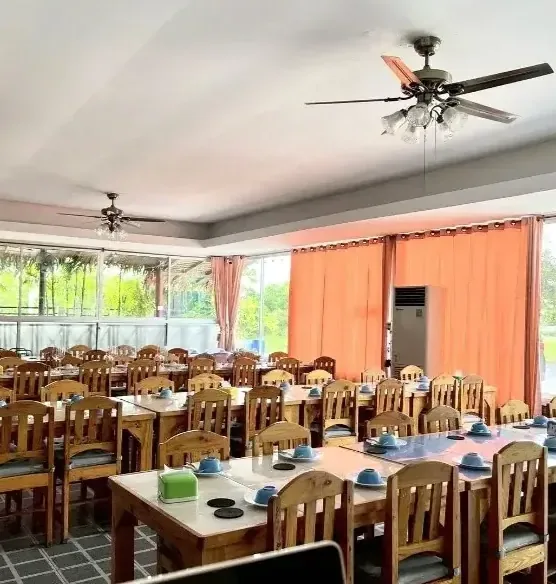
A roadside hall in Ban Nong Pla Duk — long wooden tables, a karaoke stage, and room for a big family without fuss.
Thai and Isaan share the menu. It is the easy lunch on the way across town.

Location · Mueang Lopburi District · Ban Nong Pla Duk

Pae Baan Rim Nam

Pae Baan Rim Namสวนอาหารแพบ้านริมน้ำ

Daily · about 10:00–22:00

A raft on the Lopburi River along Phet Racha Road in Tha Hin, near Wat Choeng Tha and a short ride from King Narai's palace.
Sunset is the hour. Freshwater fish, som tum, and a thick river-prawn tom yum are what the deck is for.

Location · Mueang Lopburi District · Phet Racha Road, Tha Hin

Pha Rak

Pha Rakเพาะรัก · Natural Life

Daily · about 11:00–23:00

A deep-soi garden off Soi Tha Sala 5, behind Big C — tables under trees around a pond, and a band of 1980s and 1990s songs once the light drops.
Thai food arrives on banana leaf, including the old-style fried rice. A small animal corner waits for children; it is a garden, not a zoo.

Location · Mueang Lopburi District · Soi Tha Sala 5

Ralph N' Laos

Ralph N' LaosRALPH N' LAOS

Daily · about 17:00–23:00

A compact lane room past Bridge 7, beside the Land Consolidation Office. Park on the main road and walk the soi in.
Giant barbecue pork ribs lead the menu, with Isaan-leaning plates, a short list of craft drinks, and live music most evenings.

Location · Mueang Lopburi District · past Bridge 7

05

Local Specialties & Souvenirs

Marl Eggs, Mudmee & Sunflower Seed

Lopburi packs small and specific. White marl from Ban Hin Song Kon coats the salted eggs, Thai Phuan kitchens in Ban Mi ferment the fish, and the looms there still tie mudmee. The eight gifts below are listed A to Z. The custard apple and the sunflower honey follow the season; the cloth, the brass, and the eggs travel any month.

  • Ban Mi ikatผ้ามัดหมี่ · ลายไส้ปลาไหล Thai Phuan looms in Ban Mi tie mudmee by hand. Motifs include the three prangs, the sunflower, and the monkey. The pha khao ma keeps two older patterns of this district, the eel-intestine line and ta mong. Lengths, scarves, and shoulder cloth are the pieces that pack.
  • Ban Tha Krayang brassงานหล่อบ้านท่ากระยาง Casters behind Wat Tong Pu, in Thale Chup Son, have poured brass for more than a century — Buddha images first, then Hanuman, Phra Kan, and the twelve animals. The same houses still press the old small cakes of marl.
  • Dinso phongดินสอพอง Fine white marl, washed and sun-dried into cakes at Ban Hin Song Kon in Thale Chup Son, near Bridge 6. It is named in King Narai’s medical text, and today it coats salted eggs and goes into incense and traditional powder. A village story says Rama’s arrow scorched this earth white; what the households dry is the marl itself.
  • Dinso phong salted eggsไข่เค็มดินสอพอง Duck eggs packed in that same white marl. Three cures leave the coat: boiled salted eggs, kai khem dao fried so the yolk stays soft, and kai wan, the sweet one. Buy them sealed and they ride home cleanly.
  • Khanom piaขนมเปี๊ยะ A round pastry with a thin, soft skin and a heavy filling. The three to know are mung bean with salted egg, taro, and black sesame. The salted-egg one belongs in the same bag as the marl eggs.
  • Phra Narai custard appleน้อยหน่าพระนารายณ์ · น้อยหน่าพระที่นั่งเย็น The old cotton custard apple of Thale Chup Son, also called Phra Thinang Yen, with a large fruit and a white fluff around the seeds. Local history places the first trees here in Narai’s reign, beside the hall the fruit is named for. It ripens once a year. Orchards thinned as the tambon built over them; planting returned in 2016. Eat it in the week you are here.
  • Pla som fakปลาส้ม · ปลาส้มฟัก White fish, salt, cooked rice, and garlic — the Thai Phuan cure of Ban Mi, often finished with winter melon. Pa Aew still sells it in Tha Kham, a short ride from Phra Prang Sam Yot, about 07:30–17:00, bones in or bones out. Ask also for Somporn, or for the Prakob Chit group in Ban Kluai, which has kept the same kitchen for more than forty years.
  • Sunflower seeds and honeyเมล็ดทานตะวันอบ · น้ำผึ้งดอกทานตะวัน Roasted sunflower seed is the bag that lasts. Sunflower honey belongs to the bloom, about November to January around Khao Chin Lae. The fields shift from year to year, so buy the jar in the district that is flowering.

06

Local Culture & Vibe

Narai in February, Macaques in November

Lopburi keeps more than one calendar. Thai Phuan households in Ban Mi and Mueang stop the fields for Kam Fa and fill baskets when the rains end. A Mon village lives at Bang Khan Mak, and Thai Boeng speech and cloth remain at Khok Salung. In the old town, February belongs to King Narai and the last Sunday of November to the macaques. The eight rites below are listed A to Z.

  • Flower alms-givingตักบาตรดอกไม้ On the morning of Khao Phansa, the day after Asanha Bucha, two temples in Mueang take flowers with the incense and candles. At Wat Sirichantranimit, Wat Khao Phra Ngam, monks tie the bathing-cloth into a bag, receive the blooms, and carry them to the Buddha. Wat Mani Chonlakhan in Phrommat has kept the same offering since 1933, when its abbot brought the rite down from the hill. In 2026 that morning fell on 30 July.
  • Kam Faกำฟ้า A Thai Phuan rest day in Ban Mi and Mueang, on the 3rd day of the waxing moon in lunar month 3, usually February. The day before is Suk Dip. Households offer khao lam and grilled sticky rice, ask the sky for rain in its season, and leave the fields idle. The afternoon turns to folk play.
  • King Narai Festivalงานแผ่นดินสมเด็จพระนารายณ์มหาราช · งานในวัง Lopburi calls it the fair in the palace. For about ten days in mid-February, around the 16th, the day kept as King Narai’s birthday, the old town dresses in Thai cloth and a historical procession crosses Phra Narai Ratchaniwet and the monuments beside it. In 2026 the fair ran 13–22 February, and the ruins were lit at night.
  • Lent candles of nine templesหล่อเทียนและแห่เทียนพรรษา 9 วัด Kok Ko casts the Lent candles at Wat Dong Noi, then carries them to nine temples in the tambon: Wat Dong Noi, Wat Pa Sak, Wat Kok Ko, Wat Ban Rai, Wat Khun Nuan, Wat Ban Mai, Wat Khok Muang, Wat Mai Champa Thong, and Wat Amphawan, the Mon wat at Bang Khan Mak. In 2025 the casting was 7 July and the procession, about two kilometres, was the next morning. The dates move with Khao Phansa.
  • Monkey banquetงานเลี้ยงโต๊ะจีนลิง On the last Sunday of November the city sets a formal table for the macaques that live with Chao Pho Phra Kan. The feast began in 1989. In 2024, its 36th year, the rite still opened at San Phra Kan, and the trays were laid at the municipal animal nursery in Pho Kao Ton and on the lawn behind Phra Prang Sam Yot. Watch from the edge. The animals are bold, and a bag or a pair of glasses goes first.
  • Phra Sri Ariya processionชักพระศรีอาริยเมตไตรย์ · วัดไลย์ Twice a year at Wat Lai in Khao Samo Khon, Tha Wung, the future Buddha rides a wheel-less palanquin pulled by rope. The first day is the 14th of the waxing moon in lunar month 6, along the road from Wat Lai to Wat Thong Khung. The second is the 4th of the waning moon in lunar month 11, toward Wat Thep Amphai. Food pavilions line the route, and people gild and bathe the image. In 2023 the rite was entered on the national list of intangible cultural heritage.
  • Sai Krachadใส่กระจาด · เส่อกระจาด The Thai Phuan name is so krachad. In Ban Mi it belongs to the Mahachat sermon, in the waning days of lunar month 11, after Ok Phansa. The day before, households wrap khao tom. On the day itself, bananas, sugarcane, oranges, and incense go into a basket left at a neighbour’s house. The host feeds the visitors and sends them home with khao tom mat. The next morning those gifts become the thirteen chapters offered to the monks in a single day.
  • Sunflower bloomเทศกาลทุ่งทานตะวันบาน The province counts itself Thailand’s largest sunflower grower, and the yellow runs about November to January. The festival follows the bloom. The fields are not the same ground every year, so ask which district is open. Khao Chin Lae is the name most visitors already know.
Lopburi culture

07

Travel Info & Getting There

Plan Your Journey

How to reach Lopburi from Bangkok, and how to move around once you arrive.

From Bangkok

By air

Lopburi has no passenger airport. Don Mueang is the useful door: northern-line trains stop at the station beside the terminal and continue to Lopburi, and Highway 1 runs north from the same side of the city. Landing at Suvarnabhumi means a cross-town ride to Bang Sue, or a long road north.

By car

About 153 km north of Bangkok on Highway 1, Phahonyothin — the distance the province itself uses — and usually two to two and a half hours once you are clear of the city. The Don Mueang Tollway skips the Rangsit crawl and joins Phahonyothin. Coming from Ayutthaya, Highway 32 is the western road; allow about an hour. The old lanes are narrow and full of macaques, so park and walk the last streets to the prang and the palace.

By train

Lopburi sits on the northern line, 133 km from Bangkok, at a station in Tha Hin. Special expresses leave Krung Thep Aphiwat — the MRT Blue Line reaches Bang Sue — and often take about an hour and a half to two hours, with a stop at Don Mueang if you are landing there. Ordinary and commuter trains still start at Hua Lamphong and take closer to three hours; on the 2026 timetable third class is about 28 THB. Northeastern trains leave this line at Ban Phachi and run through Saraburi. The palace and the three prangs are a short ride from the platform. Times move; check the SRT sheet.

By bus

Watcharin Tour runs the regular vans from the Mo Chit 2 queue in Chatuchak, with some departures also at Rangsit, into the Lopburi bus station. In 2026 seats were listed from about 172 THB, from early morning into the evening, and the run is about two to three hours. The station sits outside the old lanes; a songthaew finishes the trip to the prang.

Getting around

The old town is a handful of streets: the station, Narai’s palace, Phra Prang Sam Yot, and San Phra Kan. Walk them, and keep a bag closed — the macaques are quick. Songthaews and motorcycle taxis cover the rest of the city. For Wat Lai in Tha Wung, the Ban Mi looms, Pasak Jolasid, Wang Kan Lueang, and the sunflower plots, hire a car for the day. In the cool season a special sightseeing train sometimes runs onto the dam; book it ahead.

Best time to visit

November to February is the kind window: cooler air on the plain, sunflower fields in bloom, the monkey banquet on the last Sunday of November, and King Narai’s fair for about ten days in mid-February. March to May is hot — go to the palace when it opens and leave the prang for earlier light. May to October turns the eastern hills green and fills the Lopburi River; expect afternoon rain and high water on the low fields.

Continue the Journey

Nearby Provinces