
Bueng Kaen Nakhonบึงแก่นนคร
The city’s civic lake — evening walks, food stalls, and Wat Nong Waeng’s nine-storey chedi across the water. This is where Khon Kaen actually spends its free hours.

 ThailandLover
Contact
01
Geography & Climate
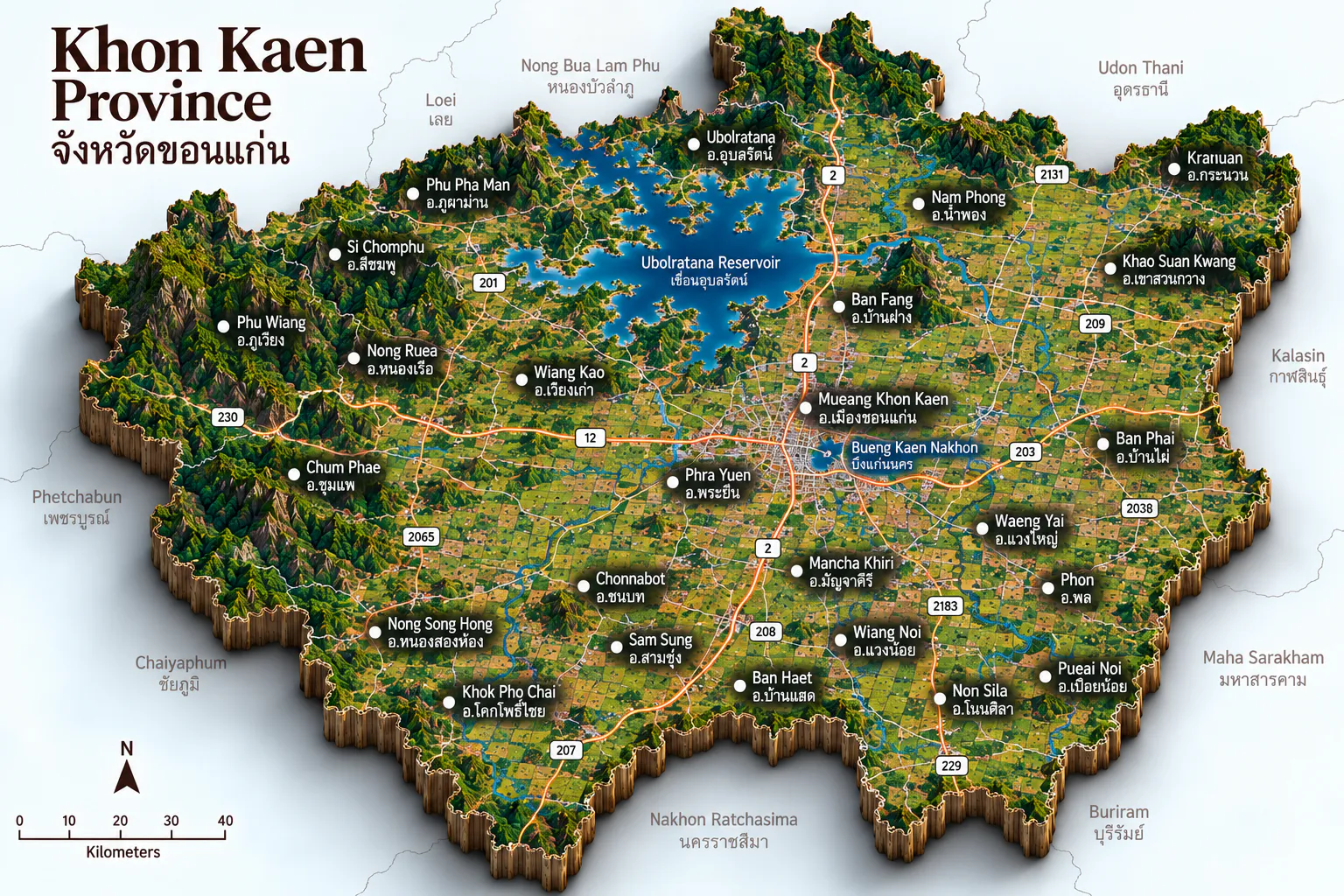
Khon Kaen sits in the middle of the northeast, about 10,886 square kilometres and roughly 445 kilometres from Bangkok on Highway 2. Loei, Nong Bua Lamphu, and Udon Thani lie to the north; Kalasin and Maha Sarakham to the east; Nakhon Ratchasima and Buriram to the south; Chaiyaphum and Phetchabun to the west.
Most of the province is Khorat Plateau — rice, dry forest, and the Chi River — while the west and north lift into the Phu Phan and Phu Wiang hills. Ubolratana Dam holds the Nam Phong; Bueng Kaen Nakhon is the lake the city actually lives around.
The climate is wet-and-dry Isan. November to February is the clear, cooler stretch. March to May burns. Rains usually settle from about May through October and turn the paddies green.
Best time: November – February for the lake, Phu Phan viewpoints, and the Silk Festival; July – December for Namtok Ba Luang and Tat Fa; late November into early December for Phuk Sieo.
02
History & Heritage
The name is a legend you can still visit. Khon means a log, kaen the hard heartwood — a tamarind trunk, the story says, that became Phra That Kham Kaen in Nam Phong and, later, the province’s name.
The town itself was raised in the early Rattanakosin years. Provincial chronicles trace Phia Mueang Pan, who brought followers out of Suwannaphum country to settle at Bueng Bon. In 1797 (B.E. 2340), under King Rama I, that settlement was formally made Mueang Khon Kaen, with Phia Mueang Pan titled Phraya Nakhon Si Borirak, under Nakhon Ratchasima. The seat did not stay still. It shifted more than once — including a spell at Ban Nong Lek, now inside Maha Sarakham — until 1908 (B.E. 2451), when the hall was planted at Mueang Phra Lap, the ground of today’s city.
Older than any of those moves are the plateau’s earlier lives: prehistoric burials around Phu Wiang and Chum Phae, and Khmer sanctuaries such as Prasat Pueai Noi. The log arch in old photographs, lettered KHON KAEN, is the civic memory the modern university city still stands under.

03
Top Attractions
A nine-storey that on the lake, dinosaur hills, Khmer hospital shrines, and pine shade on the way to Loei — places that shape a Khon Kaen journey, listed A to Z.
The city’s civic lake — evening walks, food stalls, and Wat Nong Waeng’s nine-storey chedi across the water. This is where Khon Kaen actually spends its free hours.

A wide public park and reservoir for jogging, cycling, and a quieter sunset than the main lake. Easy to add when you already have a car in town.
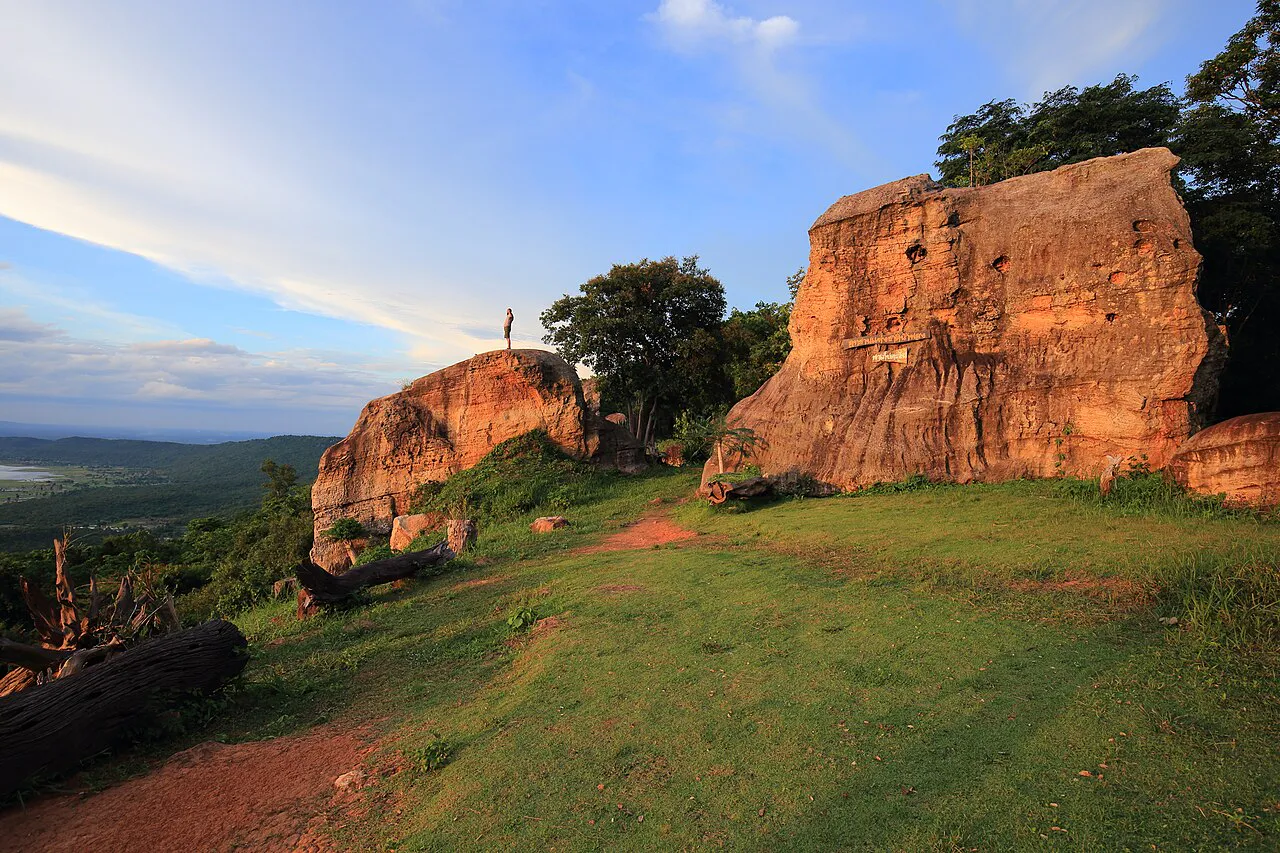
Sandstone boulders and a cliff deck inside Nam Phong National Park, about an hour from the city, looking over Ubolratana reservoir. Come for sunrise or late-day light; the park gate fee applies.

The city’s guardian shrine beside Bueng Kaen Nakhon — incense, garlands, and a short stop locals still make before a big journey. Pair it with a lake loop rather than a separate trip.

The weekend pedestrian stretch through the old centre — snacks, student crowds, and music after the shops close. Go after dusk; daytime it is just a street again.

The city’s zoo and shaded grounds, a practical family half-day when the heat makes cliff walks unkind. Check closing time before you leave the lake.
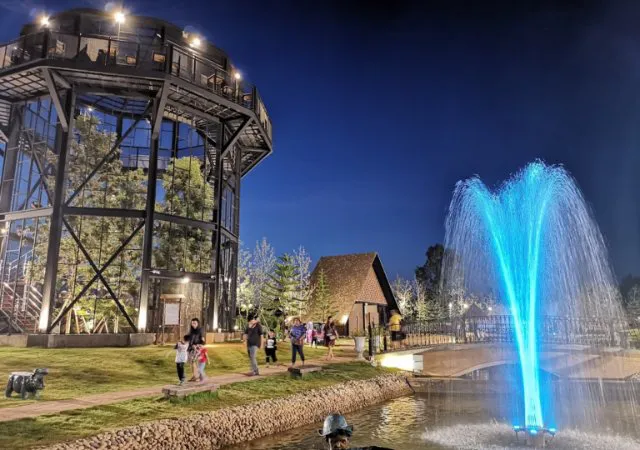
A private animal park families use as a short, air-conditioned detour from the city circuit. Hours move; confirm on the pin before you drive out.

A forest-park waterfall over a broad rock lip, with shade trees and picnic shelters. Water is strongest from about July through December; the rest of the year it is a cool rock garden.

The nine-storey chedi of Wat Nong Waeng on the lake’s edge — relics, museum floors, and a high gallery over Bueng Kaen Nakhon. It is the silhouette the city uses for itself.

The that tied to the tamarind heartwood legend that gave Khon Kaen its name. A quiet Nam Phong pilgrimage stop, stronger as faith than as a photo queue.
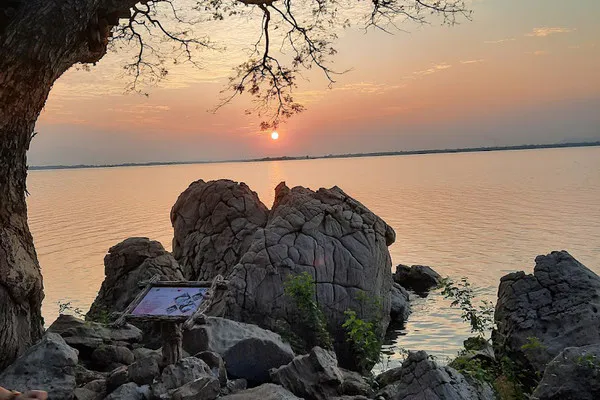
Forest ridges shared with Nong Bua Lamphu — viewpoints, the Buddha-footprint temple, and dry-season trails above the reservoir country. Bring water; shade is thinner than it looks from the road.

Village stays on the Phu Pha Man edge, for travellers who want a night near caves and Tat Fa instead of another hotel by the lake. Book ahead on cool-season weekends.
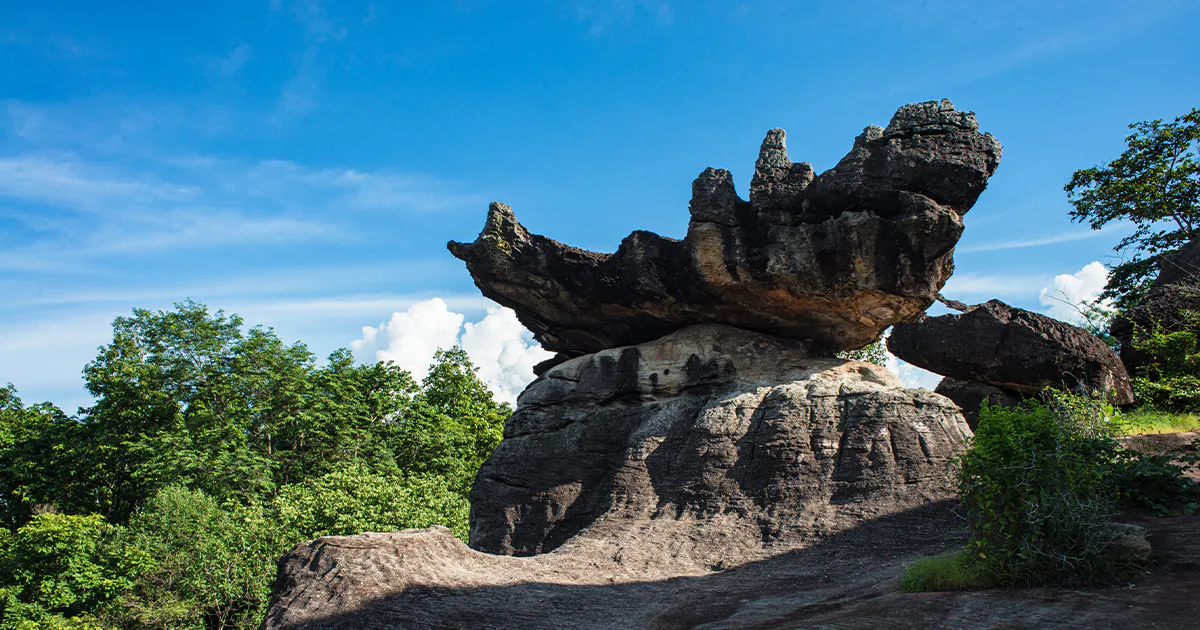
Limestone caves, forest, and Tat Fa waterfall on the Khon Kaen–Loei border. A full day from the city — go with a car, and start early if you want both cave and falls.

Thailand’s dinosaur museum, built over the Phu Wiang fossil hills — Siamosaurus country, indoor galleries, and a short drive on to the dig sites. The easiest half-day of science in Isan.

A small Khmer sanctuary from the age of Jayavarman VII, laid out as an arogyasala — a hospital chapel — in the south of the province. Compact, laterite, and easy to combine with a Ban Phai stop.
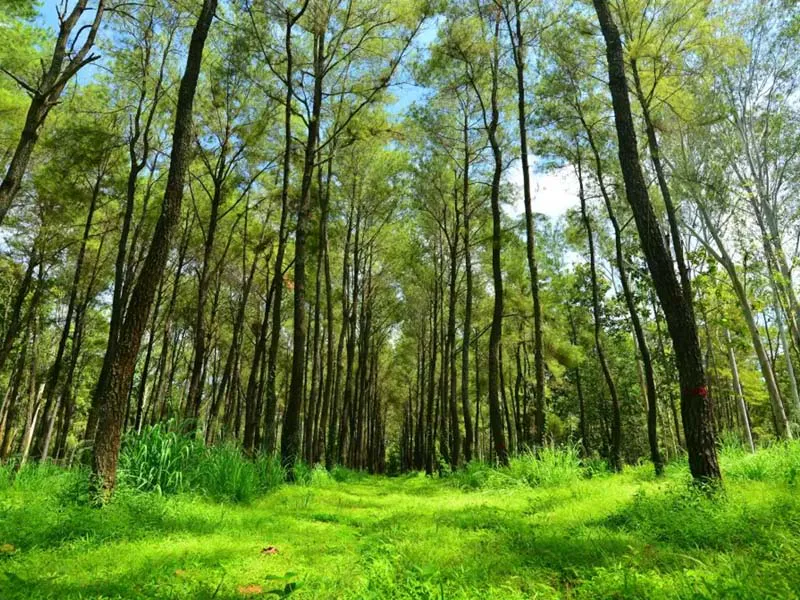
A planted pine stand in Chum Phae that feels nothing like the rice plain — cool shade and a picnic pause on the road toward Phu Kradueng. Best after rain, when the needles smell sharp.

The showpiece fall of Phu Pha Man National Park, dropping in tiers through forest. Green season fills it; dry months leave the rock shelves and the walk.

A Hindu sanctuary on the city bypass, with a large Shiva and shrines to Ganesha and the wider pantheon. Quiet in the morning; devotees come to ask for work, health, and a clear road.

The big evening market on Mittraphap — food lanes, clothes, and a crowd that builds after 16:00. This is Khon Kaen shopping without the mall air-con.

The Nam Phong reservoir that cools the north of the province — dam crest, lake wind, and viewpoints back toward Hin Chang Si. A half-day with a car, longer if you stop to eat by the water.
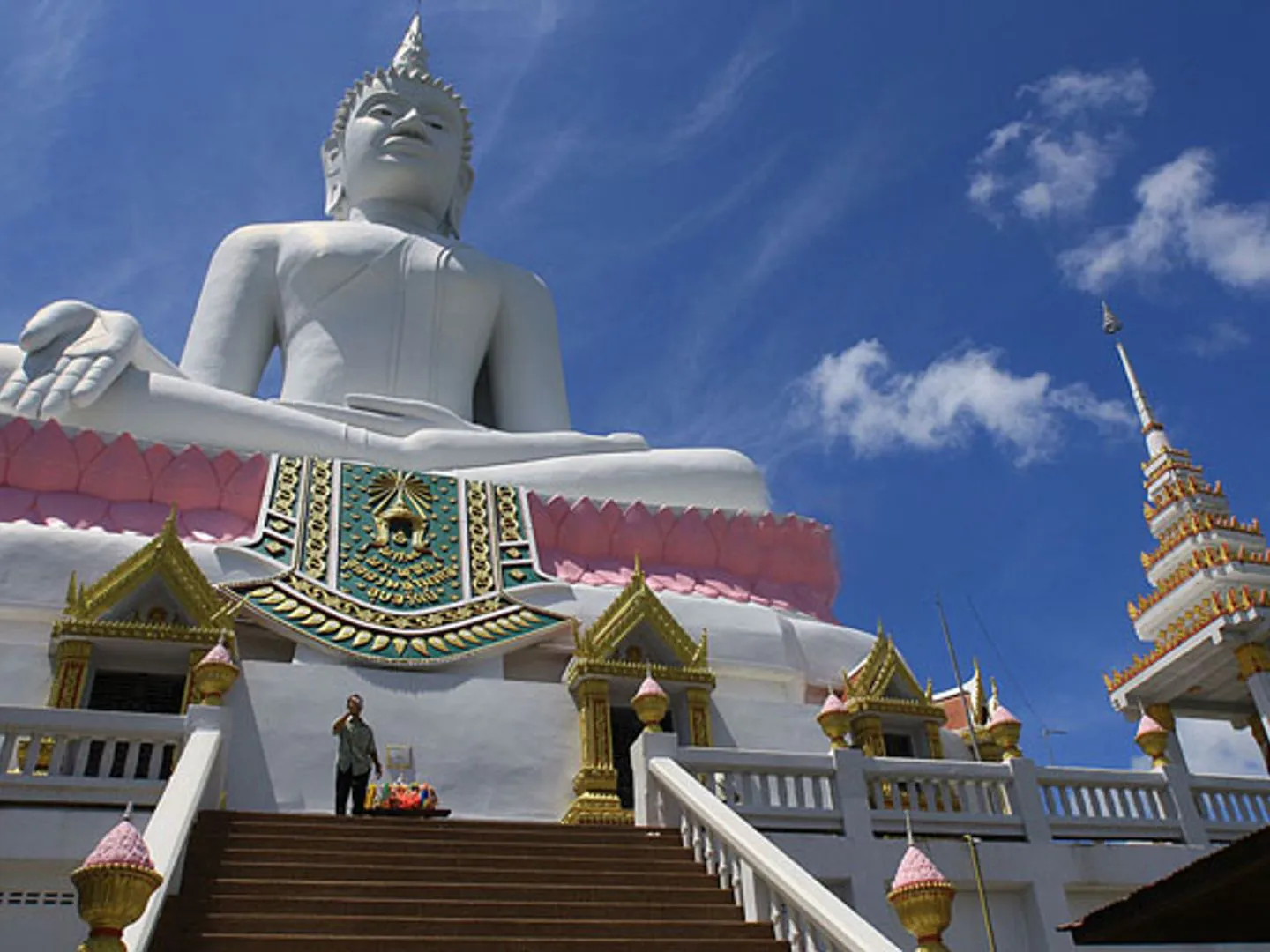
A Buddha-footprint temple in the Phu Phan Kham hills, where the walk up is part of the visit. Clear mornings give you the ridge; midday is just heat and concrete.
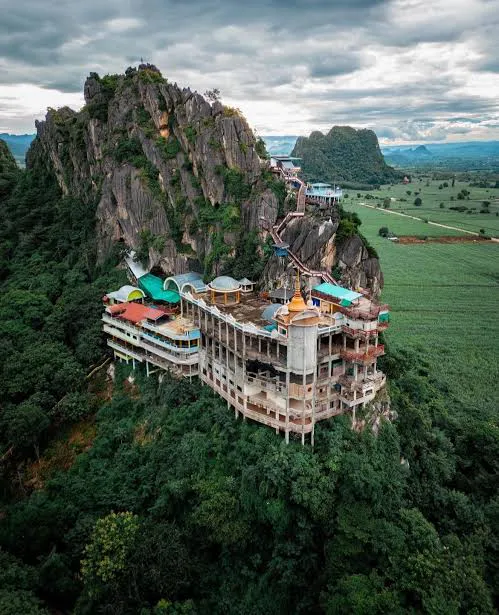
A cave temple for a short, cool walk under the rock — Buddha images in the dim and forest at the mouth. Dress for a temple, not a hike, and keep your voice down.

The naga temple on the edge of town — long serpent balustrades, a busy merit courtyard, and the reputation that draws both pilgrims and photo stops. Mornings are calmer than weekends.
04
Local Flavours & Food
Khon Kaen eats with university-city energy and lake-town calm — Michelin breakfast on Klang Mueang, lakeside Thai–Chinese at Bueng Kaen Nakhon, contemporary Isan tasting plates, and Vietnamese kitchens the whole table can share. The twelve tables below are where locals and travellers still start.
Where to Eat
Lake-view Chinese tables, Michelin breakfast, contemporary Isan, and Vietnamese kitchens — family restaurants locals still name first, listed A to Z. Hours can change; tap Location for the latest pin.

A Michelin Bib Gourmand Thai–Chinese breakfast on Klang Mueang Road, grown from the family’s Heng Nguan Hiang shop of 1957.
Order the house sandwich, baked rice with sweet Chinese sausage, then a hot black coffee or milk tea — and take kun chiang home from the gift counter.

A lakeside memory of Khon Kaen, set mid-marsh at Bueng Kaen Nakhon with open decks and air-conditioned rooms for family tables and tour groups.
Come for Thai–Chinese sets at sunset, when the breeze comes off the water and Wat Nong Waeng lights up across the lake.
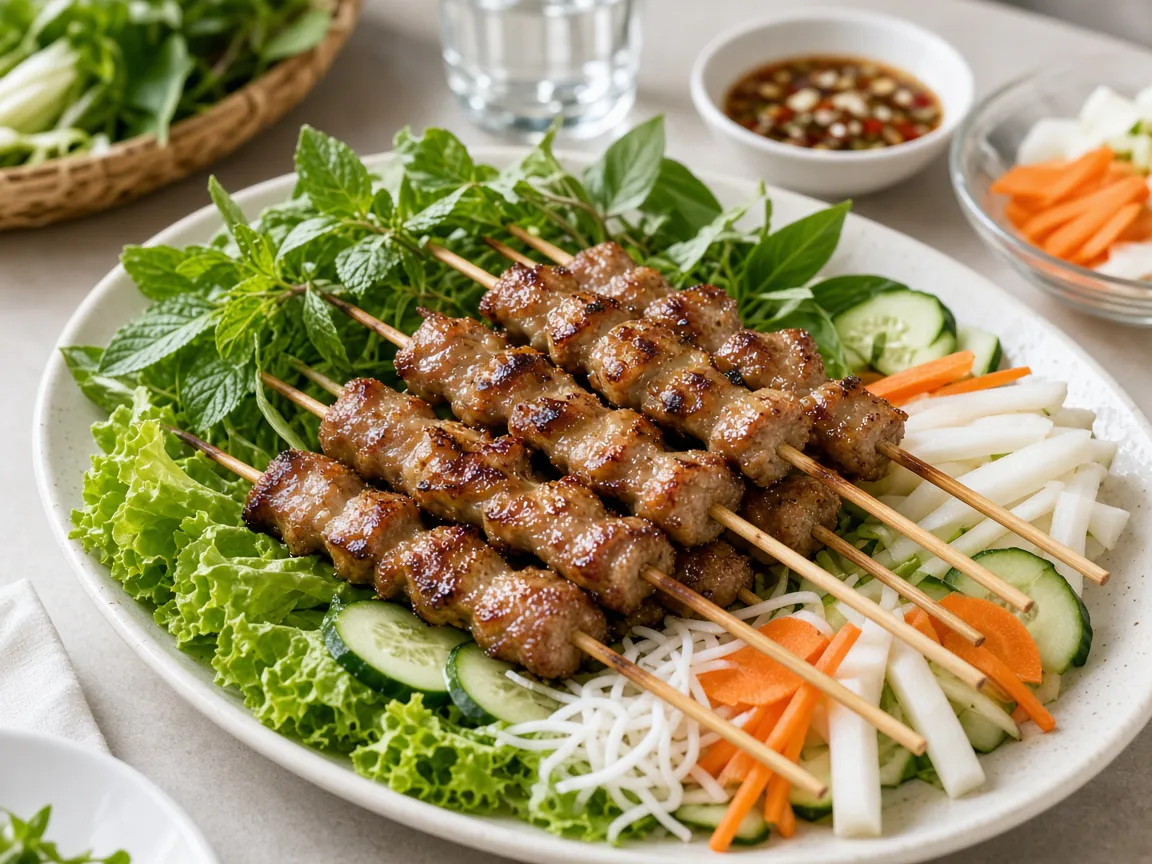
A big Vietnamese–Isan kitchen that moved across the street into a wider room — banquet halls, meeting space, and a kids’ play corner for family days.
Order nam nueng with fresh greens, steamed Mekong fish with jaew, or coconut Vietnamese noodles when the table wants a shared Isan–Vietnam plate.
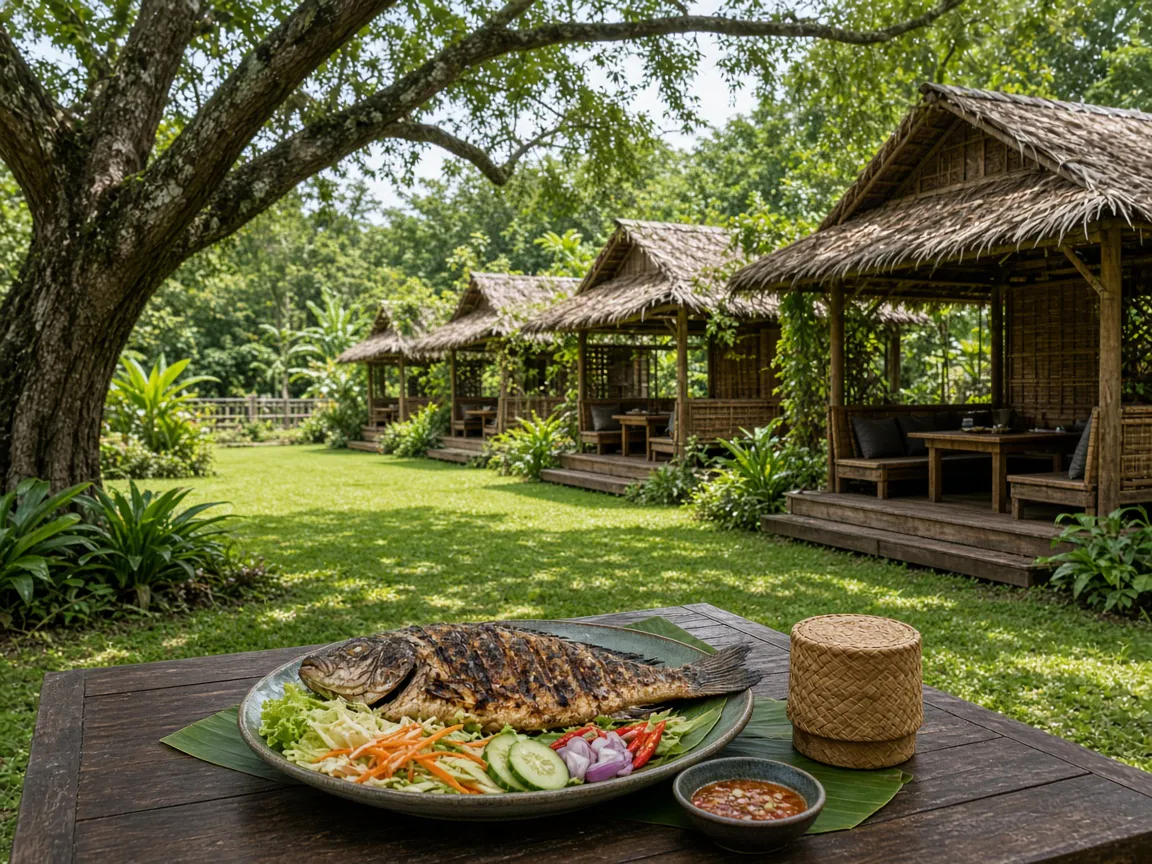
A new Ban Fang landmark about 25 minutes from town — nine rai of open air, private booths, and room for celebrations beyond a city café.
Try the grilled-fish set, pla nin with kha-yaeng greens and fish-roe eggs, or hoi na when you want a countryside table without driving half the province.

A Michelin Guide contemporary Isan kitchen on Soi Adunyaram — chefs Paisarn and Kanyarat refine local produce into casual fine dining.
Book ahead for dinner; ask for kaeng ploe with free-range chicken and yanang broth, or the 24-hour sous-vide beef tongue when the tasting mood is on.
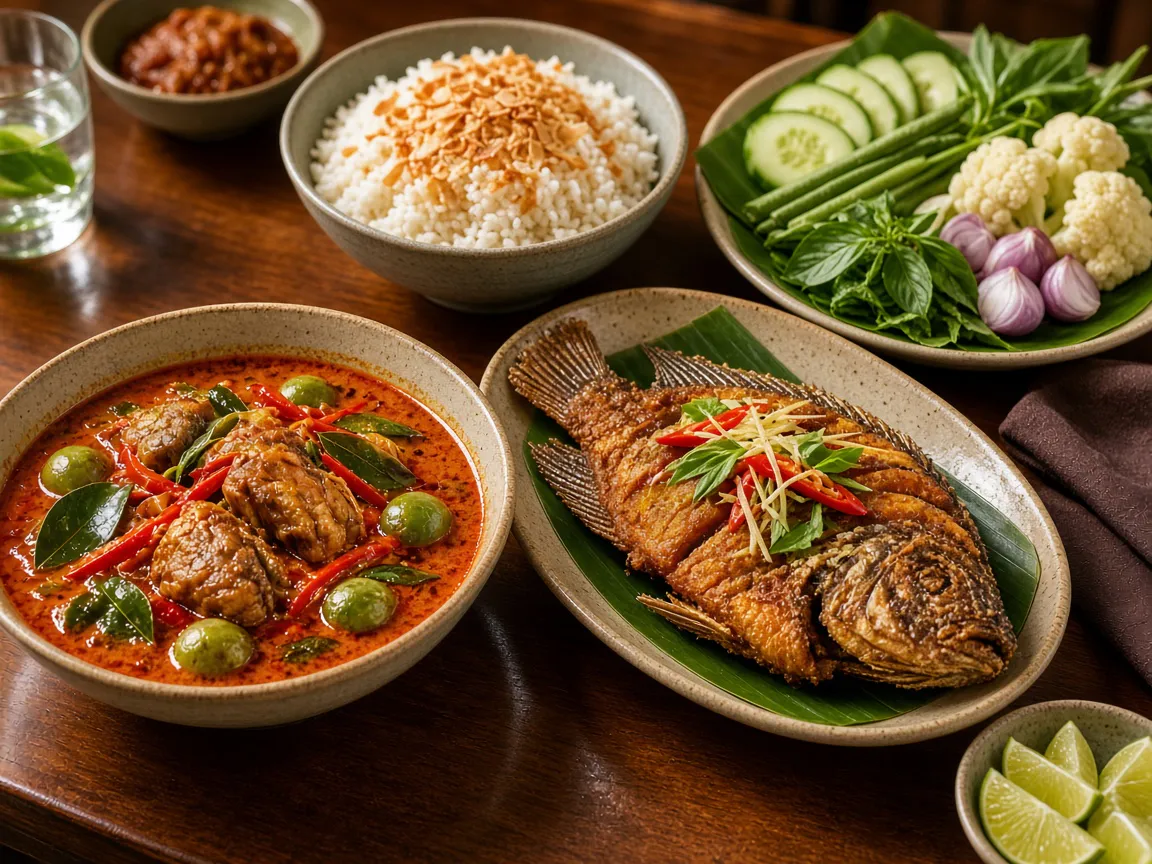
Southern Thai cooking on the Mittraphap corridor toward Udon — rich curry pastes plated in a polished room that still tastes like the deep south.
Come when the table wants gaeng tai pla heat and coconut depth without leaving the Northeast; useful for guests who miss Pak Tai flavours.

A Michelin Guide–listed Isaan kitchen on the airport road, about 300 metres before the terminal on the left — local plates and seasonal village dishes.
Stop for Isaan sausage, herb-fried chicken, and whatever rare seasonal bowl is on when your flight lands or leaves.
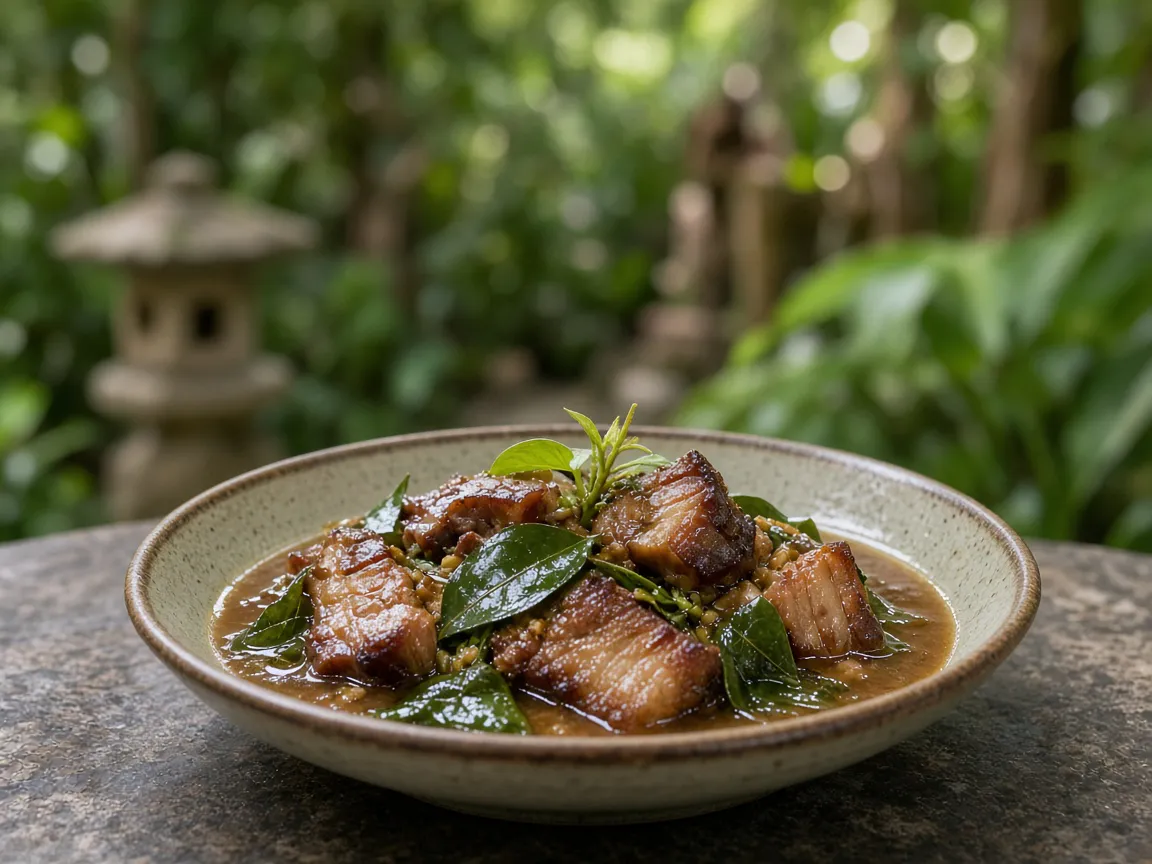
Michelin Guide Thai cooking at Supanniga Home on Phothisan Road — eastern seaboard recipes from Grandma Somsri, set in a quiet garden near Bueng Kaen Nakhon.
Order muu chamuang first, then the house miang and seasonal sweets; indoor and tree-shade seats both work for family meals.
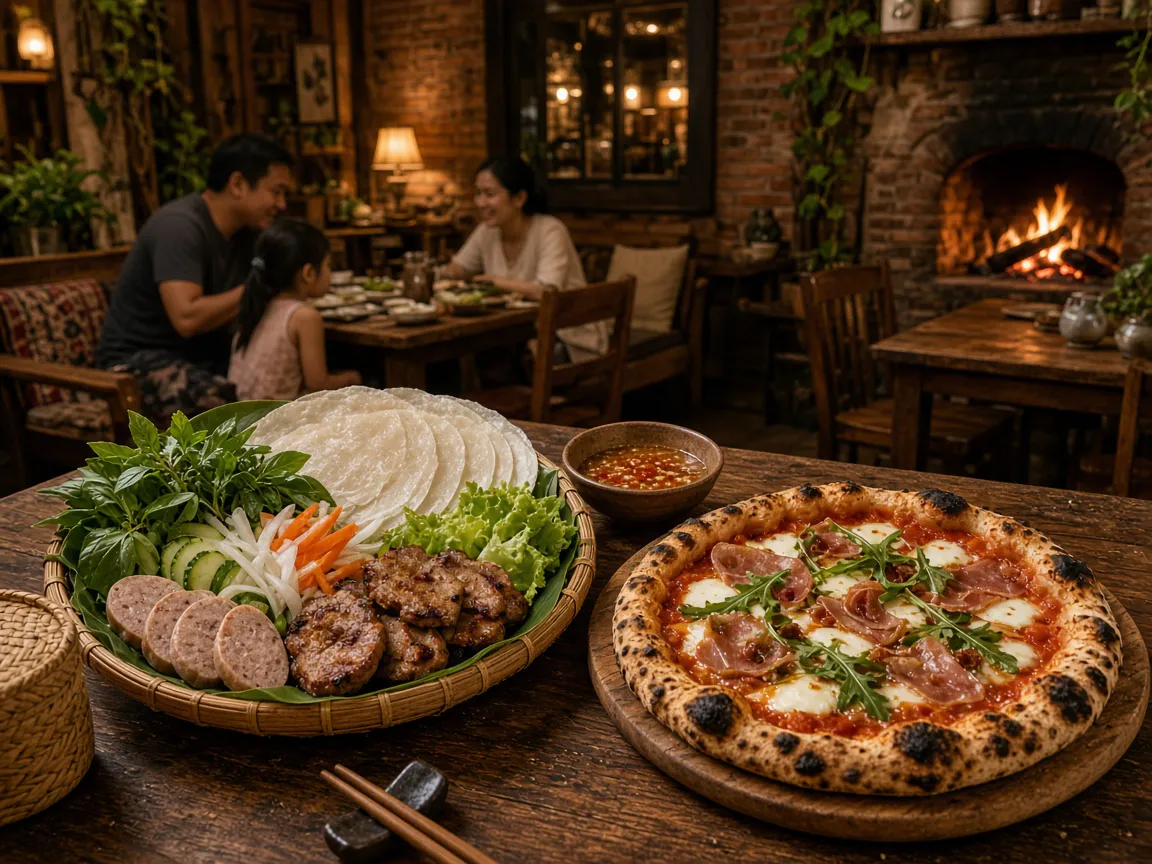
A Maliwan Road institution of more than thirty years — warm brown-toned rooms for Thai, Vietnamese, and Italian plates under one roof.
Locals still start with nam nueng and crisp green oak lettuce, then split a pizza when the table wants something everyone can share.

The rooftop on floor 27 of Ad Lib Hotel Khon Kaen — 360° city lights, indoor and outdoor seats, and a Western–fusion dinner list.
Reserve a glass-edge table for rib-eye, fresh pasta, or a house cocktail when the night needs a view above Si Chan Road.

A long-loved garden table by Bueng Kaen Nakhon, beside the Peng Tao Kong Ma shrine — shade trees and a pace that suits elders and long lunches.
The signature is chicken in lime-cream sauce with fried kaffir lime; also order cashew chicken or thick tom yum when the lake walk ends hungry.

An old Thai–Chinese legend that left the lakeside for a wider room at Sam Liam Junction on Mittraphap Road — still the banquet house many families trust.
Order red pork duck, oyster omelette, jeb chai, or stir-fried pork belly with chilli-salt when you want classic Chinese–Thai plates in town.
05
Souvenirs from Khon Kaen
Khon Kaen packs the classic Isan gift bag: Chinese-Thai sausages from old town shops, peanut sweets that have outlived generations, and mudmee silk with a national GI. Fill the edible side first, then leave room for cloth and bamboo that still feel like the province.
06
Local Culture & Vibe
Khon Kaen keeps Isan time by Heet Sip Song, then writes a louder chapter in mudmee silk and the Phuk Sieo friendship rite. Recognised as a World Craft City for mudmee since 2018, the province still gathers each late November for silk, Red Cross nights, and wrist-tying that binds strangers into sieo. Around Bueng Kaen Nakhon and the campus quarter, the mood is devout, musical, and young — a capital of the Northeast that never quite loses its village heartbeat.
07
Travel Info & Getting There
How to reach Khon Kaen from Bangkok, and how to move around once you arrive.
Khon Kaen Airport (KKC) is the Northeast’s easiest city door — about 8 kilometres from downtown, roughly 20 minutes by taxi or Grab. Frequent hops from Don Mueang (Thai AirAsia, Thai Lion Air) and Suvarnabhumi (Thai Airways, Thai VietJet) land in about an hour; on busy days a dozen-plus flights keep fares competitive. Land, clear the small terminal, and you are already in the university city.
About 450 kilometres and a 6–7 hour drive in ordinary traffic, almost entirely on Highway 2 (Mittraphap). Take Highway 1 (Phahonyothin) to Saraburi, then Mittraphap through Pak Chong and Nakhon Ratchasima into Ban Phai and Khon Kaen city. The road is wide, well signed, and lined with rest stops — break at Pak Chong or Korat if you want Khao Yai air or a proper meal before the Isan plain opens.
Ride the Northeastern Line from Krung Thep Aphiwat Central Terminal straight into Khon Kaen station in the city centre — roughly 7–8 hours, with daytime express services around 6 hours 45 minutes and overnight sleepers closer to 7 hours 45 minutes. Several trains a day; book a second-class berth if you want to wake already on Mittraphap’s rice fields. From the station, Grab, tuk-tuks, and songthaews cover town in minutes.
The simplest door-to-door ride: coaches from Bangkok’s Mo Chit 2 (Chatuchak) cover the Mittraphap corridor in about 6–7 hours and roll into Khon Kaen’s bus terminals. Nakhonchai Air runs frequent Gold and First Class services through the day and night — often every half hour on busy stretches — with Transport Co and other Isan lines sharing the route. Daylight seats for the rice-field view; overnight if you want coffee already in town.
Central Khon Kaen is easy — Bueng Kaen Nakhon, the train station, malls, and food streets sit within Grab, tuk-tuk, and songthaew range. Rent a car or hire a driver for Phu Wiang Dinosaur Museum, Phu Pha Man, Ubolratana Dam, Hin Chang Si, and Khao Suan Kwang. Mittraphap (Highway 2), Highway 12 toward Kalasin, and the airport road are the spines; Phu Phan and the western hills sit a turn off them.
November to February brings dry, cooler days for lake walks, Phu Phan viewpoints, and easy museum hours — and late November into early December is Silk Festival and Phuk Sieo season. May through October is greener paddies and quieter hotels, with rain often on the afternoon clock. March–April is the hot stretch; start early for outdoor sites and save the lake for sunset.
Continue the Journey