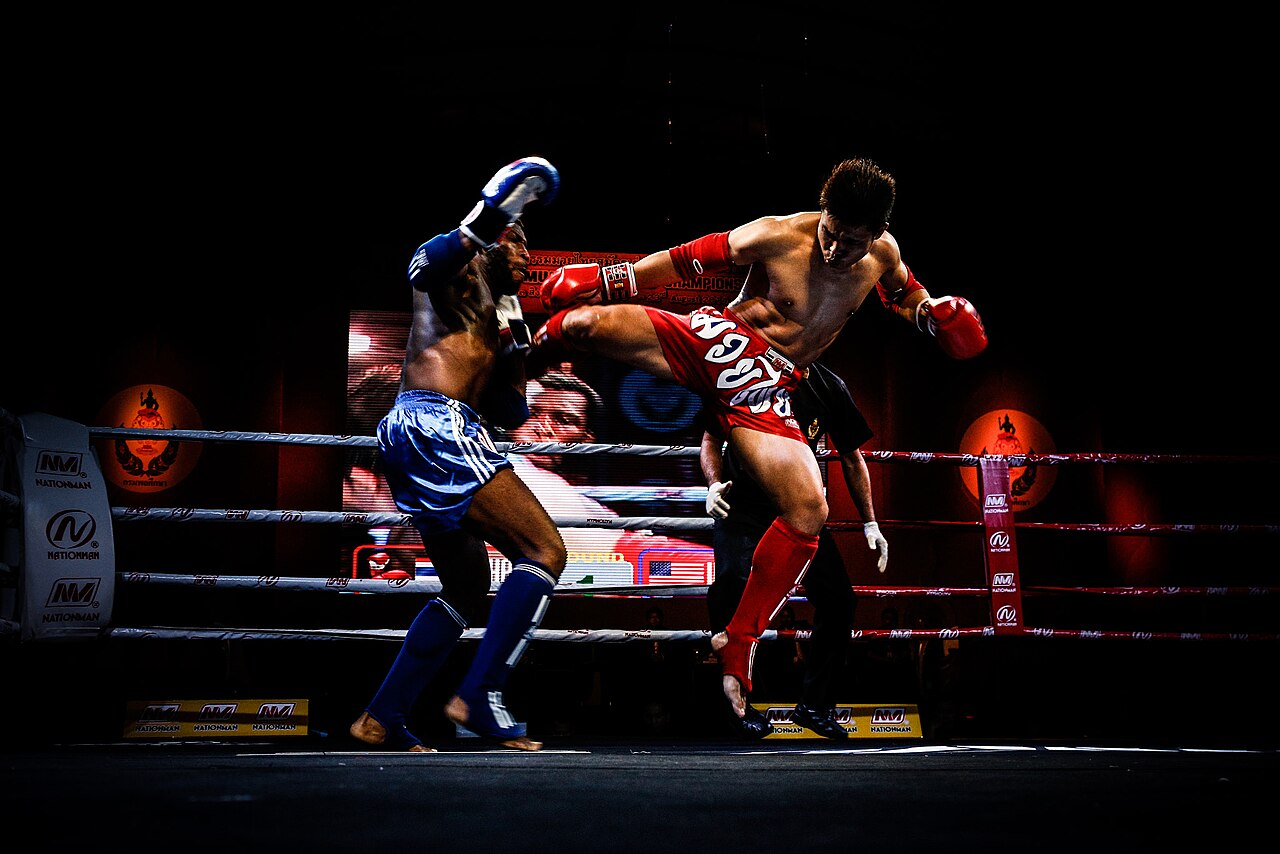
Warm-up, then pads
Class starts with a long warm-up, then pads and clinch work. Expect tired legs. That is the ordinary rhythm of a real session.

 ThailandLover
Contact
ThailandLover
Contact
Experience
Train in a real camp, watch a stadium fight, and understand the ritual behind Thailand’s national sport.
The story of Muay Thai
Muay Thai grew up as a Thai fighting art and became the ring sport people travel to see. Fists, elbows, knees, and shins — the style often called the art of eight limbs — sit inside a ritual: the wai kru, the drums, and the relationship between fighter and teacher.
A stadium night is one way in. A morning at camp is another. Both are worth it if you choose a gym that trains, and a venue that treats the ritual as more than a show.
Explore the History →
Eight limbs. One tradition.
Muay Thai is more than fighting
It teaches more than a combination.
It teaches you how to stay in the work.
Train Muay Thai in Thailand
Train with experienced instructors, experience authentic training environments, and become part of a welcoming Muay Thai community.
You do not need a fight record. Bangkok has the big stadium nights and classic gyms. Phuket and Chiang Mai suit a short training holiday. Look for trainers who coach beginners safely, a clear class schedule, and a gym that feels like work.
Train here. Stay humble.
A morning at camp
The day starts early. You warm up, hit pads, clinch, and leave with sore legs. A reputable gym feels like work — not only a photo backdrop or a tourist show.
Class starts with a long warm-up, then pads and clinch work. Expect tired legs. That is the ordinary rhythm of a real session.
Bag rounds and technique drills come before anyone asks you to spar. Spar only when you and your partner both agree — and when a trainer is watching.
Serious gyms open or close with respect for the teacher. You may train beside local fighters. Watch first, then work. The room is a community, not a backdrop.
Featured Muay Thai camps
An introductory list, not a verified directory. Confirm schedules and coaching with each gym before you book.
Phuket
World-famous training camp with a strong international community.
Pattaya
A legendary camp with professional trainers and a complete training environment.
Phuket
A modern training environment in a tropical setting.
Chiang Mai
Authentic training with a more relaxed northern atmosphere.
Chiang Mai
Traditional training with a personal touch.
Muay Thai culture
Before the first strike there is the wai kru — a short dance of respect for teachers, parents, and the gym. Fighters wear the mongkhon, the traditional headband, then take it off before they fight. Sarama music, led by the oboe and drums, sets the pace of a stadium night.
If you go to watch, stand for the anthem and stay quiet during the wai kru. Buy tickets from the stadium or a trusted desk.
The relationship that matters is the one between fighter, trainer, and the people who hold pads every morning. Technique is taught. Respect is expected.
Before you train
Clothes you can move in. Leave shoes off the mat. Bring your own wraps.
Wraps are yours. Gyms often supply gloves — ask before you pack a pair.
Afternoon heat is part of the workout. Drink before you are thirsty, and eat enough for a long session.
A proper class is hard. Tell the trainer your level on day one. A gym that feels like work is a better sign than one built only for photos.
Wai when you enter. Do not step over pads or people. At a stadium, stand for the anthem and be quiet during the wai kru.
You can train without a fight background. Look for trainers who coach beginners safely, and a timetable you can read before you arrive.
A few sessions show you the rhythm. A week or more is when the pads start to make sense. There is no required minimum — go at the pace your body allows.
Bangkok has the big stadium nights and classic gyms. Phuket and Chiang Mai are strong for a short training holiday. Book fight tickets through the stadium or a trusted desk.
Your next experience
Culture, adventure, people and places — all in one journey.
Start Exploring →