

Preparatory National Park · Tak
Doi Soi Malai National Park
อุทยานแห่งชาติดอยสอยมาลัย – ไม้กลายเป็นหิน (เตรียมการ)
Where an Ancient Forest Meets the Mountains
Ban Tak · Tak · Western Thailand
A 120,000-year-old petrified tree meets the living forests and mountains of Tak — world-record geology, the Roof of Tak, and a conservation landscape still taking shape.
Doi Soi Malai National Park in Tak: Ancient Forests and the World’s Longest Petrified Tree
There are places in Thailand where the story of the landscape is measured not in decades, but in hundreds of thousands of years.
Doi Soi Malai National Park — officially Doi Soi Malai – Petrified Wood National Park (Preparatory Area) — is one of them.
Located in Ban Tak District of Tak Province in western Thailand, this protected landscape brings together high mountain country, forest ecosystems, waterfalls, hiking destinations and an extraordinary geological discovery: a petrified tree measuring 69.70 metres in length, officially recognised by Guinness World Records in 2022 as the longest petrified wood in the world.
But the story is larger than a single fossil.
The landscape also preserves evidence of a very different environment in the past — a prehistoric forest that once existed in what is now Tak Province.
Today, the area is being developed toward national-park status as Doi Soi Malai – Petrified Wood National Park (Preparatory Area).
It is a destination where Thailand’s living forests meet a forest that disappeared more than 100,000 years ago.
Doi Soi Malai National Park at a Glance
- English Name
- Doi Soi Malai – Petrified Wood National Park (Preparatory Area)
- Thai Name
- อุทยานแห่งชาติดอยสอยมาลัย – ไม้กลายเป็นหิน (เตรียมการ)
- Province
- Tak
- District
- Ban Tak
- Key Area
- Tak Ok Subdistrict and surrounding protected forest
- Highest Point
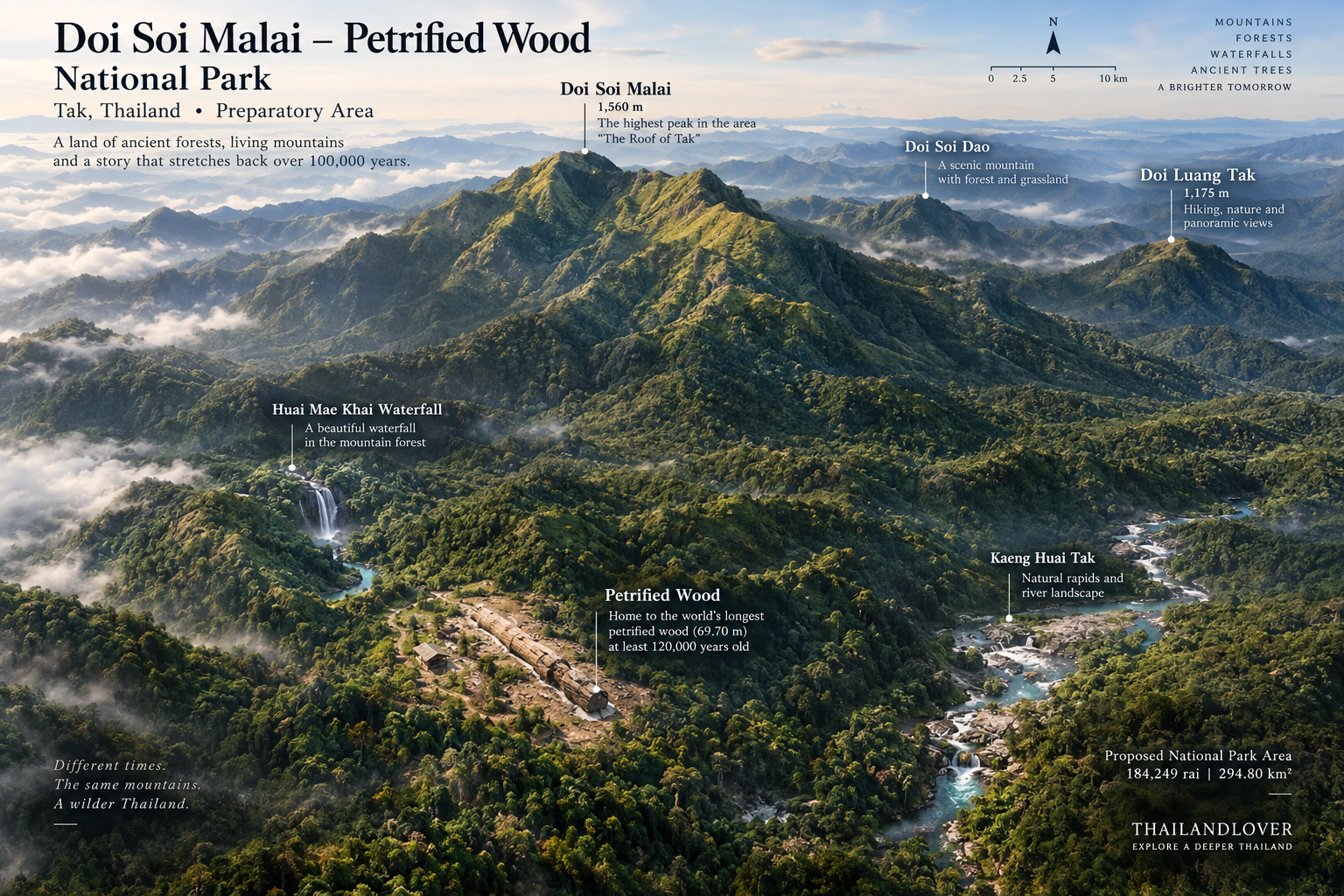
- Doi Soi Malai — approximately 1,560 metres
- Another Major Peak
- Doi Luang Tak — approximately 1,175 metres
- World Record
- Longest petrified wood in the world — 69.70 metres
- Average Diameter
- Approximately 1.80 metres
- Estimated Age
- At least 120,000 years
- Guinness Recognition
- 8 July 2022
- Current Status
- National Park Preparatory Area
- Area under consideration
- Approximately 184,249 rai / 294.80 km²
Why Doi Soi Malai – Petrified Wood Is Special
This is not simply another mountain destination in northern Thailand.
Its significance comes from the combination of mountains, forests, biodiversity and geological heritage.
The area contains several distinct natural environments:
- Lower montane forest
- Dry evergreen forest
- Mixed deciduous forest
- Deciduous dipterocarp forest
- Grassland
Together, these ecosystems create a landscape with considerable ecological diversity. The area is also an important watershed and habitat for wildlife.
Recent surveys have recorded species of conservation interest including serow, gaur, goral, green peafowl, Himalayan vulture and great hornbill.
The landscape therefore has value not only as a recreational destination, but also as an area for conservation, ecological research and environmental education.
The Petrified Forest
The Reason the Name Is Impossible to Ignore
The geological highlight of the area is its collection of petrified wood.
Petrified wood is fossilised wood in which the original organic material has been progressively replaced or preserved by minerals over geological time. The result can look surprisingly similar to a tree trunk. But it is no longer wood in the ordinary sense.
It is a fossil — a geological record of a forest that existed in the distant past.
At Doi Soi Malai – Petrified Wood, researchers have documented several large petrified trees. Seven excavation sites have been identified, with some specimens retaining remarkably recognisable trunk structures.
The most famous specimen is the first excavation site.
The World’s Longest Petrified Wood
69.70 Metres Long
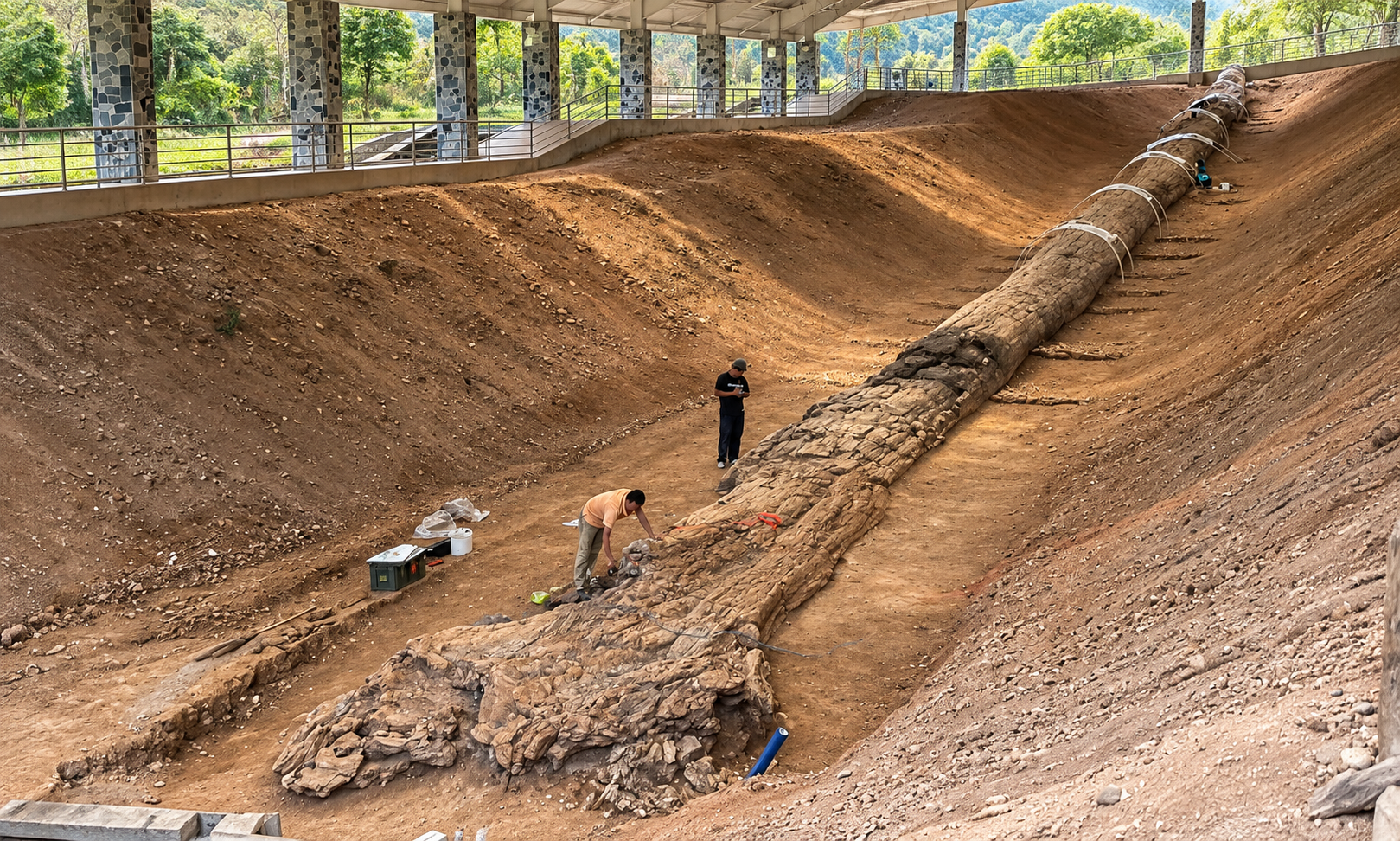
On 8 July 2022, Guinness World Records officially recognised the petrified wood discovered in Tak as the longest petrified wood in the world.
The specimen measures 69.70 metres in length, with an average diameter of approximately 1.80 metres. Its length is roughly comparable to the height of a 20-storey building.
The fossil is estimated to be at least 120,000 years old.
This makes it one of Thailand’s most remarkable geological records. More importantly, it provides evidence that the landscape of present-day Tak once supported a very different type of forest.
From a Living Tree to Stone
The fossil tells a story that is much older than the modern landscape.
The petrified tree has been identified as belonging to Koompassioxylon elegans, a fossil plant closely related to the modern Koompassia malaccensis, commonly associated with the Thai tree known as Thong Bueng.
The modern distribution of related trees is associated with humid tropical environments in southern Thailand and parts of the Malay Peninsula, Sumatra and Borneo.
The presence of this fossil in Tak provides an important clue about past environmental conditions.
The forest surrounding Tak today is not necessarily the forest that existed here in the past.
The fossil record allows scientists to reconstruct aspects of ancient environments and investigate changes in vegetation, climate and landscape through time. That is what makes this place particularly valuable from a geological and scientific perspective.
A Forest That Became a Fossil
The discovery of the large petrified tree began in the early 2000s. Initial excavation work revealed a huge buried tree.
The specimen was originally measured at approximately 72.22 metres after excavation. After being exposed to water and subsequent erosion, the preserved measurable length was reduced. The current recognised measurement is 69.70 metres.
The discovery became internationally significant when Guinness World Records officially recorded it in 2022. Today, the site is protected and interpreted as an important geological heritage site.
Seven Petrified Trees
The site is not significant because of only one fossil. Excavations have identified seven major petrified-wood sites, with several specimens displaying substantial portions of their original tree structure.
Some of the best-preserved examples are displayed in protected structures designed to reduce exposure to rain and groundwater. Fossil wood, despite having become stone, can still deteriorate when exposed to environmental conditions.
The conservation approach therefore allows visitors to see the geological evidence while reducing unnecessary damage to the fossils.
Doi Soi Malai
The Green Roof of Tak
At the opposite end of the landscape from the fossil forest is the mountain world of Doi Soi Malai.
The summit rises to approximately 1,560 metres above sea level, making it the highest point within the proposed protected area. It is widely known as “The Roof of Tak” and also as the “Green Roof of Tak.”
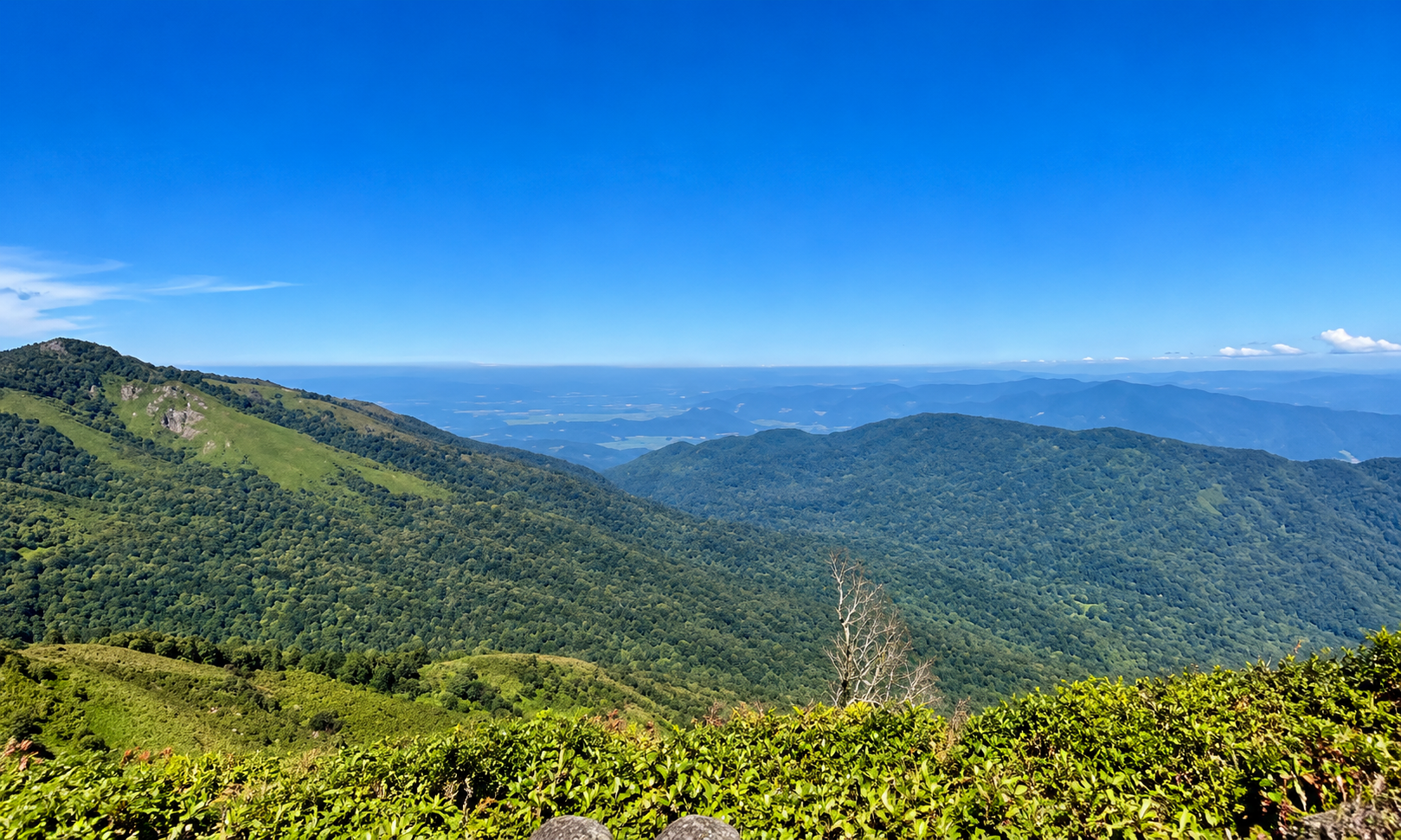
The name reflects its commanding position above the surrounding forested landscape. From the high country, the landscape opens into layers of mountains, forest and valleys.
It is a very different experience from visiting the petrified wood site.
One is a journey into the geological past. The other is an encounter with Thailand’s living mountain landscape.
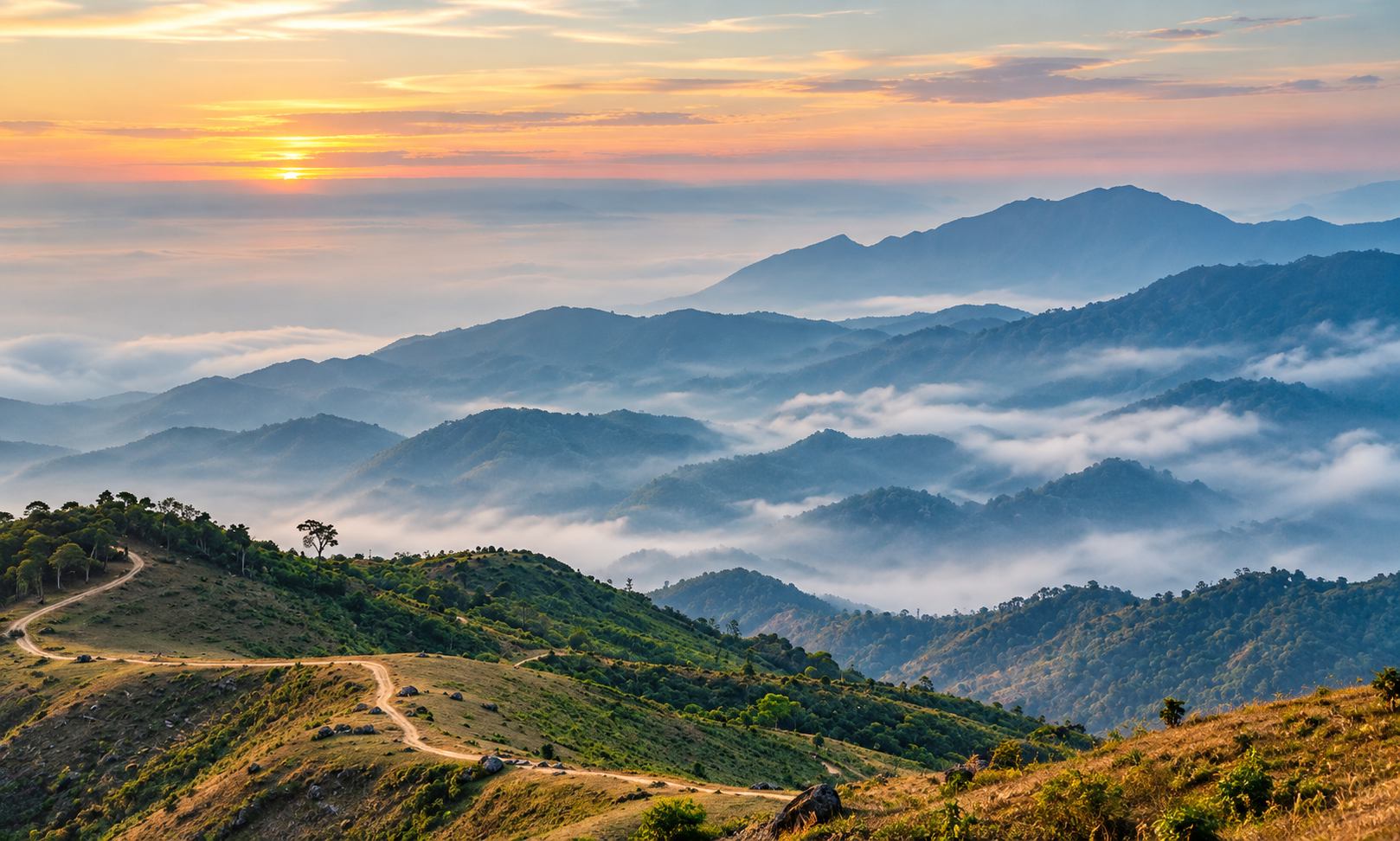
The highland environment is known for cooler air, expansive scenery, mountain camping, sunrise and sunset views, mist and cloud landscapes, grassland, nature observation and hiking. During suitable weather, mist can gather around the ridges and valleys, creating one of the area’s most atmospheric landscapes.
For photographers, the mountain is particularly interesting because the landscape changes dramatically with season, cloud cover and light.
Explore the Landscape
ดอยสร้อยดาว
Doi Soi Dao
Another mountain destination associated with the same highland route is Doi Soi Dao. The route provides access to the higher mountain landscape and is often combined with the Doi Soi Malai experience.
For visitors interested in mountain scenery rather than conventional sightseeing, this is one of the more adventurous sides of the destination.
1,175 Metres
Doi Luang Tak
Doi Luang Tak is another important highland destination within the broader landscape. Its summit is approximately 1,175 metres above sea level.
The mountain is associated with hiking, nature study and panoramic scenery — forest, grassland, open ridges, mountain viewpoints and layered hills.
Doi Luang Tak is better suited to travellers who want an active outdoor experience rather than a short sightseeing stop. Visitors should treat hiking routes as wilderness experiences and check current access arrangements, weather conditions and local requirements before travelling.
น้ำตกห้วยแม่คาย
Huai Mae Khai Waterfall
The proposed national-park landscape also includes Huai Mae Khai Waterfall. The waterfall is part of the area’s mountain watershed system.
Rather than being viewed independently from the surrounding forest, the waterfall is best understood as part of a larger system:
mountain → forest → watershed → stream → waterfall.
The forests are not simply scenic backgrounds. They are part of the watershed infrastructure that sustains downstream ecosystems and communities.
แก่งห้วยตาก
Kaeng Huai Tak
Kaeng Huai Tak is another notable natural feature within the proposed protected landscape. Together with the waterfalls, mountain streams and forest, it demonstrates the diversity of landscapes contained within the proposed national park.
The area is particularly suited to visitors who prefer natural scenery, photography and quiet exploration rather than heavily developed tourism.
Five Major Ecosystems
One of the strongest ecological characteristics of the proposed park is its combination of different forest and landscape types. The most recent DNP information identifies five principal ecosystems:
1. Lower Montane Forest
Higher elevations support vegetation adapted to cooler mountain conditions. These areas contribute to the ecological transition between lowland and highland environments.
2. Dry Evergreen Forest
This forest type retains substantial vegetation even through the dry season and is particularly important for biodiversity and watershed protection.
3. Mixed Deciduous Forest
A characteristic forest ecosystem of northern and western Thailand, often showing dramatic seasonal changes. During the dry season, deciduous trees lose their leaves, changing the appearance of the forest.
4. Deciduous Dipterocarp Forest
This ecosystem is associated with seasonal dryness and open forest landscapes. Its appearance changes considerably through the year.
5. Grassland
Open grassland areas create a striking contrast with dense forest and provide habitat for wildlife while also producing some of the area’s most expansive mountain views.
Wildlife
The proposed protected area is important as wildlife habitat. Recent DNP surveys have recorded species of conservation interest including:
Serow
A mountain-dwelling ungulate associated with rugged forest and rocky terrain.
Gaur
One of Thailand’s largest wild bovids and an important indicator of relatively intact forest ecosystems.
Goral
A mountain ungulate adapted to steep terrain.
Green Peafowl
One of Southeast Asia’s most spectacular forest birds.
Himalayan Vulture
A large soaring bird whose presence reflects the area’s importance for avian biodiversity.
Great Hornbill
One of Thailand’s iconic large forest birds and an important species associated with mature forest ecosystems.
Wildlife sightings are never guaranteed. Visitors should treat the area as wildlife habitat rather than a wildlife-viewing attraction. The best approach is quiet observation, maintaining distance and avoiding any attempt to approach, feed or disturb animals.
A Landscape for Birdwatchers
The combination of different elevations and ecosystems creates opportunities for birdwatching. Mountain forest, mixed deciduous forest, grassland and watershed environments provide different habitats within the same broad protected landscape.
It is a landscape where habitat diversity becomes the attraction.
The Story Behind the National Park
The idea of bringing the area’s major conservation sites together developed over many years. The original protected landscape included Petrified Wood Forest Park, Huai Mae Khai Waterfall Forest Park and Kaeng Huai Tak Forest Park.
The initiative to develop the area toward national-park status dates back to the 2010s. It was initially associated with the proposed Petrified Wood National Park. In 2018, the name was changed to Doi Soi Malai National Park (Preparatory Area). Later, the name became:
Doi Soi Malai – Petrified Wood National Park (Preparatory Area)
The final name reflects the two defining identities of the landscape: Doi Soi Malai — the mountain and Petrified Wood — the geological heritage.
Current Status — Important for Travellers
As of 2026, the area remains officially described by the Department of National Parks as a national-park preparatory area. It should therefore not be presented as a fully established national park in the same way as Thailand’s formally designated parks. The designation process is still ongoing.
In August 2026, the Department of National Parks announced an additional public consultation concerning the proposed boundaries. The originally surveyed area was approximately 222,140 rai (355.42 km²). After field verification and consultation with local communities, the area currently under consideration was revised to approximately 184,249 rai (294.80 km²).
The proposed area includes portions of several forest reserves and incorporates the three former forest-park areas. The current process is not simply a tourism development project. It is a long-term conservation and land-management process involving communities, ecosystems, forests, wildlife and geological heritage.
Protected-area boundaries affect not only conservation, but also local land use and community livelihoods. For ThailandLover, this is part of the story worth explaining.
The destination is not simply “a new national park waiting to open.” It is an evolving conservation landscape.
Who Should Visit?
Doi Soi Malai – Petrified Wood is particularly interesting for travellers who enjoy:
- Nature & landscape — quieter mountain country away from Thailand’s most heavily visited destinations
- Hiking — mountain routes and outdoor exploration
- Photography — ridges, mist, grassland, forest and geological features
- Birdwatching — multiple ecosystems in one landscape
- Geology — fossils, ancient landscapes and environmental history
- Families & education — a vivid way to introduce geology and environmental change
- Slow travel — understanding a place rather than collecting another attraction
The Best Way to Experience It
Doi Soi Malai – Petrified Wood is best approached as two connected experiences.
Experience One — The Ancient Forest
Visit the petrified wood area. Learn how the fossil was discovered. See the enormous preserved tree. Understand how a living tree can become a geological record. Think about what the landscape may have looked like more than 100,000 years ago.
Experience Two — The Living Forest
Move into the mountain landscape. Explore Doi Soi Malai. Experience the highland atmosphere. Walk through forest and grassland. Look across the mountain ranges. Watch for birds and wildlife. Experience the landscape that exists today.
A forest beneath your feet. A forest around you. And more than 100,000 years between them.
When to Visit Doi Soi Malai National Park
The experience changes considerably with the seasons.
- Cool Season
- Generally the most comfortable period for mountain activities. Cooler temperatures make hiking and camping more enjoyable. Morning conditions can also create atmospheric mountain views.
- Hot Season
- Lower elevations can become considerably warmer. Higher mountain areas can remain more comfortable than surrounding lowlands. The dry season can also change the appearance of deciduous forests and grasslands.
- Rainy Season
- The landscape becomes greener and streams and waterfalls can become more impressive. Cloud and mist can create dramatic mountain scenery. Hiking routes can become slippery, access conditions can change, and wildlife and insects become more noticeable.
For serious hiking, visitors should always check current conditions and access arrangements before departure. This is not a destination to rush through. A good visit can combine geology, hiking, landscape, photography and local culture.
Responsible Travel
The value of Doi Soi Malai – Petrified Wood depends on protecting both its living and fossil heritage. Visitors should:
- Stay on designated routes
- Do not touch, damage or remove fossils
- Never collect pieces of petrified wood
- Do not disturb wildlife or feed wild animals
- Carry rubbish out
- Avoid unnecessary noise
- Follow instructions from park staff and local guides
- Respect local communities
- Check current access restrictions before travelling
- Follow seasonal fire and camping regulations
A fossil that survived for more than 100,000 years should not be damaged during a five-minute visit.
The ThailandLover Perspective
Doi Soi Malai – Petrified Wood is not yet one of Thailand’s famous international tourist destinations. And that is precisely what makes it interesting.
Thailand is often introduced to international travellers through beaches, temples, food, Bangkok and famous northern mountains. But the country’s natural history is much deeper.
In Tak, you can stand beside a tree that became stone more than 100,000 years ago — and then look up toward a living mountain forest.
That contrast is extraordinary. The destination tells two stories at the same time:
The story of Thailand as it is today. And the story of Thailand as it once was.
If you remember only one thing about Doi Soi Malai – Petrified Wood, make it this:
This is where one of the world’s longest known petrified trees meets the living mountain forests of Tak.
Frequently Asked Questions
- What is Doi Soi Malai National Park?
- Doi Soi Malai National Park is a proposed national park in Ban Tak District, Tak Province, combining mountain forests with a world-record petrified-wood site. As of 2026 it remains Doi Soi Malai – Petrified Wood National Park (Preparatory Area).
- Where is Doi Soi Malai National Park?
- Doi Soi Malai National Park is in Ban Tak District, Tak Province, in western Thailand, including Tak Ok Subdistrict and surrounding protected forest.
- Is Doi Soi Malai a fully designated national park?
- No. The Department of National Parks still describes it as Doi Soi Malai – Petrified Wood National Park (Preparatory Area). The designation process is ongoing.
- How long is the petrified wood at Doi Soi Malai?
- The Guinness World Records specimen at Doi Soi Malai in Tak measures 69.70 metres, with an average diameter of about 1.80 metres. It is estimated to be at least 120,000 years old and was recognised on 8 July 2022 as the longest petrified wood in the world.
- How high is Doi Soi Malai, the Roof of Tak?
- The summit of Doi Soi Malai is approximately 1,560 metres above sea level and is known as the Roof of Tak. Doi Luang Tak is another major peak at about 1,175 metres.
- What else can I see at Doi Soi Malai National Park?
- Besides the petrified wood, visitors can explore Doi Soi Dao, Doi Luang Tak, Huai Mae Khai Waterfall, Kaeng Huai Tak, mountain viewpoints, five forest ecosystems and wildlife habitat.
- When is the best time to visit Doi Soi Malai National Park?
- The cool season is generally the most comfortable for hiking and camping at Doi Soi Malai. The rainy season is greener and more atmospheric, but trails can be slippery.
- Can I collect petrified wood in Tak?
- No. Do not touch, damage or remove fossils at Doi Soi Malai National Park. A fossil that survived more than 100,000 years should not be taken as a souvenir.
Explore More of Tak
- Taksin Maharat National Park
- Tak’s highland forest closer to Mae Sot — giant trees, cool air and a different side of the same province.
- Lan Sang National Park
- Waterfalls and forest near Tak town — an easy pairing if you are travelling the western highway.
- Namtok Pha Charoen National Park
- A multi-tiered waterfall landscape in Tak for travellers continuing toward Mae Sot.
- Khun Phawo National Park
- Another Tak forest and mountain landscape for a slower western Thailand itinerary.
- Mae Moei National Park
- Border-country forest along the Moei River — wilder Tak for travellers heading west.
- Mae Wa National Park
- A Lampang–Tak forest landscape if you are crossing between the north and the west.
- Nature & Parks
- More mountains, forests and protected landscapes across ThailandLover’s collection.
Location
Find Doi Soi Malai – Petrified Wood
Ban Tak, Tak Province, Western Thailand