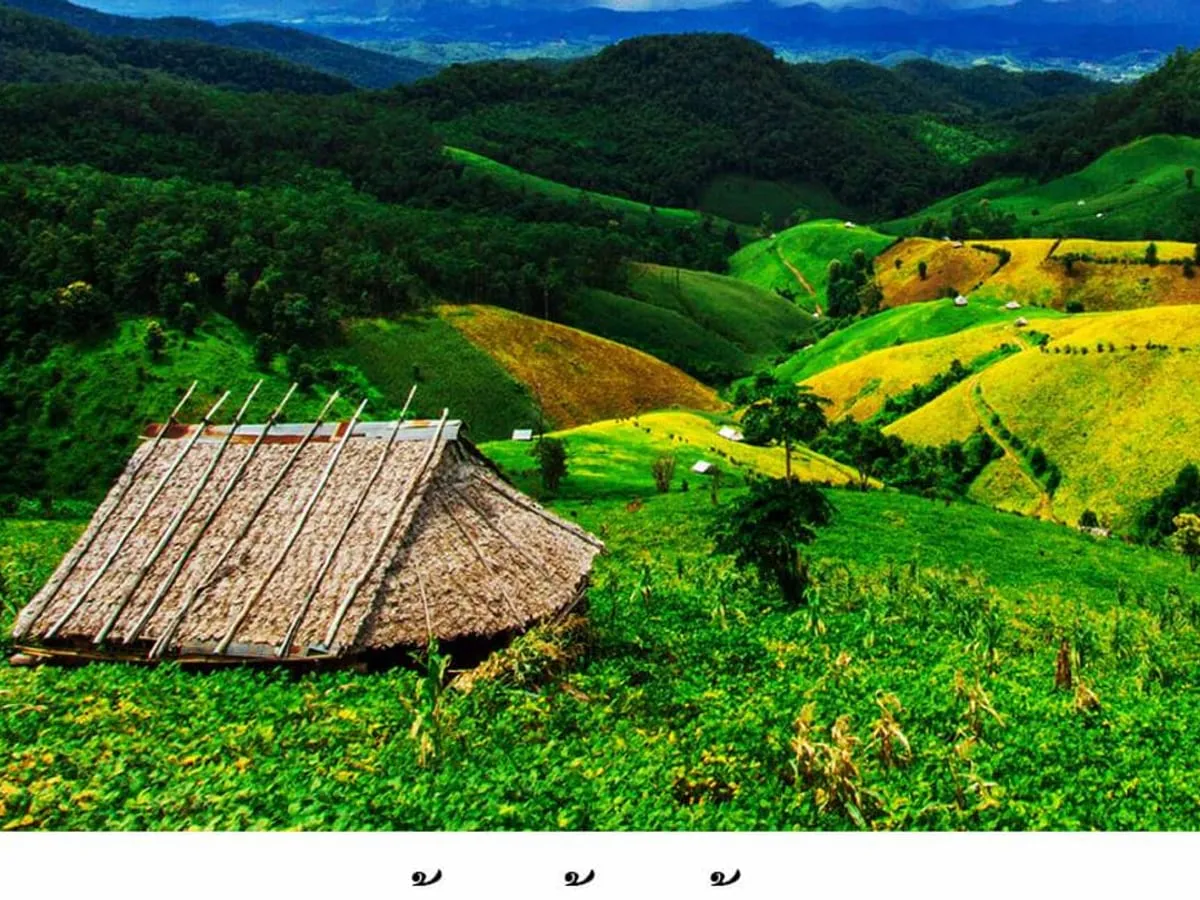
Ban Huai Hom
A quiet highland village in the Royal Project Mae La Noi zone, wrapped in rice terraces, areca palms, and cool mountain air. Come for Arabica coffee, passion fruit farms, and a slow homestay rhythm that feels far from the main loop.

 ThailandLover
Contact
แม่ฮ่องสอน
City of Three Mists
On Thailand’s far western edge, Mae Hong Son folds into misty mountain curves, a quiet highland of Shan temples, forested ridges, and slow valley towns far beyond the Chiang Mai crowds.
01
Geography & Climate
Mae Hong Son is Thailand’s westernmost province, about 12,765 square kilometres of folded highland between Myanmar and the northern Thai heartland. Every district touches the Myanmar frontier, with Chiang Mai to the east and Tak to the south. The land is almost entirely mountain: the Daen Lao and Dawna ranges frame the west, while the Thanon Thongchai Range forms the long eastern wall. Doi Mae Ya, in Pai District, rises to about 2,005 metres, the province’s highest peak, and forest still covers more than 85 percent of the land.
Narrow valleys hold the towns. The Pai, Yuam, and Ngao rivers cut through the ridges, and the Salween (Salawin) marks stretches of the western border. National parks and wildlife sanctuaries, Huai Nam Dang, Tham Pla–Namtok Pha Suea, Namtok Mae Surin, Salawin, Mae Ngao, and Mae Sariang, keep much of this green world intact. Population density is the lowest in Thailand; space, mist, and mountain silence are the province’s everyday companions.
The climate is tropical savanna with a highland edge. November to February brings the cool, clear dry season, mornings of mist, crisp air, and the famous “three mists” that give Mae Hong Son its nickname. March to May is the hot stretch, when ridge shade and waterfalls matter most. The southwest monsoon greens the forests from about May to October, filling streams and softening the curves of Highway 1095 and 108.
Best time: November – February for cool mist, clear ridge light, and the classic mountain-road season; late October – December for bua tong (Mexican sunflower) fields around Khun Yuam; May – October for lush forests, fuller waterfalls, and quieter valleys after the rains.

02
History & Heritage
Mae Hong Son’s story begins long before the modern province. In the limestone caves of Pang Mapha, Spirit Cave, Tham Lod, and neighbouring sites, archaeologists have found evidence of early highland life, including the haunting “log coffin” culture whose carved wooden coffins still rest in remote caverns. These finds place human presence here thousands of years deep, long before Tai towns rose in the valleys.
The town itself grew from the jungle edge. Around 1831, in the reign of Chao Luang Phuttawong of Chiang Mai, Chao Kaew Muang Ma was sent west to capture wild elephants. Along the Pai River he gathered scattered Tai Yai (Shan) and Karen communities into Ban Pang Mu, then founded Ban Mae Hong Son beside a stream-gully used as an elephant training ground, hòng in northern Thai. The name stuck: Mae Hong Son, the stream where elephants were taught.
Trade in teak and the arrival of Shan settlers from across the Salween thickened the towns. In 1874, King Inthawichayanon of Chiang Mai raised Mae Hong Son to city status and appointed the Shan leader Chan Kale as its first governor, Phaya Singhanatracha. Under him and later rulers, including Chao Nang Miya, the frontier town dug moats, built gates, and became a lasting Tai Yai centre. Modern administration under King Rama V folded Mae Hong Son, Khun Yuam, Pai, and Mae Sariang into one western unit; by 1910 it stood as Mae Hong Son Province within Monthon Phayap.
That heritage still shapes the journey. Twin Shan temples Wat Chong Kham and Wat Chong Klang frame Jong Kham Lake; Wat Phra That Doi Kong Mu watches the valley from the ridge above town; and in Pang Mapha the log-coffin caves keep an older silence. Drive the mountain curves, pause for mist at dawn, and the province still feels like what its nickname promises, a city of three mists, held between Thailand and the Shan hills.

03
Top Attractions
Misty lakes, Shan temples, bamboo bridges, and highland blooms. Mae Hong Son’s must-sees, listed A to Z.
A quiet highland village in the Royal Project Mae La Noi zone, wrapped in rice terraces, areca palms, and cool mountain air. Come for Arabica coffee, passion fruit farms, and a slow homestay rhythm that feels far from the main loop.
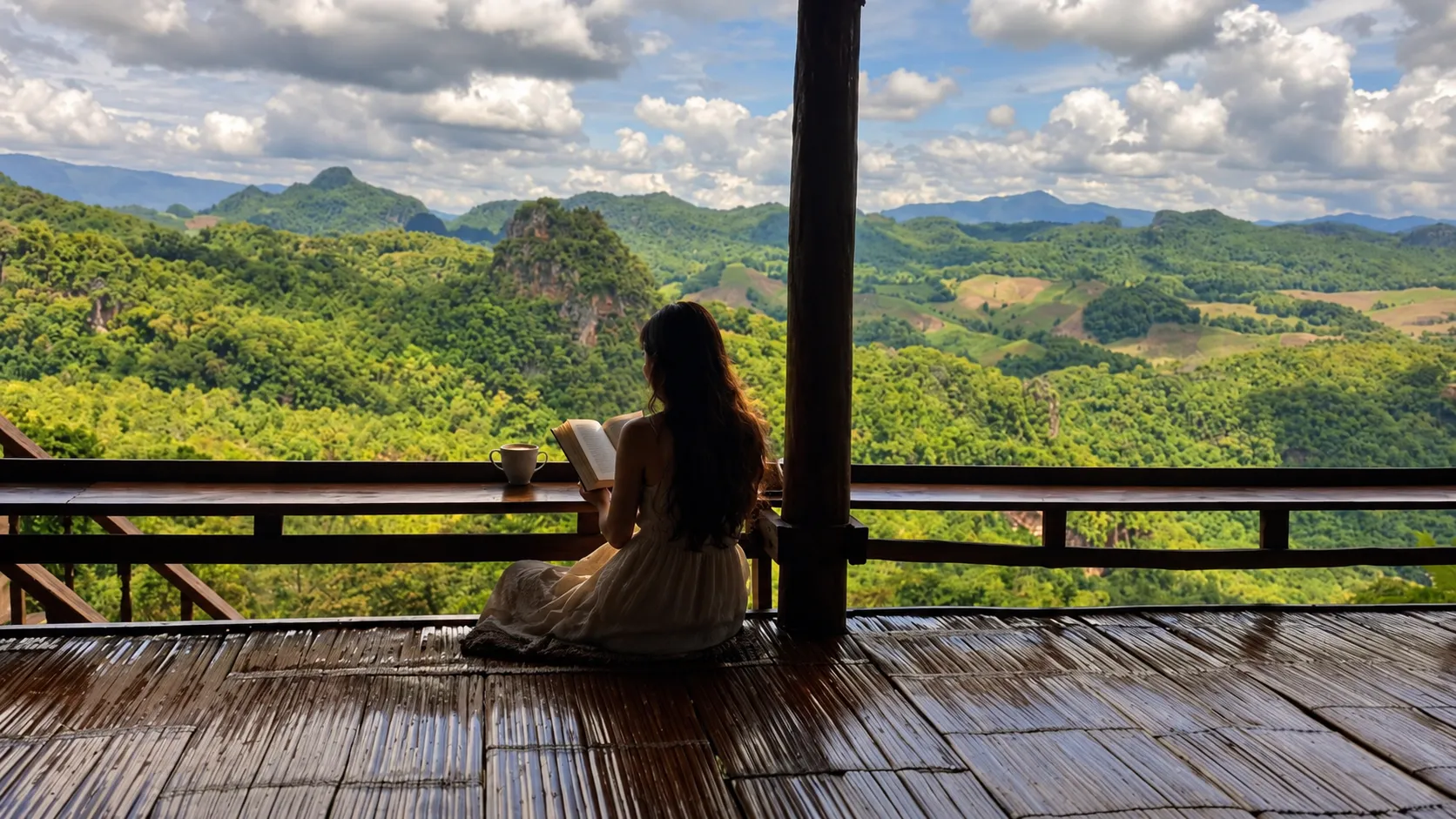
A Lahu (Musoe) hill community above Pang Mapha, known for cliff-edge noodle views and a warm greeting of A-Bo-Da-ya. Pair it with Tham Lod for a day that mixes cave adventure with highland village life.
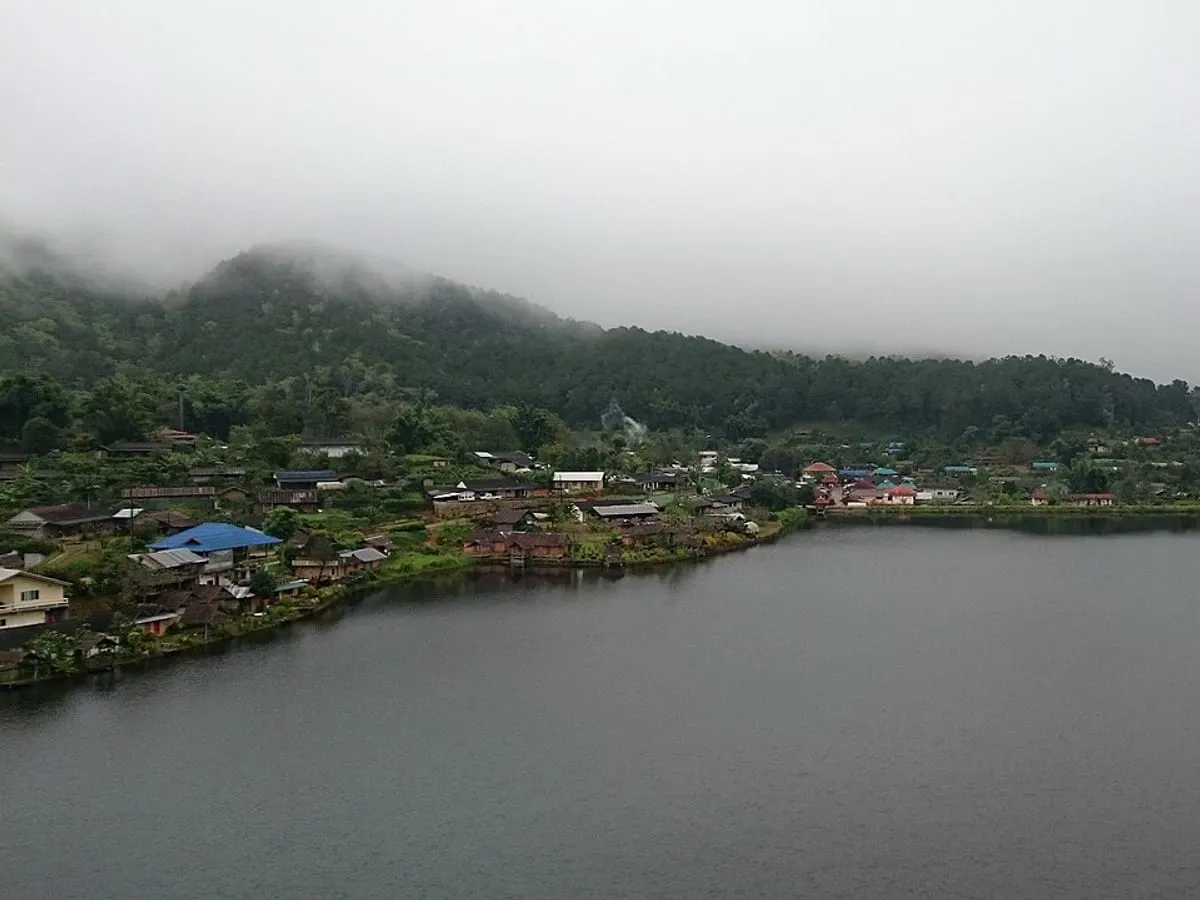
A Yunnanese Chinese village by a border lake, settled by former Kuomintang families. Tile-roof houses, tea terraces, and Yunnan plates make this the classic cool-air stop near Mae Hong Son town, about 1,776 metres above sea level.
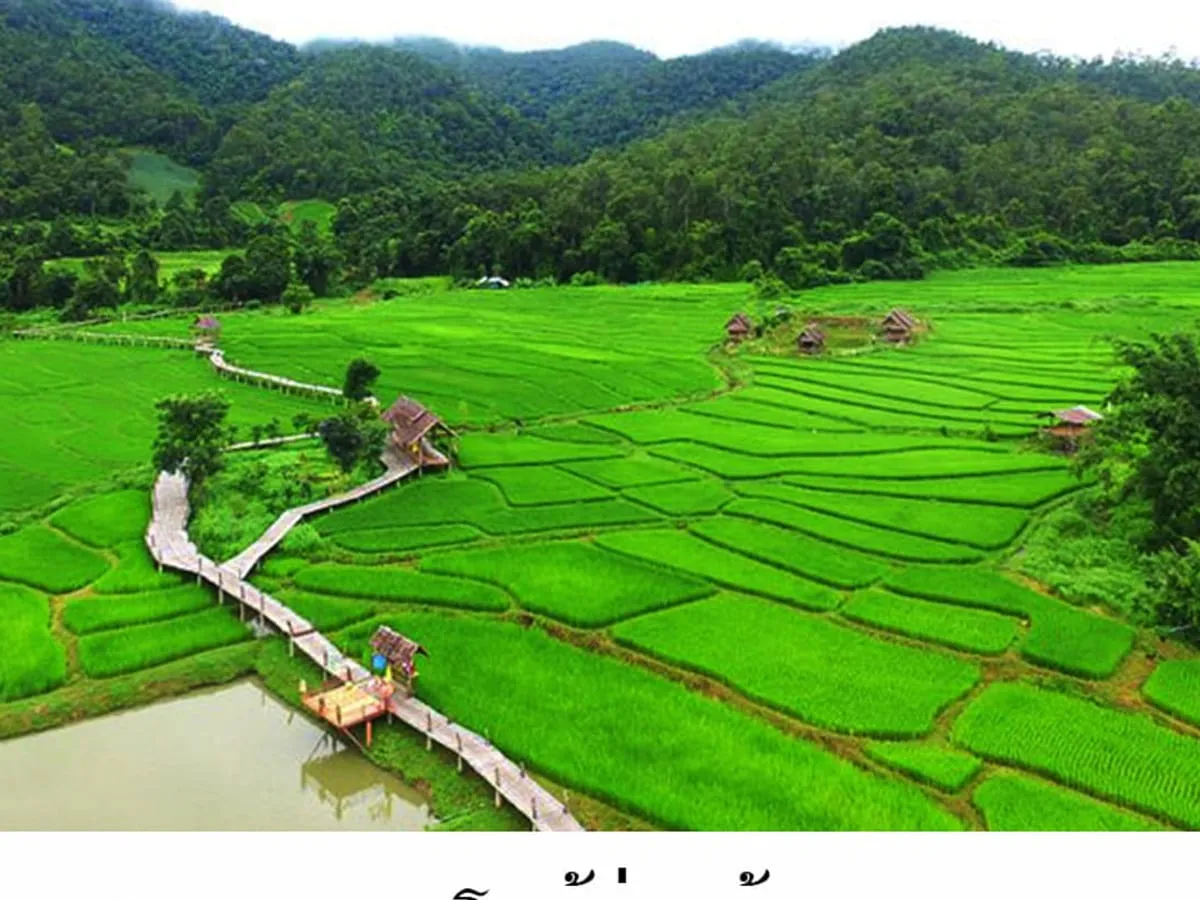
A winding bamboo bridge through rice fields at Ban Phaem Bok, about 10 km from Pai. Faith and village labour built this walkway; travellers come for the mountain backdrop, green paddies, and an easy countryside pause.
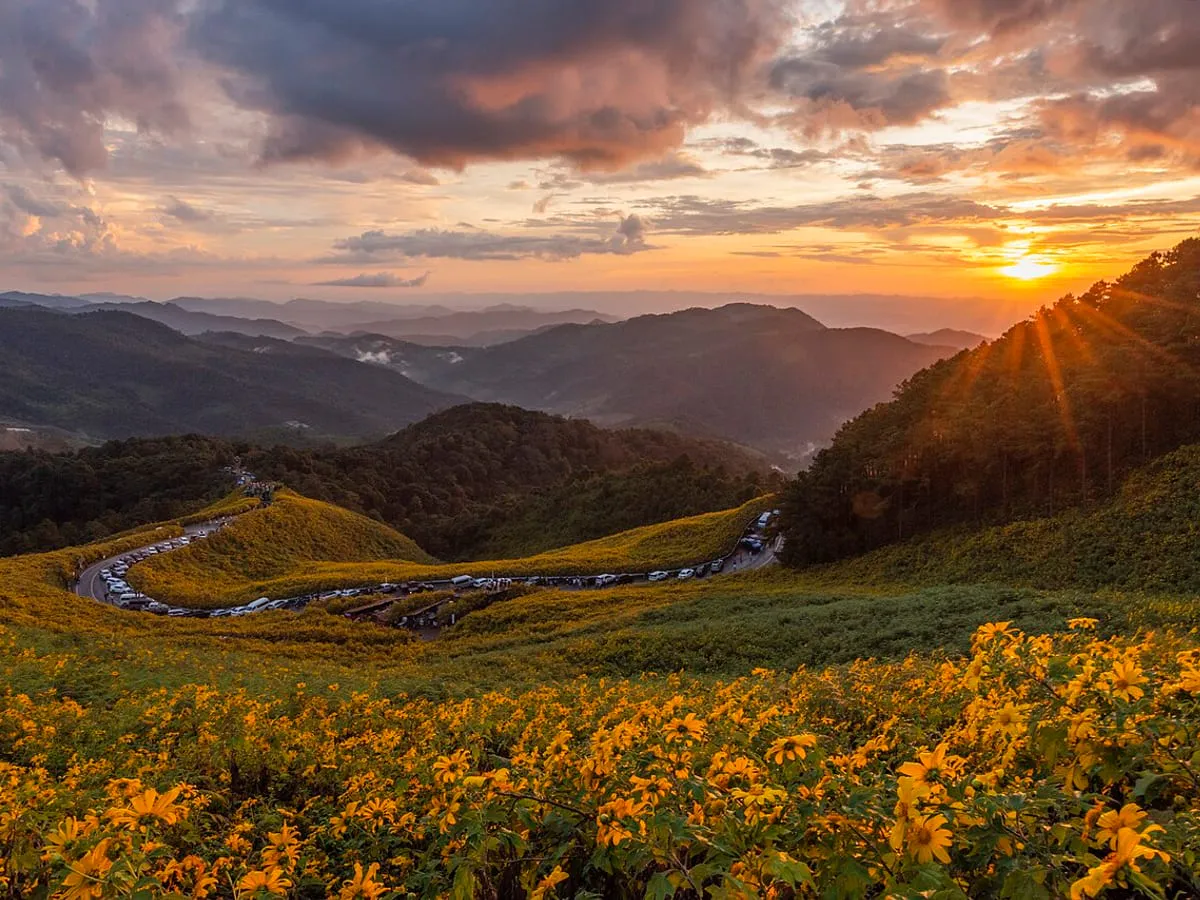
Mae Hong Son’s famous Mexican sunflower bloom, covering hundreds of rai around 1,600 metres on Doi Mae U Kho. The fields open only once a year in the cool season, turning the highland into a sea of gold against layered ridges.

Also called Kao Phue Suk, this bamboo bridge stretches across rice fields in a Tai Yai and Karen community about 4 km from town. Walk the span for mountain air, then stay for local culture and seasonal Poy Sang Long celebrations.
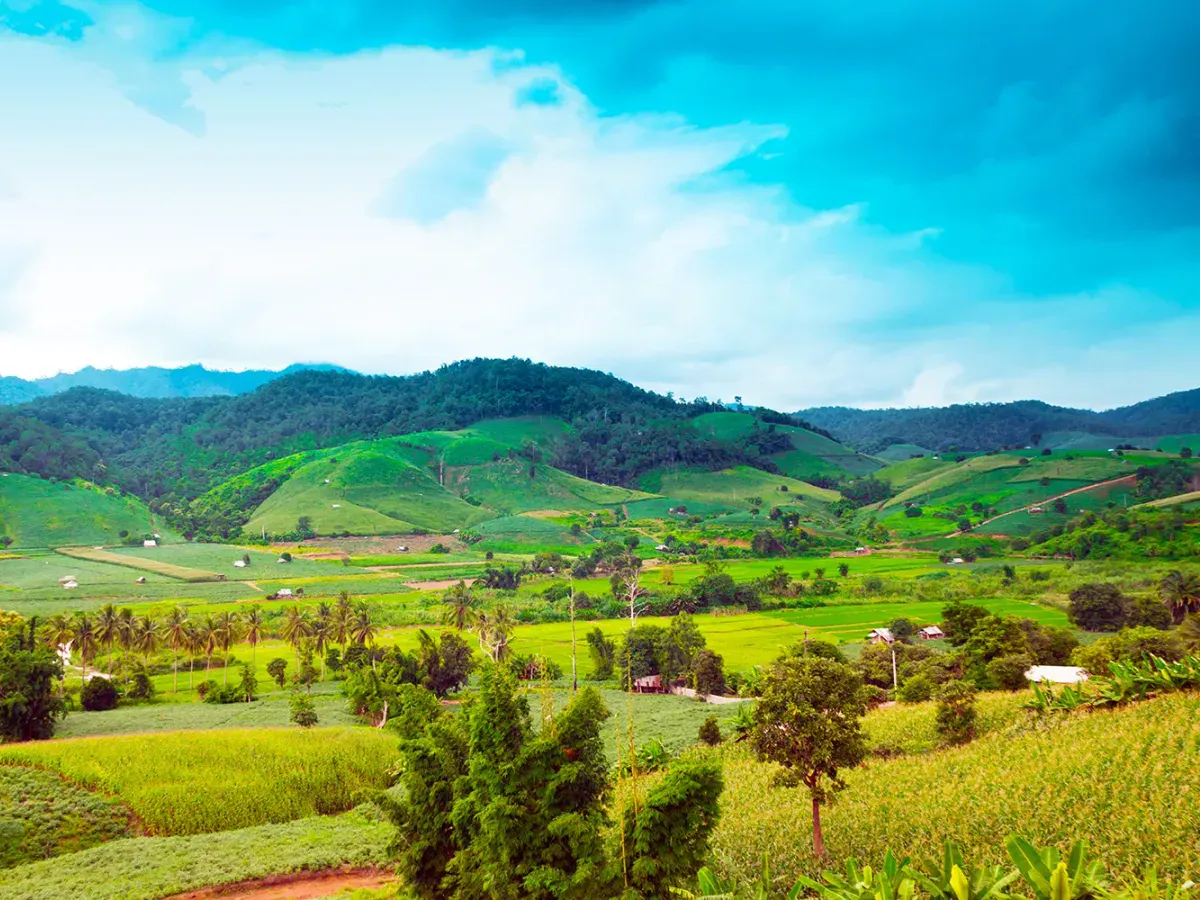
A roadside lookout on Highway 108 between Mae Sariang and Mae Hong Son, with cafe decks above green mountain folds. Ideal as a coffee-and-view break on the southern approach to the province.
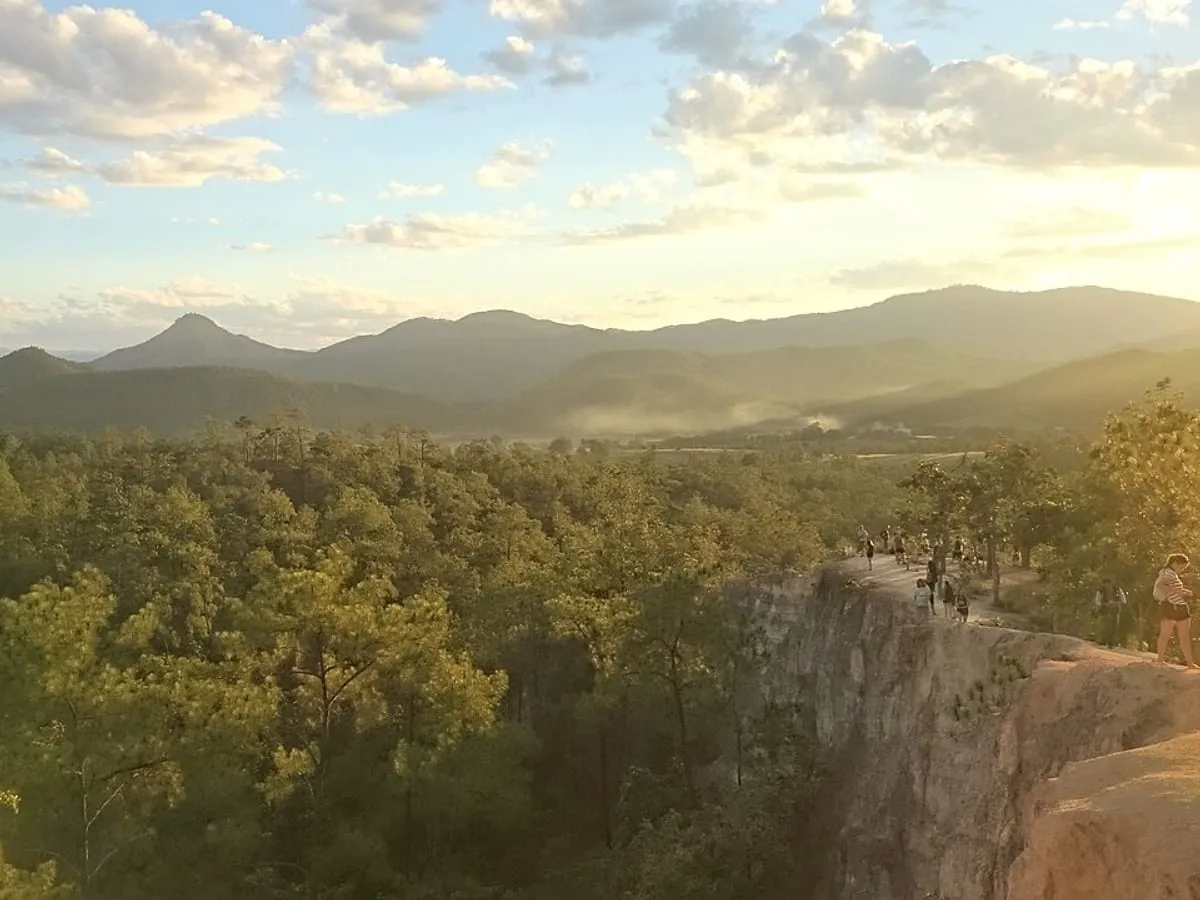
Also known as Kong Lan, this eroded red-sandstone ridge near Pai offers narrow spine walks and wide valley views. Come near sunset for golden light over the gullies, and wear closed shoes for the steep, sandy paths.
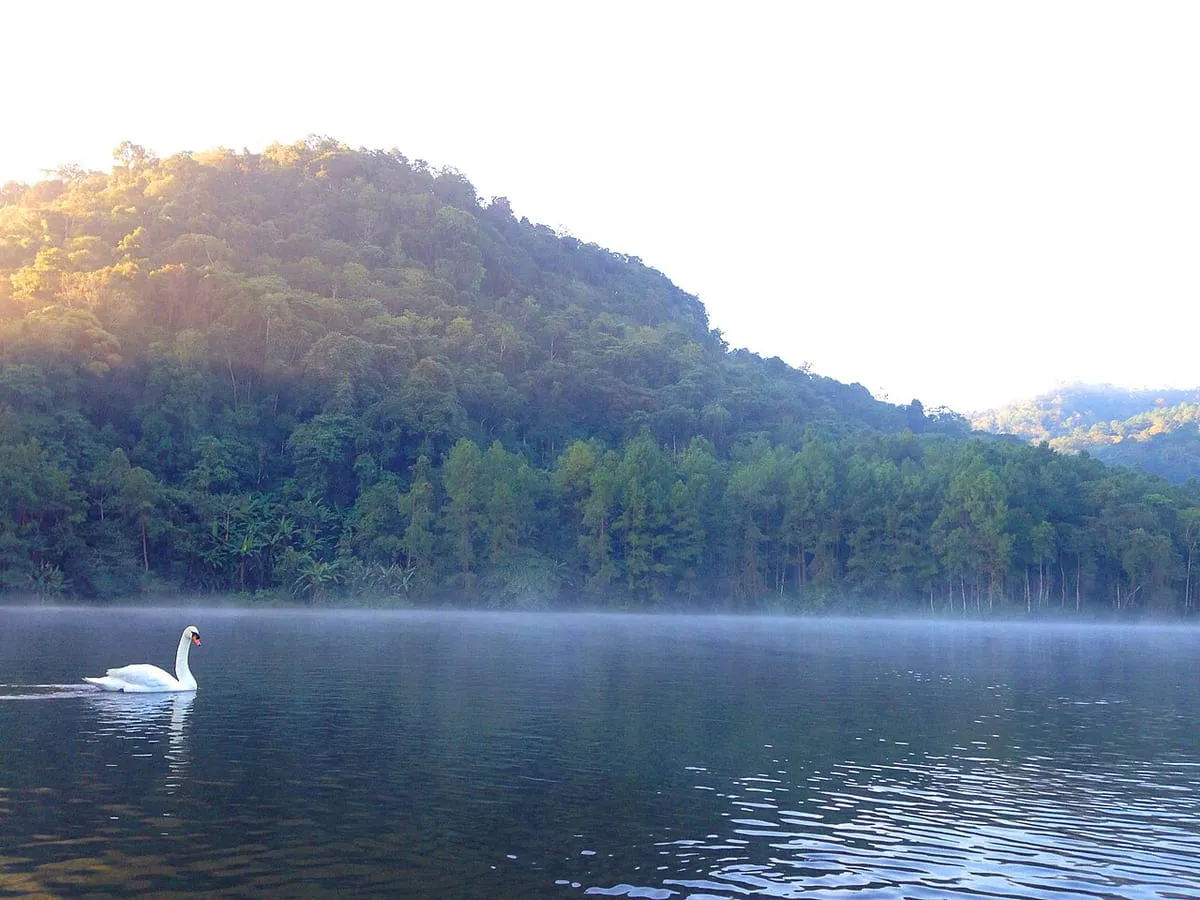
Officially Pang Tong Royal Project 2, this pine-ringed reservoir is Mae Hong Son’s misty highland lake. Dawn fog over the water earned it the nickname Switzerland of Thailand; camp, walk the shore, or simply watch the light change.

A forested lookout about 12 km from town, overlooking ridges and the Pha Bong hydropower dam on Mae Lamad stream. The name comes from bong, a local word for the cleft where water slips between the cliffs.
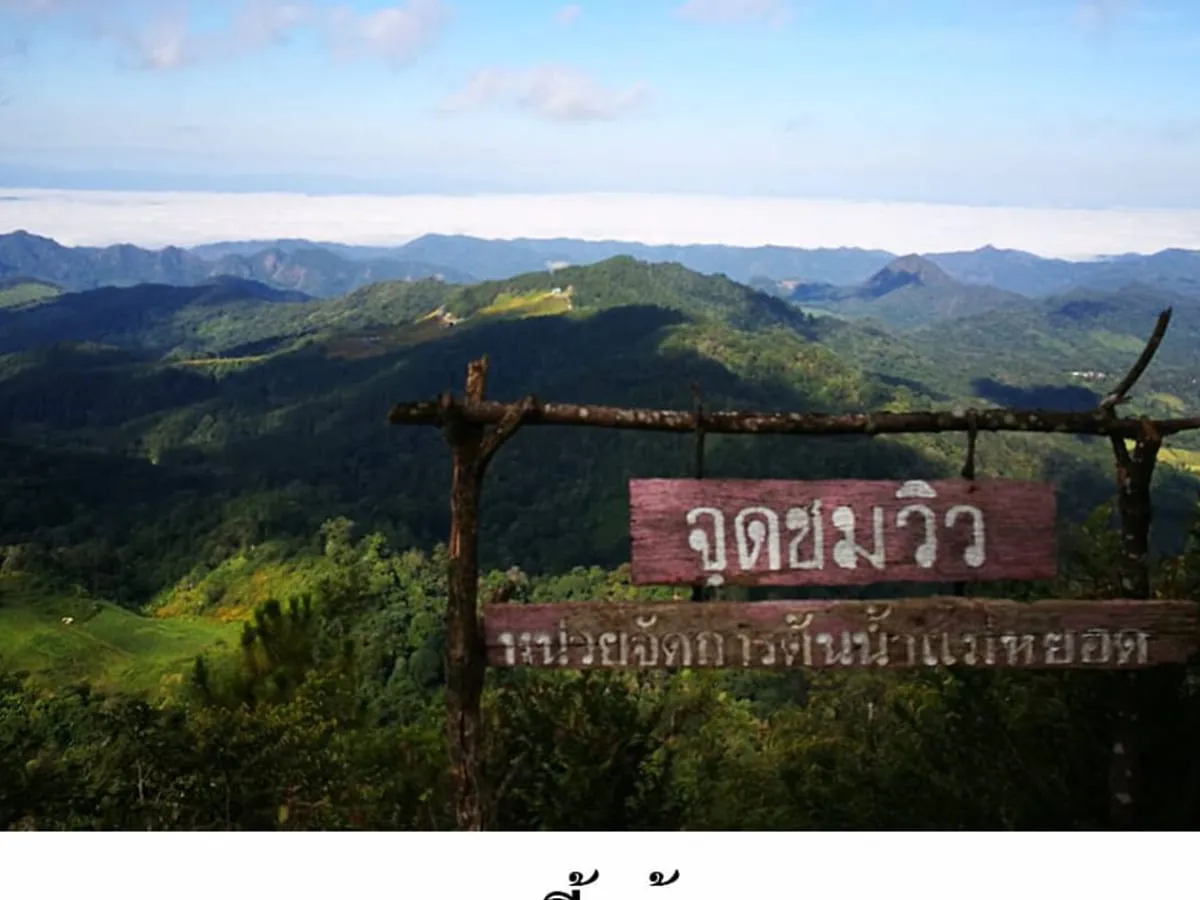
A quieter sunrise ridge near Doi Mae U Kho, rising to about 1,818 metres in the Mae Yot watershed. On clear cool-season mornings you can look down over misted peaks, and when the sunflowers bloom, over the gold of Mae U Kho itself.
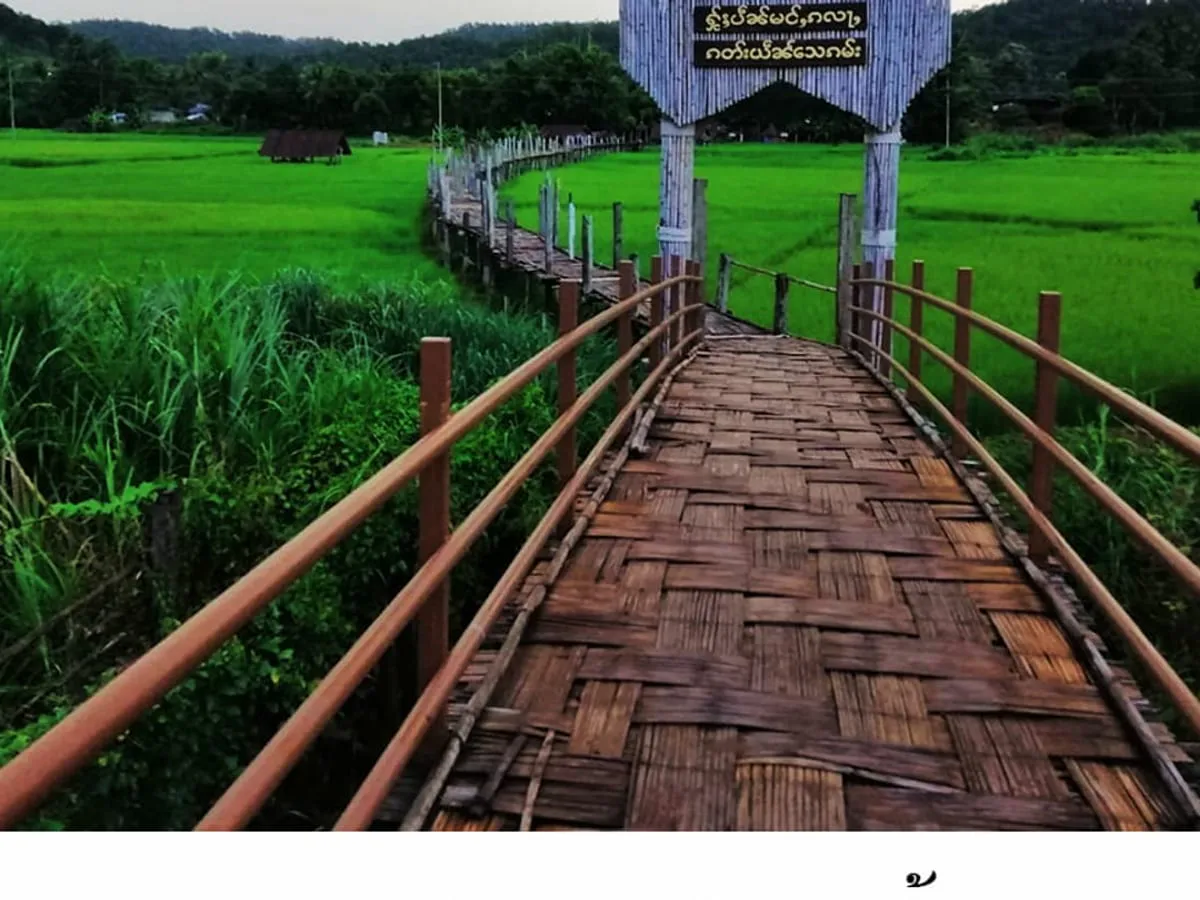
A long bamboo bridge at Ban Kung Mai Sak, about 8 km from town. In Shan, Su Tong Pae speaks of wishes fulfilled; villagers and monks built it across the paddies so community life, and travellers’ hopes, could cross more easily.
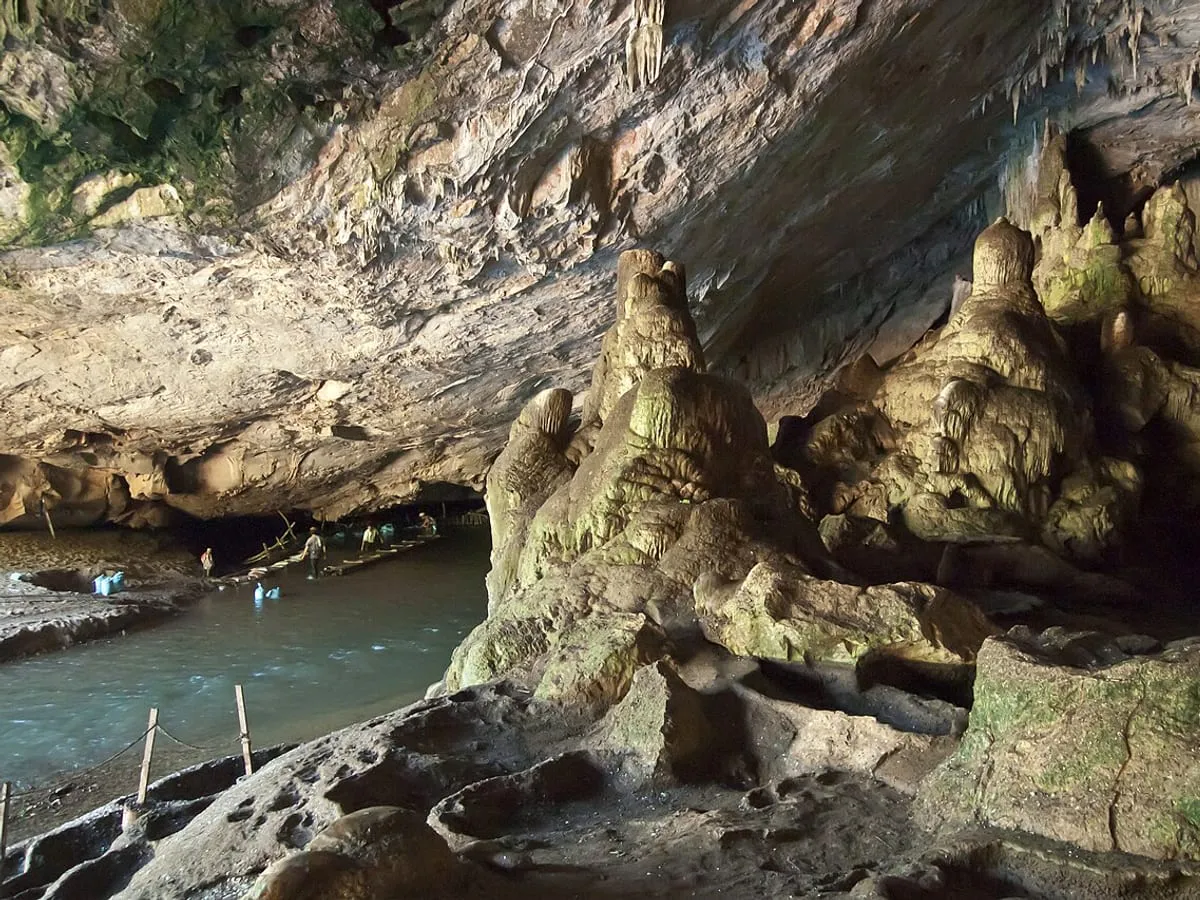
A river-cut cave where Nam Lang flows straight through the mountain. Hire a local guide and bamboo raft to pass chambers of stalactites, prehistoric finds, and, at dusk, clouds of swiftlets returning to roost.

Twin Shan temples beside Nong Chong Kham in the heart of town, the cultural emblem of Mae Hong Son’s Tai Yai identity. Come after dark when lights paint the roofs onto the lake, or by day for teak halls and lakeside calm.
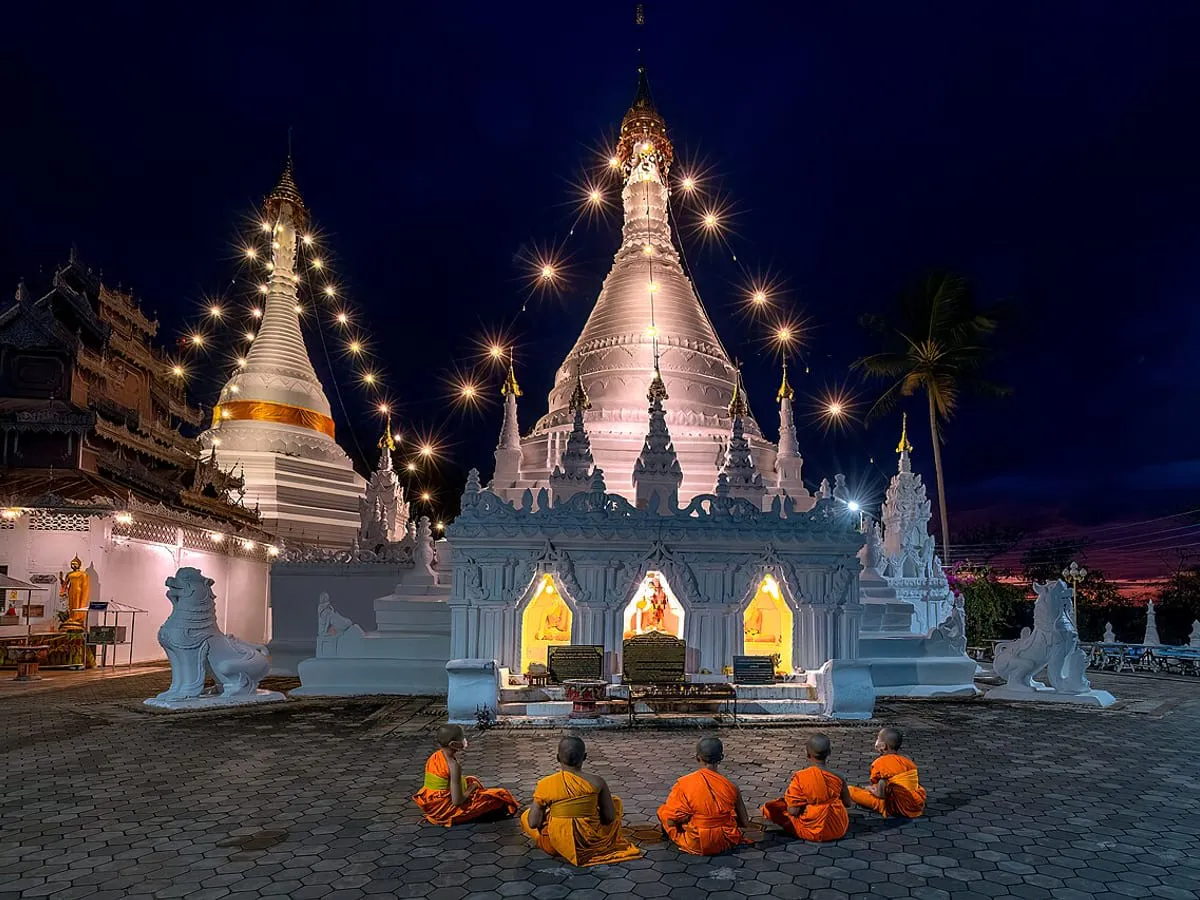
The sacred hilltop pair of chedis west of town, built in the mid-19th century and still the spiritual landmark of Mae Hong Son. From the terrace you read the whole valley: Jong Kham Lake, the twin temples, and mist on the ridges beyond.
04
Local Flavours & Food
After the mountain curves, Mae Hong Son feeds you slowly: Shan-influenced northern plates, long-loved khao soi, Yunnan lakeside cooking at Ban Rak Thai, and cafés that catch the cool air. The tables locals and travellers still name first, listed A to Z. Hours can change; tap Location for the latest pin.
Where to Eat
Shan kitchens, Yunnan lakeside plates, old-town khao soi, and mountain cafés. Listed A to Z. Hours can change; tap Location for the latest pin.

An open-air evening table in town with cool valley air and a view toward Wat Phra That Doi Kong Mu.
Share oyster-sauce beef, glass-noodle baked prawns, tom saep pork ribs, and fried fermented-pork ribs when the day softens into night.
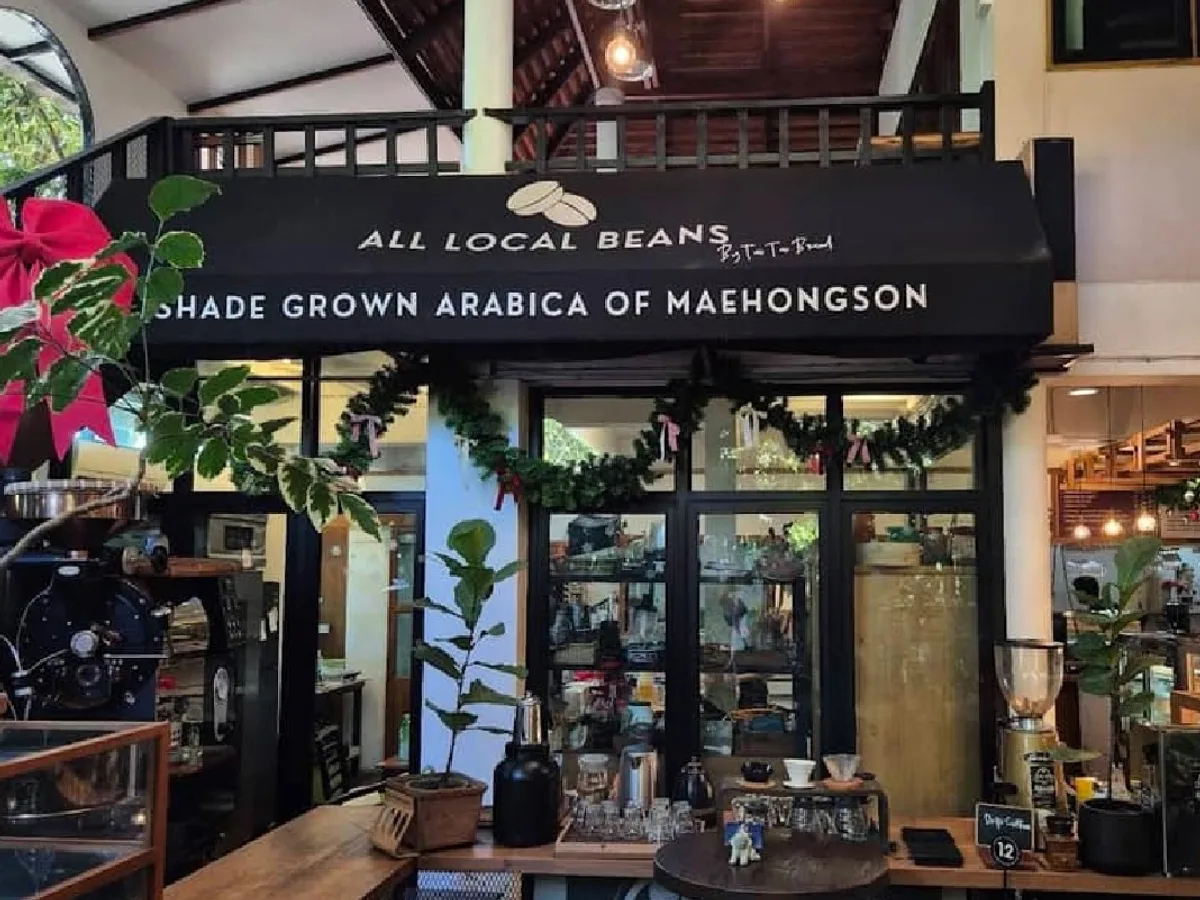
A wide Thai wooden house under big shade trees, easy for families and groups who want a calm daytime meal.
The kitchen mixes northern bowls with southern comfort, from khao soi to khanom chin nam ya and khao khluk kapi.
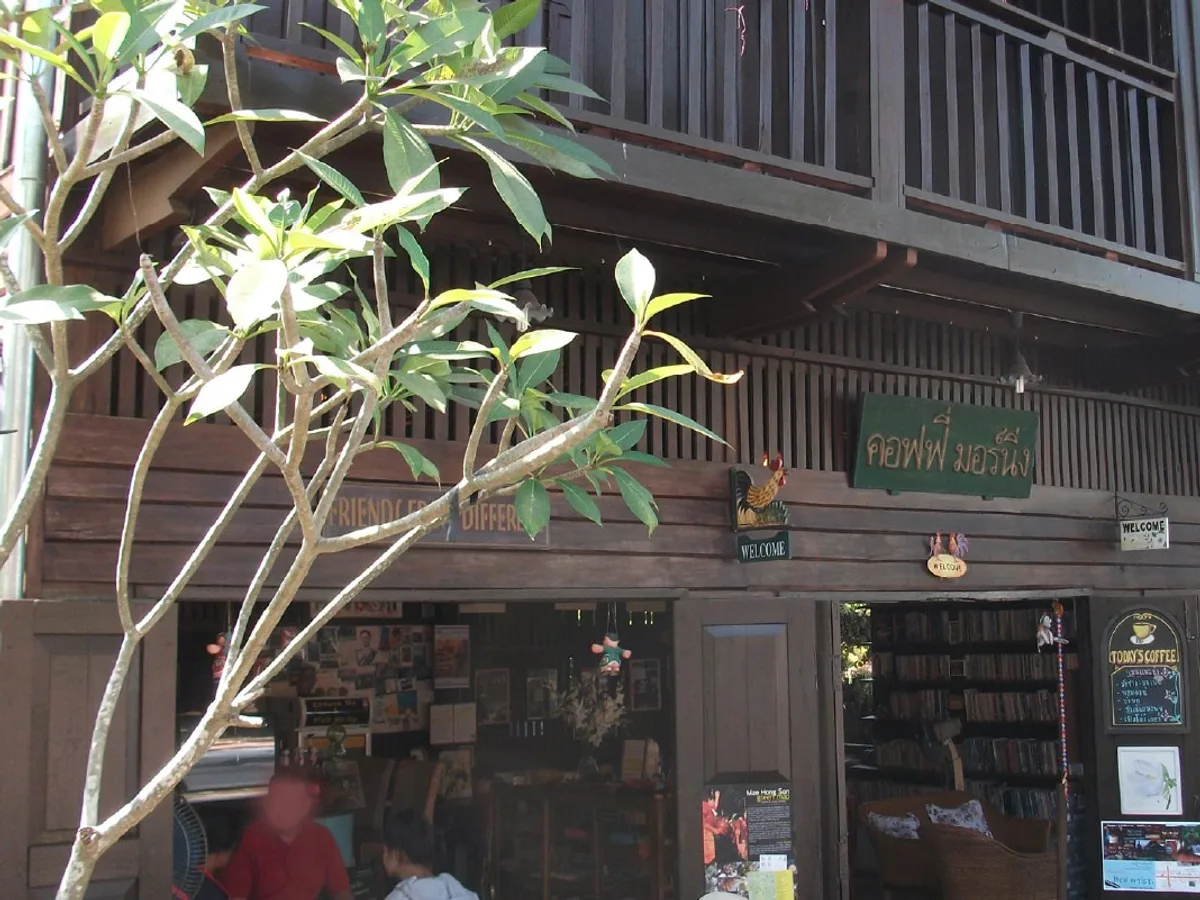
A small in-town café with warm wood counters and the pace of a friend’s living room.
Northern Arabica comes gentle rather than fierce; stay for green tea, fruit tea, or a smoothie between temple walks.
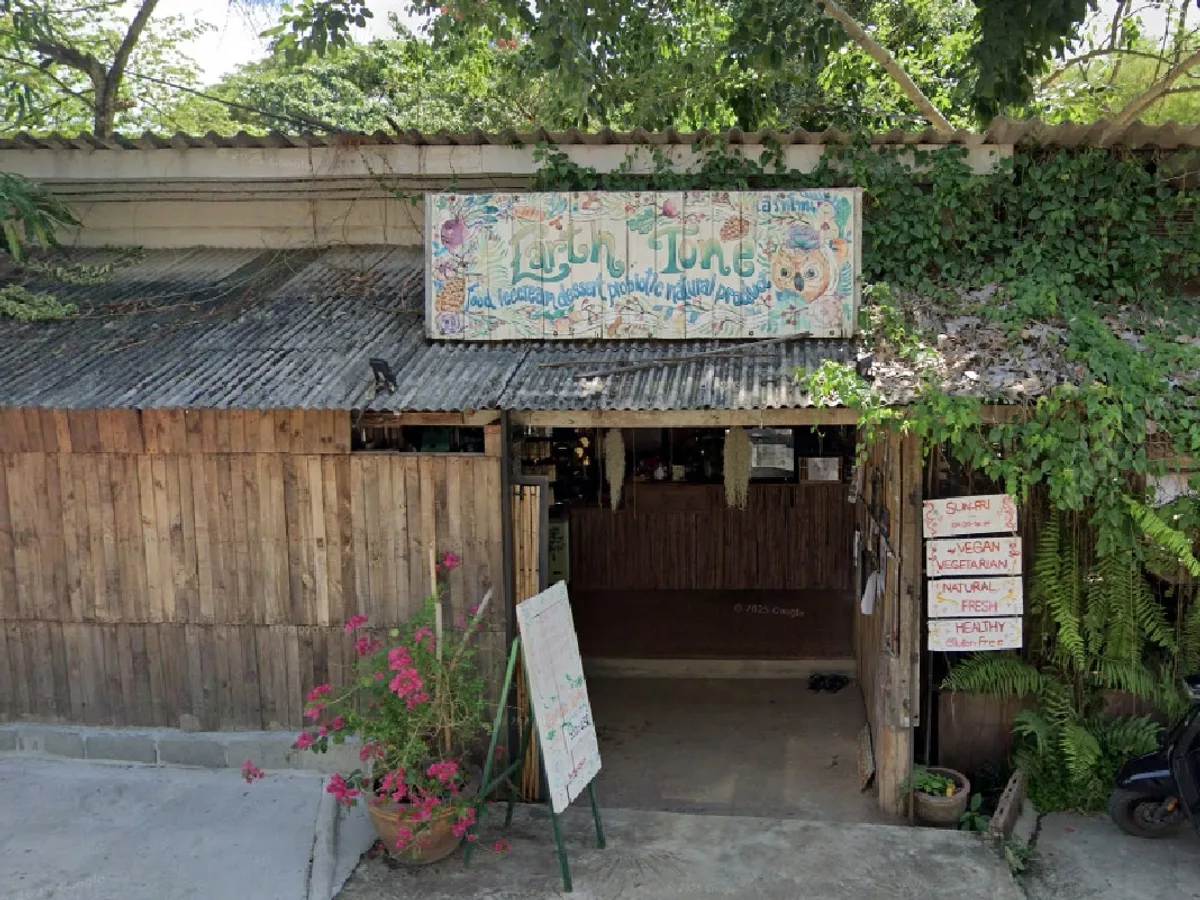
Lanna-modern rooms in earth colours, teak, and greenery, with air-conditioned and open balcony seats.
Come for hang lay, chicken stir-fried with fresh chilli, nam prik ong, northern laab, and herb-fried fish made for sharing.
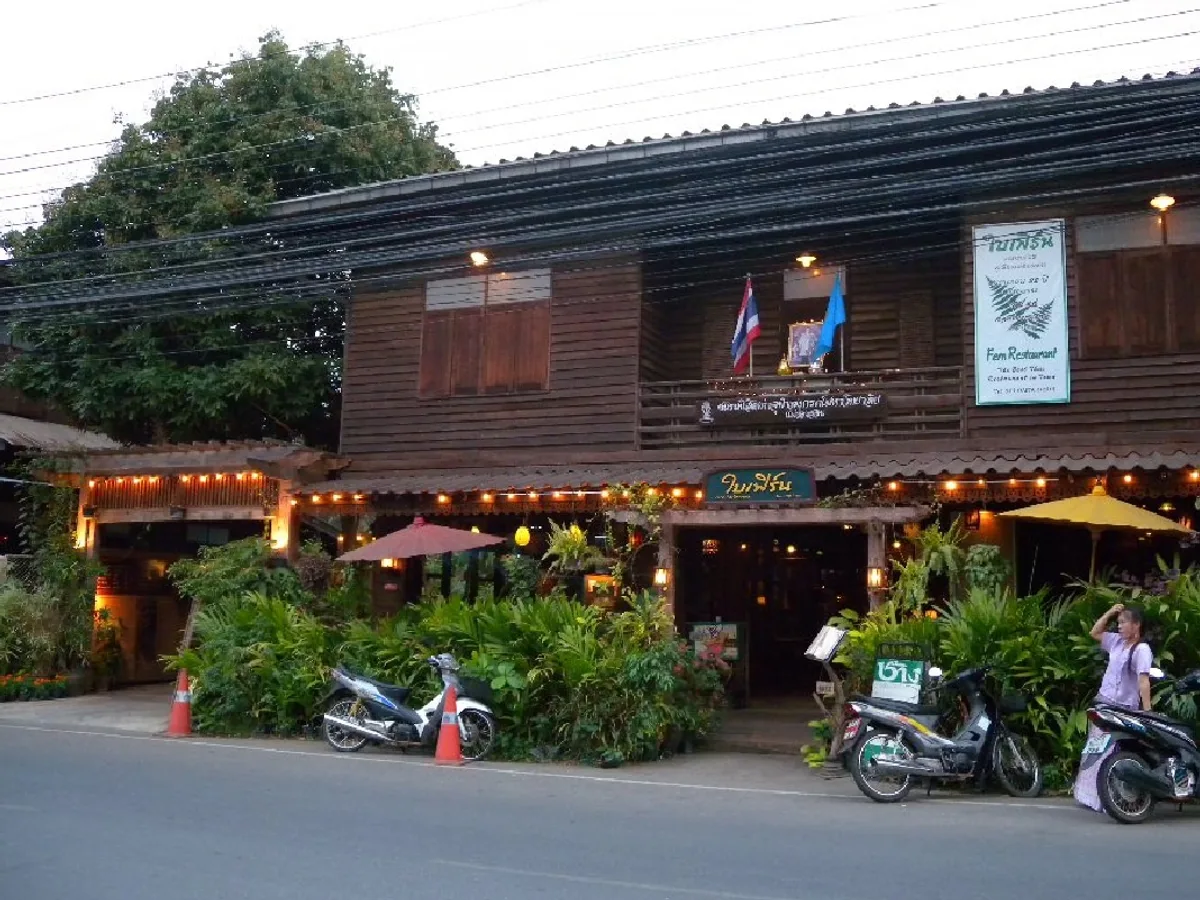
Mae Hong Son’s classic Lanna wooden house restaurant, open since 1987 and still the town’s first recommendation.
Order hang lay curry, nam prik num, pickled-cabbage pork-rib soup, and city-style pork laab among the ferns and garden shade.
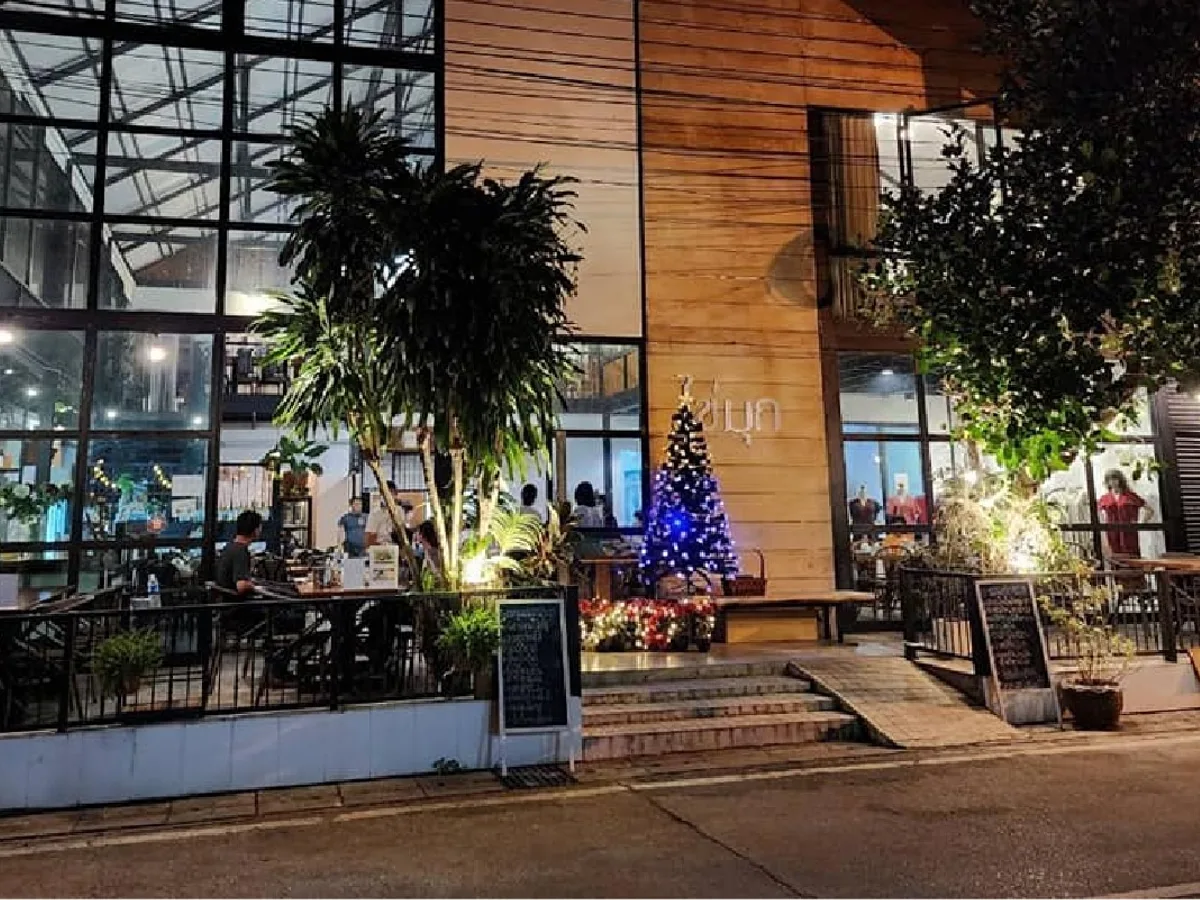
A long-standing kitchen by the old market, mixing modern local style with dishes you will not find on every corner.
The signature is snakehead-fish sai ua; also try Pai River fish tom yum, stuffed pork knuckle, and roasted northern laab.
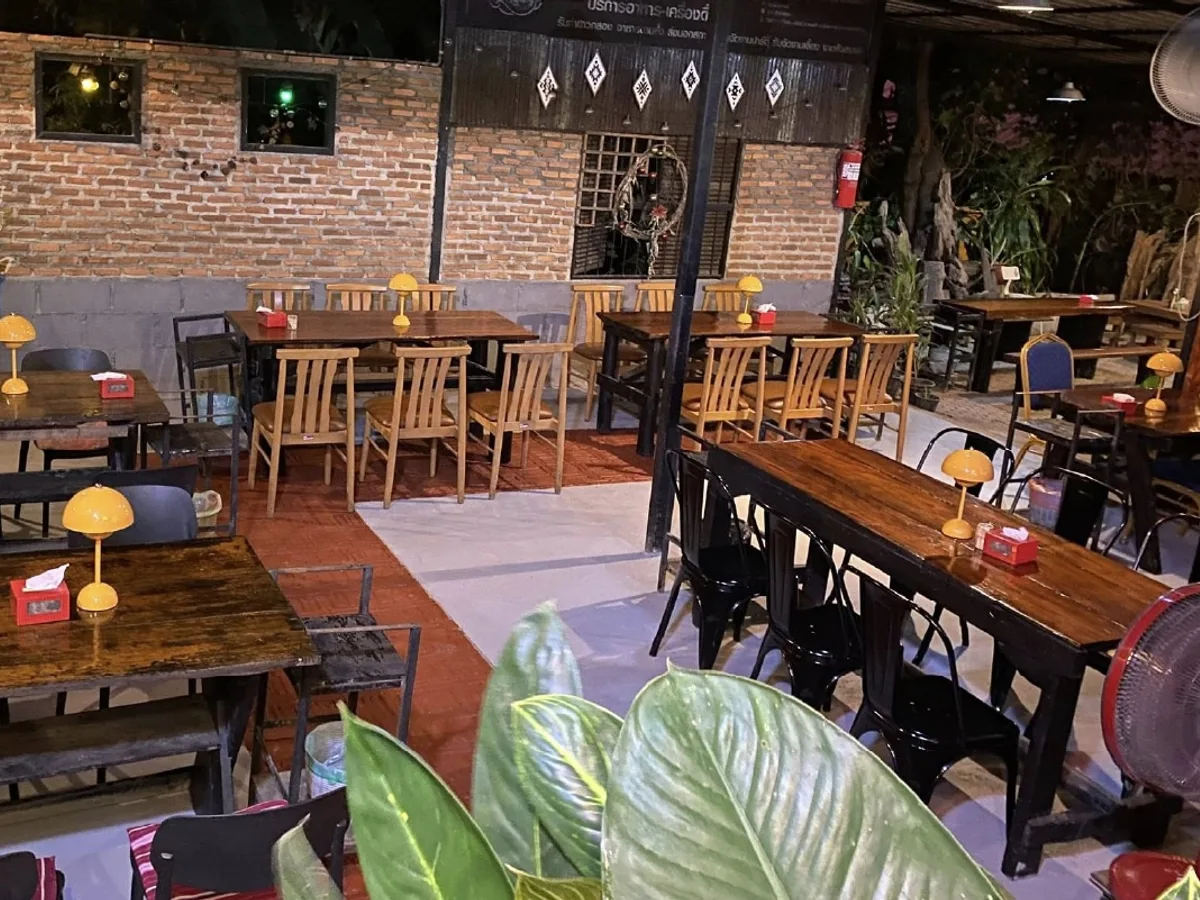
A late open-air stop when the mountain cool arrives and town kitchens start to close.
Big Thai sharing plates, crisp pork belly, garlic chicken, tom saep soft bone, and squid with garlic keep night hunger in check.

A small neighbourhood khao soi shop with more than sixty years of local loyalty.
The curry broth stays balanced, the noodles springy, and the chicken generous; try chicken, beef, pork, or the fried khao soi when you want the house classic.
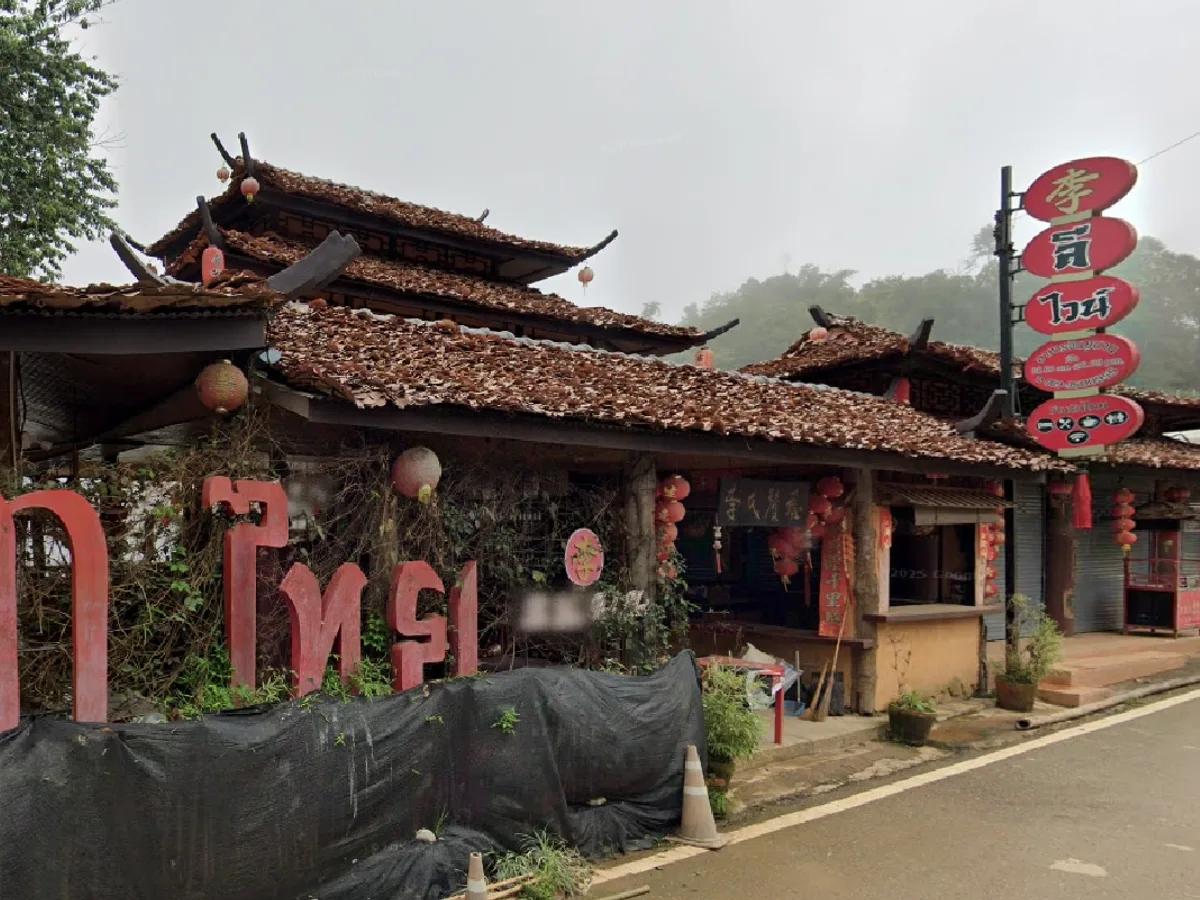
A lakeside Yunnan table in Ban Rak Thai, with red lanterns, carved wood, and cool air off the water.
Share stewed pork knuckle with steamed mantou, Hui Chiang meatball soup, tea-leaf salad, and Yunnan ginger-chilli pork.
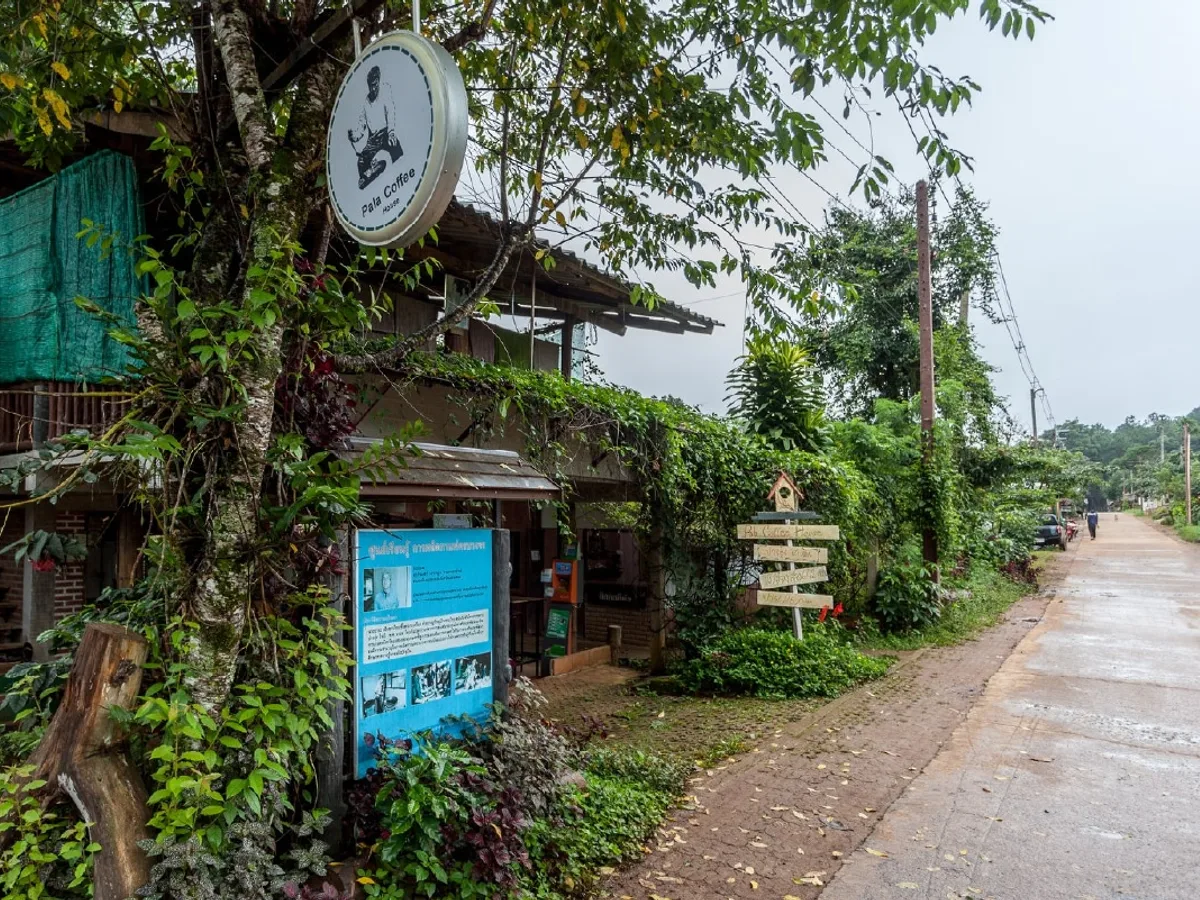
A quiet coffee stop near Pang Ung for travellers who want northern beans without the town rush.
Espresso drinks and drips use highland Arabica; non-coffee guests can choose cocoa, green tea, or fruit drinks after a misty lake morning.
05
Souvenirs from Mae Hong Son
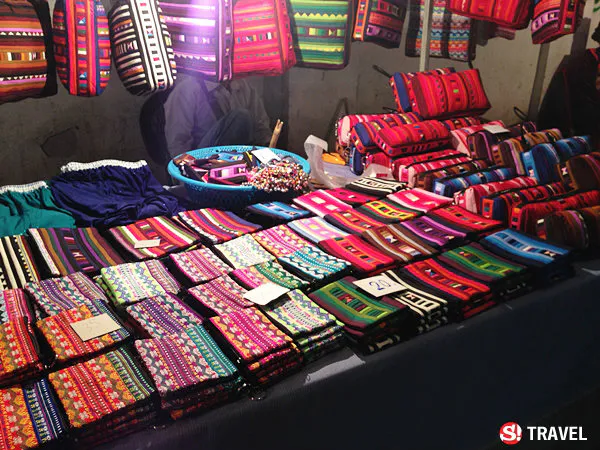
Mae Hong Son packs the mountains into bags you can carry: GI peanuts and garlic, Shan sesame sweets, Ban Rak Thai tea, Huai Hom weaving, hill-tribe silver, and mineral mud from the hills. Fill the edible side first, then leave room for cloth and craft that still feel like the province.
06
Local Culture & Vibe
Mae Hong Son’s culture is Tai Yai at heart, shared with Karen, Lahu, and other highland communities whose rites still mark the year. Faith looks festive here: jewelled novices in March, bamboo castles at the end of Lent, morning alms on Mae Sariang streets, and floating lights on Chong Kham Lake. Come for a ceremony and you meet the province at its most itself, devout, colourful, and unhurried.

07
Travel Info & Getting There
How to reach Mae Hong Son from Bangkok, and how to move around once you arrive.
Mae Hong Son Airport (HGN) has no scheduled passenger flights right now, so Chiang Mai International Airport (CNX) is the real gateway, about 1 hour 10 minutes from Bangkok. From CNX allow most of a day on the mountain road: Highway 1095 via Pai is the classic, curvier run into town, while Highway 108 via Mae Sariang is longer and gentler. Book the Chiang Mai leg as your arrival; there is no flight fallback if the bends run slow.
There is no passenger railway into Mae Hong Son. Take the overnight or daytime train from Krung Thep Aphiwat Central Terminal to Chiang Mai Railway Station, then continue by bus or minivan from Arcade Bus Terminal into the province. The rail-and-road combo still earns the journey if you want sleepers and misty ridges in one trip.
Direct overnight coaches from Bangkok’s Mo Chit 2 (Chatuchak) cover about 930 km in roughly 17 hours, with Sombat Tour among the regular evening options. Many travellers break in Chiang Mai, then ride Prempracha from Arcade: line 612 on Highway 1095 through Pai takes about 5 to 6 hours, while line 170 on Highway 108 through Mae Sariang takes about 8 to 9 hours. Book ahead in cool season.
Town is compact around Jong Kham Lake, so walk or rent a bicycle for temples and the night market. Songthaews and motorbike taxis cover short hops; Grab can be thin. For Pang Ung, Ban Rak Thai, Pai, Tham Lod, and the Mae Hong Son Loop, rent a car or scooter only if you are confident on mountain bends, or hire a local driver. Those roads reward patience more than speed.
November to February is classic Mae Hong Son: cool mist, clear ridge light, and the famous mountain-road season. Late October to December brings bua tong sunflower fields around Khun Yuam; March to April is Poy Sang Long season but can turn hot and hazy. May to October greens the forests, fills waterfalls, and softens the crowds after rain. Pack layers for highland mornings year-round.
Continue the Journey