
Baan Dam Museum (Black House)
Artist Thawan Duchanee’s dark counterpart to the White Temple — a striking kalae-style compound of black houses filled with sculptures, ritual objects, and dramatic animal-hide installations.

 ThailandLover
Contact
01
Geography & Climate
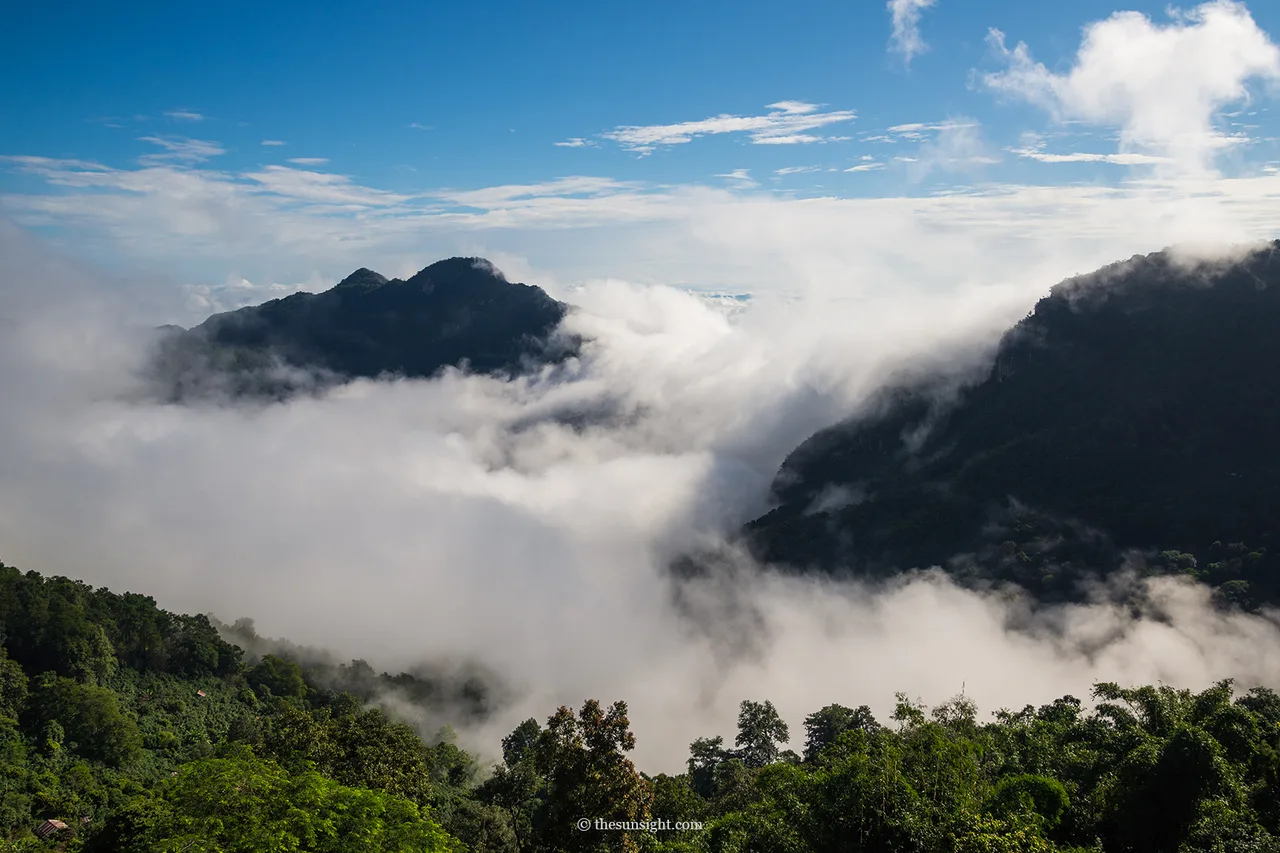
Chiang Rai sits at the tip of Thailand, where mountain ranges fold toward Myanmar and Laos and the Mekong and Kok rivers stitch the landscape together. Tea and coffee hills rise around Doi Chang and Wawee; viewpoints like Phu Chi Fa, Doi Pha Tang, and Doi Tung catch winter seas of mist.\n\nCool season (November–February) is the classic visit — clear mornings, highland chill, and cherry blossoms. Hot season still favours the hills and hot springs; green season (May–October) turns waterfalls and tea estates lush and quieter.
Best time: November – February for misty viewpoints, cool nights, and flower season; March – April for highland escapes; May – October for green hills and fewer crowds.
02
History & Heritage
King Mengrai founded Chiang Rai in 1262 — decades before Chiang Mai — as an early capital of the Lanna world. Nearby Chiang Saen recalls ancient river kingdoms along the Mekong, while Wat Phra Kaew marks the legendary discovery of the Emerald Buddha. Today the province balances that heritage with a bold contemporary art scene shaped by masters such as Chalermchai Kositpipat and Thawan Duchanee.

03
Top Attractions
Landmarks and check-in spots that define Chiang Rai.
Artist Thawan Duchanee’s dark counterpart to the White Temple — a striking kalae-style compound of black houses filled with sculptures, ritual objects, and dramatic animal-hide installations.

An 8,000-rai highland estate of tea, fruit, and mountain views — tour by farm shuttle or bike, taste Oolong No. 12, and stroll sunn hemp fields that bloom brightest in early December.

A glittering landmark in the same ornate style as Wat Rong Khun — catch the light-and-sound show at 7, 8, and 9 pm with the song Chiang Rai Ram Luek echoing through the streets.
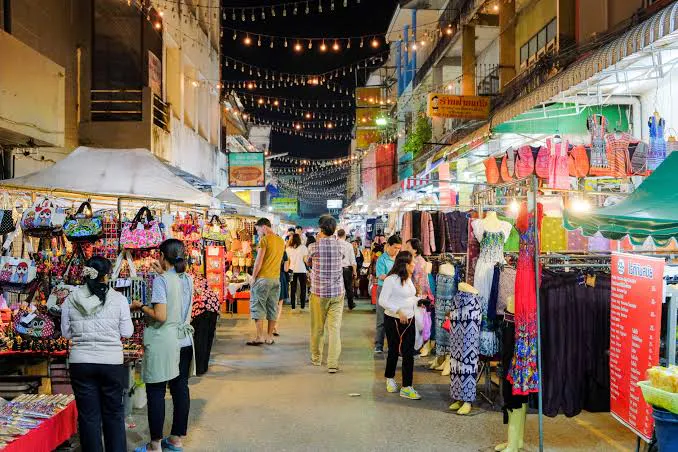
Near the old bus station — handicrafts, local food courts, and an evening stage with Thai dance and traditional salaw-saw-seung music. Open daily from about 6:30–11:00 pm.

Five converted railway carriages in front of the old City Hall — a family-friendly reading space and photogenic stop beside the King Rama V monument and historic grounds.
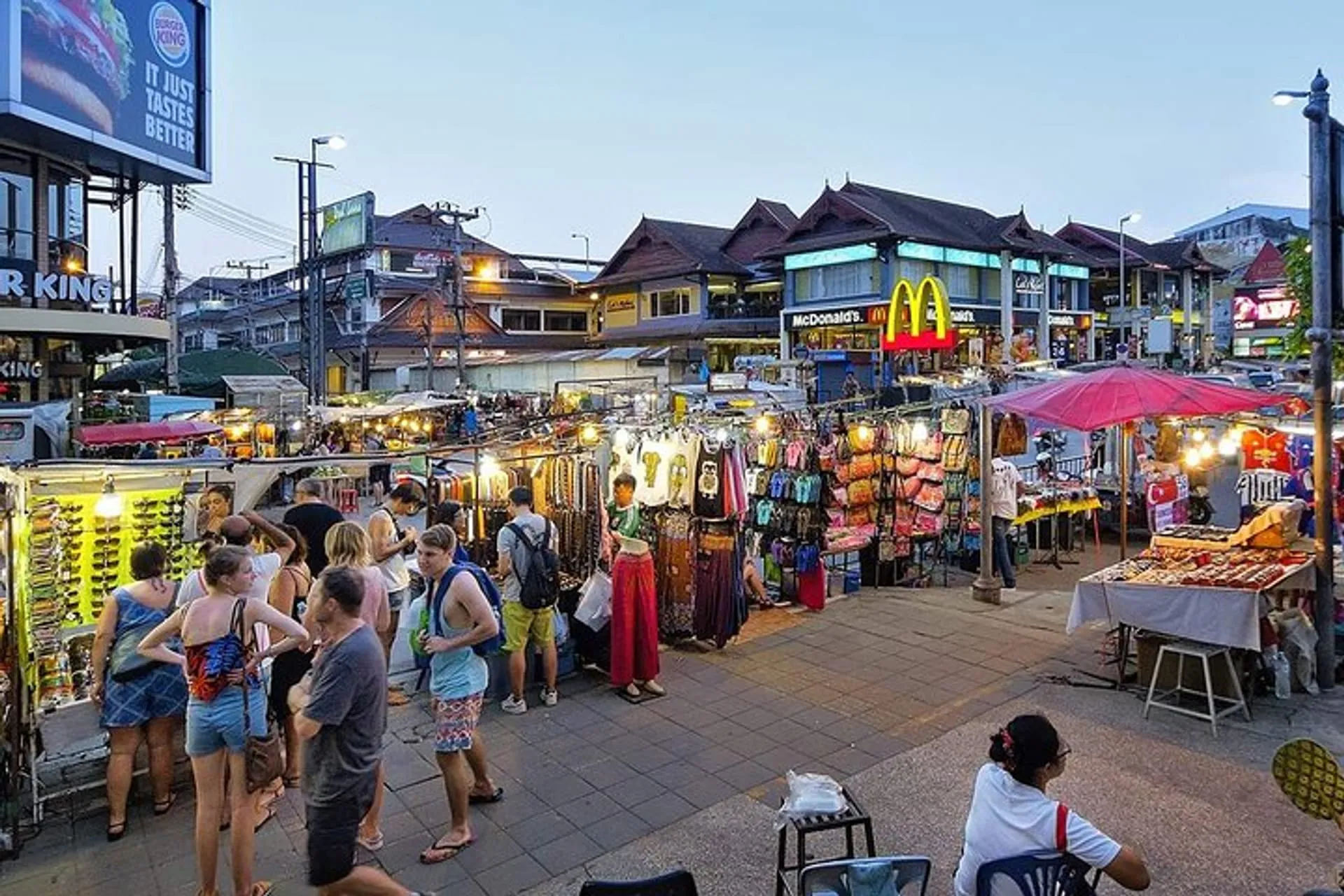
Also called Kad Chiang Hai Ram Luek — Saturdays only on Thanalai Road, packed with handmade goods, souvenirs, and a lively circle where locals join the traditional ramwong dance (4 pm–midnight).
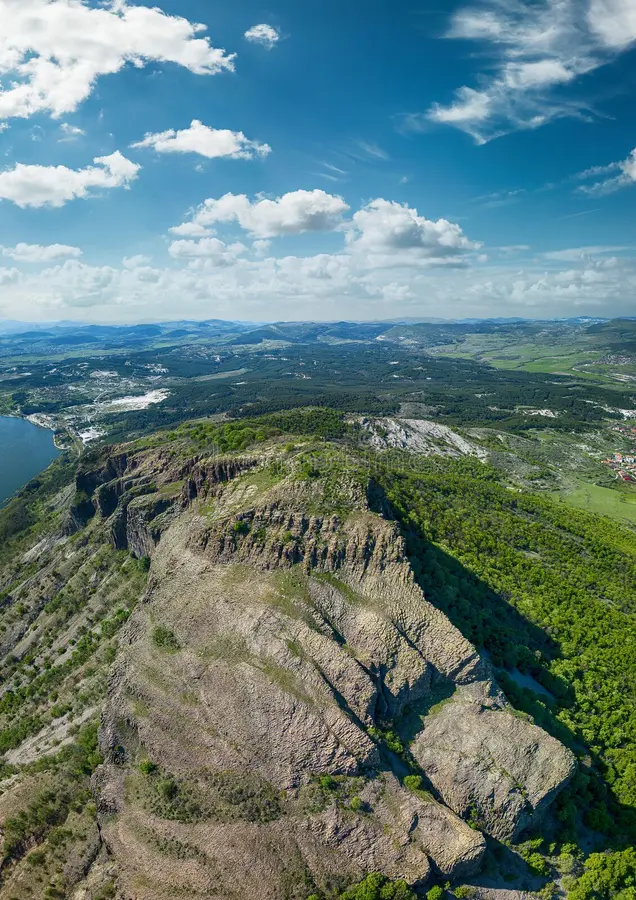
A newer sea-of-mist viewpoint in the Doi Wawee range with rare 360-degree panoramas — pair it with nearby Wawee tea hills and Doi Chang coffee country when cherry blossoms bloom.

Hilltop Viewpoint 103 at 1,653 m — tent overnight for sunrise over mist rolling along the Mekong into Laos, wild Himalayan cherry blooms, and single-digit winter mornings.
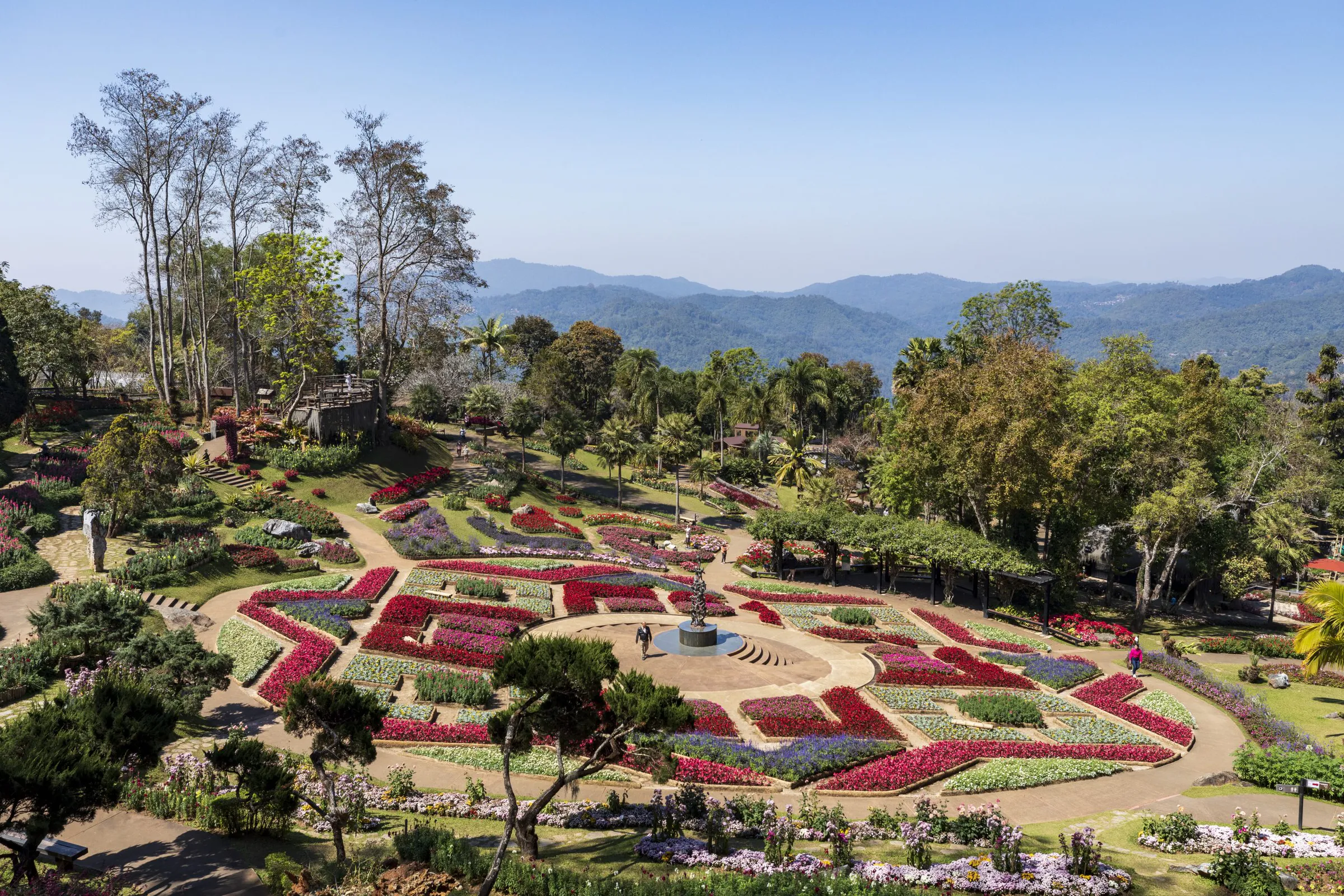
A full mountain day trip — the Swiss-inspired royal villa, botanical gardens, and Wat Phra That Doi Tung with sacred relics set among cool highland forests near the border.

Where the borders of Thailand, Myanmar, and Laos meet at the Mekong — visit Wat Phra That Doi Pu Khao and take a long-tail boat along the river through this storied frontier.
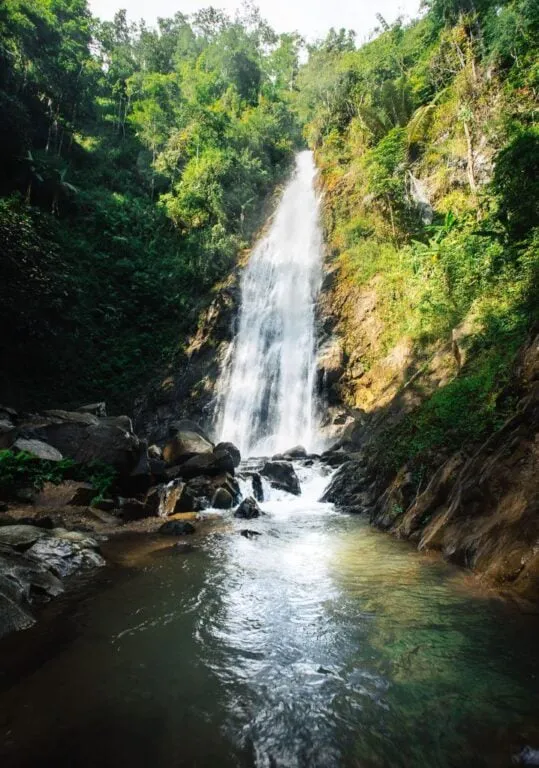
Chiang Rai’s tallest waterfall — about a 1.5 km walk through mossy rainforest to year-round cascades that roar after the rains and invite a cool dip.

Pay respects to the founder of Chiang Rai at this city-centre monument on the road toward Mae Chan — a quick, auspicious stop for travellers starting their northern loop.
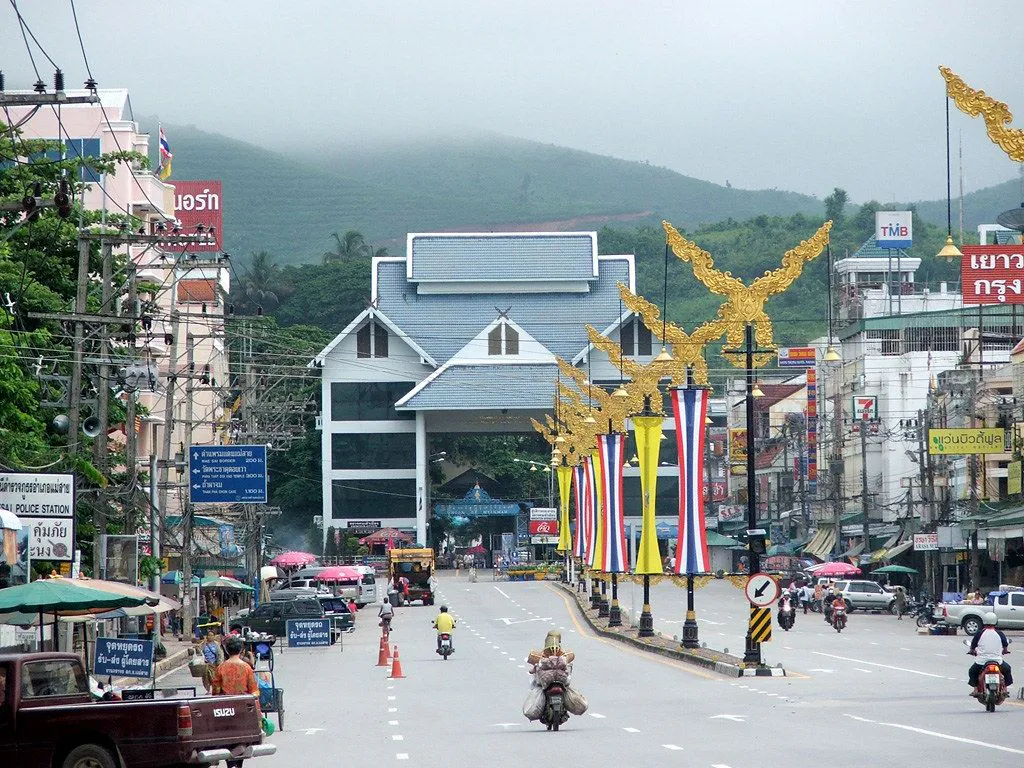
Thailand’s northernmost border town — browse markets stocked with Chinese and Myanmar goods, and cross into Tachileik during opening hours with a day-pass from the immigration office.
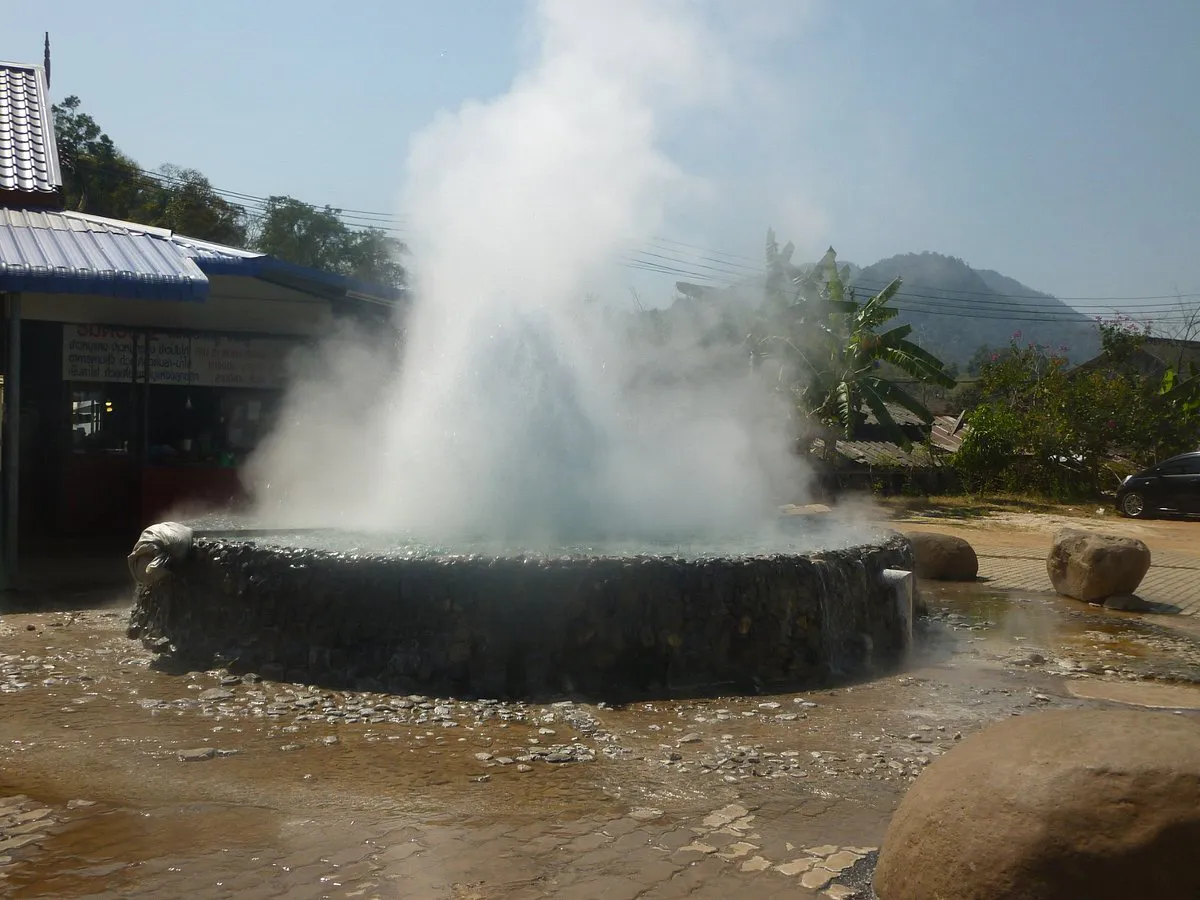
Natural geothermal springs about 20 km from town near Ban Karen Ruam Mit — soak in outdoor pools or private rooms (the source spring itself is for viewing only), then unwind at the on-site café.
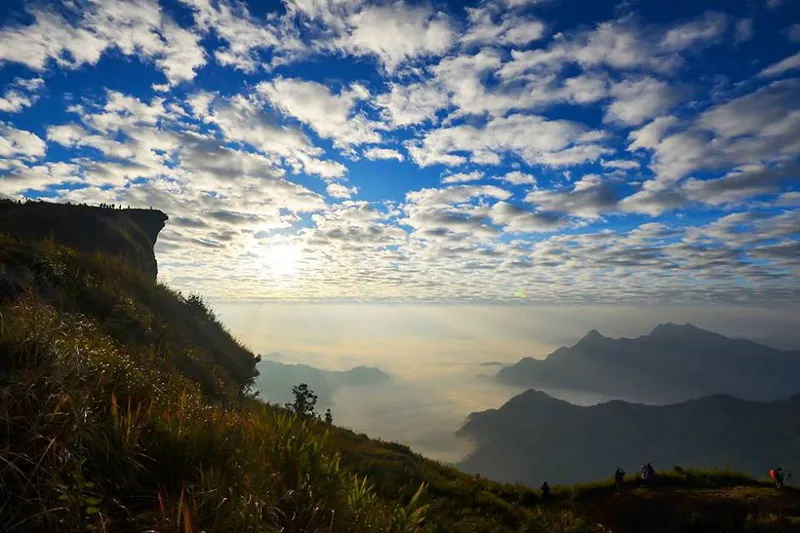
A 1,200–1,800 m ridge overlooking a vast green valley that marks the Thai–Lao border — one of Chiang Rai’s most beloved sunrise and sea-of-mist viewpoints.
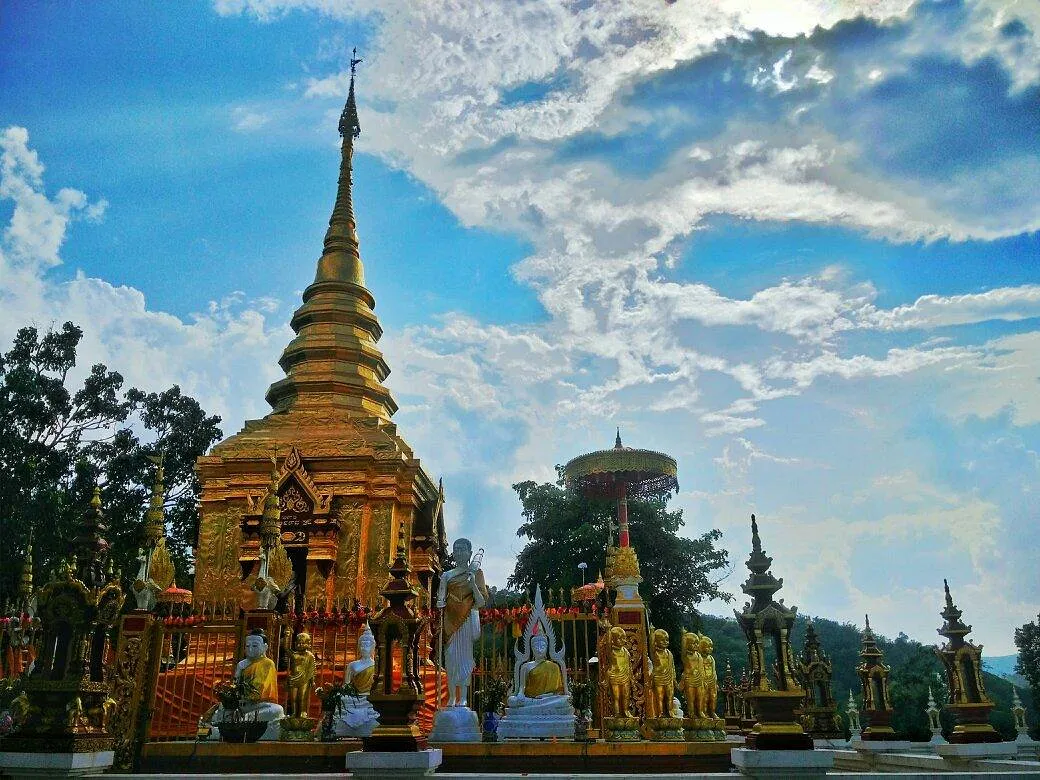
Hilltop temple in Mae Sai housing an ancient chedi — from the summit you can look across Mae Sai and into Tachileik on the Myanmar side of the border.
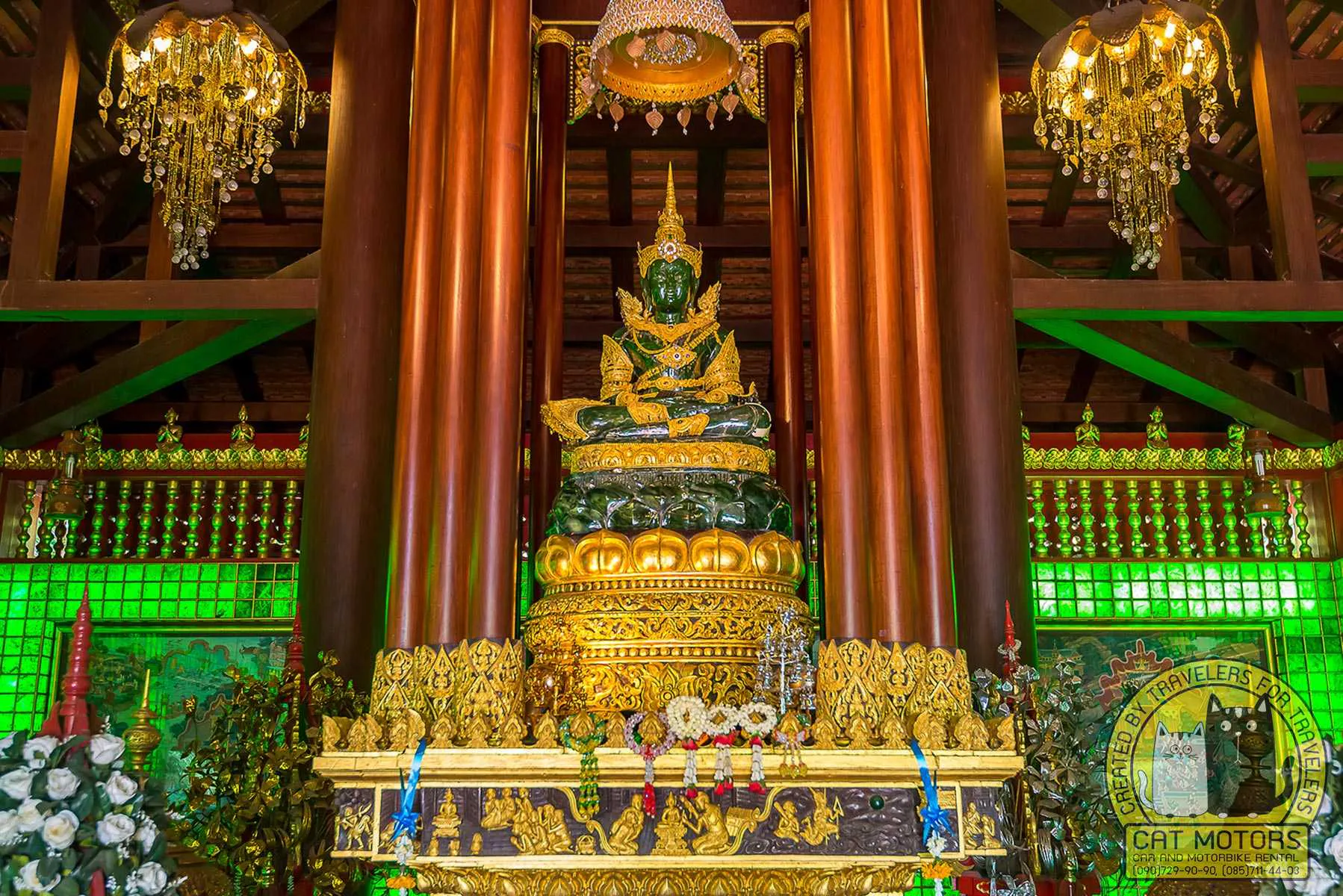
Chiang Rai’s sacred twin city temple — site of the Emerald Buddha’s discovery, with a Chiang Saen-style ubosot, the Jade Buddha pavilion, and the Hong Luang Saeng Kaew museum in leafy grounds.
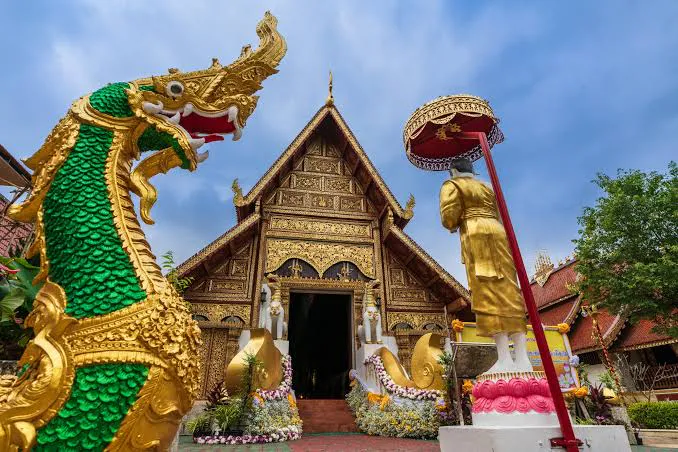
A royal monastery and spiritual heart of Chiang Rai — home to the Phra Buddha Sihing (Phra Sing) in Lanna mara-vijaya style and a stone replica of the Buddha’s footprint for worship.
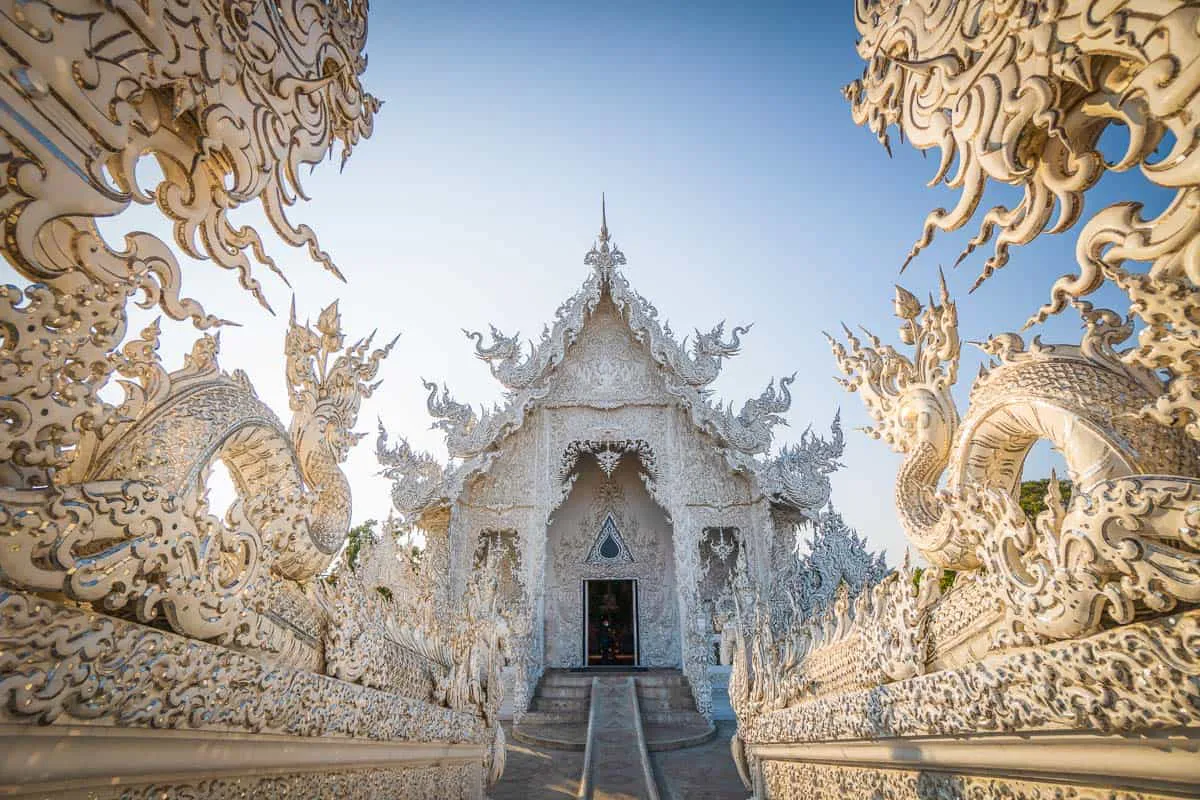
Chalermchai Kositpipat’s world-famous white temple — mirror mosaics, intricate sculpture, and murals that weave heaven, hell, and contemporary culture into a uniquely Lanna vision.
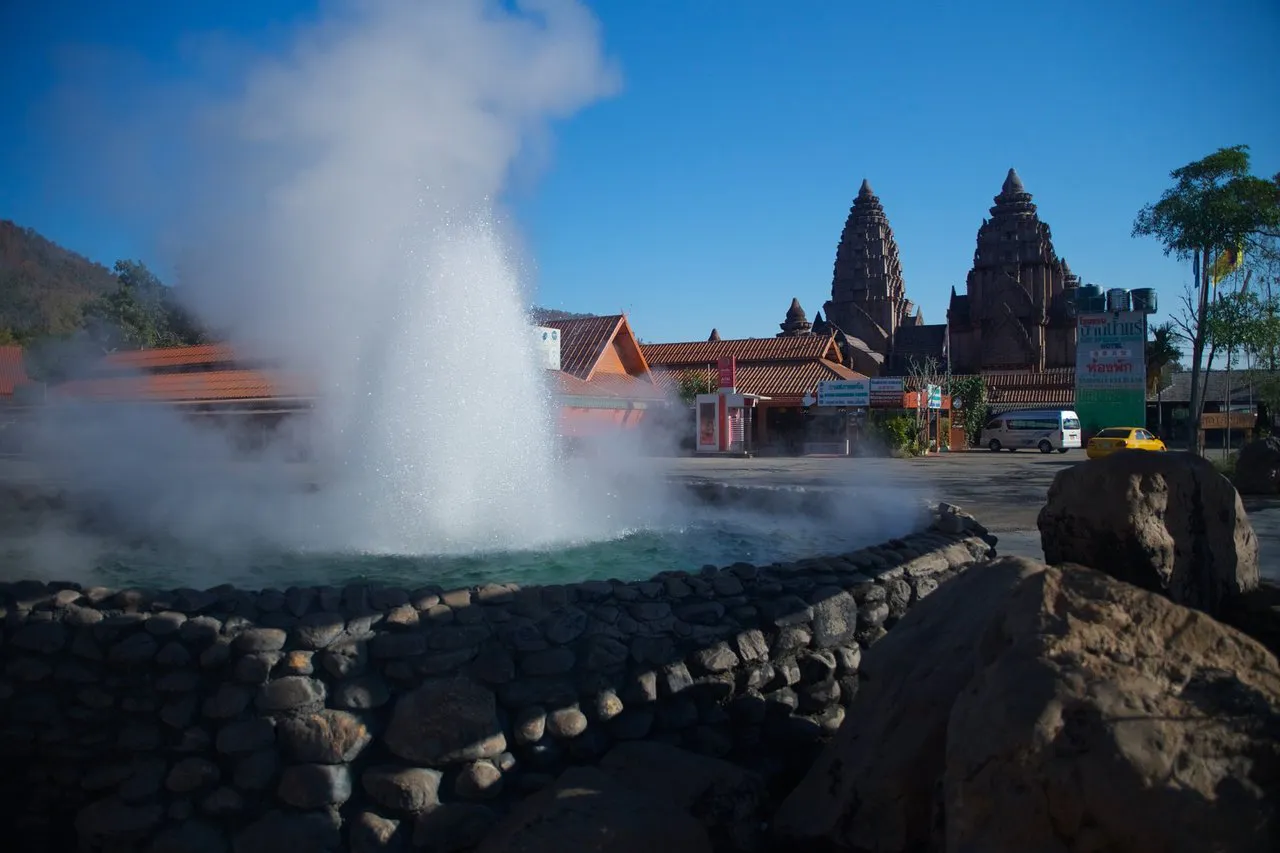
Three natural mineral pools in landscaped gardens on the Chiang Mai–Chiang Rai route — soak away travel fatigue, then browse the cafés and souvenir shops around the park.
04
Northern Bowls, Tea Hills & Border Flavours
Expect classic Lanna plates with a frontier twist — coconut curry noodles, tomato-rich nam ngiao, grilled sai ua, and sticky rice shared at night markets. Highland coffee from Doi Chang and Oolong from Wawee and Boon Rawd Farm are as much a reason to visit as any temple.
Northern curry noodles in a coconut-spice broth, topped with crispy noodles — Chiang Rai’s markets and local shops serve bowls every bit as serious as Chiang Mai’s.
Rice noodles in a tangy pork-and-tomato broth scented with dried cotton-tree flower — a Shan-rooted northern classic that tastes especially at home this far north.
Herb-loud grilled northern sausage with chilli dips and sticky rice — the everyday starter set of Lanna tables and Chiang Rai night markets.
High-altitude Arabica from the Doi Chang hills — sip it at origin cafés or bring beans home as the province’s most famous edible souvenir.
Oolong and highland teas grown on cool slopes — farm tastings around Wawee and Boon Rawd turn a day trip into a slow, fragrant ritual.
Where to Eat
Eat by the Mae Kok, in teak rooms, at Singha Park after a balloon morning, or at a chef’s counter that turns Lanna into twelve small plates. These are the tables Chiang Rai keeps going back to.
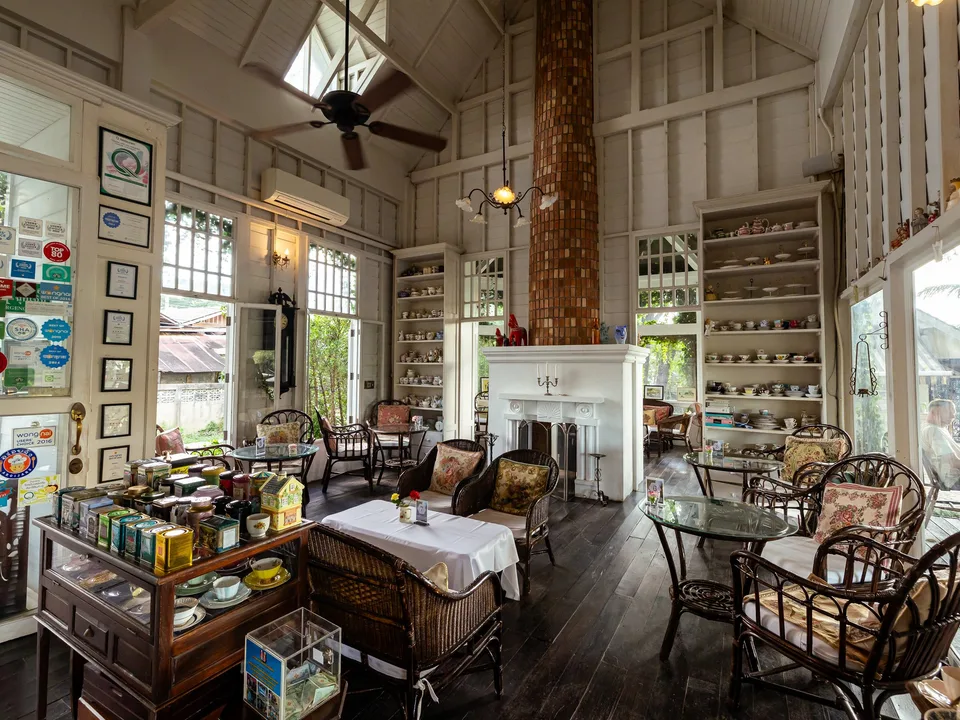
A relaxed European-leaning bistro on the Mae Kok — homemade bakery, coffee, Thai-fusion plates, and a river view that invites a slow sit.
Come for breakfast or a long lunch. Easy when you want Western comfort without leaving the water.

A gallery-café noodle room: Sukhothai-style tom yum in a hot, garlic-oil bowl, or the dry “earth-bean” noodles tossed in dark soy — no extra seasoning needed.
Rice plates (honey roast pork, khao khluk kapi) sit beside the canvases. Lunch only; arrive hungry before mid-afternoon.
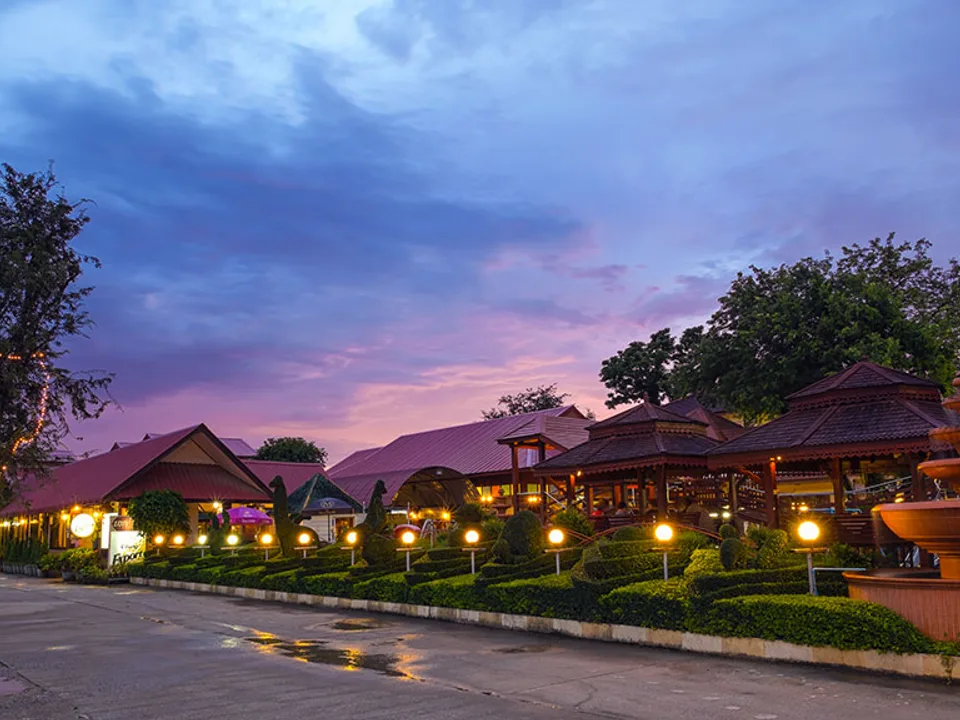
A Chiang Rai institution of more than forty years — Thai, Chinese, seafood, and northern plates across a huge menu, indoor and garden seating, plus private rooms for groups.
The house move is the seafood yen ta fo hotpot: a tom-yum-leaning broth packed with prawns, squid, and clams. Locals treat it as a can’t-skip table.
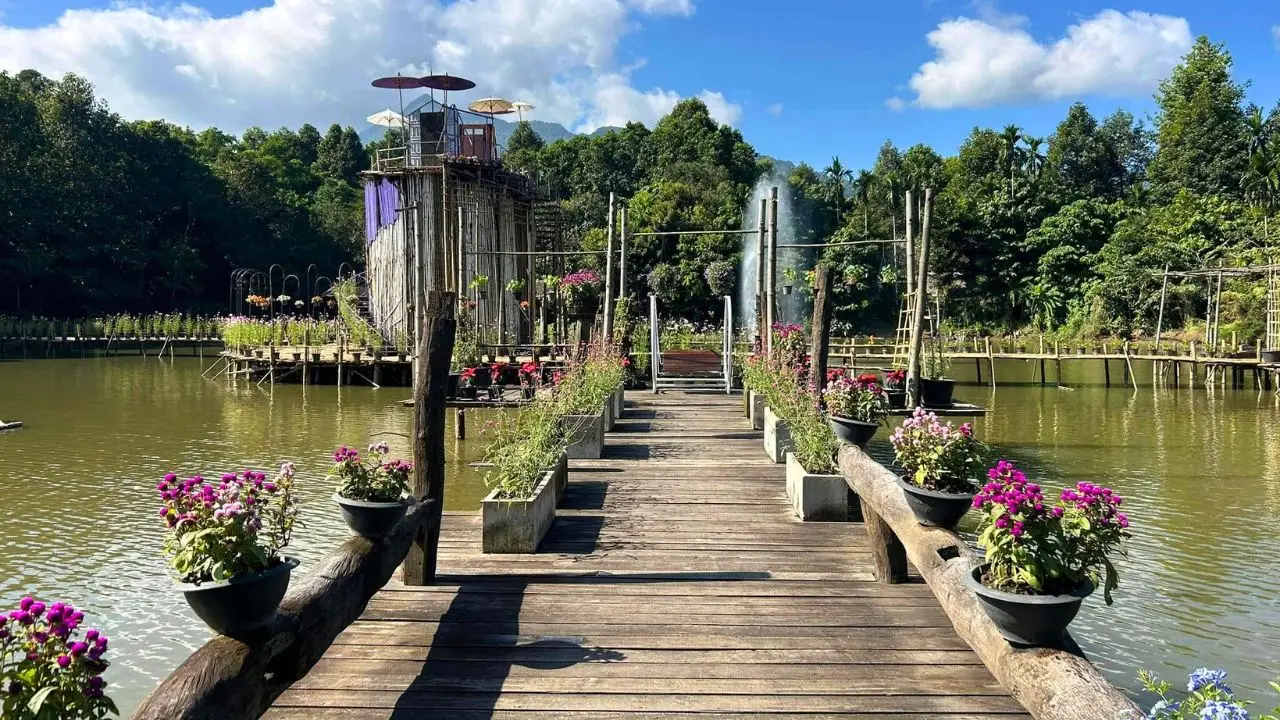
A garden kitchen in Mae Sai — a wooden walkway over the pond, flowers, and herbs before you even sit down. Northern dishes built on greens, house recipes, and a daily produce stall out front.
Pair a Mae Sai border morning with a light, plant-forward lunch. Hours and the vegetable selection change with the harvest.

Chiang Rai’s original clay-pot jok shop — century-egg, salted-egg, “emperor,” and prawn porridge, plus the bouncy house pork that regulars order without looking at the board.
Open early for breakfast and again from late afternoon. A local congee stop, not a scenic lunch.
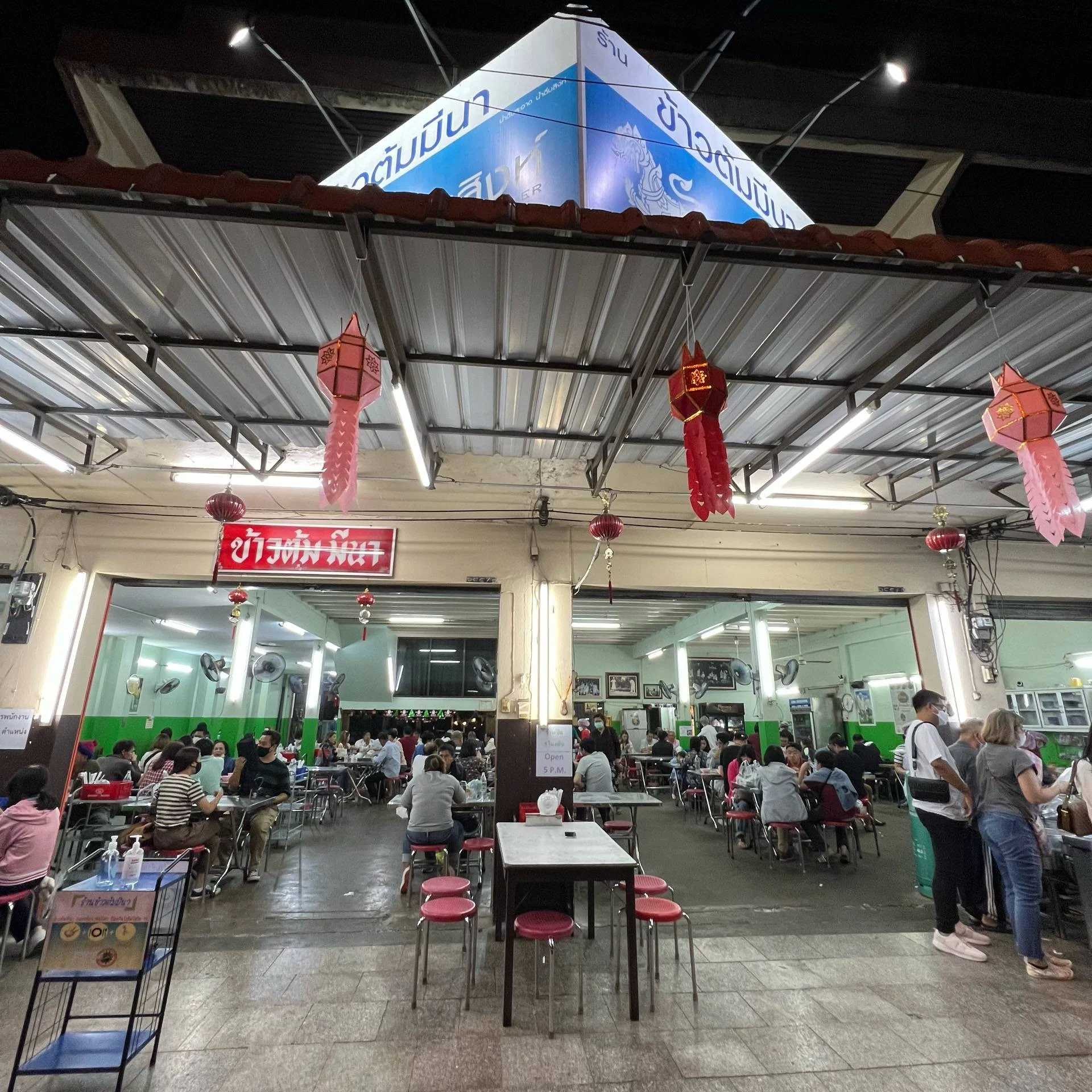
The city’s famous late khao tom room — ready-made stews and fries on one side, made-to-order woks on the other if you can wait.
Order the palo pork knuckle while it lasts, then pad krapao or morning glory. A night-hunger address on the main road, not a riverside terrace.
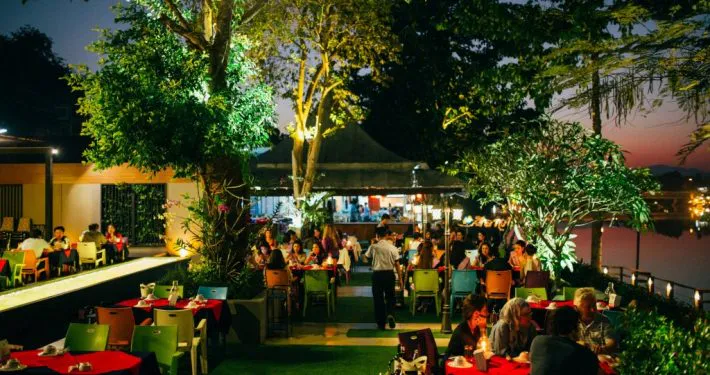
A Kok riverside bar-restaurant with live music most evenings — northern and Thai-fusion sharing plates, from cashew yum and fried shiitake to river fish with black pepper.
Come after 16:30 for sunset energy, not a quiet lunch. Book if you want a table by the water on weekends.
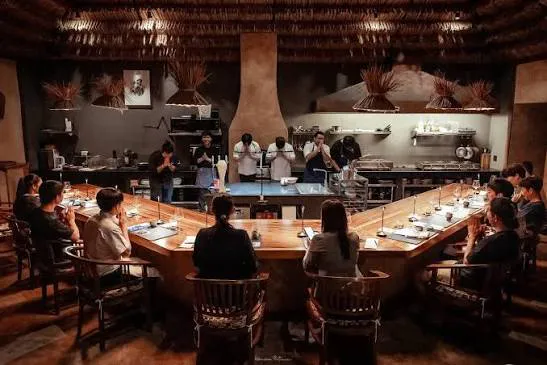
A chef’s-counter degustation — ten to twelve courses of contemporary Lanna, using French, Japanese, and Italian technique, with the menu rotating about every two months around the season.
Reserve at least two weeks ahead. This is a special-night table, not a walk-in northern curry stop.
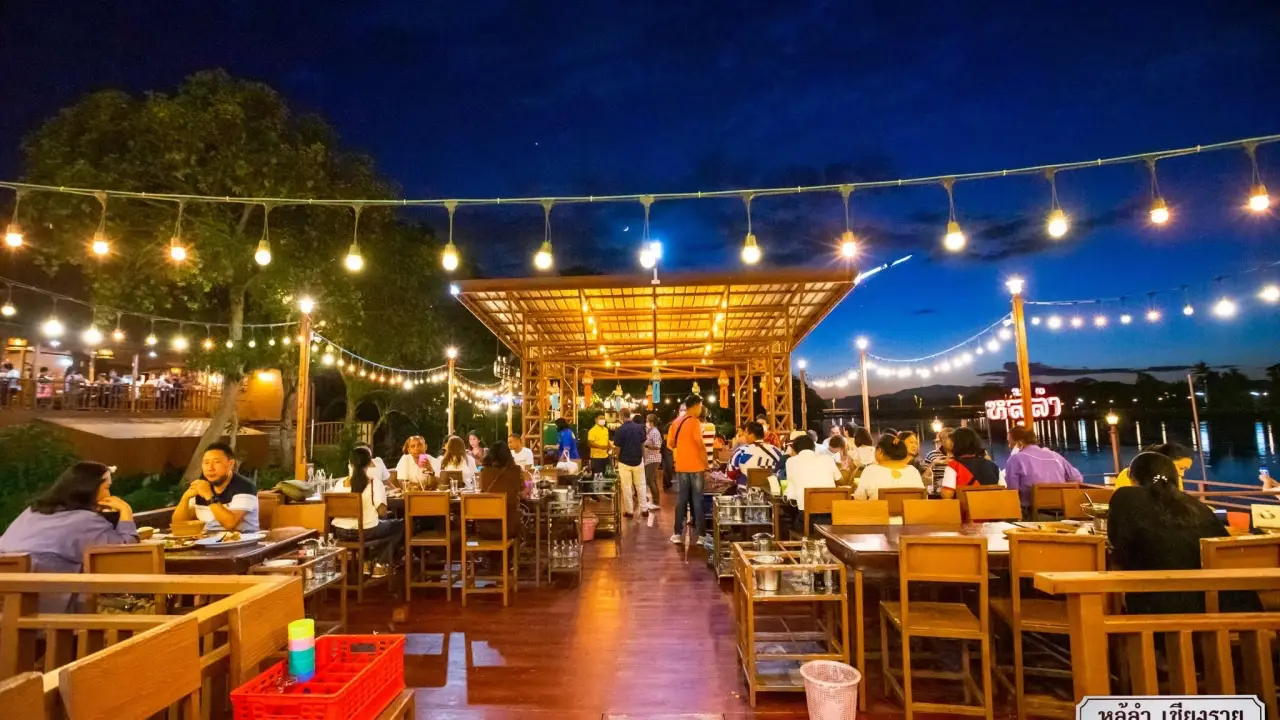
A Mae Kok legend since 1981 — raft-style tables facing the river and hills, and a northern starter set of nam prik num, naem, boiled greens, and khaep moo.
Follow with pork larb khua, hang lay, gaeng ho, and sai ua. Go for the view as much as the sticky rice.
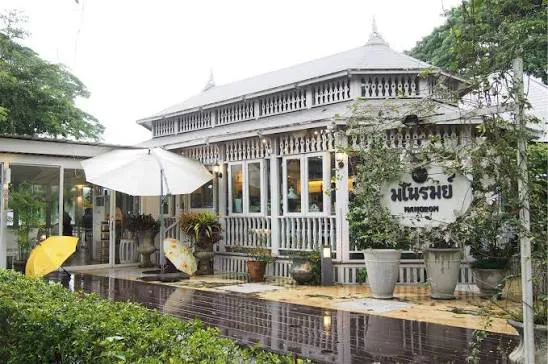
Garden tables by the Mae Kok that feel farther from town than they are — modern Thai-European cooking with a quiet local backbone.
The kanom jeen nam ya pu is the plate people remember: coconut-rich, crab-forward, simply plated. Vegetarian menus and private events are available.

A vintage European café-restaurant on the Mae Kok — pizzas (try the hang lay topping), sai ua pasta, beef khao soi, German pork knuckle, and sweet plates for the camera.
Daylight hours only. Come for a long brunch or early dinner with a river photo stop, not a late night.
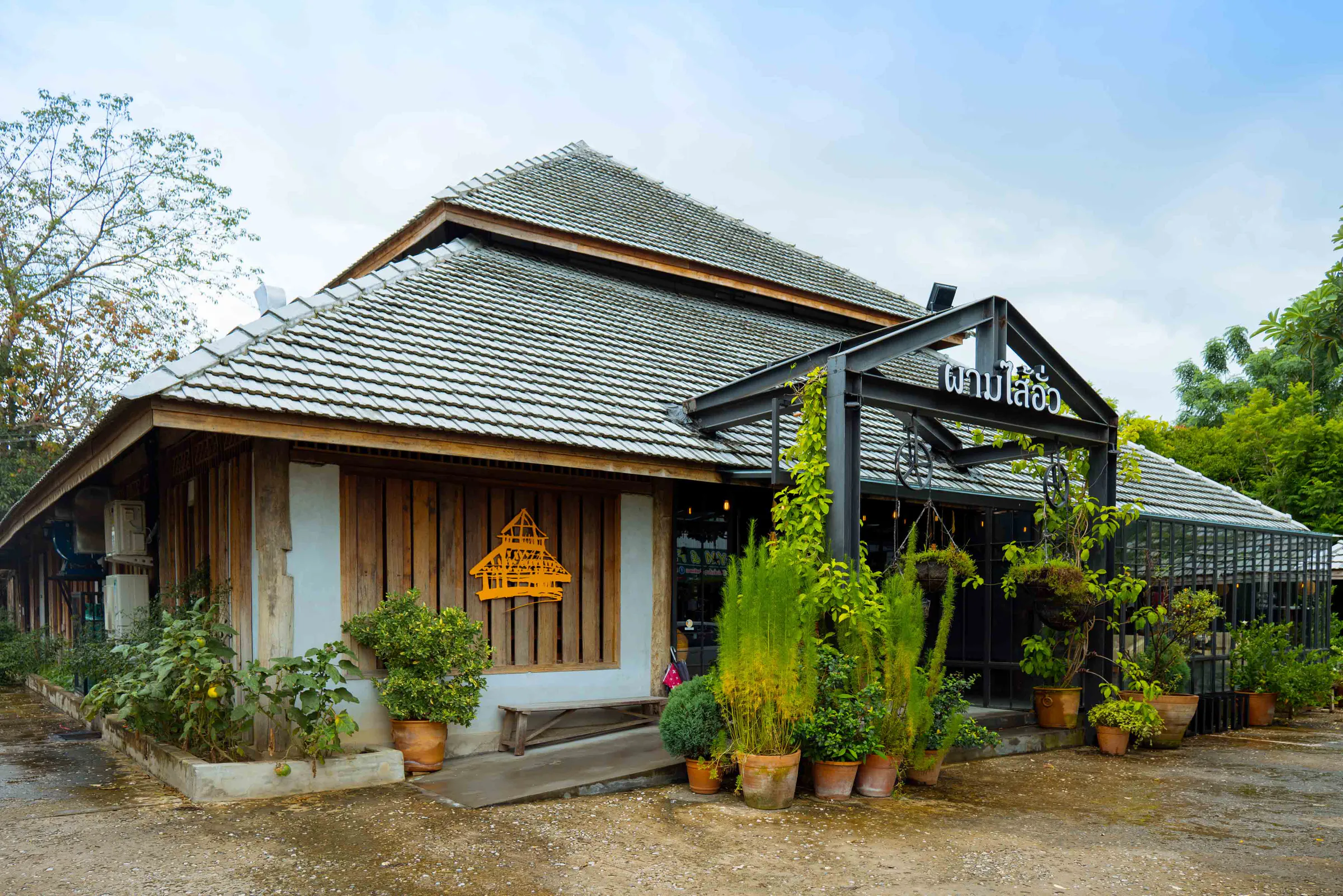
Contemporary Lanna in a house that mixes old teak lines with a kitchen garden out back — herbs, vegetables, and fruit grown for the pass.
Northern classics sit beside playful plates: sai ua pizza with nam prik num, pork larb pasta, hell’s-basil sai ua. A stylish in-town lunch.
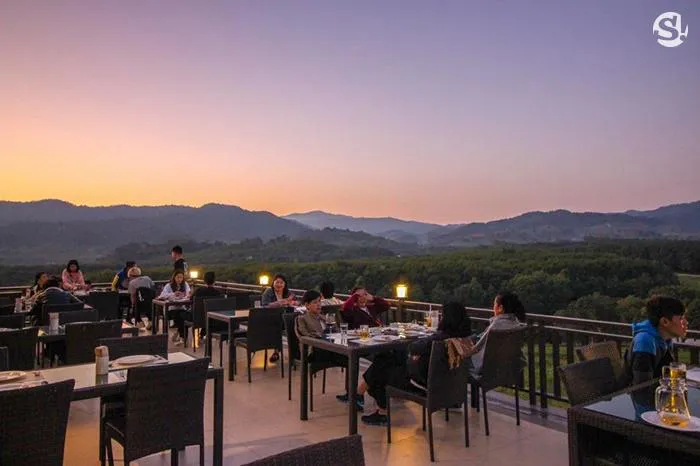
The garden restaurant inside Singha Park — wide lawns, farm produce, and the famous yum of crispy fried tea leaves with a sharp, sour-hot dressing.
Add honey-glazed pork neck, northern appetisers, or grilled chicken after a park day. Pair it with a balloon-field or tea-terrace walk.
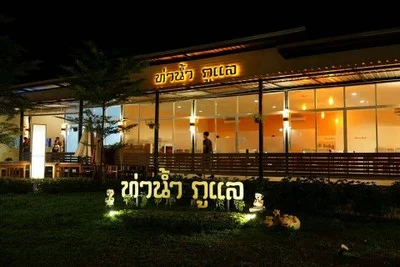
A long-running family kitchen near the Mae Kok — indoor and outdoor rooms, Thai and northern sharing plates, and the house fried pork (mu nok jai) with garlic and kaffir lime.
Gaeng kae gai, gaeng ho, and crisp Phulae pineapple close a weekend table. Casual, local, and easy with a group.

Old-school Lanna named for the tong tueng leaves once used to wrap rice and thatch roofs — naem mok, chin som, steamed snakehead “mueang” style, and pork larb khua.
Seasonal hed pho mushrooms appear when the forest allows. Some evenings add northern or Burmese dance between courses. Two sittings; not an all-day café.
05
Local Specialties & Souvenirs
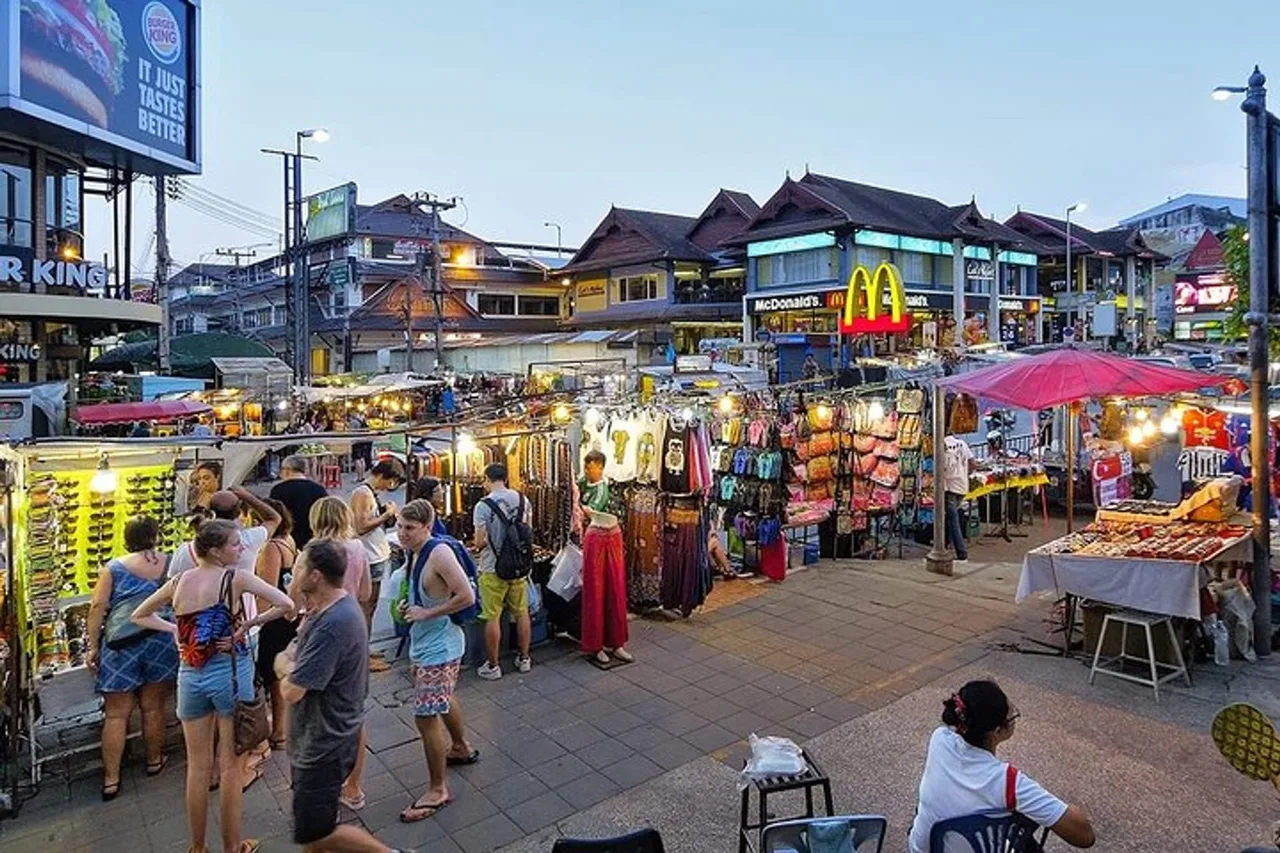
Bring home flavours and crafts that only this borderland grows — highland tea and coffee, handwoven textiles, and small art pieces inspired by Chiang Rai’s temples and studios.
06
Local Culture & Vibe
Chiang Rai feels less hurried than bigger northern cities — temple mornings, evening markets, and long drives into tea country. Lanna roots meet hill-tribe communities and a strong contemporary art pulse: the White Temple, Black House, and Clock Tower turn the province into an open-air gallery as much as a travel destination.

07
Travel Info & Getting There
How to reach Chiang Rai from Bangkok, and how to move around once you arrive.
Mae Fah Luang–Chiang Rai International Airport (CEI) has frequent flights from Bangkok (about 1 hour 20 minutes) and is the easiest way in.
There is no passenger railway into Chiang Rai city. Most travellers fly, or take the train to Chiang Mai and continue by bus or private transfer (about 3–4 hours).
VIP and standard coaches run from Bangkok (roughly 10–12 hours) and Chiang Mai. Overnight buses are common; book ahead in peak cool season.
In town use Grab, songthaews, and rental scooters if you are confident. For Phu Chi Fa, Doi Tung, the Golden Triangle, or tea hills, a private driver or organised day trip is the most comfortable option.
November – February for cool mist and flower season. Shoulder months are greener and quieter — pack layers for highland mornings year-round.
Continue the Journey