02
History & Heritage
A River Town Called Mae Klong
People still call it Mae Klong, after the river. In writing the town appears in the reign of King Borommatrailokkanat, 1448–1488 (B.E. 1991–2031), when the governor held the title Phra Samut Songkhram — samut, from Sanskrit, for the sea, and songkhram for war. The town later took that title as its name. It was then a district of Ratchaburi known as Suan Nok, the outer garden, set against Suan Nai at Bangkok, and its centre was Bang Chang, in today’s Amphawa. Before King Naresuan, Mon households had already settled upriver and come down to the mouth. A palace list from King Uthumphon’s reign still has their boats at the capital, loaded with old coconut, mangrove wood, and white salt.
Provincial histories place the name on a Dutch map of 1636 (B.E. 2179) and on La Loubère’s map of 1687 (B.E. 2230), in the reign of King Narai. An officer of that same embassy, Claude Céberet, left Tha Chin for Mae Klong on 18 December 1687 and wrote the town down: larger than Tha Chin, about a mile from the sea, no city wall, one small square brick fort with four little towers, and drinking water he called good, the ground around the fort already under water. Late in Ayutthaya, and on into Thonburi, Bang Chang and Mae Klong left Ratchaburi and the place was called Mueang Mae Klong. A decree of King Borommakot in 1756 (B.E. 2299) already uses the name Samut Songkhram.
In 1766 (B.E. 2309) Thong Duang, Luang Yokkrabat of Ratchaburi and later King Rama I, married Nak, daughter of a Mon household at Amphawa. Their son Chim — King Rama II — was born at Bang Chang on 24 February 1767 (B.E. 2310). When he took the throne, Nak’s family became the Bang Chang royal line.
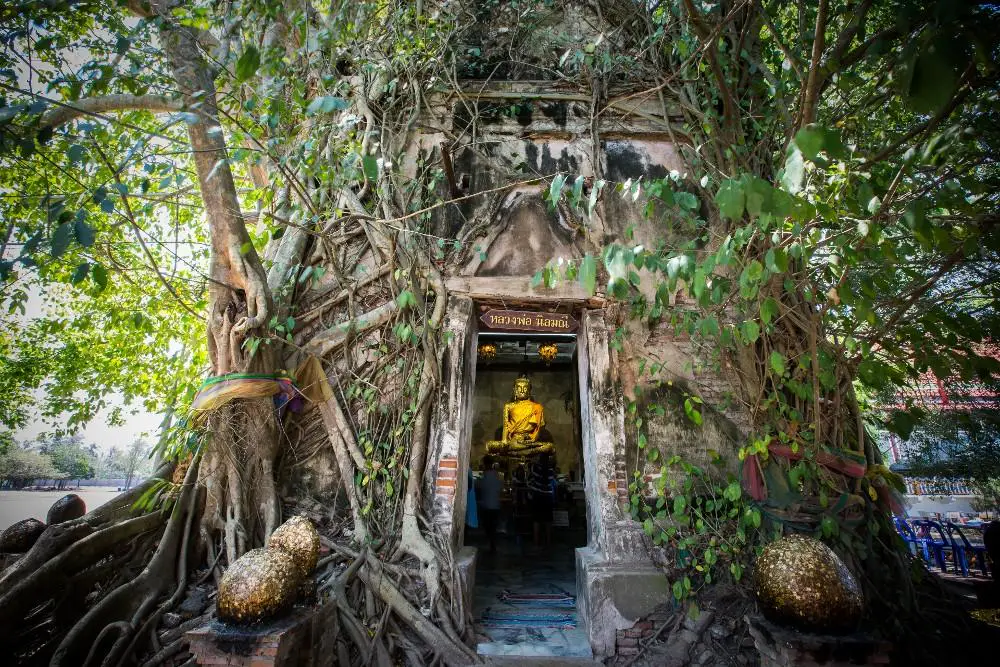
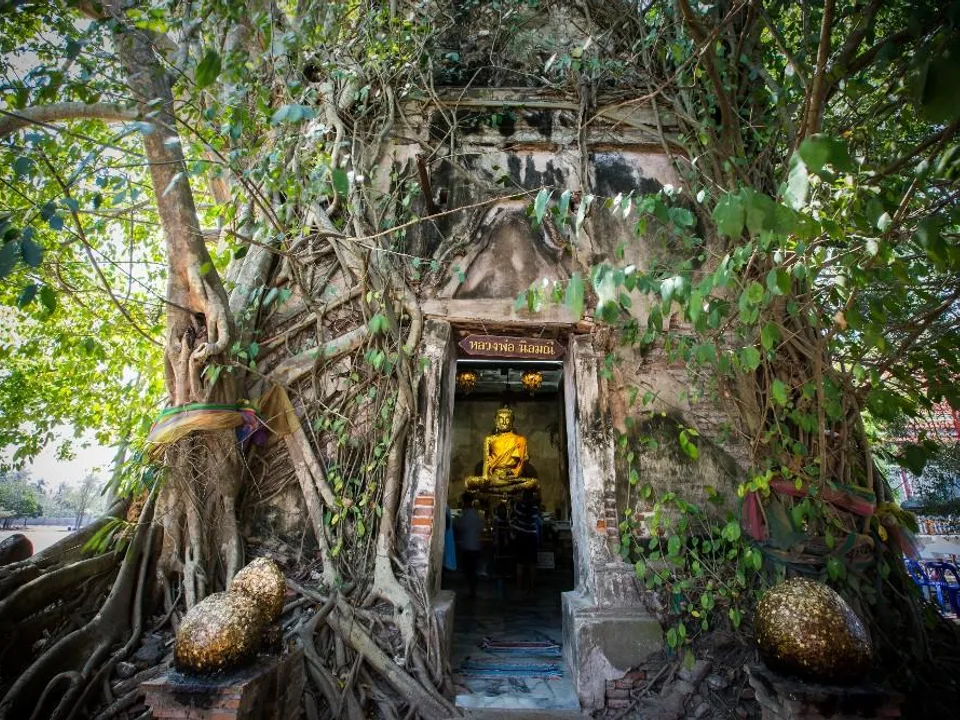
In 1765 (B.E. 2308) King Ekkathat sent a fleet to camp at Bang Kung, in today’s Bang Khonthi, and walled Wat Bang Kung into the middle of it, a hold against a Burmese army coming down the Mae Klong. The camp fell, and in 1767 so did Ayutthaya. After King Taksin had driven the Burmese out, he posted Chinese levies from Rayong, Chonburi, Ratchaburi, and Kanchanaburi on that same ground. People called it the Chinese camp of Bang Kung. In the dry season at the close of 1767 (B.E. 2310) a force out of Tavoy came through Kanchanaburi and laid siege. Taksin sent Phraya Maha Montri — Bunma, later the Front Palace — with a fleet of about a hundred boats. The siege broke, and the Burmese pulled back to Tavoy. It was the first fight with Burma after Thonburi was founded. The ordination hall of Wat Bang Kung still stands inside a cage of roots, the Buddha in the old doorway.
In 1901 (B.E. 2444, Rattanakosin era 120), under King Chulalongkorn’s thesaphiban reform, Mae Klong was raised to the province of Samut Songkhram, in three districts that are still the whole of it: Mueang Samut Songkhram, Bang Khonthi, and Amphawa.